


In Yin Yoga, poses are typically held for three to five minutes, though some holds can extend to ten minutes or more, depending on your experience level and the specific pose. Unlike more dynamic yoga styles, this longer hold time is intentional and central to how Yin Yoga works. Below, we unpack the reasoning behind those long holds and how to make the most of them in your own practice.
Why does Yin Yoga use longer hold times than other styles?
Yin Yoga uses longer hold times because it targets the body’s deep connective tissues, including fascia, ligaments, tendons, and joint capsules, rather than the muscles. These tissues respond very slowly to stress and require sustained, gentle pressure over time to release tension and increase flexibility. A short hold simply does not reach deep enough to create meaningful change.
In more active yoga styles like Vinyasa or Ashtanga, the goal is to warm and strengthen the muscles through repetitive movement. Connective tissue, however, is not elastic in the same way. It is denser and less responsive to quick stretching. To gently stress and hydrate these tissues, the body needs time, usually several minutes, to allow the fascia to slowly soften and lengthen.
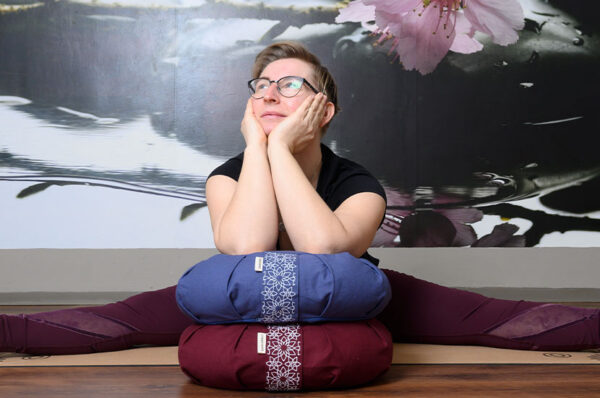
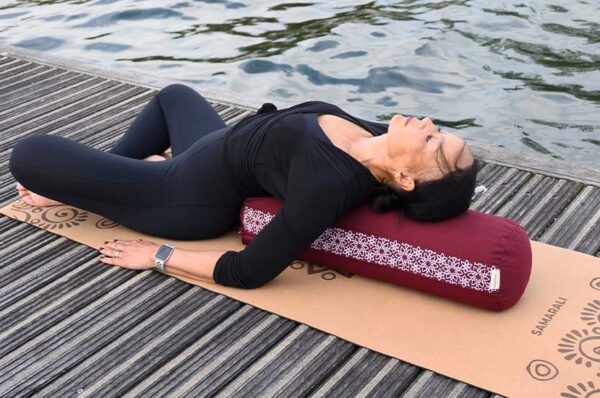
There is also a mindfulness dimension to the longer holds. Sitting with stillness and mild discomfort for an extended period trains the nervous system to find calm under pressure. This meditative quality is a core part of the Yin Yoga philosophy, making the practice as much about mental resilience as physical flexibility. Pairing your practice with a supportive yoga bolster can make those longer holds far more accessible and comfortable.
How long should you hold a Yin Yoga pose?
Most Yin Yoga poses should be held for three to five minutes as a general guideline. Beginners are encouraged to start at the lower end of that range, around two to three minutes, and gradually build up as the body becomes more familiar with the sensations. Advanced practitioners sometimes extend holds to seven or even ten minutes in certain postures.
Here is a practical breakdown by experience level:
- Beginners: Two to three minutes per pose. Focus on settling into a comfortable edge without strain.
- Intermediate practitioners: Three to five minutes. You can explore a slightly deeper expression of the pose as your tolerance builds.
- Advanced practitioners: Five to ten minutes. Longer holds are used intentionally to work deeper into connective tissue and cultivate stillness.
It is worth noting that the quality of the hold matters more than the duration. Being at your “appropriate edge,” where you feel a mild, steady sensation without sharp pain, is far more important than hitting a specific time target. A well-supported three-minute hold on a comfortable yoga mat will always outperform a strained five-minute hold on a slippery surface.
What factors affect how long you hold a Yin pose?
Several factors influence the ideal hold time for any individual in a Yin Yoga pose, including experience level, the specific pose, the area of the body being targeted, and how your body feels on any given day. There is no single correct answer because Yin Yoga is deeply personal.
The pose itself
Some poses are gentler and easier to sustain for longer periods, such as supported Butterfly or Legs Up the Wall. Others, like Dragon or Saddle, place significant load on the hips, knees, or lower back and may require shorter holds, especially for beginners. Always adjust hold time based on what a specific pose demands from your body.
Your body’s current state
Stress, fatigue, hydration levels, and even the time of day can all affect how your connective tissue responds. In the morning, the body tends to be stiffer, so shorter holds with less depth make sense. Later in the day, when the body is warmer and more open, you may find you can sustain poses longer with greater ease. Listening to your body in the moment is always the most reliable guide.
When should you come out of a Yin Yoga pose early?
You should come out of a Yin Yoga pose early if you experience sharp, stabbing, or shooting pain, numbness or tingling in the limbs, joint pain rather than a muscular stretch sensation, or any feeling that something is wrong. These are clear signals from your body that the pose is not serving you in that moment, and no time target is worth overriding them.
Yin Yoga works with the concept of finding your “appropriate edge,” which is a place of mild to moderate intensity that you can sustain with steady breathing. If you have moved past that edge into genuine discomfort or pain, easing out early is not failure. It is good practice.
There are also subtler reasons to come out early:
- Your breath becomes shallow or strained, suggesting the nervous system is in distress.
- You feel a strong emotional response that feels overwhelming rather than releasing.
- A joint, rather than the surrounding tissue, is bearing the load of the stretch.
- You are compensating by tensing other parts of the body to manage the sensation.
Coming out of a pose mindfully and resetting is always a valid option. You can use props like a folded organic cotton yoga blanket to modify the pose and return to it with better support. Yin Yoga rewards patience and self-awareness, not endurance for its own sake.
If your Yin Yoga practice has inspired you to invest in quality props that genuinely support your holds, Samarali has everything you need. From a natural rubber yoga mat that keeps you grounded through every long hold, to a yoga bolster that makes deep poses accessible and comfortable, our collection is designed with mindful practitioners in mind. Explore the full yoga collection at Samarali and set yourself up for a practice that feels as good as it looks. Shop now.
Frequently Asked Questions
Can I practice Yin Yoga every day, or do I need rest days?
You can practice Yin Yoga daily, but it is wise to vary which areas of the body you target each session to allow connective tissue adequate recovery time. Because Yin Yoga applies sustained stress to fascia, ligaments, and tendons, repeatedly loading the same joints and tissues without a break can lead to overuse irritation over time. A good approach is to alternate focus areas — for example, targeting the hips one day and the spine the next — or to include at least one lighter, restorative session per week.
What should I feel during a Yin Yoga hold, and how do I know if the sensation is normal?
During a Yin hold, you should feel a dull, steady, and diffuse sensation of tension or mild intensity — often described as a deep pulling or pressure rather than a sharp or burning feeling. This is the connective tissue responding to the sustained load, and it is entirely normal. What is not normal is sharp, stabbing, or shooting pain, joint pain, or numbness and tingling, all of which are signals to ease out of the pose immediately. If you are unsure, a helpful rule of thumb is to ask yourself: ‘Can I breathe slowly and steadily here?’ If the answer is yes, you are likely at an appropriate edge.
How do I stop my mind from wandering or getting bored during long holds?
Mental restlessness during long holds is extremely common, especially for beginners, and it is actually one of the things Yin Yoga is designed to train you through. Anchoring your attention to your breath is the most effective strategy — try counting slow inhales and exhales, or following a simple breathing pattern like a four-count inhale and six-count exhale. You can also use a body scan technique, gently shifting your awareness to different sensations in the pose as they evolve over the hold. Over time, this mental practice becomes one of the most rewarding aspects of Yin Yoga.
What is the best way for a complete beginner to start building a Yin Yoga practice?
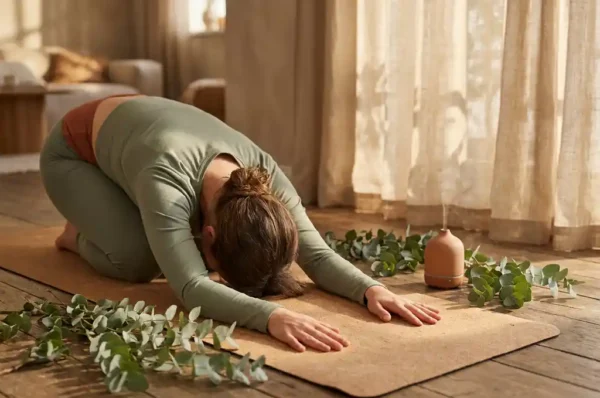
The best starting point for a beginner is a short, simple sequence of three to four poses held for just two to three minutes each, focusing on accessible postures like Butterfly, Supported Child’s Pose, or Legs Up the Wall. Before your first session, gather a few basic props — a yoga mat, a bolster or firm pillow, and a folded blanket — so you can modify poses comfortably rather than forcing your body into unsupported positions. Following a guided class, either in-person or via a reputable online platform, is strongly recommended at first so you can learn how to find your appropriate edge safely before practicing independently.
Does Yin Yoga actually improve flexibility, and how long does it take to notice results?
Yes, Yin Yoga does improve flexibility, but the mechanism is different from what most people expect. Rather than lengthening muscles, it works by gently stressing and hydrating the connective tissue — fascia, ligaments, and joint capsules — which gradually increases the range of motion around joints. Most practitioners begin to notice subtle improvements in mobility and ease of movement within four to eight weeks of consistent practice, though this varies significantly based on individual anatomy, age, and how often you practice. The changes tend to feel less like dramatic splits-level flexibility and more like a quiet, lasting openness in the joints and hips.
Can Yin Yoga be harmful if I hold poses for too long?
Holding poses for excessive durations, particularly beyond what your experience level warrants, can place undue stress on connective tissue and joints, potentially leading to irritation or injury over time. The risk is not so much the clock as it is the intensity — holding a pose at too deep an edge for too long compounds stress on structures that recover slowly. Always prioritize your appropriate edge over hitting a time target, and build duration gradually over weeks and months rather than jumping straight to ten-minute holds. Listening to your body and using props to reduce intensity are your most reliable safeguards.
How is Yin Yoga different from restorative yoga, and which one is right for me?
While both styles involve stillness and longer holds, Yin Yoga and restorative yoga have distinct goals and intensities. Yin Yoga intentionally applies mild stress to connective tissue to stimulate change, meaning you should feel a noticeable sensation in the pose — it is therapeutic but not entirely passive. Restorative yoga, by contrast, uses extensive propping to fully support the body so that muscles and the nervous system can completely release with zero effort or sensation. If you are looking to improve joint mobility and build mental resilience, Yin Yoga is a strong fit; if you are recovering from illness, injury, or burnout and need deep rest, restorative yoga may serve you better — and many practitioners find value in including both in their weekly routine.