


Yes, Yoga Nidra can improve your breathing. The practice naturally shifts the nervous system from a stressed, shallow-breathing state into a deep parasympathetic response, which slows and deepens the breath without any deliberate effort on your part. Below, we unpack exactly how this works and what to expect from a regular practice.
How does Yoga Nidra affect the breath?
Yoga Nidra affects the breath by triggering the parasympathetic nervous system, which slows the respiratory rate and encourages diaphragmatic breathing. Unlike active breathing exercises, this shift happens passively as the body enters a state of conscious deep rest. Most practitioners notice their breath naturally becoming slower, quieter, and more rhythmic within the first few minutes of a session.
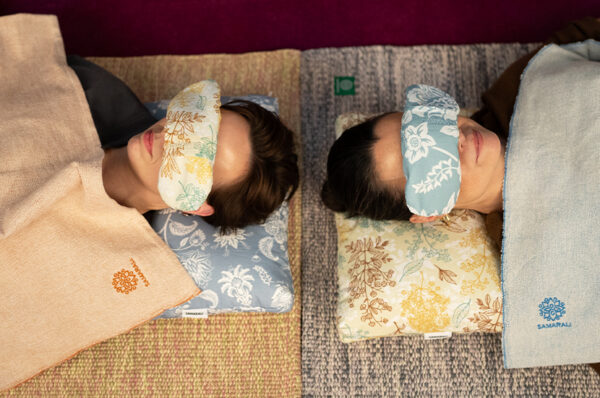
During a Yoga Nidra session, you lie still in a comfortable position and follow a guided rotation of awareness through the body. This process systematically releases physical tension, and as muscular holding patterns soften, the diaphragm is freed to move more fully. Chest breathing, which is common during stress, gives way to belly breathing without you having to consciously try to change anything.
Over time, the body begins to associate the cues of Yoga Nidra with this more relaxed breathing pattern. Regular practitioners often report that their resting breath outside of sessions becomes slower and more even. This is not a coincidence. Repeated exposure to deep parasympathetic states essentially retrains the nervous system’s baseline, making calm, efficient breathing your default rather than the exception.
What’s the difference between Yoga Nidra and pranayama for breathing?
The key difference is that pranayama directly trains the breath through deliberate control, while Yoga Nidra improves breathing indirectly by resolving nervous system tension that disrupts it. Pranayama is an active practice; Yoga Nidra is a receptive one. Both can support better breathing, but they work through entirely different mechanisms and suit different needs.
Pranayama techniques such as nadi shodhana (alternate nostril breathing) or ujjayi breath require active engagement. You consciously regulate the length of your inhale, exhale, and any retention between them. This builds breath capacity, strengthens the respiratory muscles, and develops voluntary control over the nervous system. It is a skill-based practice that rewards consistent effort.
Yoga Nidra, by contrast, asks nothing of the breath directly. You are guided into a state between waking and sleep, and the breath responds to the depth of relaxation you reach. This makes Yoga Nidra particularly accessible for people who find pranayama difficult, overwhelming, or anxiety-provoking. For someone whose breathing problems are rooted in chronic tension or hypervigilance, the passive approach of Yoga Nidra can actually be more effective as a starting point.
Many practitioners find the two practices complement each other well. A short pranayama sequence before Yoga Nidra can help settle the mind and prepare the body for deeper rest. Think of pranayama as working from the breath downward into the nervous system, and Yoga Nidra as working from the nervous system upward to the breath.
Can Yoga Nidra help with stress-related breathing problems?
Yes, Yoga Nidra is particularly well suited to stress-related breathing problems. Conditions like shallow breathing, breath-holding, chest tightness, and hyperventilation are often driven by chronic activation of the stress response. Yoga Nidra directly addresses this by guiding the body into a deep parasympathetic state, which reduces the physiological stress that causes these patterns in the first place.
When the body is under chronic stress, the sympathetic nervous system stays partially activated even at rest. This keeps the breath high in the chest, the respiratory rate elevated, and the muscles around the ribcage and shoulders held tight. Over time, these patterns become habitual, persisting even when there is no immediate stressor present. The body simply forgets what relaxed breathing feels like.
Yoga Nidra interrupts this cycle by creating a reliable, repeatable experience of deep rest. In this state, the body can release held tension, the breath can drop into the belly, and the nervous system gets a clear signal that it is safe to downregulate. With regular practice, this recalibration accumulates. Many people find that anxiety-related breathing difficulties ease noticeably after a few weeks of consistent Yoga Nidra sessions.
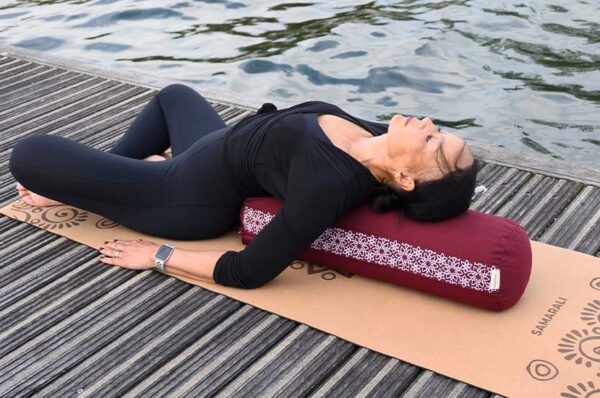
If you are setting up a dedicated space for this kind of practice, having the right support makes a real difference. A yoga bolster placed under the knees during Savasana takes pressure off the lower back and allows the whole body to release more fully, which in turn supports deeper, more natural breathing throughout the session.
How often should you practise Yoga Nidra to notice breathing changes?
Most people begin to notice changes in their breathing after two to four weeks of practising Yoga Nidra three to four times per week. A single session can produce an immediate sense of calm and slower breathing, but lasting changes to your resting breath pattern require repetition. Consistency matters more than session length, especially in the early stages.
A session of 20 to 30 minutes is enough to produce a meaningful shift in nervous system state. Even shorter sessions of 10 to 15 minutes can be effective if you are pressed for time, though longer sessions tend to allow deeper release. What matters most is that you practise regularly enough for the nervous system to begin treating the parasympathetic state as its new normal.
It helps to practise at a consistent time of day. Many people find that early morning or late evening works well, as these are natural transition points when the nervous system is already inclined toward rest. Lying on a supportive surface is important too. Our meditation range includes props designed to make extended rest postures genuinely comfortable, which makes it easier to stay present and relaxed for the full duration of a session.
If you are using Yoga Nidra specifically to address breathing difficulties, treat it as you would any wellness practice: give it a genuine trial period of at least four to six weeks before evaluating the results. Breathing patterns that have built up over months or years will not resolve overnight, but with patient, regular practice, Yoga Nidra offers a genuinely accessible path toward calmer, deeper, more natural breathing.
Ready to create the ideal space for your Yoga Nidra practice? At Samarali, you will find everything you need to support deep, restorative rest. A yoga bolster helps release lower back tension so your breath can flow freely, while a meditation mat gives you a dedicated, comfortable surface to return to session after session. Browse our full meditation sets to find everything in one place, and give your practice the foundation it deserves. Shop now.
Frequently Asked Questions
Can I practise Yoga Nidra if I have a diagnosed breathing condition like asthma or anxiety disorder?
Yoga Nidra is generally considered safe and low-risk for people with asthma or anxiety-related breathing disorders, and many find it genuinely helpful. Because the practice makes no demands on the breath and requires no physical effort, it avoids the triggers that some active breathing exercises can provoke. That said, if you have a diagnosed medical condition, it is always worth checking with your healthcare provider before starting any new wellness practice. Starting with shorter sessions of 10–15 minutes and building up gradually is a sensible approach.
What should I do if I feel breathless or anxious during a Yoga Nidra session?
It is not uncommon for people with stress-related breathing patterns to feel a brief wave of anxiety or breathlessness when first settling into stillness — the nervous system can resist the shift into rest before it accepts it. If this happens, gently open your eyes, take a few slow natural breaths, and remind yourself you are in control and can stop at any time. Over repeated sessions, this resistance typically fades as the nervous system learns to associate the practice with safety. If breathlessness persists or feels severe, discontinue the session and consult a healthcare professional.
Do I need a guided recording for Yoga Nidra to work, or can I practise on my own?
For most people, especially beginners, a guided recording is strongly recommended because the verbal guidance is what leads the mind through the rotation of awareness and prevents it from wandering or falling fully asleep. Without guidance, it is difficult to maintain the precise threshold between waking and sleep that makes Yoga Nidra effective. There are many high-quality recordings available from certified teachers on apps and streaming platforms. Once you have practised extensively with a guide, some experienced practitioners do develop an internalized sense of the structure, but this typically takes years of consistent practice.
Is there a best body position for maximizing the breathing benefits of Yoga Nidra?
The traditional position is Savasana — lying flat on your back with arms slightly away from the body and palms facing up. This posture naturally encourages diaphragmatic breathing by allowing the ribcage and belly to expand freely in all directions. Placing a bolster or rolled blanket under the knees reduces lower back tension, which can otherwise keep the body subtly braced and limit the depth of the breath. If lying flat is uncomfortable due to injury or reflux, a semi-reclined position supported by bolsters or cushions is a perfectly valid alternative that still allows the body to release deeply.
How is the breathing improvement from Yoga Nidra different from simply taking a nap?
While both involve lying down and resting, a nap involves unconscious sleep where the mind disengages entirely, whereas Yoga Nidra maintains a thread of conscious awareness throughout. This conscious witnessing is what makes Yoga Nidra therapeutically distinct — the guided awareness rotation actively works to release specific patterns of tension in the body and nervous system, rather than just allowing passive recovery. Research suggests that even a 30-minute Yoga Nidra session can produce physiological restoration equivalent to several hours of sleep, and the intentional parasympathetic activation it creates has a more targeted effect on breathing patterns than ordinary sleep.
Can children or teenagers use Yoga Nidra to help with stress-related breathing issues?
Yes, Yoga Nidra is well suited to younger practitioners and is increasingly used in school and therapeutic settings for stress and anxiety management. Sessions designed for children and teenagers typically use shorter durations (10–20 minutes), more imaginative or story-based language, and age-appropriate body scan cues. The passive, non-demanding nature of the practice makes it particularly accessible for young people who may resist more structured breathing exercises. Look for recordings or classes specifically designed for younger age groups to ensure the pacing and language are appropriate.
Can I combine Yoga Nidra with other relaxation or breathwork tools to speed up results?
Absolutely — Yoga Nidra works well alongside other supportive practices. As mentioned in the post, a short pranayama sequence beforehand can help settle the mind and prime the nervous system for deeper rest. Other complementary tools include progressive muscle relaxation, gentle restorative yoga, or even a short walk in nature before your session to discharge physical tension. The key is not to overload your routine; even one or two complementary practices used consistently alongside Yoga Nidra will tend to produce better results than cycling through many techniques without regularity.