


Yes, Yoga Nidra can genuinely help with deep relaxation. It is one of the most effective practices for guiding the body and mind into a state of profound rest, often described as yogic sleep. Unlike simply lying down and unwinding, Yoga Nidra uses a structured, guided process to systematically release physical, mental, and emotional tension. Below, we unpack exactly how it works and whether it is right for you.
How does Yoga Nidra actually create deep relaxation?
Yoga Nidra creates deep relaxation by guiding practitioners into a hypnagogic state, the threshold between waking and sleep, where the nervous system shifts from sympathetic activation to parasympathetic dominance. In this state, the body’s stress response quiets, muscle tension releases, and the mind becomes receptive and calm without losing awareness entirely.
The practice achieves this through a deliberate sequence of stages. A typical Yoga Nidra session begins with a physical scan of the body, moving attention systematically from one body part to the next. This rotation of awareness interrupts habitual mental chatter and signals the nervous system that it is safe to let go. Breath awareness follows, slowing the respiratory rate and further deepening the relaxation response.
What makes Yoga Nidra particularly powerful is the Sankalpa, a short personal intention set at the beginning and end of the practice. Because the mind is in a highly receptive state during Yoga Nidra, this intention lands at a deeper level than it would during ordinary waking consciousness. Practitioners often describe a quality of rest after a session that feels more restorative than several hours of ordinary sleep, which is why the practice has grown so popular among people managing stress, burnout, and sleep difficulties.
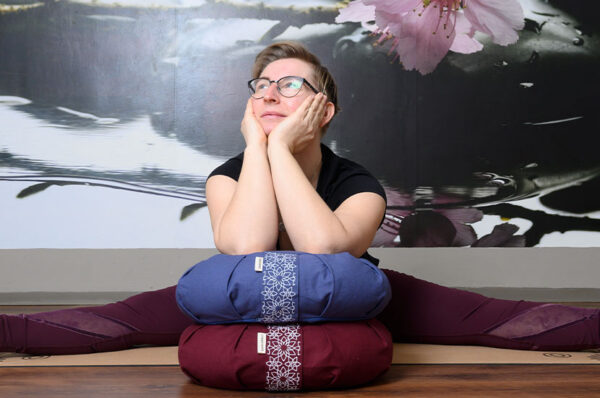
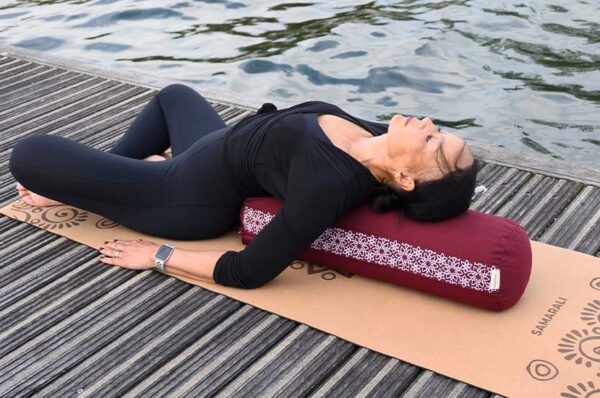
To get the most from the physical surrender Yoga Nidra requires, comfort matters. Lying on a supportive surface such as a yoga bolster under the knees or a folded blanket beneath the head allows the body to fully release without distraction.
What’s the difference between Yoga Nidra and regular meditation?
The key difference between Yoga Nidra and regular meditation is the physical position and the target state of consciousness. Regular meditation is typically practiced seated and aims to cultivate alert, present awareness. Yoga Nidra is practiced lying down and intentionally guides the practitioner toward the edge of sleep, prioritising deep rest over focused attention.
In most meditation styles, the goal is to remain fully awake and aware, observing thoughts without engagement. The effort, however gentle, still requires a degree of mental vigilance. Yoga Nidra flips this dynamic. The practitioner is invited to follow a guide’s voice passively, and even if they drift toward sleep, the practice is still considered beneficial because the body continues to rest deeply.
Effort and accessibility
Regular meditation can feel frustrating for beginners who struggle to quiet a busy mind. Yoga Nidra removes that barrier because there is nothing to do except listen and follow along. The guided nature of the practice means the instructor carries the structure, making it accessible even for people who have never meditated before.
Purpose and outcome
Meditation broadly aims to build mindfulness, concentration, or insight over time. Yoga Nidra’s primary purpose is restorative: it targets the nervous system directly, making it especially useful as a tool for stress relief and recovery rather than as a contemplative or awareness-building practice. Both have genuine value, but they serve different needs.
How long does a Yoga Nidra session need to be to feel the effects?
A Yoga Nidra session of just 20 to 30 minutes is enough for most people to feel a meaningful shift in relaxation. Shorter sessions of 10 to 15 minutes can still provide noticeable relief from tension, while longer sessions of 45 to 60 minutes offer a deeper, more complete experience. The effects are often felt immediately after a single session.
Unlike many wellness practices that require weeks of consistency before producing results, Yoga Nidra tends to deliver a tangible sense of calm from the very first attempt. This is partly because the practice works directly with the autonomic nervous system rather than requiring a learned mental skill to develop over time.
For people using Yoga Nidra primarily to manage stress or improve sleep quality, a daily practice of 20 to 30 minutes is widely considered the most effective approach. Those with very limited time can benefit from shorter sessions, especially when practiced consistently. The key variable is not duration alone but the quality of the environment: a quiet space, comfortable warmth, and minimal interruptions make even a brief session significantly more effective.
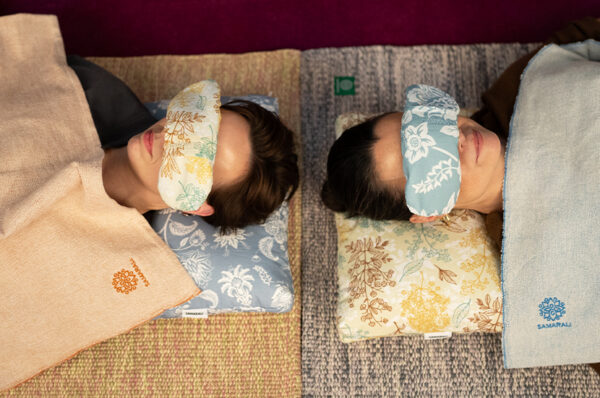
Wrapping up in an organic cotton yoga blanket during your session helps maintain body temperature as the metabolism slows, which supports the depth of relaxation the practice is designed to produce.
Who can benefit most from Yoga Nidra for relaxation?
Yoga Nidra is beneficial for almost anyone, but it is particularly well suited to people dealing with chronic stress, sleep difficulties, anxiety, or mental fatigue. Because it requires no prior yoga experience, no physical flexibility, and no ability to sit still, it is one of the most inclusive relaxation practices available.
People who find seated meditation difficult, whether due to physical discomfort, a restless mind, or simply a lack of experience, often find Yoga Nidra far more approachable. The lying-down position removes physical barriers, and the guided format removes the uncertainty of not knowing what to do.
Those managing stress and burnout
For anyone running on empty, Yoga Nidra offers a way to access genuine rest without requiring effort or skill. The parasympathetic activation it produces helps lower cortisol and restore a sense of equilibrium, making it a practical tool for professionals, parents, or anyone whose daily demands leave little room for recovery.
Yoga practitioners seeking deeper restoration
Experienced yoga practitioners often use Yoga Nidra as a complement to their physical practice. Whereas asana builds strength, flexibility, and body awareness, Yoga Nidra provides the deep integration and rest that allows those benefits to settle. Many practitioners find that adding a regular Yoga Nidra session improves not just their mental wellbeing but the overall quality of their practice. Exploring our meditation collection is a good starting point if you want to create a dedicated space that supports this kind of restorative work.
Ready to take your practice deeper? At Samarali, you will find everything you need to make each Yoga Nidra session as restorative as possible. From a supportive yoga bolster that lets your body fully surrender, to a cosy organic cotton yoga blanket that keeps you warm as you drift into deep rest, every detail in your setup makes a difference. Browse our full meditation collection and meditation sets to find the tools that will support your journey toward genuine, lasting relaxation. Shop now and create the space your nervous system deserves.
Frequently Asked Questions
Can I practice Yoga Nidra if I always fall asleep during the session?
Falling asleep during Yoga Nidra is extremely common, especially when you are sleep-deprived or new to the practice, and it does not mean the session has failed. Your body is simply taking the rest it needs, and the deep physiological relaxation response continues even when conscious awareness fades. Over time, as your sleep debt decreases and your nervous system becomes more familiar with the hypnagogic state, you will likely find it easier to stay in that aware-yet-relaxed threshold. If staying awake is a priority, try practicing earlier in the day rather than right before bed.
How do I find a good Yoga Nidra guide or recording to start with?
For beginners, look for guided recordings by well-established teachers such as Swami Satyananda Saraswati, yoga Nidra Network instructors, or certified iRest practitioners, as these follow structured, evidence-informed protocols. Free options are widely available on platforms like YouTube, Insight Timer, and Spotify, making it easy to sample different voices and styles before committing to a paid course. The most important factor is that the guide’s voice and pacing feel comfortable and trustworthy to you personally, so try two or three different recordings before settling on one. Aim for a session that includes a body scan, breath awareness, and a Sankalpa prompt to ensure you are getting the full practice.
Is there a best time of day to practice Yoga Nidra for maximum benefit?
Yoga Nidra is flexible enough to be practiced at any time of day, but the ideal time depends on your goal. For stress relief and nervous system recovery, a midday or early afternoon session can act as a powerful reset, often replacing the need for a nap. For sleep improvement, practicing in the early evening rather than immediately at bedtime tends to work better, as it calms the nervous system without the pressure of needing to fall asleep right after. Morning practice is less common but can be effective for setting a calm, intentional tone for the day, particularly when paired with your Sankalpa.
What should I do if I feel anxious or uncomfortable during a Yoga Nidra session?
Mild discomfort or a brief wave of anxiety during Yoga Nidra is not unusual, particularly for people carrying significant stress or emotional tension, as the practice can surface feelings that were being suppressed by constant activity. If this happens, gently open your eyes, take a few slow natural breaths, and remind yourself that you are in control and can stop at any time. You do not need to push through discomfort; even ending a session early still provides benefit. If anxiety arises consistently, consider working with a trauma-sensitive Yoga Nidra teacher, as specialised protocols exist specifically for people with trauma histories or anxiety disorders.
Can Yoga Nidra replace sleep, or is it just a supplement to it?
While Yoga Nidra is often described as being as restorative as several hours of sleep, this is a qualitative comparison rather than a physiological replacement. The practice produces deep rest and nervous system recovery, but it does not replicate the full sleep cycle, including the REM and slow-wave stages that are essential for memory consolidation, cellular repair, and hormonal regulation. Think of Yoga Nidra as a powerful supplement that reduces sleep pressure, improves sleep quality, and helps you recover from fatigue, rather than a substitute for a full night of sleep. Consistent practitioners often report that their overall sleep improves significantly, meaning the two work best together.
How do I set a Sankalpa, and does it really make a difference?
A Sankalpa is a short, positive, present-tense intention that reflects a deep personal value or aspiration, such as ‘I am at peace’ or ‘I trust myself fully.’ It should be simple, emotionally resonant, and consistent across sessions rather than changed frequently, as repetition over time is what allows it to take root at a subconscious level. Because Yoga Nidra places the mind in a highly receptive state, the Sankalpa bypasses the critical, analytical thinking that often blocks affirmations from feeling meaningful during waking hours. Research and practitioner experience both suggest that intentions set during Yoga Nidra can gradually shift habitual thought patterns and emotional responses, making it one of the more underrated aspects of the practice.
How often should I practice Yoga Nidra to see lasting results?
For noticeable and lasting benefits, a daily practice of 20 to 30 minutes is considered the gold standard by most Yoga Nidra traditions, though even three to four sessions per week can produce meaningful improvements in stress levels, sleep quality, and emotional resilience over time. Consistency matters far more than duration, so a short daily session will generally outperform an occasional longer one. Most practitioners report feeling a cumulative effect after two to four weeks of regular practice, with deeper benefits, including reduced baseline anxiety and improved sleep architecture, becoming more pronounced after one to three months. Starting with a realistic commitment, even just ten minutes a day, is far more effective than aiming for perfection and practicing sporadically.