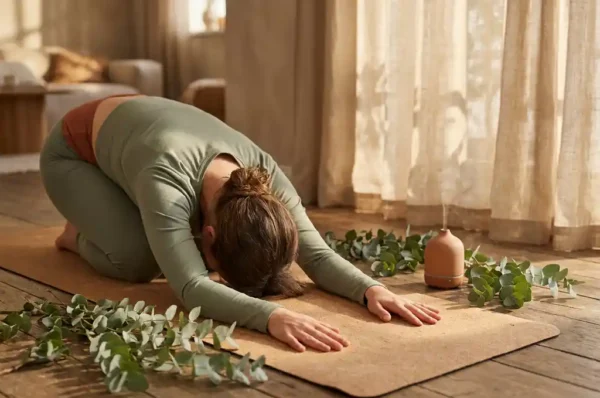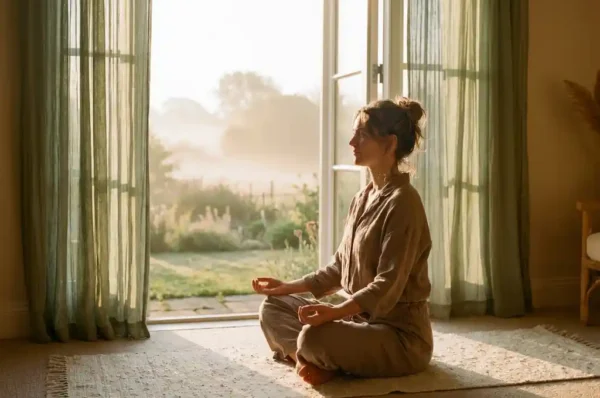



Yoga nidra and meditation are not the same thing, though they share meaningful overlap. Yoga nidra is a guided practice that intentionally leads you into a state between waking and sleep, while most meditation techniques keep you fully conscious and alert. Think of yoga nidra as a specific destination on the relaxation spectrum, and meditation as a broader category of awareness practices.
Both practices cultivate inner stillness and self-awareness, but they do so through different mechanisms and produce different states of consciousness. The sections below unpack the key distinctions, what happens in your brain during each practice, and how to decide which one belongs in your routine.
How is yoga nidra different from meditation?
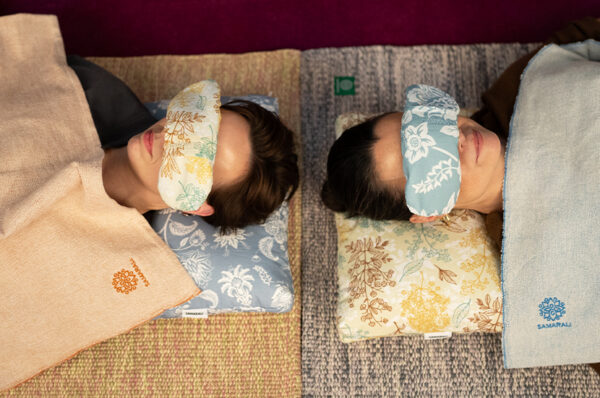
Yoga nidra is a systematic guided relaxation technique that moves your awareness through the body while you remain lying down completely still. Traditional meditation, by contrast, typically requires an upright seated posture and an actively alert mind. The core difference is intentionality around consciousness: meditation trains you to observe thoughts while staying awake, whereas yoga nidra deliberately guides you toward the hypnagogic threshold, the edge between waking and sleep.
In most meditation styles, whether breath-focused, mantra-based, or open awareness, the practitioner works to sustain conscious attention. Drifting off is considered a lapse. In yoga nidra, that same drift toward deep relaxation is actually the goal. You are guided through a body scan, breath awareness, and visualisation layers precisely to release the grip of ordinary waking consciousness without fully falling asleep.
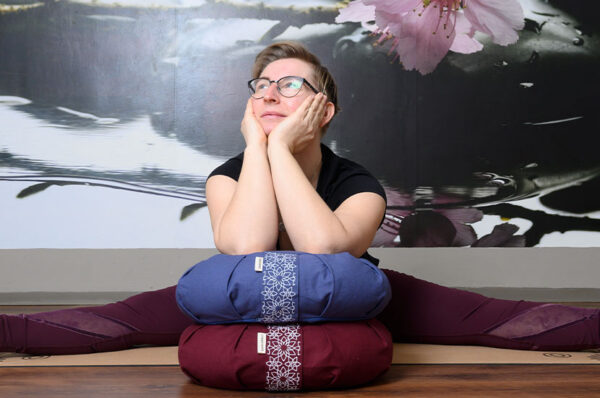
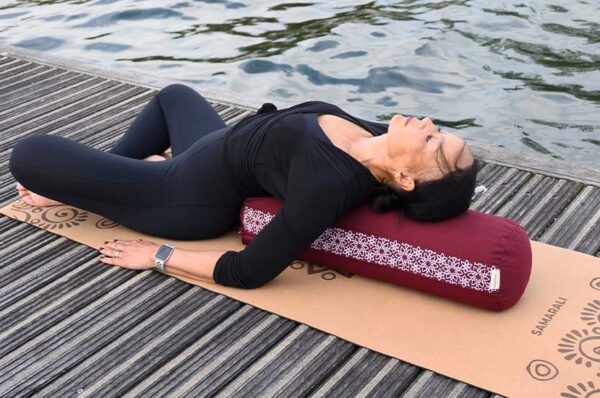
Another practical difference is accessibility. Many people find it genuinely difficult to sit still with a racing mind, especially when starting out. Yoga nidra removes that barrier entirely because you begin lying down in savasana, and the instructor’s voice does the navigating. A supportive setup, such as a yoga bolster under the knees or a blanket over the body, makes the practice even easier to settle into.
What actually happens to your brain during yoga nidra?
During yoga nidra, your brain transitions from the beta waves of ordinary waking awareness into alpha waves associated with relaxed alertness, and then into theta waves, the slow oscillations typically present during light sleep and vivid dreaming. This theta state is considered the most restorative phase of the practice, where deep-seated tension and mental patterns can begin to release without the analytical mind interfering.
What makes this neurologically interesting is that the practitioner retains a thread of conscious awareness even as the brain enters states it normally only reaches during sleep. This dual quality, a deeply relaxed body combined with a gently witnessing mind, is what distinguishes yoga nidra from simply napping. The body receives many of the physiological benefits of deep rest while the mind remains softly present rather than completely switched off.
In conventional meditation, brain activity tends to stay predominantly in the alpha range, with experienced meditators sometimes producing gamma waves linked to heightened focus and clarity. The two practices are therefore working with overlapping but distinct neurological territory, which is part of why practitioners often find them complementary rather than interchangeable.
Can yoga nidra replace sleep or meditation in your routine?
Yoga nidra cannot fully replace sleep, but it can meaningfully supplement it. The practice produces deep physiological rest and has been used to support recovery during periods of poor sleep quality, but it does not replicate the full biological repair that occurs across a complete sleep cycle, including REM and slow-wave stages. Think of it as a powerful restorative tool rather than a sleep substitute.
As for replacing meditation, that depends on what you are trying to achieve. If your goal is stress relief, nervous system regulation, and a sense of inner calm, yoga nidra can absolutely fulfil that role. If your goal is cultivating sustained concentration, emotional resilience under pressure, or the kind of alert presence that carries into daily life, a seated meditation practice may serve you better in those specific areas.
Many practitioners find the most effective approach is to use both. A short seated meditation in the morning to set a clear, focused tone for the day, paired with a yoga nidra session in the afternoon or evening to decompress and restore, creates a well-rounded practice that addresses both alertness and deep rest.
Who should try yoga nidra over traditional meditation?
Yoga nidra is particularly well-suited to people who struggle with conventional seated meditation, those dealing with chronic stress or burnout, and anyone who finds it difficult to quiet mental chatter through willpower alone. Because the practice is guided and requires no prior experience, it offers an accessible entry point for beginners who feel intimidated by the open-ended nature of traditional meditation.
People recovering from physical injury or illness often benefit from yoga nidra because the completely reclined position removes any physical strain associated with sitting upright. It is also commonly recommended for those experiencing anxiety or sleep difficulties, as the deliberate shift into theta-wave states offers the nervous system a genuine reset.
That said, yoga nidra is not exclusively for beginners or those in recovery. Experienced meditators frequently incorporate it to access deeper layers of relaxation that their seated practice does not reach. Athletes use it for physical recovery. Creatives use it to access the theta state where intuitive thinking tends to flourish.
If you are curious about exploring yoga nidra as part of a broader wellness routine, setting up a comfortable, dedicated space makes a real difference. A good meditation mat and a few supportive props help your body fully release, which is exactly the condition yoga nidra needs to work at its best. We design our products with that kind of intentional rest in mind, because the quality of your environment directly shapes the depth of your practice.
Ready to build a practice space that supports both deep rest and focused awareness? At Samarali, you will find everything you need to get started. Whether you are looking for a meditation mat to anchor your sessions, a yoga bolster to make yoga nidra truly effortless, or an organic cotton yoga blanket to wrap yourself in comfort, our collection is designed with intentional practice in mind. Explore our full range of meditation sets and find what your practice has been missing. Shop the collection now.
Frequently Asked Questions
How long should a yoga nidra session be for beginners?
For beginners, a session of 20 to 30 minutes is an ideal starting point. This is long enough to guide your brain through the alpha and into the theta state without overwhelming someone new to the practice. As you become more familiar with the hypnagogic threshold and how your body responds, you can gradually extend sessions to 45 or 60 minutes for a deeper restorative effect.
What is the best time of day to practice yoga nidra?
Yoga nidra is highly adaptable and can be practised at several points throughout the day depending on your goal. Early afternoon is often ideal for a restorative reset, particularly after lunch when natural energy dips occur. Evening practice works well for unwinding before bed, though if you fall asleep easily, practising too close to bedtime may mean you miss the conscious theta-awareness window that makes yoga nidra distinct from ordinary sleep.
Is it okay if I fall asleep during yoga nidra?
Falling asleep occasionally, especially when you are sleep-deprived, is completely normal and nothing to be concerned about. Your body is simply taking what it needs. However, the deeper benefits of yoga nidra, such as conscious access to the theta state and intentional release of mental patterns, are best experienced when you maintain that faint thread of awareness throughout. If you find yourself consistently falling asleep, try practising at a different time of day or slightly elevating your head with a folded blanket.
Do I need a teacher or can I practise yoga nidra using a recording?
A live teacher is wonderful but absolutely not a requirement, especially when starting out. High-quality guided recordings, whether through apps, streaming platforms, or dedicated yoga nidra teachers on YouTube, work very effectively because the practice is entirely voice-led by design. The key is choosing a recording whose pacing and tone feel comfortable to you, since the instructor’s voice is essentially the vehicle for the entire experience.
Can yoga nidra help with anxiety, and if so, how quickly?
Yes, yoga nidra is widely used as a tool for managing anxiety, largely because it directly activates the parasympathetic nervous system and guides the brain out of the high-beta stress state. Some people notice a meaningful reduction in tension after just one session, though consistent practice over several weeks tends to produce more lasting shifts in baseline anxiety levels. If you are managing clinical anxiety, yoga nidra works best as a complement to professional support rather than a standalone treatment.
What is a sankalpa, and do I need one to practise yoga nidra?
A sankalpa is a short, heartfelt intention or resolve, typically planted at the beginning and end of a yoga nidra session when the mind is most receptive. Examples might include a phrase like ‘I am calm and resilient’ or ‘I trust my own clarity.’ You do not need a sankalpa to benefit from yoga nidra, and many beginner-focused recordings skip it entirely. However, working with one over time is considered one of the practice’s most powerful elements, as the theta state makes the mind unusually open to deep impressions.
How is yoga nidra different from a body scan meditation?
A body scan meditation and yoga nidra share the technique of moving awareness systematically through the body, which is why they are often confused. The key distinction is depth and destination: a body scan is typically practised in a fully alert, seated or lying state and is considered a mindfulness technique that keeps you in the alpha-wave range. Yoga nidra uses the body scan as just one layer within a broader multi-stage protocol specifically designed to carry you into theta-wave consciousness, making it a more immersive and neurologically distinct experience.