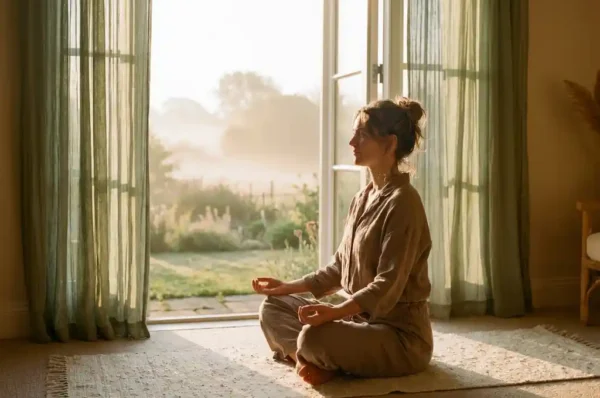



For Yin Yoga, a thick, cushioned mat is your best friend. Because Yin involves holding passive poses for several minutes at a time, you need extra padding to protect your joints, hips, and spine from hard floor pressure. A mat that prioritizes comfort and support over grip or responsiveness will serve this slow, meditative practice far better than a standard all-purpose mat. Below, we answer the most common questions about choosing the right mat for Yin Yoga.
What thickness should a yoga mat be for Yin Yoga?
For Yin Yoga, we recommend a mat at least 5mm thick, with 6mm to 8mm ideal for most practitioners. Because Yin poses are held passively for two to five minutes or longer, your knees, hips, ankles, and spine are in direct, sustained contact with the floor. Thicker padding reduces discomfort and allows you to fully relax into each pose without distraction.
Standard yoga mats are typically around 3mm to 4mm thick, which works well for dynamic styles like Vinyasa or Ashtanga where you are constantly moving. In Yin, you are still. That stillness means pressure points build up gradually, and a thinner mat simply does not provide enough cushioning for extended holds.
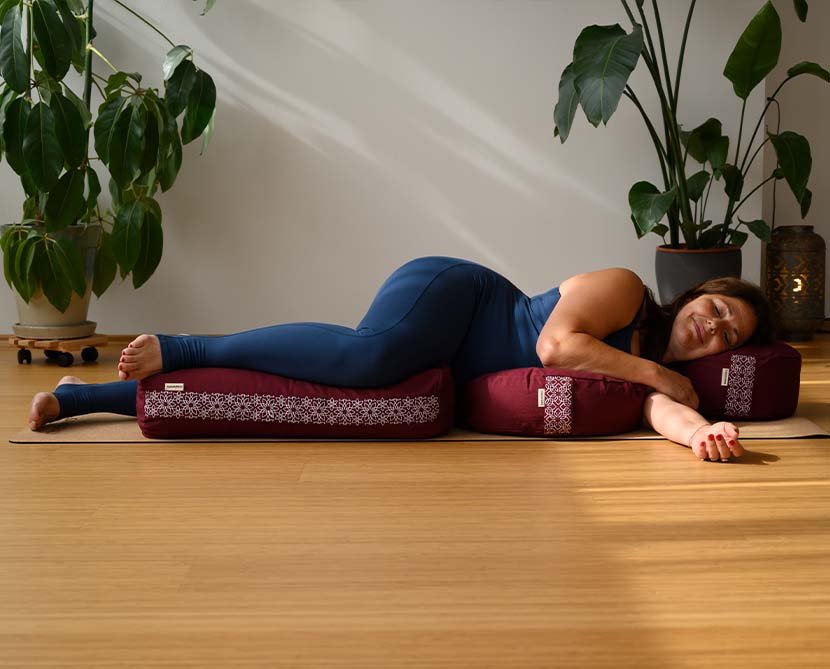
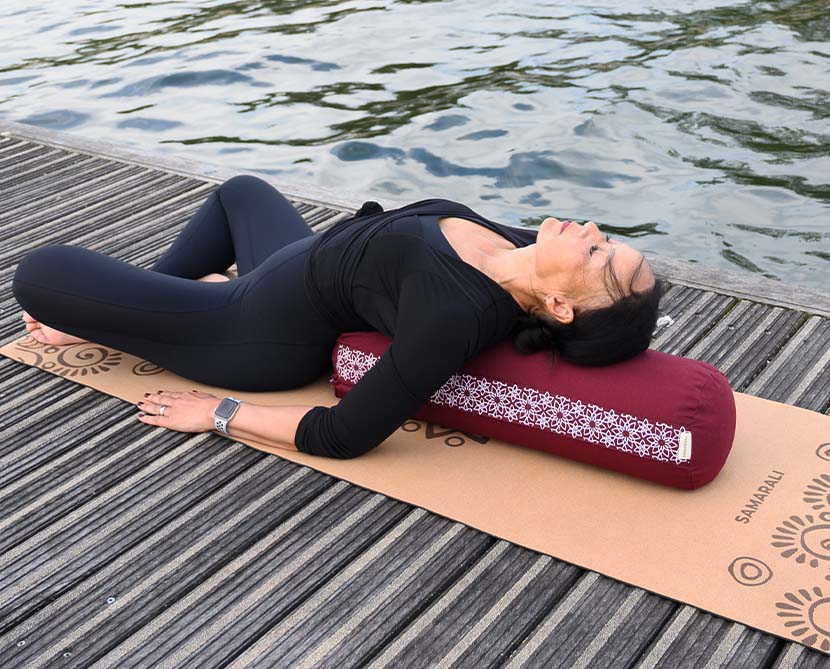
To understand why thickness matters so concretely, consider how specific poses load your body. In Dragon Pose, the front knee and hip flexor sustain extended pressure against the mat — 6mm to 8mm of dense rubber padding is critical here to prevent that bony contact from becoming a distraction. In Sleeping Swan, the outer hip and sacrum press into the mat for several minutes at a time, so a mat that does not compress flat under sustained weight is essential. In Butterfly, the inner thighs and sacrum need even, consistent support across a wide surface area. Each of these poses demands that the mat hold its structure rather than flatten out beneath you.
If you already own a thinner mat and love it for other styles, a good workaround is layering a folded blanket or a yoga bolster beneath you for the poses where you feel the floor the most. That said, investing in a dedicated thicker mat for your Yin practice will make a noticeable difference in how deeply you can settle and surrender.
What mat material works best for Yin Yoga?
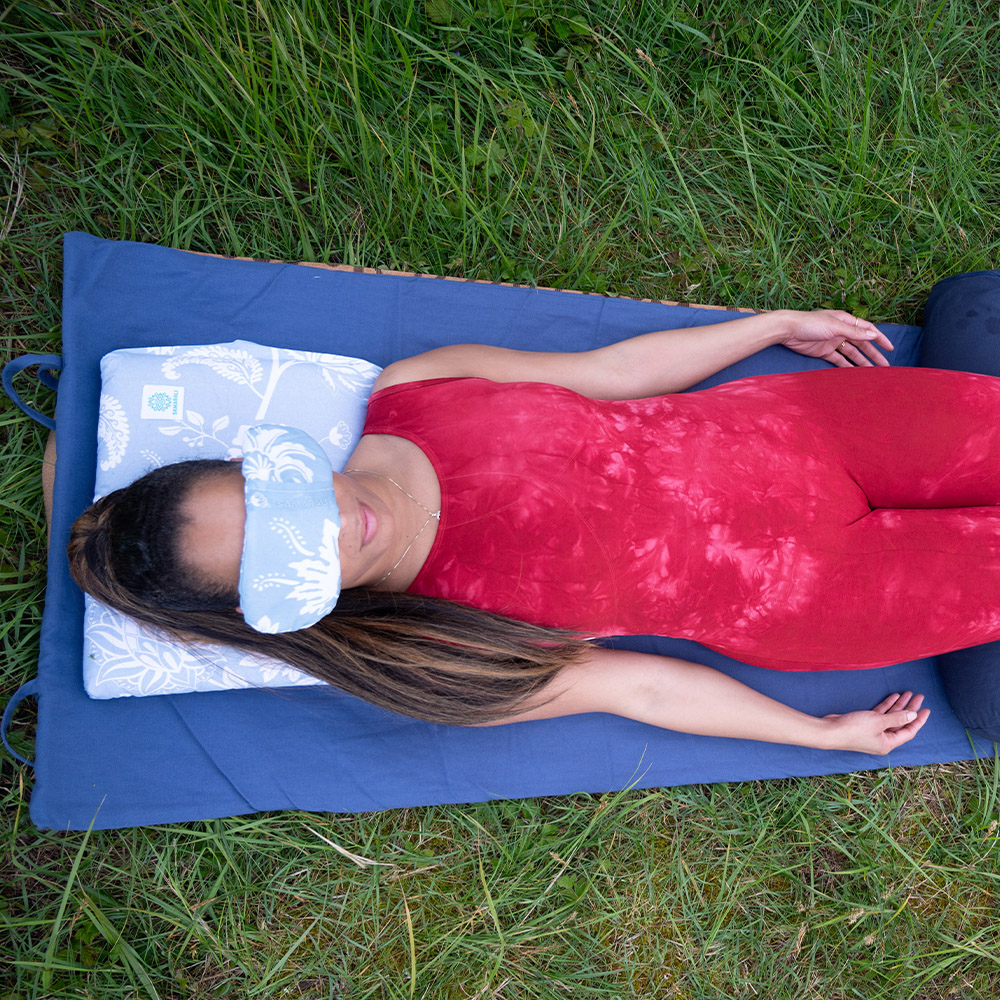
Natural rubber and organic cotton are the two best materials for a Yin Yoga mat. Natural rubber offers excellent cushioning, durability, and a stable surface, while organic cotton provides a softer, more grounded feel that suits the meditative pace of Yin practice. Both materials are also far more sustainable than synthetic PVC alternatives.
Natural rubber mats are dense and supportive without feeling spongy, which means they cushion your joints without causing instability. They also tend to be heavier, which keeps the mat in place even during longer holds. Our natural rubber yoga mat is a strong choice for practitioners who want reliable padding with an eco-conscious footprint.
Organic cotton mats and rugs have a different quality altogether. They feel warm and tactile underfoot, and their natural texture creates a grounding sensation that pairs beautifully with the introspective nature of Yin. An organic cotton yoga rug layered over a thicker base mat can also give you the best of both worlds: cushioning from below and a soft, breathable surface on top.
What to avoid in Yin Yoga is any material that feels springy or unstable under sustained weight. Some foam mats compress unevenly over time and can actually feel less supportive the longer you hold a pose.
Yoga Rug vs. Yoga Mat for Yin Yoga: Which Should You Choose?
Both a yoga mat and a yoga rug can serve Yin Yoga well, but they offer genuinely different experiences. Understanding those differences helps you choose the right foundation for your practice — or decide whether to use both together.
| Natural Rubber Mat | Organic Cotton Rug | PVC Foam Mat | |
|---|---|---|---|
| Thickness range | 4mm–8mm | Thick or thin (layered over base mat) | 4mm–10mm+ |
| Weight & portability | Heavier, stays in place | Lightweight, easy to carry | Light to moderate |
| Grip level | Stable natural traction | Sweat-absorbing natural grip | Varies — often sticky coating |
| Sustainability | High — natural material | High — organic, washable | Not recommended — synthetic |
| Best suited for | Primary cushioning layer | Soft surface layer, warmth | Not recommended — compresses unevenly, synthetic materials |
For Yin Yoga, natural rubber and organic cotton are the clear frontrunners — PVC foam is included only for reference.
Natural Rubber Yoga Mat for Yin
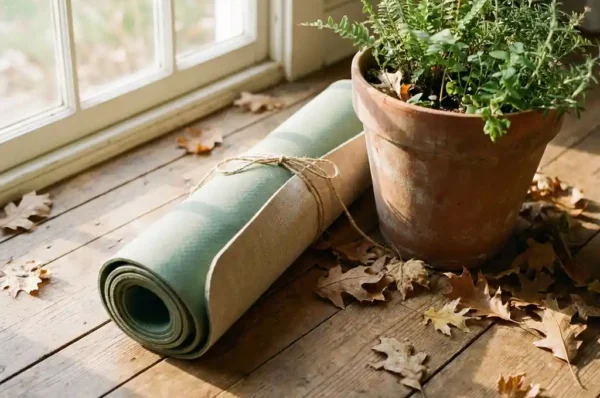
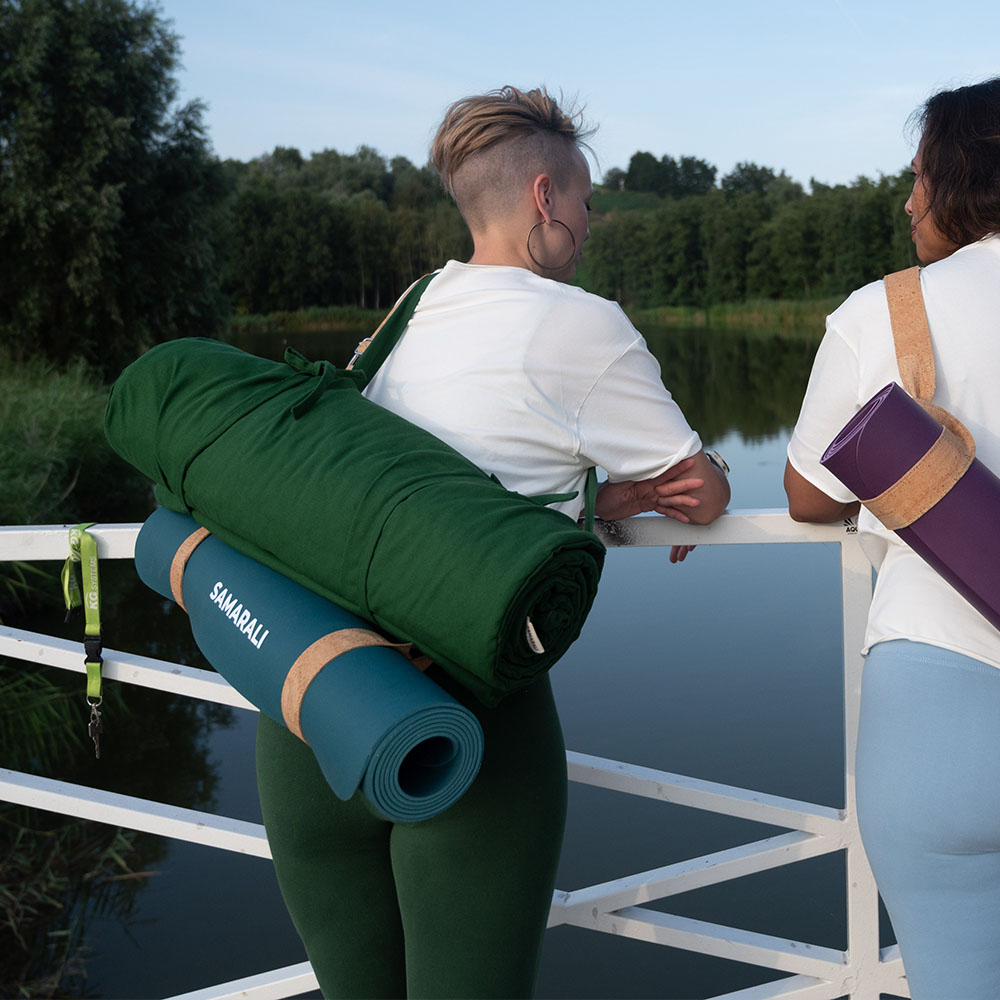
A natural rubber yoga mat functions as the primary cushioning layer in your Yin practice. Its density means it absorbs the sustained pressure of long holds without flattening out beneath you — the defining quality you need when your sacrum or knee is in contact with the mat for three to five minutes at a stretch. The surface provides stable, natural traction that keeps you grounded without the need for synthetic sticky coatings, and its weight means it stays put on the floor without shifting mid-pose.
From a sustainability standpoint, natural rubber is a renewable material that biodegrades far more readily than PVC foam. It is the right choice for practitioners who want their primary mat to do the heavy lifting in terms of joint protection, and who practice Yin as a standalone discipline. Our natural rubber yoga mat is designed with exactly this kind of sustained-hold practice in mind.
Organic Cotton Yoga Rug for Yin
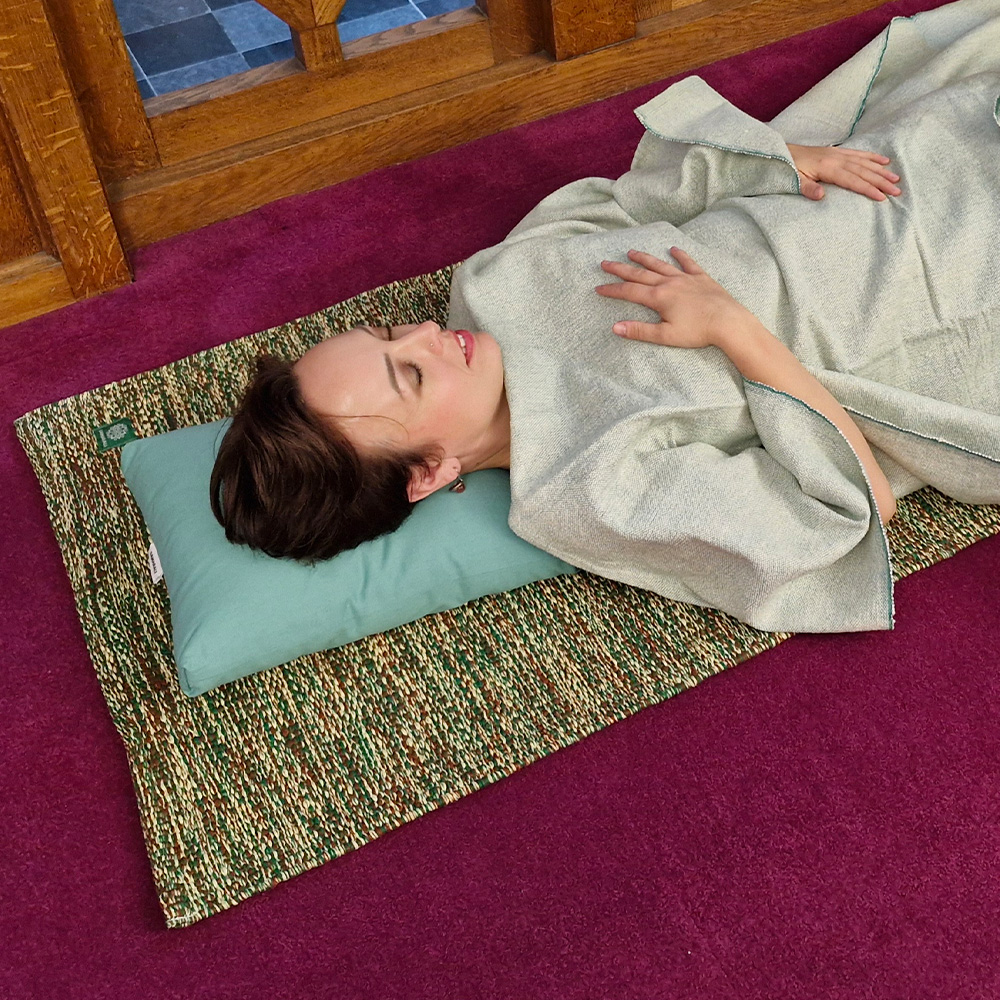
A yin yoga mat made from organic cotton brings a completely different sensory quality to the practice. The woven surface is soft and warm against the skin — a meaningful comfort factor when you are lying still for extended periods and your body temperature begins to drop. Cotton’s natural fibres also absorb moisture without becoming slippery, which means the rug’s grip actually improves slightly with warmth and light perspiration rather than degrading.
A yin yoga rug is also lightweight, like a rubber mat, making it an ideal travel companion or a versatile addition to a studio kit. Its main limitation is thickness: on its own, a cotton rug does not provide the same joint cushioning as a rubber mat. The ideal solution for practitioners who want both a soft surface and reliable padding is to layer the organic cotton rug over the rubber mat — you get the structural support from below and the tactile warmth of cotton on top. Our organic cotton yoga mat is designed to work beautifully as both a standalone surface and a layering piece.
Does grip matter for Yin Yoga the same way it does for other styles?
Grip matters far less in Yin Yoga than it does in active styles. Because you are not bearing weight dynamically, transitioning quickly between poses, or building heat through movement, the risk of slipping is minimal. In Yin, your priority is comfort and ease, not traction.
In styles like Vinyasa or Power Yoga, a high-grip surface is essential to prevent your hands and feet from sliding during weight-bearing poses and fast transitions. Yin Yoga removes almost all of that concern. You are largely seated, lying down, or in gentle forward folds, and you are not generating the kind of sweat or force that demands aggressive grip.
That said, a completely slippery surface can still be distracting if you find yourself adjusting your position during a hold. A moderate, natural grip is perfectly sufficient. Natural rubber provides this without the need for sticky synthetic coatings. So while grip is not a top priority for Yin, a mat with a gentle, non-slip texture will still feel more comfortable than one that shifts around beneath you.
What’s the difference between a Yin Yoga mat and a Restorative Yoga mat?
The key difference between a Yin Yoga mat and a Restorative Yoga mat is the level of cushioning and the role of props. Yin mats prioritize thickness and joint support for floor-based passive holds, while Restorative mats are often used alongside bolsters, blankets, and blocks that do most of the supportive work. In practice, a high-quality thick mat works well for both styles.
Yin Yoga involves passive stretching with the goal of targeting connective tissue and fascia. Poses are held for a long time, but the body is largely unsupported and working with gravity. The mat itself carries much of the responsibility for your comfort.
Restorative Yoga, on the other hand, is built around props. Bolsters, folded blankets, and cushions are positioned to fully support the body so that every muscle can release completely. The mat in a Restorative practice is more of a base layer, and the props do the heavy lifting. This means a Restorative mat does not need to be as thick, because you are rarely resting your full body weight directly on it.
If you practice both styles, a thick natural rubber or cotton mat paired with a good bolster and a soft blanket will cover all your needs. We offer a range of yoga mats designed with exactly this kind of versatility in mind, so you do not need a separate mat for every practice.
Building Your Complete Yin Yoga Equipment Setup
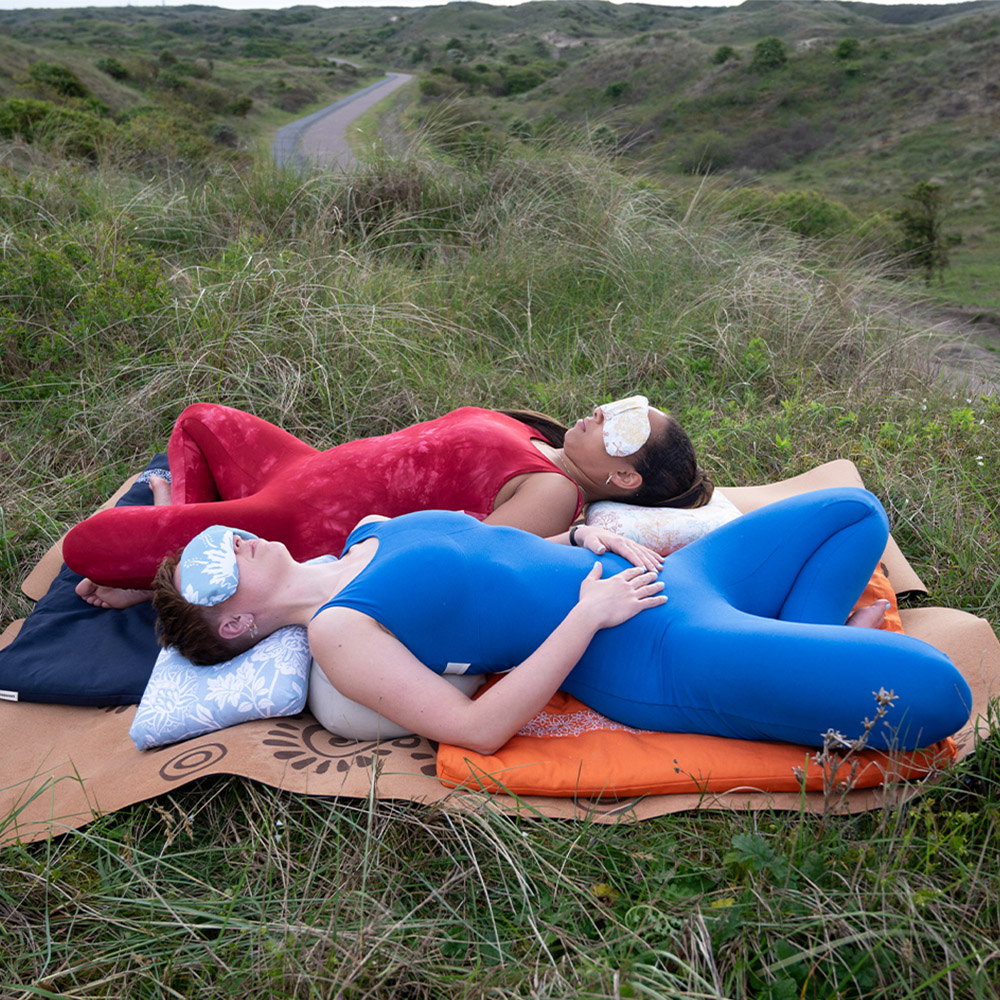
Yin Yoga is a prop-intensive practice by nature. Unlike dynamic styles where the body moves through sequences continuously, Yin asks you to be completely still for extended periods — and the right yin yoga equipment removes the physical barriers that prevent you from fully releasing into that stillness. When your setup supports you properly, your nervous system can let go rather than brace.
Think of your equipment as a layered system rather than a collection of individual items:
- Mat or rug — the foundation layer: A 6mm–8mm natural rubber mat provides the primary cushioning your joints need during long holds. Layer our organic cotton yoga rug on top if you want a softer, warmer surface against your skin.
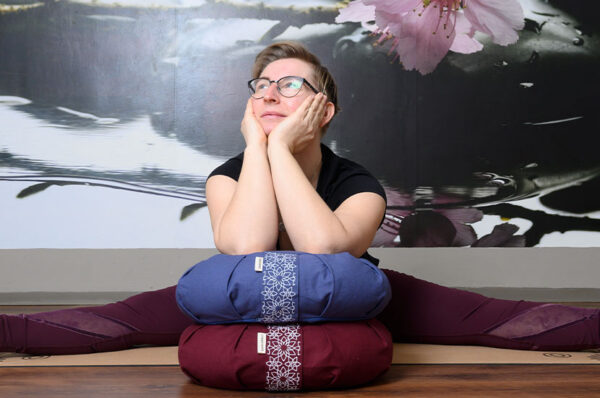
- Bolster — for supported poses: A yoga bolster is the single most versatile prop in Yin. It supports the chest in Heart Opener, the hips in Butterfly, and the spine in gentle backbends, allowing muscles to release without effort.
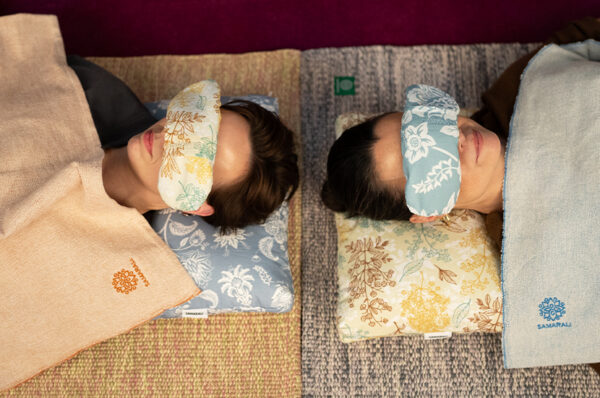
- Blanket — for warmth and joint padding: Body temperature drops noticeably during long passive holds. Our organic cotton yoga blanket keeps you warm and can also be folded for extra padding beneath the knees or ankles in poses where the mat alone is not quite enough.
- Blocks — for bridging gaps: Two blocks help bring the floor closer to your body in poses like Supported Fish or Shoelace, where a gap between a body part and the floor creates unnecessary tension rather than productive release.
Together, these four elements form a complete yin yoga equipment setup that addresses every common comfort challenge in the practice — from joint pressure on the mat to temperature regulation during the final minutes of a long hold.
Ready to set up your Yin practice with the right foundation? At Samarali, you will find everything you need to support a slow, intentional practice — from our natural rubber yoga mat and organic cotton yoga rug to a supportive yoga bolster and a cosy organic cotton yoga blanket for those long, warming holds. Every product is chosen with comfort, sustainability, and genuine practice in mind. Shop the full yoga mat collection and find the perfect match for your Yin practice today.