


For Yin Yoga, the best eye pillow is one filled with flaxseed or lavender, made from a soft natural fabric like organic cotton or silk, and heavy enough to gently block out light and encourage the eyes to relax. The weight and texture matter most, since Yin poses are held for several minutes at a time and your eye pillow needs to stay comfortable throughout. Below, we answer the most common questions to help you choose the right one.
What makes a good eye pillow for Yin Yoga?
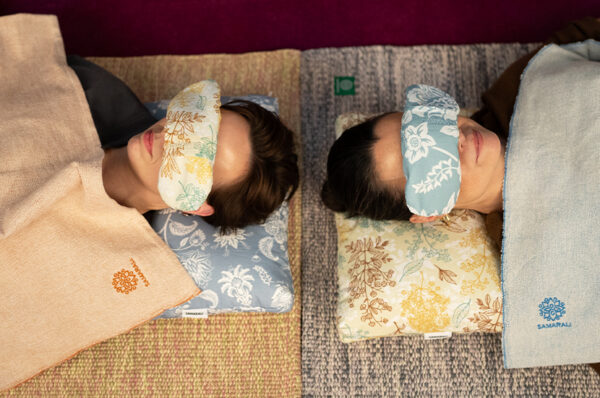
A good eye pillow for Yin Yoga is one that applies gentle, even pressure across the eyes, blocks light completely, and stays in place without feeling uncomfortable during long holds. The ideal pillow is slightly weighted, made from a smooth natural fabric, and filled with something that conforms softly to the contours of your face.
Yin Yoga is a slow, meditative practice where poses are held anywhere from two to ten minutes. During that time, your body is meant to fully release and surrender. An eye pillow supports this by activating the oculocardiac reflex, a natural response where gentle pressure on the eyes slows the heart rate and calms the nervous system. This is why even a modest amount of weight in the pillow makes a meaningful difference to how deeply you can relax.
When it comes to fabric, organic cotton and silk are the most popular choices. Cotton feels grounding and earthy, while silk glides smoothly against the skin and feels especially cooling. Both are breathable and gentle enough for sensitive skin. Synthetic fabrics tend to feel scratchy or trap heat, which is the last thing you want when you are trying to settle into stillness.
Size matters too. A pillow that is too small will not cover the eyes fully, and one that is too large may feel cumbersome. Most yoga eye pillows measure around 22 by 10 centimetres, which is wide enough to rest across both eyes and the bridge of the nose without sliding off.
What filling is best in a yoga eye pillow?
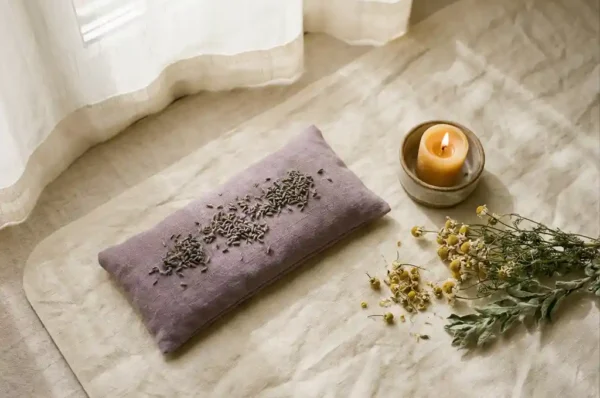
The best filling for a yoga eye pillow is flaxseed, often combined with dried lavender. Flaxseed is small, dense, and moulds naturally to the shape of your face, providing consistent gentle pressure without feeling stiff or lumpy. Lavender adds a subtle calming scent that supports relaxation during Yin Yoga and meditation.
Flaxseed is the most widely used filling for good reason. The seeds are heavy enough to create the light pressure needed to trigger the relaxation response, but fine enough to distribute evenly across the eye area. They also hold temperature well, which becomes relevant if you choose to warm or cool your pillow before practice.
Lavender is a natural companion to flaxseed in many meditation and yoga products. The scent has been used for centuries to ease anxiety and prepare the mind for rest. In a Yin Yoga setting, where the goal is to move inward and release tension, even a gentle aromatic cue can deepen the experience.
Some eye pillows use rice instead of flaxseed. Rice is lighter and less expensive, but it does not conform to the face as well and can feel uneven. Buckwheat hulls are another alternative, though they tend to be noisier and bulkier. For most practitioners, flaxseed with lavender strikes the best balance between weight, texture, and sensory experience.
Should you use a heated or unheated eye pillow for Yin Yoga?
Both heated and unheated eye pillows work well for Yin Yoga, and the right choice depends on your personal preference and the time of year. A warmed eye pillow adds soothing heat that helps release tension around the eyes and forehead, while an unheated or lightly chilled pillow feels refreshing and grounding, particularly in warmer conditions.
Warming an eye pillow is simple. Most flaxseed-filled pillows can be placed in a microwave for 20 to 30 seconds, or warmed on a radiator before practice. The gentle heat encourages the muscles around the eyes to soften, which can be especially welcome during evening Yin sessions when the body is already winding down. It also adds a spa-like quality to the practice that many people find deeply restorative.
Cooling the pillow is equally easy. Placing it in a sealed bag in the refrigerator for a few minutes before practice creates a light cooling effect that feels calming on a warm day or after an active morning session. Some practitioners find the cool sensation helps them feel more present and alert at the start of a long hold.
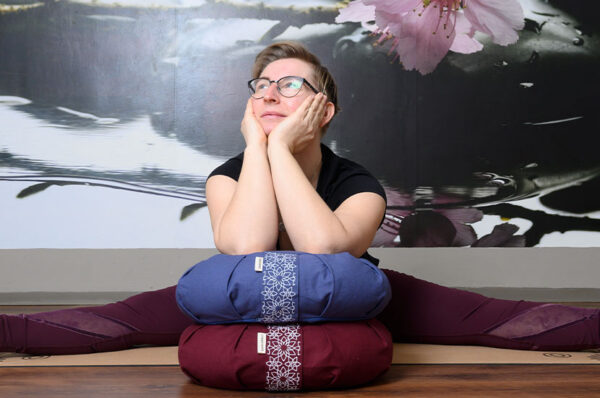
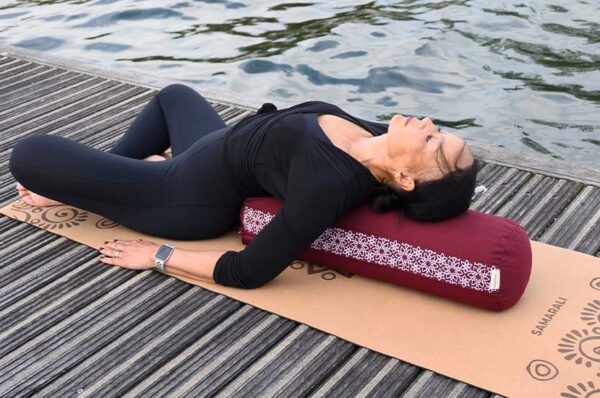
If you are new to Yin Yoga and unsure which you prefer, start unheated. A room-temperature eye pillow still provides all the pressure and light-blocking benefits, and you can experiment with warmth once you have settled into a regular practice. Pairing your eye pillow with supportive props like a yoga bolster can make the full experience even more restorative.
How do you care for and clean a yoga eye pillow?
Most yoga eye pillows should not be submerged in water because the filling, particularly flaxseed, will clump and spoil if it gets wet. The best approach is to use a removable cover that can be washed regularly, while the inner pillow is spot-cleaned and aired out between uses.
If your eye pillow comes with a removable outer cover, wash it according to the fabric instructions. Organic cotton covers can usually go in the washing machine on a gentle, cool cycle. Silk covers should be hand-washed or dry-cleaned to preserve the texture. Washing the cover after every few uses keeps it fresh and free from oils and sweat that naturally transfer during practice.
For the inner pillow itself, spot-clean any marks with a lightly damp cloth and allow it to air dry completely before storing. Keeping it in a breathable cotton bag rather than a sealed plastic container helps prevent moisture build-up and keeps the filling fresh for longer.
Over time, the lavender scent in a filled pillow will naturally fade. You can refresh it by adding a few drops of pure lavender essential oil to the fabric and allowing it to dry before use. Avoid synthetic fragrance sprays, which can irritate the skin around the eyes.
A well-cared-for eye pillow can last for years. Looking to complete your practice with the right tools? At Samarali, you will find everything you need to support a deeply restorative Yin Yoga or meditation practice — from a supportive yoga bolster and a cushioning meditation mat to a cosy organic cotton yoga blanket. Browse the full yoga collection or explore our meditation sets to find everything in one place. Shop now and bring more intention to every practice.
Frequently Asked Questions
Can I use an eye pillow if I have sensitive skin or allergies?
Yes, but you’ll want to choose carefully. Opt for an eye pillow made from certified organic cotton or pure silk, as these are least likely to cause irritation. If you’re sensitive to scents, look for an unscented flaxseed-only filling, and always do a short patch test by resting the pillow on your inner wrist before placing it over your eyes during a full practice.
How heavy should a yoga eye pillow be for Yin Yoga specifically?
For Yin Yoga, an eye pillow typically weighing between 100 and 150 grams (roughly 3.5 to 5 ounces) strikes the right balance — heavy enough to activate the oculocardiac reflex and encourage deep relaxation, but light enough to stay comfortable during holds of five minutes or more. If you find yourself adjusting the pillow repeatedly during a pose, it may be too heavy or too light for your face shape. A well-filled flaxseed pillow in the standard 22 x 10 cm size usually falls naturally within this ideal weight range.
Is it safe to heat a yoga eye pillow in the microwave every time I practice?
Yes, as long as you follow a few simple precautions. Heat the pillow in short 15–20 second intervals, shake it gently between intervals to distribute the heat evenly, and always test the temperature against your wrist before placing it over your eyes. Avoid overheating, as this can degrade the filling over time and risk minor burns. With proper use, a quality flaxseed pillow can be safely microwaved hundreds of times without losing its shape or effectiveness.
Can I make my own Yin Yoga eye pillow at home?
Absolutely — a DIY eye pillow is a straightforward project that requires minimal sewing skills. You’ll need a piece of organic cotton or silk fabric cut to approximately 22 x 10 cm, a cup of organic flaxseed, and optionally a tablespoon of dried lavender flowers. Sew three sides of the fabric together, fill it to about two-thirds capacity so it can mould to your face, then sew the final side closed. Just be sure to leave the filling loose enough to shift and conform comfortably during long Yin holds.
How do I know when it's time to replace my yoga eye pillow?
There are a few clear signs it’s time for a new one: if the filling has become hard, uneven, or clumped (often a sign of moisture exposure), if the fabric has thinned or developed rough patches, or if the pillow no longer lies flat and conforming across your eyes. A well-maintained eye pillow can last two to four years with regular use. If the lavender scent has faded but the structure is still intact, refreshing it with a few drops of essential oil can extend its life before a full replacement is needed.
Can I use a yoga eye pillow for practices other than Yin Yoga?
Yes — eye pillows are wonderfully versatile and work beautifully in any practice or situation that calls for stillness and relaxation. They’re commonly used during Savasana in Hatha or Restorative Yoga, guided meditation sessions, Yoga Nidra, or simply during rest and stress-relief breaks throughout the day. The light-blocking and nervous-system-calming benefits are just as effective outside of a formal yoga context, making a good eye pillow one of the most multi-purpose wellness accessories you can own.
What's the difference between a yoga eye pillow and a regular sleep mask?
The key difference is weight and intention. A standard sleep mask is designed to be as light and unobtrusive as possible, focusing purely on blocking light. A yoga eye pillow, by contrast, is intentionally weighted to apply gentle pressure to the eyes, which is what triggers the calming oculocardiac reflex central to deep Yin Yoga relaxation. Sleep masks also typically use elastic bands that can feel restrictive during floor-based poses, while yoga eye pillows rest freely on the face, making them far better suited to the long, still holds of a Yin practice.