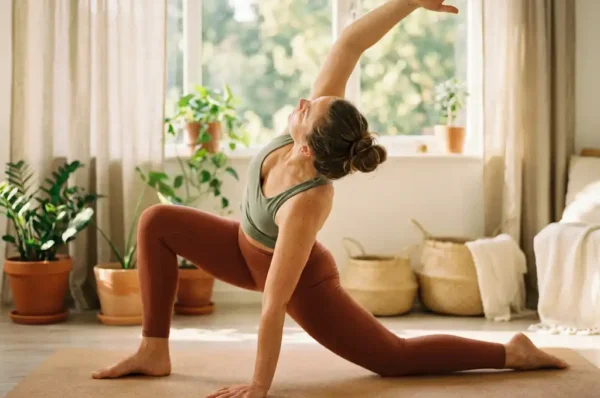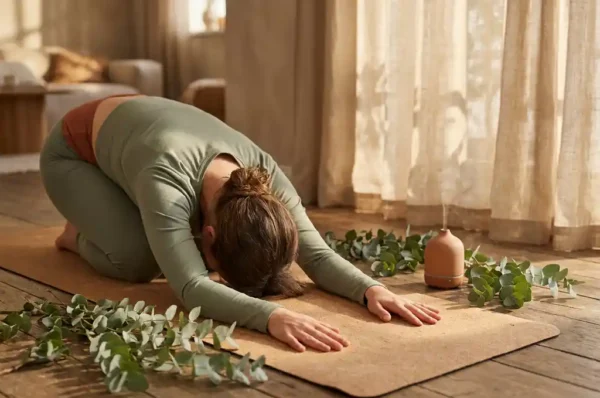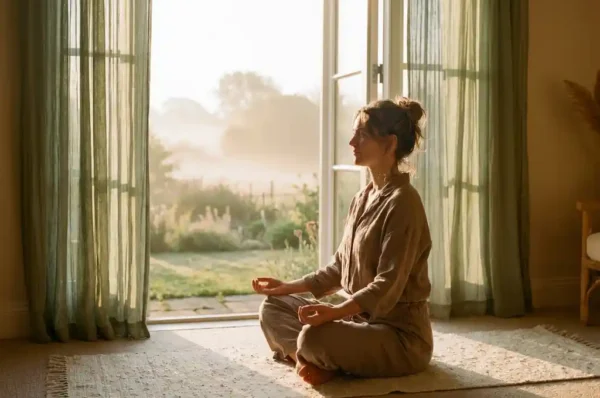



Yes, Yin Yoga is genuinely good for anxiety and tension. This slow, floor-based practice works directly with the body’s connective tissues and nervous system, creating a physiological shift away from the stress response and toward deep rest. The calming effects are real, accessible to beginners, and tend to build the more consistently you practice. Below, we break down exactly how it works and how to get started.
How does Yin Yoga calm the nervous system?
Yin Yoga calms the nervous system by activating the parasympathetic response, commonly known as “rest and digest.” When you hold a pose for two to five minutes while breathing slowly and deliberately, your body receives a clear signal that it is safe to down-regulate. Your heart rate slows, muscle tension releases, and the flood of stress hormones that drives anxiety begins to subside.
The mechanism behind this is rooted in how the body processes sustained, gentle pressure. Unlike dynamic movement, long holds in Yin Yoga stimulate the vagus nerve, which is the primary pathway of the parasympathetic nervous system. Vagal activation is one of the most effective ways to interrupt a cycle of chronic stress, and Yin Yoga triggers it naturally through stillness, breath, and time.
There is also a mindfulness dimension at work. Staying present with physical sensation for several minutes at a time trains the mind to observe discomfort without reacting to it. Over time, this translates directly into how you handle anxious thoughts outside of practice. The mat becomes a training ground for emotional regulation.
What makes Yin Yoga different from other yoga styles for stress relief?
Yin Yoga targets the deep connective tissues, including fascia, ligaments, and joint capsules, rather than the muscles. This is what sets it apart from more active styles like Vinyasa or Hatha for stress relief. While those styles release tension through movement and muscular effort, Yin works by asking the body to completely surrender into stillness, which produces a qualitatively different kind of release.
Most yoga styles address stress through physical exertion followed by relaxation. Yin skips the exertion entirely. Every pose is held passively, supported by gravity rather than muscular engagement. This makes it uniquely suited for people whose anxiety manifests as physical holding patterns, tight hips, a clenched jaw, or a chronically braced lower back.
Restorative yoga is the closest comparison, but even there the difference is meaningful. Restorative yoga uses props to achieve total support and comfort. Yin intentionally introduces mild, tolerable stress on the connective tissue to stimulate adaptation. The slight edge of sensation you feel in a Yin pose is part of the practice, teaching the nervous system to remain calm even when something feels mildly uncomfortable. That is a skill with direct applications to managing anxiety in daily life.
Which Yin Yoga poses are best for releasing anxiety and tension?
The most effective Yin Yoga poses for anxiety and tension are those that open the hips, chest, and spine, as these are the areas where the body most commonly stores stress. Poses held for three to five minutes with steady, relaxed breathing tend to produce the deepest release.
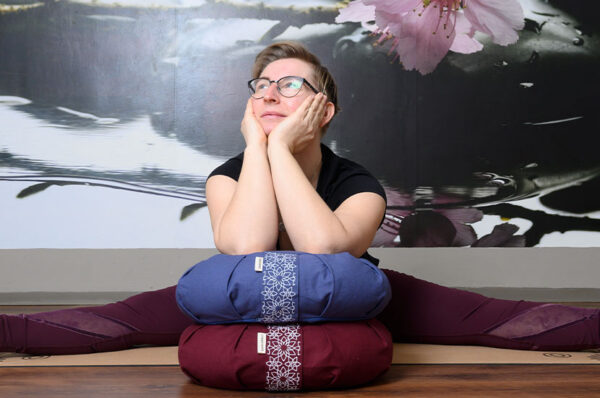
- Butterfly (Baddha Konasana): Sitting with the soles of the feet together and folding gently forward releases the inner groin and lower back, two areas that hold a significant amount of chronic tension.
- Sleeping Swan (Pigeon Pose variation): A deep hip opener that targets the outer hip and glutes. Many practitioners find this pose emotionally releasing, as the hips are widely associated with stored emotional tension.
- Caterpillar (Seated Forward Fold): A long, rounded forward fold that decompresses the entire spine and calms the nervous system through the physical sensation of curling inward.
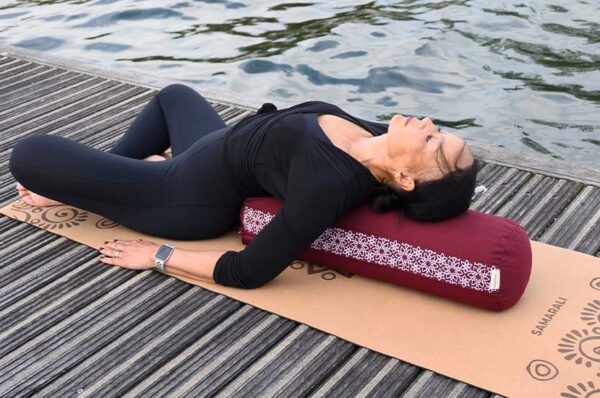
- Supported Fish: Opening the chest and throat counters the protective forward rounding that anxiety often creates in the upper body. Placing a yoga bolster under the spine makes this pose deeply supported and restorative.
- Legs Up the Wall (Viparita Karani): One of the most effective poses for immediate nervous system calming. Inverting the legs promotes venous return and signals the body to shift into a restful state.
Comfort and support matter enormously in Yin practice. An organic cotton yoga blanket folded under the hips or knees can make the difference between a pose that feels accessible and one that creates unnecessary strain, allowing you to stay longer and release more deeply.
How often should you practice Yin Yoga to feel less anxious?
Practicing Yin Yoga two to three times per week is enough to notice a meaningful reduction in anxiety and tension for most people. Even a single session of 45 to 60 minutes can produce an immediate calming effect, but the longer-term benefits, including improved emotional regulation and reduced baseline tension, build with consistent practice over several weeks.
If your schedule is tight, shorter sessions are still worthwhile. A 20-minute Yin sequence focused on just two or three poses can shift your nervous system state noticeably, especially if practiced in the evening when the body is already winding down. The key variable is regularity rather than duration.
There is no ceiling on frequency. Daily Yin practice is safe for most people because the poses work the connective tissue rather than the muscles, and connective tissue recovers differently. However, beginners are best served by starting with two sessions per week and building from there, giving the body time to adapt to the deeper tissue work.
If you are new to the practice, having a dedicated space and the right support makes it far easier to show up consistently. Exploring our yoga collection is a good starting point for finding the props and accessories that make a regular Yin practice feel genuinely inviting rather than effortful.
Frequently Asked Questions
Can I practice Yin Yoga if I have never done any yoga before?
Absolutely — Yin Yoga is one of the most beginner-friendly yoga styles precisely because it requires no prior flexibility, strength, or yoga experience. Every pose is performed on the floor at a slow pace, and props like blankets, bolsters, and blocks can be used to make each shape accessible regardless of your starting point. The main skill you are developing — staying present and breathing through mild discomfort — is something anyone can practice from day one. If anything, coming to Yin Yoga with no prior habits from other styles can be an advantage, as there is nothing to unlearn.
What should I do if my mind races and I can't stay still during a Yin hold?
A restless or racing mind during long holds is extremely common, especially in the early weeks of practice, and it is not a sign that Yin Yoga is not working for you — it is actually the practice doing exactly what it is meant to do. Rather than fighting the mental noise, try anchoring your attention to a single physical sensation, such as the weight of your body on the floor, the rhythm of your breath, or the specific area of tension releasing in the pose. You can also count your exhales from one to ten and restart whenever you lose count. Over time, the window of stillness your mind can tolerate will naturally widen.
Is it normal to feel emotional or even tearful during or after a Yin Yoga session?
Yes, and it is more common than most people expect. The deep, sustained pressure that Yin Yoga applies to the hips, pelvis, and chest can trigger an emotional release, which is thought to be connected to how the body stores unprocessed stress and tension in the connective tissue. If emotions surface during a pose, the best approach is to breathe through them without judgment and allow them to pass rather than suppressing them or leaving the pose abruptly. These moments are often described by long-term practitioners as some of the most valuable in the entire practice, offering a release that purely physical or mental approaches to anxiety management cannot replicate.
How is Yin Yoga different from simply lying down and resting?
While both involve stillness, Yin Yoga is a deliberate, structured practice with a specific physiological purpose. Each pose is chosen to apply mild, sustained stress to a targeted area of connective tissue, which stimulates adaptation and release over time — something passive rest does not achieve. Additionally, the mindfulness component of Yin Yoga, staying present with sensation rather than drifting off or scrolling through your phone, actively trains the nervous system and builds emotional regulation skills. Think of the difference between sitting quietly and meditating: the outer appearance may look similar, but the internal process and the long-term outcomes are meaningfully different.
Can Yin Yoga replace therapy or medication for anxiety?
Yin Yoga is a powerful complementary tool for managing anxiety, but it is not a clinical treatment and should not be used as a replacement for professional mental health care, medication, or therapy when those are indicated. What it can do very effectively is support and enhance other treatments by reducing the physical symptoms of anxiety, lowering baseline stress levels, and building the mindfulness skills that many therapeutic approaches also target. Many therapists and mental health professionals actively encourage somatic practices like Yin Yoga alongside clinical treatment precisely because the body-based benefits are difficult to achieve through talk therapy alone.
What is the best time of day to practice Yin Yoga for anxiety relief?
Evening is widely considered the most effective time for Yin Yoga when the primary goal is anxiety and tension relief, as it aligns with the body’s natural wind-down process and can significantly improve sleep quality by calming the nervous system before bed. That said, a morning Yin session can set a grounded, low-reactivity tone for the entire day, which is particularly useful if your anxiety tends to peak in the morning or during high-pressure workdays. The honest answer is that the best time is whichever slot you can protect consistently — the regularity of the practice matters far more than the hour at which you do it.
Are there any situations where Yin Yoga might not be appropriate for someone with anxiety?
For most people, Yin Yoga is safe and beneficial, but there are a few situations worth being aware of. Individuals with hypermobility conditions should approach deep connective tissue work with caution and ideally consult a qualified teacher, as the long holds can overstretch already-lax joints. People with trauma histories may find that body-based stillness practices occasionally surface difficult memories or sensations — working with a trauma-informed yoga teacher can make the practice much safer and more supportive in those cases. If you have any joint injuries, recent surgeries, or chronic pain conditions, checking with a healthcare provider before beginning is always a sensible step.
Ready to build a Yin practice that genuinely supports your nervous system? At Samarali, you will find everything you need to make each session feel grounded and comfortable — from a yoga bolster for supported chest openers to an organic cotton yoga blanket for cushioning deep hip holds. If you are just getting started or looking to refresh your setup, browse our full yoga mats and yoga collection to find the props that will help you show up consistently and release more deeply. Shop now and bring your Yin practice to life.