


The best bolster for Yin Yoga is a round or cylindrical bolster filled with a firm, supportive material such as buckwheat or dense cotton. Yin Yoga requires long, passive holds of three to five minutes or more, so your bolster needs to maintain its shape and provide consistent, reliable support throughout every pose. Below, we break down the key questions to help you choose the right one.
What shape of bolster works best for Yin Yoga poses?
A round, cylindrical bolster is generally the best shape for Yin Yoga. Its curved profile naturally supports the spine, hips, and chest in passive backbends, forward folds, and reclined poses, allowing the body to fully release without the prop shifting or collapsing under sustained weight.
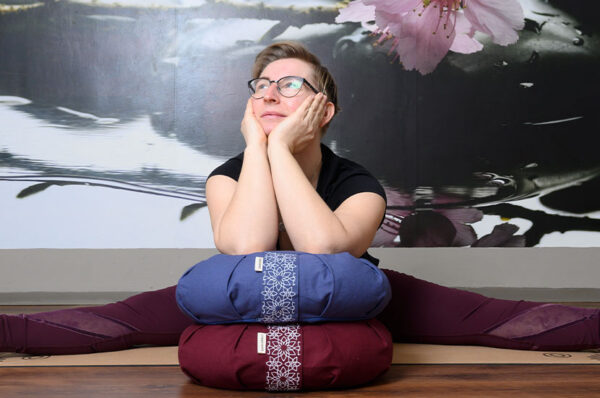
Rectangular bolsters are a popular alternative and work well for practitioners who prefer a flatter, more stable surface. They are particularly useful in seated forward folds and supported butterfly pose, where a lower profile helps the body melt forward more gradually. However, for deep chest openers like supported fish or reclined bound angle, the round shape offers a more pronounced, comfortable arch that encourages the thoracic spine to release over time.
Ultimately, your body type and the poses you practice most often should guide your choice. If your Yin practice leans heavily into backbend-focused sequences, a round yoga bolster will serve you better. If you favour forward folds and hip openers, a rectangular option may feel more natural.
What filling material makes a bolster most supportive for Yin?
The most supportive filling materials for a Yin Yoga bolster are buckwheat hulls, dense organic cotton, and natural kapok fibre. These materials hold their shape under the prolonged, passive pressure that defines Yin practice, preventing the bolster from flattening mid-pose and leaving you without the support you need.
Buckwheat hulls conform gently to the body while remaining firm enough to maintain structure, making them a favourite among dedicated Yin practitioners. Organic cotton batting offers a slightly softer feel and is often layered to achieve the right density. Kapok, a natural plant fibre, is lightweight yet surprisingly supportive and is a popular choice in sustainably made bolsters.
Synthetic foam fillings are common in budget bolsters, but they tend to compress over time and can lose their supportive quality faster than natural alternatives. For a practice built on stillness and surrender, a bolster that gradually sags will interrupt your experience and may even strain the joints it is meant to protect. Choosing a bolster with a natural filling is both a practical and an environmentally conscious decision.
How firm should a Yin Yoga bolster be?
A Yin Yoga bolster should be firm enough to hold its shape under your full body weight for several minutes, but not so hard that it creates pressure points or discomfort. The ideal firmness allows the body to gradually sink into a pose without the bolster collapsing, supporting passive release rather than forcing it.
Think of it this way: in Yin Yoga, the goal is to apply gentle, sustained stress to the connective tissues, not the muscles. A bolster that is too soft compresses quickly and removes the supportive feedback your body needs to relax into the correct alignment. A bolster that is too rigid, on the other hand, can create tension rather than dissolve it.
A good way to test firmness before purchasing is to press your full palm into the bolster and hold it for a few seconds. It should give slightly but spring back without flattening. If you are using the bolster alongside other props, such as a folded organic cotton yoga blanket, you can fine-tune the overall height and softness to suit your body and the specific pose.
Are sustainable bolsters as durable as conventional ones?
Yes, sustainably made bolsters are absolutely as durable as conventional ones, and in many cases they outlast synthetic alternatives. Natural fillings like buckwheat, kapok, and organic cotton are dense, resilient materials that maintain their structure over years of regular use when properly cared for.
The durability of a bolster comes down to two factors: the quality of the filling and the strength of the cover fabric. Sustainable bolsters made with organic cotton or hemp covers are typically tightly woven and resistant to wear, while natural fillings do not break down or off-gas the way synthetic foam can over time. A well-made sustainable bolster is genuinely built to last.
There is also a practical maintenance advantage. Many sustainable bolsters feature removable, washable covers made from natural fabrics, which means you can keep them clean without degrading the material. Buckwheat fillings can even be refreshed or replaced as needed, extending the life of the bolster indefinitely.
We believe that choosing a sustainable bolster is not a compromise. It is a smarter long-term investment for your practice, your wallet, and the planet. Explore our full range of yoga props to find a bolster that supports both your Yin practice and your values.
Ready to elevate your Yin practice with props that are built to last? At Samarali, you will find a carefully curated selection of sustainably made yoga essentials — from our yoga bolster and organic cotton yoga blanket to our full range of yoga mats — all designed to support deep, mindful movement. Whether you are just beginning your Yin journey or deepening an established practice, the right props make all the difference. Shop the collection at Samarali now.
Frequently Asked Questions
How do I know if my bolster is the right size for my body?
Bolster sizing largely depends on your height, torso length, and the poses you practice most. As a general guide, a standard round bolster measuring around 24–26 inches in length and 10 inches in diameter suits most adult practitioners, while taller individuals may benefit from a longer option to ensure full spinal support in reclined poses. If you find that your lower back or neck is unsupported during a pose, it is usually a sign that your bolster is either too short or too narrow for your frame.
Can I use a regular pillow or cushion instead of a proper Yin Yoga bolster?
While a firm pillow or cushion can work as a short-term substitute, it is not recommended for a consistent Yin practice. Household pillows lack the structural firmness needed to maintain support during three-to-five-minute holds, and they tend to shift, flatten, or bunch under sustained body weight, which can compromise your alignment and even strain the joints the prop is meant to protect. Investing in a purpose-built bolster ensures reliable, consistent support that a regular pillow simply cannot replicate.
How should I care for and maintain my Yin Yoga bolster to make it last?
The best way to extend the life of your bolster is to remove and wash the cover regularly according to the fabric care instructions, and to air out the inner filling periodically to prevent moisture build-up. Avoid leaving your bolster in direct sunlight for extended periods, as this can degrade both natural fabric covers and organic fillings over time. If your bolster has a buckwheat filling, you can top it up or replace the hulls entirely if the firmness diminishes, effectively giving the bolster a second life.
What other props pair well with a bolster for a deeper Yin practice?
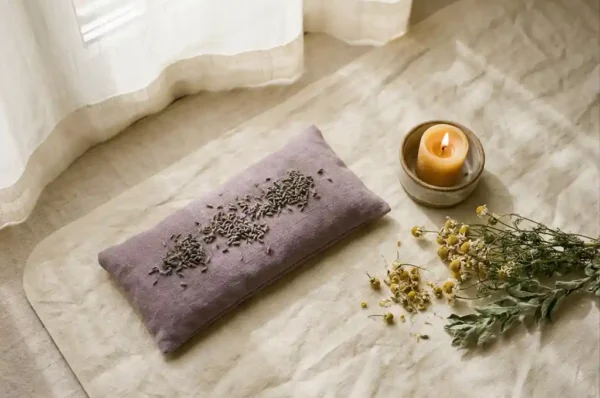
A folded yoga blanket is one of the most versatile companions to a bolster, allowing you to fine-tune height, cushion bony points, and add warmth during long passive holds. Yoga blocks are also excellent for adjusting the bolster’s angle or providing additional support under the knees, hips, or head. A supportive eye pillow can complete the setup by encouraging sensory withdrawal and deeper relaxation during extended floor-based poses.
Is a round or rectangular bolster better for beginners to Yin Yoga?
For most beginners, a rectangular bolster is often the more accessible starting point because its flat, stable surface feels less unfamiliar and works well across a broad range of foundational poses, including supported child’s pose, seated forward folds, and basic hip openers. As your practice deepens and you begin incorporating more backbend-focused sequences, you may find a round bolster becomes increasingly useful. Some practitioners choose to own both shapes over time, but if you are just starting out, a firm rectangular bolster offers the most versatility.
How do I position the bolster correctly for common Yin poses like Supported Fish or Reclined Butterfly?
For Supported Fish, place the round bolster horizontally across your mat and sit just in front of it before slowly lowering your spine onto it, positioning it between your shoulder blades to encourage a gentle thoracic backbend. In Reclined Butterfly, the bolster runs lengthwise along the spine from the sacrum to the head, with the soles of the feet together and knees falling open to the sides. Always take a moment to adjust the bolster’s position before settling into the hold, as small shifts in placement can make a significant difference in comfort and the quality of the stretch over several minutes.
Can a Yin Yoga bolster be used for other styles of yoga or meditation?
Absolutely — a good bolster is one of the most multi-purpose props in any yoga toolkit. It is equally valuable in Restorative yoga, where it supports the body in deeply passive, healing poses, and in meditation practice, where it can elevate the hips for a more comfortable seated position and reduce strain on the knees and lower back. Many practitioners also use their bolster for prenatal yoga, breathwork sessions, and even as a supportive prop during Savasana, making it a genuinely worthwhile investment beyond Yin practice alone.