


Yin yoga and meditation are related but distinct practices. Yin yoga is a physical practice where you hold passive poses for several minutes to target deep connective tissue, while meditation is a purely mental practice focused on training awareness and attention. Both cultivate stillness and inner calm, but they work through different pathways. Below, we unpack the key differences and how the two practices complement each other.
Can yin yoga replace meditation in your practice?
Yin yoga cannot fully replace meditation, but it can serve as a powerful gateway into meditative states. Because yin poses are held for three to five minutes or longer in stillness, the practice naturally invites mental quieting and present-moment awareness. For many practitioners, yin yoga becomes a moving meditation. However, dedicated meditation develops specific attentional skills that yin yoga alone does not systematically train.
In a seated meditation practice, you are deliberately working with the mind itself. You observe thoughts, return to a focal point, and build the capacity to stay with discomfort without reacting. Yin yoga offers a physical anchor for that same inner work, but the structure of the practice is organised around the body rather than the mind. The two approaches reinforce each other beautifully, and many practitioners find that a regular yin yoga practice makes sitting in formal meditation noticeably easier.
If you are new to both, starting with yin yoga can be a gentler entry point. The physical sensations give the mind something concrete to rest on, which can feel more accessible than sitting in silence. Over time, adding a dedicated meditation practice alongside your yin sessions will deepen both disciplines considerably.
How does yin yoga affect the mind compared to meditation?
Yin yoga affects the mind indirectly, using physical stillness and sensation as an anchor for mental quieting. Meditation affects the mind directly, training attention, awareness, and emotional regulation as the primary goal. In yin yoga, the mental shift is a welcome side effect of holding a pose. In meditation, the mental shift is the entire point of the practice.
During a long yin hold, the mind is naturally drawn into the present moment because the body is asking for attention. You feel the stretch deepening, you notice the urge to fidget, and you practise staying. This is genuinely meditative. But the mental training is guided by the physical experience rather than being pursued on its own terms.
In contrast, a seated or lying meditation practice strips away the physical scaffolding. Without a pose to focus on, the mind must learn to rest with itself. This is harder and, in many ways, more direct. Research and contemplative traditions consistently point to dedicated meditation as the more reliable path to long-term changes in stress reactivity, emotional regulation, and attentional focus.
That said, yin yoga brings a quality of embodied mindfulness that purely seated meditation can sometimes lack. The combination of the two tends to produce a richer inner practice than either does alone.
What happens in the body during yin yoga that doesn’t happen in meditation?
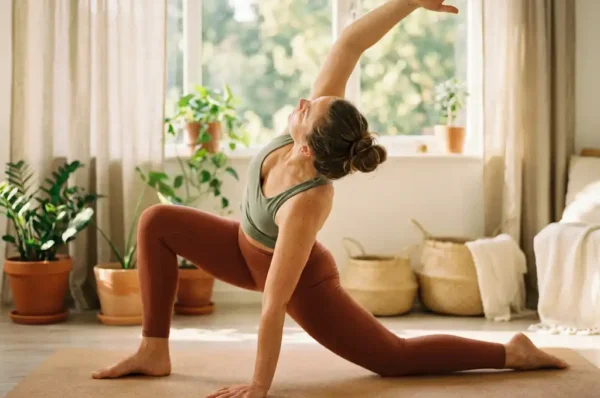
During yin yoga, the body undergoes specific physical changes that do not occur in seated meditation. Holding passive poses for extended periods applies gentle, sustained stress to the fascia, ligaments, joint capsules, and tendons. Over time, this stimulates the remodelling of connective tissue, improving mobility and joint health in ways that stillness alone cannot achieve.
This is the defining physical characteristic of yin yoga. Most forms of movement target muscle tissue, which is elastic and responds quickly to stretching. Connective tissue is denser and less responsive, and it requires longer, gentler holds to be meaningfully influenced. Yin yoga is specifically designed around this principle.
From a traditional Chinese medicine perspective, yin yoga also works along the meridian lines of the body, stimulating the flow of energy through areas that are often compressed or underused. Whether you approach this from an energetic or a purely anatomical standpoint, the result is a sense of release and spaciousness in the body that sitting meditation does not produce.
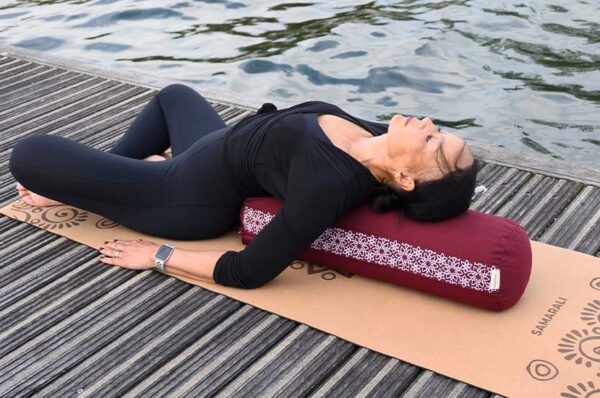
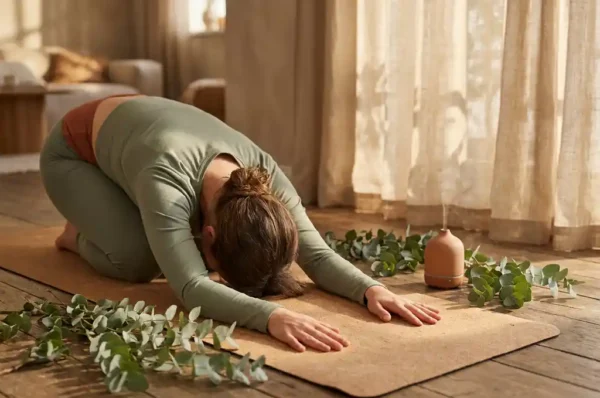
Practically speaking, this means yin yoga can relieve the physical tension and stiffness that often makes sitting in meditation uncomfortable. A yoga bolster can support many yin poses, making it easier to fully release into the hold rather than bracing against discomfort. Meditation, by contrast, leaves the body largely unchanged while working deeply on the mind.
Should you do yin yoga or meditation first in a session?
In most cases, doing yin yoga before meditation produces the best results. Yin yoga releases physical tension, calms the nervous system, and settles the mind, creating ideal conditions for sitting in meditation. Starting with meditation when the body is stiff or the mind is active is harder and often less productive, especially for newer practitioners.
The logic is straightforward. Yin yoga works on the body first, and as the body softens and the nervous system shifts toward a parasympathetic state, the mind follows. By the time you transition to seated meditation, you are already in a quieter, more receptive state. The physical practice has done some of the preparatory work for you.
That said, there are situations where reversing the order makes sense. If you are practising early in the morning and want to use meditation to set your intention before moving into yin, starting with a short sit can be grounding. Some teachers also prefer to open with a brief meditation to establish present-moment awareness before entering the first pose.
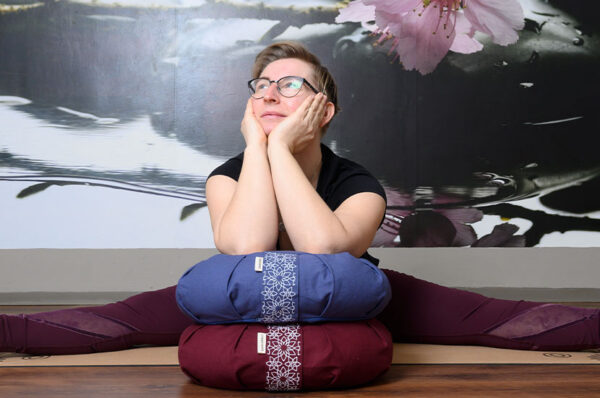
A practical approach for a combined session is to begin with five to ten minutes of simple breathwork or seated awareness, move through your yin sequence, and then close with a longer meditation or an extended savasana. This structure honours both practices and lets each one enhance the other. Pairing your practice with a supportive meditation cushion for the seated portions makes a real difference in how comfortably and sustainably you can sit.
Frequently Asked Questions
How long should I hold yin yoga poses if I'm also planning to meditate in the same session?
If you’re combining yin yoga with meditation in a single session, aim to hold each yin pose for three to four minutes rather than pushing toward the five-to-seven-minute range you might explore in a standalone yin practice. This keeps the yin sequence restorative without exhausting your focus before you sit. Preserving some mental energy for your meditation means you’ll arrive at the seated portion alert and receptive rather than drowsy or depleted.
Can I use yin yoga to prepare for a specific meditation technique, like breathwork or body scan?
Yes, and the pairing can be very intentional. If you plan to practise a body scan meditation, choose yin poses that target the areas you want to bring awareness to during the scan, such as hip openers before a lower-body focus or supported chest openers before a heart-centred practice. For breathwork techniques like pranayama, poses that open the chest, ribcage, and diaphragm — such as supported fish or reclined butterfly — create more physical space for controlled breathing. Matching your yin sequence to your meditation goal turns the physical practice into a deliberate warm-up for the mental one.
I find my mind races even more during yin holds than in seated meditation — is that normal?
Completely normal, and actually a sign the practice is working. Yin yoga removes the usual distractions of movement and effort, which means thoughts that were previously drowned out by activity suddenly become very loud. Rather than treating this as a problem, try treating it as useful information — you’re getting a clearer view of your mental baseline. Over time, using the physical sensations of the pose as an anchor (noticing the weight of the body, the texture of the breath, the specific feeling of the stretch) gives the mind a concrete resting point and the racing tends to settle.
What are the most common mistakes people make when combining yin yoga and meditation?
The most common mistake is treating savasana at the end of yin as the meditation, rather than transitioning into a deliberate seated practice. Savasana is a valuable rest, but it’s passive rather than attentionally active, so it doesn’t build the same mental skills as formal meditation. Another frequent error is skipping the transition period — moving immediately from lying down in a yin pose to sitting upright for meditation without giving the body a minute or two to adjust, which can cause discomfort that disrupts the sit. Finally, many practitioners set sessions that are too long too soon, leading to fatigue rather than depth.
Is yin yoga suitable for people who have been told meditation 'isn't for them'?
Yin yoga is often an excellent starting point for people who have struggled with or rejected seated meditation. Because the physical experience of a yin hold gives the mind something tangible to focus on — sensation, breath, the gradual release of a pose — it sidesteps the most common barrier to meditation, which is the feeling of having ‘nothing to do.’ Many people who describe themselves as unable to meditate find that they naturally enter a calm, present-moment state during yin holds without even trying. From there, the transition to a short, supported seated practice often feels far less daunting.
How often should I practise yin yoga and meditation together to notice a real difference?
A combined practice two to three times per week is generally enough to produce noticeable changes in stress levels, sleep quality, and mental clarity within four to six weeks. Consistency matters more than duration — a 45-minute session practised regularly will outperform a two-hour session done sporadically. If time is limited, even a 20-minute yin sequence followed by 10 minutes of seated meditation is a meaningful and sustainable combination. The key is building a rhythm your nervous system can begin to anticipate and settle into.
Do I need any props to get started with a combined yin yoga and meditation practice at home?
You can begin with very little — a yoga mat and a folded blanket will cover most basic yin poses and provide enough cushioning for seated meditation. That said, two props make a significant difference in comfort and sustainability: a yoga bolster for supported yin poses like reclined butterfly and supported fish, and a firm meditation cushion (zafu or similar) to elevate the hips during seated practice, which reduces strain on the lower back and knees. Investing in these two items early removes the physical discomfort that causes most people to cut their sessions short, allowing the practice to actually deepen over time.
Ready to build a practice that truly supports both body and mind? At Samarali, you will find everything you need to make your combined yin yoga and meditation practice as comfortable and sustainable as possible. From a supportive yoga bolster that helps you fully release into long yin holds, to a meditation cushion that keeps you grounded and at ease during seated practice, each piece is chosen with intention. Explore the full yoga and meditation collections at Samarali and find the props that will help your practice deepen — session after session. Shop the meditation sets now and take the next step on your journey inward.