


Yes, yin yoga can be genuinely helpful for back pain. By targeting the deep connective tissues around the spine, including fascia, ligaments, and muscles, yin yoga helps release tension and restore mobility in ways that more active movement often cannot. It works best as a complementary practice rather than a standalone treatment, and the type of back pain matters.
Below, we break down how yin yoga supports back health, which conditions it suits best, which poses to try, and how often to practice for real results.
How does yin yoga actually help with back pain?
Yin yoga helps with back pain by holding passive poses for extended periods, typically two to five minutes, which applies gentle, sustained stress to the deep connective tissues surrounding the spine. This prolonged stretching encourages the fascia and ligaments to release, improves circulation to the spinal discs, and calms the nervous system, all of which reduce the perception of pain and improve spinal mobility.
Unlike more dynamic yoga styles, yin yoga works slowly and deliberately. The long holds allow the body to move past the initial muscular response and reach deeper layers of tissue that rarely get addressed in everyday movement or active exercise. This is particularly relevant for the lower back, where chronic tightness in the hips, sacrum, and lumbar fascia often contributes to persistent discomfort.
There is also a neurological dimension to consider. Yin yoga activates the parasympathetic nervous system, shifting the body out of a stress response. Since chronic pain is often amplified by tension and stress, this calming effect can meaningfully reduce pain sensitivity over time. Many practitioners find that even a single session leaves their back feeling noticeably looser and less tense.
What types of back pain can yin yoga help with?
Yin yoga is most effective for back pain caused by muscular tension, postural imbalances, tight hips, and compressed spinal tissues. It is particularly well suited for people with chronic lower back stiffness, sacroiliac joint discomfort, and tension-related upper back or thoracic pain. It is generally not appropriate as a primary treatment for acute injuries, herniated discs, or conditions requiring medical intervention.
Back pain yin yoga tends to help
Chronic lower back tightness is one of the most common complaints that yin yoga addresses well. Long hours of sitting shorten the hip flexors and compress the lumbar spine, and yin poses that open the hips and decompress the lower back can provide meaningful relief. Sacroiliac joint tension, which often manifests as a dull ache at the base of the spine, also responds well to the gentle, sustained stretches that yin yoga offers.
Upper back and thoracic tension, often linked to rounded shoulders and screen time, can also benefit from yin yoga poses that open the chest and mid-spine. If your back pain feels like stiffness, heaviness, or a persistent dull ache rather than sharp or shooting pain, yin yoga is likely a good fit.
When to be cautious
If your back pain is acute, severe, or accompanied by nerve symptoms like numbness or tingling down the leg, speak with a healthcare professional before starting yin yoga. Conditions like active disc herniation or spinal stenosis may require modifications or medical clearance first. Yin yoga is a supportive tool, not a medical treatment, and knowing the source of your pain helps you practice safely.
Which yin yoga poses are best for back pain relief?
The most effective yin yoga poses for back pain relief are those that target the hips, sacrum, and lower spine, since tightness in these areas is a leading contributor to back discomfort. Dragon pose, Sleeping Swan, Sphinx, Caterpillar, and Supine Twist are among the most beneficial, each addressing a different aspect of spinal tension.
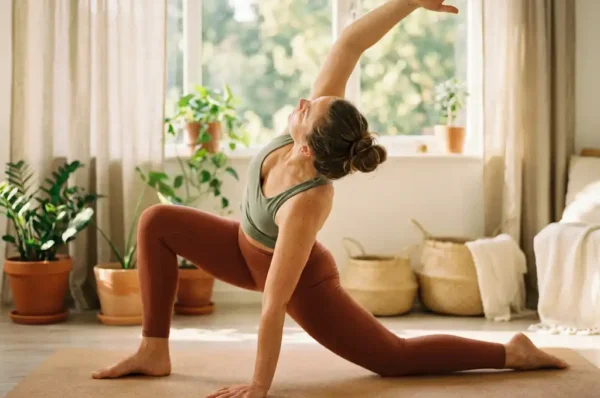
- Dragon Pose: A deep hip flexor stretch that releases compression in the lumbar spine. Tight hip flexors pull the lower back forward, and this pose directly counters that pattern.
- Sleeping Swan (Yin Pigeon): Targets the piriformis and outer hip, muscles that when tight can create referred pain in the lower back and sacrum.
- Sphinx Pose: A gentle backbend that creates traction in the lumbar spine and stimulates the sacral-lumbar arch, often providing immediate relief for lower back stiffness.
- Caterpillar: A forward fold that stretches the entire posterior chain from the lower back through the hamstrings, decompressing the spine with gravity.
- Supine Twist: Rotates the spine gently, releasing tension along the erector muscles and improving mobility through the thoracic and lumbar regions.
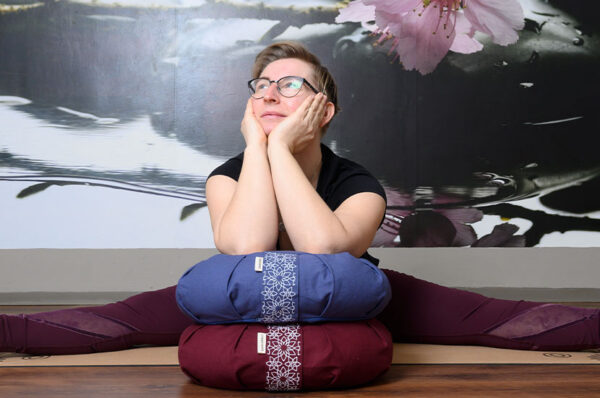
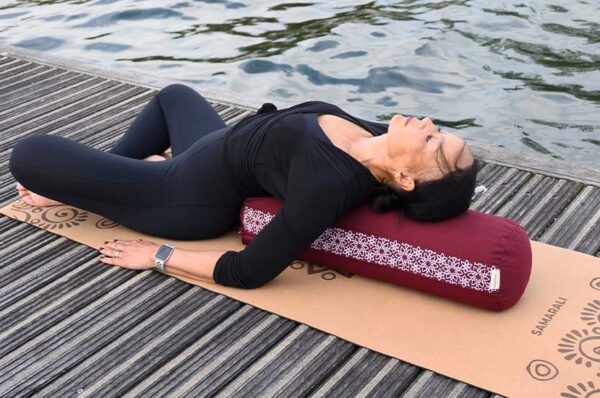
Using supportive props makes these poses more accessible and effective, especially if you are new to yin yoga or dealing with significant tightness. A yoga bolster placed under the hips or chest in poses like Sphinx or Sleeping Swan reduces strain and allows the body to relax more deeply into the stretch. Practicing on a supportive surface also matters. A quality yoga mat provides the cushioning and grip your joints need during long holds.
How often should you practice yin yoga for back pain?
For back pain relief, practicing yin yoga two to four times per week is generally most effective. This frequency gives the connective tissues enough regular stimulation to adapt and release over time, while also allowing adequate recovery between sessions. Even one session per week produces noticeable benefits, but consistency over several weeks is what creates lasting change.
When you are just starting out, shorter sessions of 20 to 30 minutes focusing on the hips and lower back are a sensible entry point. As your body adapts and you become more familiar with how the poses feel, you can extend sessions to 45 to 60 minutes and introduce a wider range of poses. The key is regularity rather than intensity. Yin yoga works through repetition and patience, not effort.
Pairing yin yoga with other movement practices, such as walking, swimming, or a gentle active yoga style, supports back health more comprehensively. Yin yoga addresses depth and release, while other movement forms build strength and circulation. Together, they create a more balanced approach to managing and preventing back pain.
If you are ready to build or deepen your yin yoga practice at home, having the right support makes all the difference. At Samarali, you will find everything you need to practice with ease and intention — from a yoga bolster that helps you settle into long holds without strain, to a natural rubber yoga mat that cushions your joints during extended poses. For a complete setup, explore our yoga mats and full yoga collection — thoughtfully curated for mindful, restorative practice. Shop now and give your back the care it deserves.
Frequently Asked Questions
How long does it take to see results from yin yoga for back pain?
Most people notice some immediate relief, such as reduced stiffness and a sense of ease, after their very first session. However, meaningful and lasting changes to connective tissue typically take four to eight weeks of consistent practice, as fascia and ligaments adapt slowly compared to muscles. The key is practicing regularly, at least two to three times per week, rather than doing occasional long sessions. Think of it as a gradual remodeling process rather than a quick fix.
Can I do yin yoga for back pain if I have never done yoga before?
Absolutely. Yin yoga is actually one of the most beginner-friendly styles because it is slow, passive, and does not require flexibility or prior experience. The most important thing is to listen to your body, never push into sharp or shooting pain, and use props like bolsters, blankets, and blocks to make poses accessible and comfortable. Starting with shorter sessions of 20 to 30 minutes focused on the hips and lower back is a practical and safe entry point for complete beginners.
Is there anything I should avoid doing in yin yoga if my back pain is flaring up?
During a flare-up, avoid any pose that involves deep forward folds, strong spinal flexion, or positions that reproduce your pain or send sensations down your leg. Instead, stick to gentle, supported poses like Sphinx with a bolster or a simple Supine Twist with a pillow between the knees. Reducing your hold times to one to two minutes rather than the full five can also help you stay within a comfortable range. When in doubt, a restorative approach with more props and less depth is always the safer choice.
Can yin yoga make back pain worse?
Yin yoga can aggravate back pain if poses are held too deeply, too long, or without appropriate modifications for your specific condition. This is most likely to happen with conditions like active disc herniation, spinal stenosis, or hypermobility, where sustained passive stretching may not be appropriate. The general rule is to find a sensation of mild to moderate stretch with no sharp, stabbing, or radiating pain. If something does not feel right, ease out of the pose and consult a healthcare professional or experienced yoga teacher before continuing.
Should I do yin yoga before or after other exercise when using it for back pain?
For back pain management, yin yoga is generally better practiced after other exercise or as a standalone session rather than before dynamic activity. Holding deep passive stretches before strength training or vigorous movement can temporarily reduce the stability of the connective tissues, which is not ideal as a warm-up. Doing yin yoga after a workout or in the evening works well because the tissues are already warm and the nervous system benefits from the calming, wind-down effect. If you practice yin on its own, a brief five-minute gentle warm-up, such as slow walking or light movement, can help the body settle into the poses more easily.
Do I need a teacher to practice yin yoga for back pain, or can I do it at home?
A home practice is entirely viable for most people once they have a basic understanding of the poses and how they should feel. Starting with a few guided classes, either in person or through a reputable online platform, is strongly recommended so you can learn proper alignment and how to use props safely. From there, a home practice with a bolster, a quality mat, and a few blocks or blankets gives you everything you need. If your back pain has a specific diagnosed cause, one session with a yoga therapist or a teacher experienced in therapeutic yoga can provide personalized guidance that makes your home practice significantly more effective and safe.
What is the difference between yin yoga and restorative yoga for back pain, and which is better?
Both styles are slow and prop-supported, but they work differently. Yin yoga intentionally applies a gentle, sustained stress to connective tissues to encourage release and adaptation, so you will feel a noticeable stretch sensation. Restorative yoga, by contrast, uses props to fully support the body so that no stretch is felt at all, making it purely about nervous system relaxation and recovery. For back pain, yin yoga tends to be more effective when the goal is improving mobility and releasing tight tissues, while restorative yoga is better suited for days when the body needs complete rest and recovery. Many practitioners benefit from incorporating both into their weekly routine depending on how their back feels on a given day.