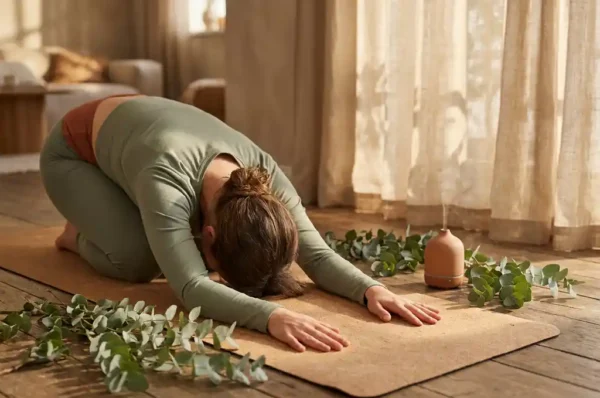



Creating a yoga practice for different energy levels means matching your routine to how you feel each day. You adapt poses, sequences, and intensity based on whether you’re energised, tired, or somewhere in between. This flexible approach prevents burnout, supports your body’s natural rhythms, and makes your practice more sustainable. Understanding how to modify your yoga for varying energy states helps you maintain consistency while honouring what your body needs.
What does it mean to practise yoga according to your energy levels?
Practising yoga according to your energy levels means listening to your body’s signals and adjusting your routine accordingly rather than forcing the same sequence every day. This approach recognises that your physical, mental, and emotional energy fluctuates naturally based on several key factors:
- Sleep quality and duration – Poor rest directly impacts your physical stamina and mental clarity
- Stress levels – High stress depletes energy reserves and affects your nervous system’s balance
- Hormonal fluctuations – Natural cycles influence your strength, flexibility, and emotional state
- Daily demands – Work pressure, family responsibilities, and life events all draw from your energy pool
This mindful approach creates a sustainable relationship with your practice by preventing the common cycle of overdoing it on good days and completely skipping practice on difficult ones. Instead of fighting against your natural rhythms, you learn to work harmoniously with them, maintaining consistency while providing exactly what your body and mind need in each moment.
Energy-aware yoga practice begins with honest self-assessment. You’ll learn to recognise different energy states through physical sensations, emotional mood, and mental clarity, then choose practices that either gently energise when you feel depleted or help ground and focus when you feel scattered.
How do you modify yoga poses when you’re feeling low energy?
When you’re feeling low energy, choose supported variations that restore rather than drain your reserves. Your modifications should focus on conservation and gentle activation rather than demanding effort:
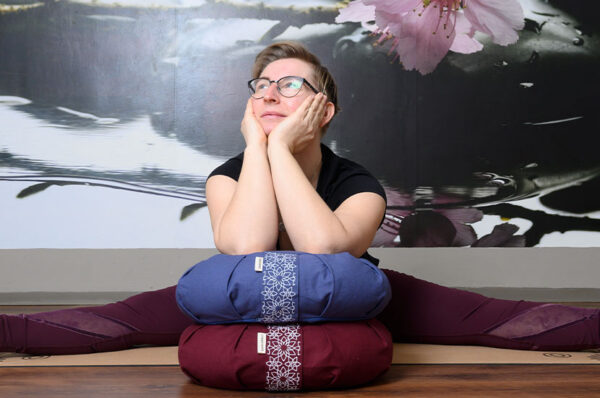
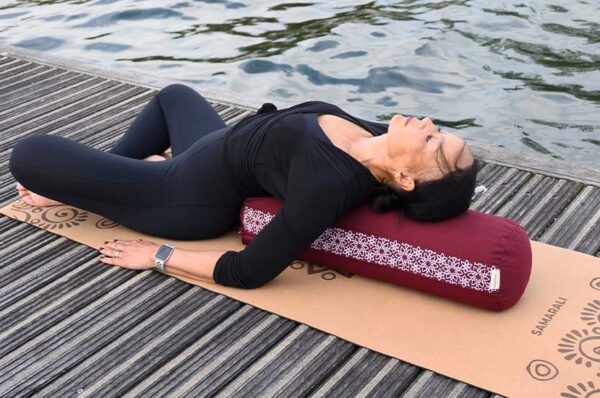
- Use props generously – Bolsters, blocks, and blankets make poses accessible while supporting your body’s weight
- Replace standing sequences with seated alternatives – Swap warrior poses for seated twists or gentle hip circles to maintain movement without energy expenditure
- Focus on restorative poses – Supported child’s pose, legs up the wall, or gentle supine twists actively calm your nervous system
- Emphasise breathing techniques – Extended exhales signal safety to your nervous system and help conserve energy
- Hold poses longer with minimal effort – This activates your rest-and-digest response rather than your stress response
These modifications create a practice that feels nurturing rather than demanding, helping you restore energy reserves while maintaining your connection to yoga. The key is working with your body’s current capacity rather than pushing through fatigue, which ultimately supports faster recovery and prevents burnout.
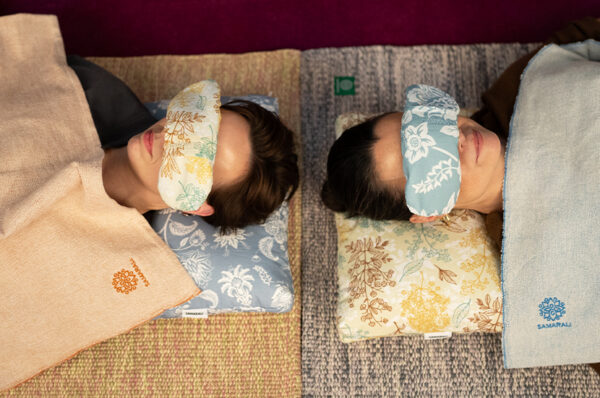
Consider practising with sustainable yoga equipment made from organic materials, as the natural textures and chemical-free environment can support your body’s recovery process without additional stress from synthetic materials.
What type of yoga practice works best for high-energy days?
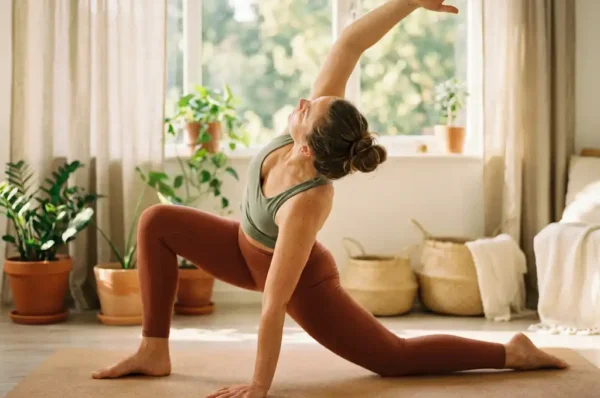
High-energy days call for dynamic sequences that help you channel abundant energy constructively while maintaining mindfulness. Your practice should match your vitality while preventing scattered or restless feelings:
- Incorporate flowing movements – Sun salutations with variations like warrior III transitions help ground excess energy through purposeful movement
- Include challenging poses – Arm balances, deeper backbends, or longer holds in demanding positions require focus and engagement
- Try standing sequences with balance challenges – These practices build strength while requiring mental concentration
- Consider power yoga or vinyasa flows – Dynamic styles match your energy level while maintaining meditative quality
- Maintain moments of stillness – Even energised practices need breath awareness to prevent burnout and preserve sustainability
The goal on high-energy days is channelling your vitality through mindful movement rather than aggressive pushing. You want to feel pleasantly satisfied afterwards, having used your energy constructively while building strength and maintaining the contemplative aspects that make yoga more than just physical exercise. A quality natural rubber yoga mat provides the stability and grip needed for these more demanding sequences.
How do you create a sustainable daily yoga routine that adapts to your changing needs?
Creating a sustainable daily yoga routine requires building flexibility into your framework rather than rigid adherence to identical sequences. Your approach should emphasise adaptability while maintaining consistency:
- Establish non-negotiable core elements – Include breath awareness, gentle movement assessment, and intention-setting that work regardless of your state
- Develop multiple sequence lengths – Create 10-minute, 30-minute, and 60-minute options to match your available time and energy
- Build a mental toolkit of poses – Know energising poses for sluggish days, calming poses for stress, and strengthening poses for when you feel strong
- Track patterns and responses – Notice how different practices affect your energy and mood across various circumstances
- Prioritise consistency over intensity – A gentle daily practice serves you better than sporadic intense sessions
This flexible framework removes the all-or-nothing mentality that often derails consistency, allowing you to show up for yourself regardless of circumstances. Your routine becomes a supportive tool that adapts to your life rather than adding stress or unrealistic expectations. The key is developing trust in your ability to assess your needs and choose appropriate practices intuitively.
At Samarali, we understand that sustainable practice extends beyond just the poses themselves. That’s why all our meditation and yoga equipment is crafted from organic cotton without plastic packaging, supporting both your personal practice and environmental wellbeing. When your tools align with your values, your entire practice becomes more authentic and sustainable.
Browse our selection of thoughtfully crafted collection of sustainable yoga essentials—designed for mindful movement and made with respect for the planet.