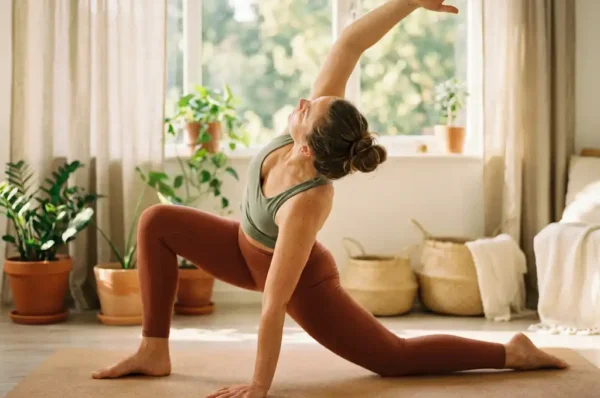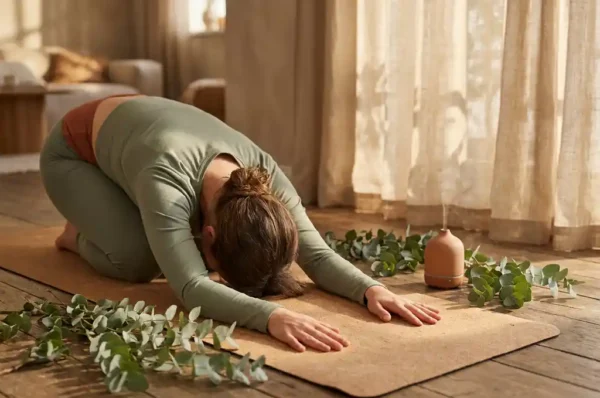



Yes, Yin Yoga can genuinely help with mental relaxation. By holding passive poses for extended periods, typically between three and five minutes, the practice activates the parasympathetic nervous system and encourages a deep release of physical and mental tension. This makes it one of the most accessible and effective tools for calming an overactive mind.
Unlike more dynamic styles of yoga, Yin works slowly and deliberately, giving the nervous system time to shift out of stress mode. It is especially well suited for people who carry anxiety, struggle to wind down, or feel disconnected from their bodies due to the demands of daily life. Below, we unpack the specific ways Yin Yoga supports mental wellbeing and how to get the most out of your practice.
How does Yin Yoga affect the nervous system?
Yin Yoga directly stimulates the parasympathetic nervous system, which is the branch responsible for rest, digestion, and recovery. When you hold a passive pose for several minutes without muscular effort, your body receives a sustained signal that it is safe to relax. This counteracts the chronic activation of the sympathetic nervous system, commonly known as the fight-or-flight response, that many people experience in everyday life.
The long holds in Yin Yoga also stimulate the vagus nerve, a key pathway that runs from the brain through the chest and abdomen. Vagal activation is strongly associated with reduced heart rate, lower cortisol levels, and an improved sense of calm. Over time, regular Yin practice can help recalibrate your baseline stress response, making it easier to stay composed under pressure.
There is also a connective tissue dimension to this. Yin Yoga targets the fascia, ligaments, and joints rather than the muscles. Because fascia holds a high concentration of sensory nerve endings, gently stressing these tissues during a hold sends calming proprioceptive feedback to the brain. This is part of why so many practitioners describe a distinctly grounded, settled feeling after a Yin session rather than the energised buzz that follows a more active practice.
Can Yin Yoga reduce anxiety and stress?
Yin Yoga can meaningfully reduce both anxiety and stress, particularly when practised consistently. The combination of slow breathing, stillness, and prolonged holds creates conditions that interrupt the mental loops associated with anxious thinking. Focusing attention on physical sensation during a pose gives the mind a concrete anchor, which naturally pulls awareness away from worry and rumination.
Diaphragmatic breathing, which is naturally encouraged when you are lying or folded in a Yin pose, activates the body’s relaxation response. Deep, slow breaths signal safety to the nervous system and help regulate the emotional centres of the brain. Even a single session can produce a noticeable reduction in perceived stress, which is why Yin is often recommended as an evening or end-of-week practice for people managing high workloads.
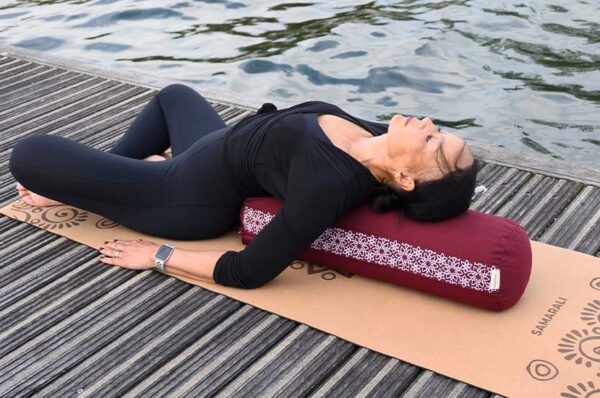
It is worth noting that Yin Yoga is not a replacement for professional mental health support when anxiety is severe or clinical. However, as a regular lifestyle practice, it offers a practical and sustainable way to manage everyday stress and build emotional resilience. Pairing your practice with supportive props like a yoga bolster can make the longer holds more comfortable and deepen the relaxation response.
How is Yin Yoga different from meditation for mental relaxation?
Yin Yoga and meditation both support mental relaxation, but they work through different entry points. Meditation approaches calm primarily through the mind, training attention and awareness in a seated or still position. Yin Yoga, by contrast, uses the body as the gateway, releasing physical tension and stimulating the nervous system through sustained stretching, which then produces mental calm as a result.
For people who find traditional meditation difficult because their minds are too restless to sit quietly, Yin Yoga can be a more accessible starting point. The physical sensation of a stretch gives the mind something tangible to focus on, making it easier to stay present without forcing concentration. In this sense, Yin Yoga functions as a moving meditation for many practitioners.
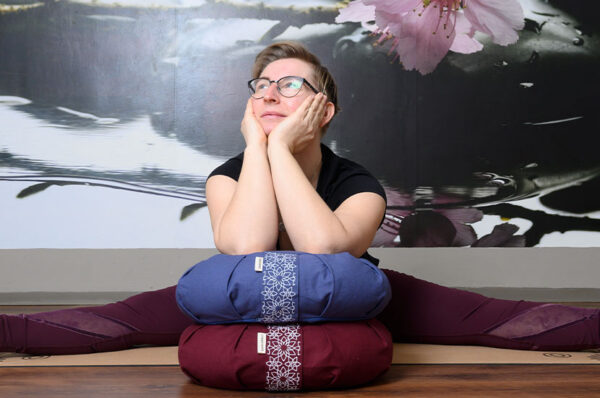
The two practices are also highly complementary. Many people find that a Yin session prepares the mind and body for deeper meditation by releasing the physical restlessness that often interrupts seated practice. If you are building a home practice that includes both, pairing a meditation cushion with your Yin mat creates a natural transition between the two.
How often should you practice Yin Yoga for mental benefits?
Practising Yin Yoga two to three times per week is generally enough to experience consistent mental benefits. At this frequency, the nervous system has regular opportunities to reset, and the cumulative effect on stress and anxiety becomes more pronounced over time. Even a single weekly session is worthwhile if your schedule is limited, particularly when held in the evening to support sleep quality.
Consistency matters more than duration. A 30-minute Yin session practised regularly will deliver greater mental benefits than an occasional 90-minute class. As you build familiarity with the poses and the stillness they require, you will likely find it easier to drop into a relaxed state more quickly, which means shorter sessions become progressively more effective.
There is no strict upper limit, though daily Yin practice should be approached thoughtfully. Because Yin targets connective tissue rather than muscle, the body needs time to integrate the effects of each session. Most experienced practitioners settle into a rhythm of three to four sessions per week, balancing Yin with more active movement on other days.
- Beginners: Start with one or two sessions per week and build gradually as you become comfortable with longer holds
- Moderate practitioners: Two to three sessions per week supports steady improvement in stress resilience and sleep quality
- Established practice: Three to four sessions per week, balanced with active movement, offers the most comprehensive mental and physical benefits
Whatever frequency you choose, creating a consistent environment for your practice makes a real difference. A dedicated space with a quality yoga mat and supportive props signals to your mind and body that it is time to slow down, reinforcing the relaxation response before you even begin.
Frequently Asked Questions
What is the best time of day to practice Yin Yoga for mental relaxation?
Evening is generally the most effective time for Yin Yoga if your primary goal is mental relaxation and stress relief. Practising in the hours before bed allows the parasympathetic activation from your session to carry directly into sleep, improving both sleep onset and quality. That said, a midday Yin session can serve as a powerful reset during a high-pressure workday, and a morning practice can set a calm, grounded tone for the day ahead. The best time is ultimately the one you can commit to consistently.
I find it hard to stay still during long holds — does that mean Yin Yoga isn't right for me?
Not at all — in fact, restlessness during holds is one of the most common experiences for beginners, and working through it is part of the practice itself. The discomfort of stillness often reflects the very mental tension that Yin Yoga is designed to address. Start with shorter holds of one to two minutes and gradually extend them as your nervous system becomes more comfortable with the stillness. Using supportive props like bolsters, blankets, or blocks can also make poses feel more sustainable, reducing the urge to fidget and helping you settle more easily.
Can Yin Yoga help with sleep problems related to stress or an overactive mind?
Yes, Yin Yoga is particularly well suited for stress-related sleep difficulties. The parasympathetic activation triggered by long, passive holds lowers cortisol levels and reduces physiological arousal, both of which are common barriers to falling and staying asleep. Poses that involve forward folds, supported reclines, and gentle hip openers are especially effective before bed, as they encourage the body to release the muscular holding patterns accumulated during the day. A consistent evening Yin routine of even 20 to 30 minutes can produce noticeable improvements in sleep quality within a few weeks.
Are there specific Yin Yoga poses that are most effective for mental relaxation?
Several poses are particularly well regarded for their calming effects on the mind. Supported Child’s Pose gently compresses the abdomen to encourage diaphragmatic breathing, while Melting Heart and Supported Fish open the chest and stimulate the vagus nerve. Legs Up the Wall is one of the most accessible and effective poses for nervous system downregulation and can be held for five to fifteen minutes with minimal discomfort. Butterfly and Sleeping Swan target the hips, where many people hold chronic stress-related tension, and practitioners often report a strong emotional release from these poses over time.
What is the difference between Yin Yoga and Restorative Yoga for stress relief?
Both practices support relaxation, but they differ in intention and intensity. Yin Yoga applies a gentle, sustained stress to the connective tissues — fascia, ligaments, and joints — with the goal of increasing flexibility and stimulating the nervous system through mild physical challenge. Restorative Yoga, by contrast, uses extensive prop support to remove all effort from the body entirely, placing it in a state of complete passive rest. For mental relaxation, Restorative Yoga may feel more immediately soothing, while Yin Yoga tends to build greater long-term stress resilience by training the mind to remain calm in the presence of mild discomfort.
Do I need prior yoga experience to start Yin Yoga for mental health benefits?
No prior yoga experience is necessary to begin a Yin practice. Because Yin Yoga is passive and performed mostly on the floor, it does not require strength, flexibility, or familiarity with complex poses. Beginners can start with a small set of foundational poses — such as Butterfly, Supported Child’s Pose, and Legs Up the Wall — and build from there at their own pace. The most important qualities to bring to a Yin practice are patience and a willingness to be still, both of which develop naturally over time regardless of your physical starting point.
Can Yin Yoga be combined with breathwork or pranayama to enhance mental relaxation?
Combining Yin Yoga with intentional breathwork significantly amplifies its mental relaxation benefits. Techniques such as box breathing, 4-7-8 breathing, or simple extended exhale breathing — where the exhale is made longer than the inhale — deepen parasympathetic activation during holds. The extended exhale in particular directly stimulates the vagus nerve and accelerates the shift into a calm, settled state. You do not need a formal pranayama background to benefit; simply focusing on slowing and deepening your breath during each pose is enough to meaningfully enhance the mental effects of your practice.
Ready to support your Yin Yoga practice with the right tools? At Samarali, you will find everything you need to create a calm, grounded space at home. Whether you are looking for a supportive yoga bolster to ease into longer holds, a natural rubber yoga mat to anchor your practice, or a meditation cushion to carry your stillness into seated practice, Samarali has you covered. Shop the collection now and take the next step towards a calmer, more resilient mind.