


For beginners, a simple, lightly cushioned mat made from natural materials is the best starting point for meditation. You do not need anything elaborate — the right mat simply needs to support a comfortable seated posture for the duration of your practice. Below, we answer the most common questions beginners have before buying their first meditation mat.
What features should a beginner look for in a meditation mat?
A beginner should look for a meditation mat that offers enough cushioning to protect the knees and ankles, a stable non-slip surface, and a size that comfortably fits your seated position. Natural materials like organic cotton or natural rubber are ideal because they are durable, breathable, and gentle on the skin during longer sessions.
Here are the key features worth prioritizing as a beginner:
- Cushioning: Thin mats work for some, but beginners often find that a little extra padding reduces discomfort in the knees and hips, making it easier to stay focused on the practice rather than the ache.
- Grip: A mat that shifts around underneath you breaks concentration. Look for a surface that stays in place on your floor.
- Size: Your mat should be large enough to sit on comfortably with room for crossed legs or a kneeling position.
- Material: Natural, breathable fabrics feel better during extended sits and are kinder to sensitive skin.
- Portability: If you plan to meditate in different spaces or attend classes, a mat that rolls or folds easily is a practical bonus.
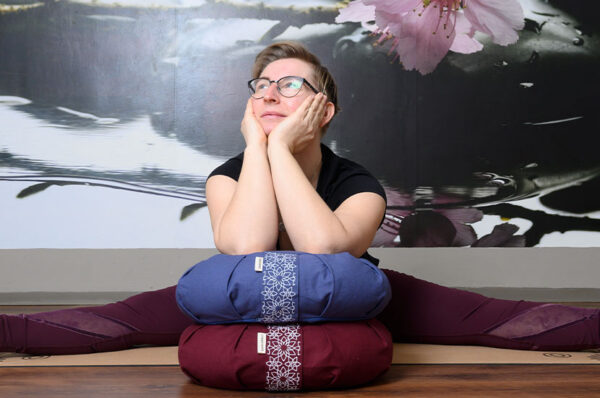
It is also worth thinking about pairing your mat with a meditation cushion early on. A cushion elevates the hips, which naturally tilts the pelvis forward and makes upright sitting far more sustainable for beginners who are still building flexibility.
What’s the difference between a meditation mat and a yoga mat?
The key difference is purpose and construction. A yoga mat is designed for dynamic movement, so it prioritizes grip, length, and a surface that handles sweat and shifting weight. A meditation mat is designed for stillness, so it prioritizes cushioning, warmth, and comfort during seated or kneeling postures held for extended periods.
In practical terms, a standard yoga mat is typically around 180 cm long and 4 to 6 mm thick, built to support poses that use the whole body. A meditation mat tends to be smaller, thicker in the sitting area, and often made from softer, warmer materials like cotton or wool blends that feel more inviting when you are sitting quietly for ten, twenty, or thirty minutes at a time.
That said, the two are not mutually exclusive. Many practitioners use a folded yoga blanket or a dedicated meditation mat placed on top of their yoga mat to get the best of both worlds, especially if they move from a movement practice straight into seated meditation.
Are eco-friendly meditation mats good for beginners?
Yes, eco-friendly meditation mats are an excellent choice for beginners. Natural materials like organic cotton, natural rubber, and jute tend to be more breathable and skin-friendly than synthetic alternatives, which matters when you are sitting still and in close contact with the surface for extended periods. They also tend to be free from the chemical off-gassing that some synthetic mats produce.
For beginners who are just establishing a regular meditation habit, choosing a sustainable mat also removes a small but real psychological friction. When your tools align with your values, you are more likely to reach for them consistently. There is something grounding about sitting on a mat made from honest, natural materials.
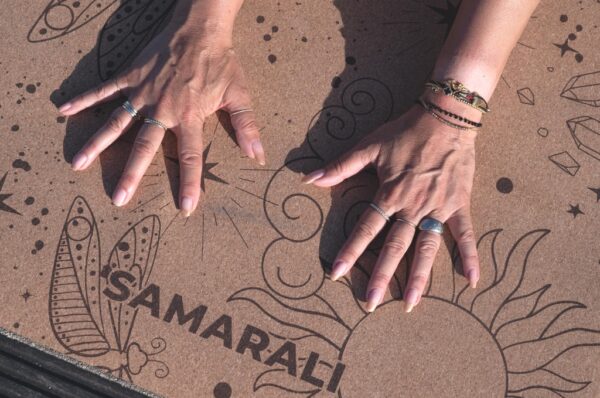
At Samarali, sustainability is at the core of everything we make. We design our products specifically for practitioners who want their wellness practice to extend beyond the mat and into the choices they make every day. An eco-friendly mat is not a compromise for beginners; in many ways, it is the better starting point.
How do you use a meditation mat correctly as a beginner?
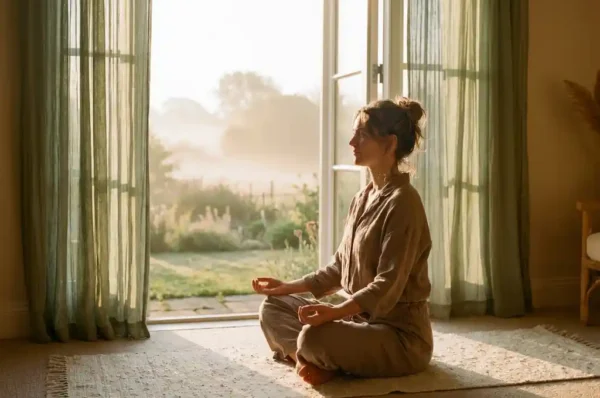
Using a meditation mat correctly as a beginner comes down to three things: positioning the mat in a quiet, dedicated space, choosing a seated posture your body can sustain, and using any additional props needed to make that posture comfortable. The mat itself is simply a defined, comfortable boundary for your practice.
Here is a simple approach to get started:
- Choose your spot: Place your mat in a quiet area with enough space around you to sit without feeling cramped. Facing a wall or a window can help anchor your attention.
- Select your posture: You do not need to sit in a full lotus to meditate. Cross-legged, kneeling (seiza), or even seated on the edge of the mat with legs extended are all valid. The goal is a posture you can hold without fidgeting.
- Add support where needed: If your hips are tight, place a folded blanket or cushion under your sitting bones. If your knees hover off the mat, support them with rolled blankets. Comfort is not a shortcut; it is essential for sustaining focus.
- Establish a consistent spot: Using the same mat in the same location each time builds a habit cue. Over time, simply sitting on your mat signals to your mind that it is time to settle.
- Start short: Begin with five to ten minutes and gradually extend your sessions as your body adapts to seated stillness.
The most important thing to remember is that the mat is a tool, not a performance. It exists to make your practice more comfortable and consistent. As a beginner, getting on the mat regularly matters far more than perfecting your posture on day one.
Frequently Asked Questions
How thick should a meditation mat be for a beginner?
For most beginners, a mat between 10 mm and 20 mm thick strikes the right balance between cushioning and stability. Thicker mats (closer to 20 mm) are especially helpful if you have sensitive knees or practice on hard floors like tile or hardwood. If you find a thick mat alone feels too soft and unstable, pairing a moderately thick mat (around 10–12 mm) with a dedicated meditation cushion is often the most effective combination.
Can I meditate on a mat without a cushion, or do I really need both?
You can absolutely start meditating on a mat alone, and many beginners do. However, a cushion becomes genuinely useful once you are sitting for longer than ten minutes, as it elevates the hips and reduces lower back strain significantly. Think of the mat as your foundation and the cushion as an optional upgrade — one that becomes less optional the longer your sessions grow.
How do I know if my meditation mat is the wrong fit for me?
The clearest sign is persistent physical discomfort that distracts you from your practice — sore knees, a slipping surface, or a mat that feels too cold or stiff. If you find yourself constantly adjusting your position or dreading sitting down, the mat may not be supporting your posture correctly. Try adding a folded blanket for extra padding first; if that resolves the issue, consider upgrading to a thicker or softer mat.
How do I clean and care for a natural material meditation mat?
Most natural cotton or jute meditation mats can be spot-cleaned with a damp cloth and a mild, natural soap, then laid flat to air dry away from direct sunlight. Avoid machine washing unless the product label specifically permits it, as repeated machine cycles can break down natural fibers and affect the mat’s shape. Airing your mat out regularly between sessions also keeps it fresh and prevents any moisture buildup from prolonged contact.
What is the best posture for a complete beginner sitting on a meditation mat?
The most accessible posture for most beginners is a simple cross-legged seat (sukhasana) with a cushion or folded blanket under the sitting bones to tilt the pelvis slightly forward. This reduces lower back rounding and makes it much easier to sit upright without muscular strain. If cross-legged sitting is uncomfortable, kneeling with a cushion between the thighs and calves (seiza position) is an equally valid alternative that many beginners find more sustainable.
Is it worth investing in a quality meditation mat right away, or should I start with something cheap?
A mid-range, quality mat from the beginning is generally the better investment. Cheap mats made from low-grade synthetic materials tend to wear quickly, lack adequate cushioning, and can actually discourage regular practice if they are uncomfortable or unpleasant to use. A well-made natural mat, on the other hand, can last for years and becomes a meaningful part of your daily ritual — and the cost per session over time makes it far more economical than replacing a budget mat every few months.
Can I use my meditation mat for other practices like breathwork or gentle stretching?
Yes, a meditation mat works well for complementary practices like breathwork (pranayama), body scan exercises, or gentle restorative stretching where you remain mostly still. Keep in mind that it is not designed for dynamic movement or vigorous yoga flows, so for those activities you will want a full-length yoga mat. Using your meditation mat exclusively for still, mindful practices can also reinforce the habit cue — your mind begins to associate that specific mat with calm and focus.
Ready to build your practice on a solid foundation? At Samarali, we offer a thoughtfully curated range of natural, sustainably made meditation essentials designed to support beginners and experienced practitioners alike. Browse our meditation mat, explore our meditation cushions to complete your setup, or discover everything in our meditation sets for a perfectly matched collection. Shop the full meditation collection now and find the tools that make showing up to your practice something you genuinely look forward to.