


The best meditation sets for Yoga Nidra include a supportive bolster, a soft blanket, a meditation mat or cushion, and optionally a neck pillow or eye pillow. Because Yoga Nidra is practiced lying completely still in Savasana for extended periods, comfort and warmth are the top priorities rather than grip or flexibility. Below, we walk through exactly what to look for, what a complete set should include, and how to choose the right setup, whether you are just starting out or deepening an established practice.
What props and accessories does Yoga Nidra actually require?
Yoga Nidra requires props that support total physical relaxation rather than active movement. The essential accessories are a cushioned mat or blanket to lie on, a bolster or rolled blanket under the knees, a blanket for warmth, and neck or head support. These props allow the body to release completely so the mind can move into the deeply restful states that define the practice.
Unlike dynamic yoga styles, Yoga Nidra is practiced entirely in Savasana, the supine resting pose. This means the body stays motionless for anywhere from 20 minutes to an hour or more. During that time, body temperature drops noticeably, muscles need passive support rather than active engagement, and even small areas of discomfort can pull attention away from the guided meditation. The right props eliminate those distractions before they arise.
The most commonly used props include:
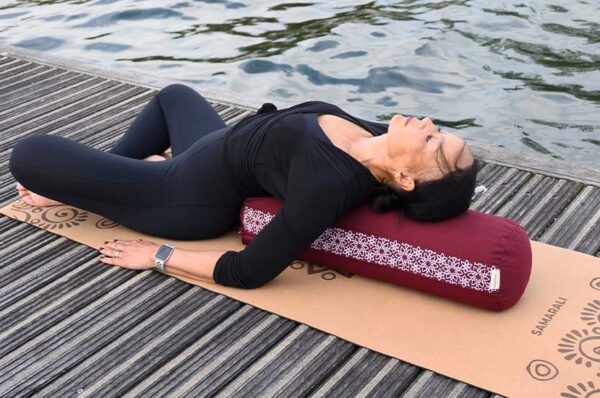
- A bolster or rolled blanket placed under the knees to release tension in the lower back
- A soft mat or folded blanket as the base layer for lying down
- A warm blanket to drape over the body, since stillness quickly makes you feel cold
- A neck pillow or thin head support to keep the cervical spine neutral
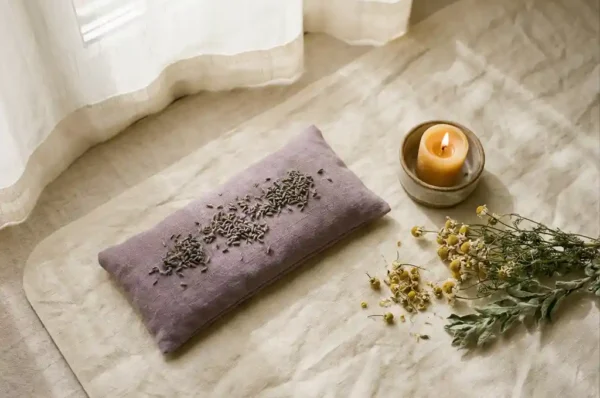
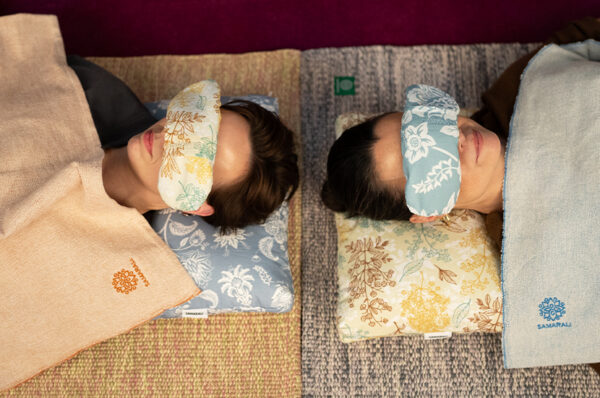
- An eye pillow to block light and gently encourage the eyes to stay closed
What should a complete meditation set for Yoga Nidra include?
A complete meditation set for Yoga Nidra should include a meditation mat, a bolster, at least one blanket, and neck or head support. Together, these four elements cover every physical need of the practice: a clean surface to lie on, lumbar support, warmth, and spinal alignment. Sets that bundle these items together are often the most practical and cost-effective starting point.
Our meditation sets are designed with exactly this kind of complete comfort in mind. When choosing or assembling a set, think of it in layers:
The base layer
A dedicated meditation mat gives you a clean, lightly cushioned surface that is distinct from your active yoga mat. Meditation mats tend to be thicker and softer underfoot, which matters enormously when you are lying still rather than moving through poses. An organic cotton yoga rug or blanket can also serve this purpose and adds a natural, grounding texture beneath the body.
The support layer
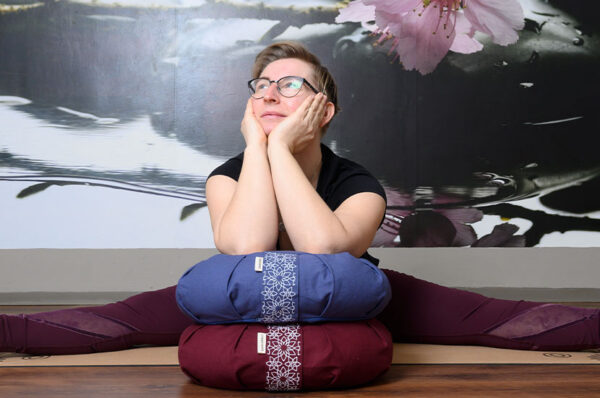
A yoga bolster placed under the knees is arguably the single most important prop for Yoga Nidra. It takes the arch out of the lower back and allows the legs to fully release. A folded blanket can substitute in a pinch, but a firm bolster holds its shape throughout a long session in a way that a blanket simply cannot. Adding a neck pillow or small cushion under the head completes the support layer by keeping the throat open and the neck relaxed.
The warmth layer
An organic cotton yoga blanket draped over the body addresses one of the most overlooked aspects of Yoga Nidra: the body cools down fast during stillness. A blanket that is breathable yet warm, and soft enough not to feel constricting, makes it much easier to stay relaxed and present throughout the session.
How do sustainable materials affect the Yoga Nidra experience?
Sustainable materials directly improve the Yoga Nidra experience by providing natural textures, breathability, and temperature regulation that synthetic alternatives cannot match. Organic cotton, natural rubber, and plant-based fibers feel softer against the skin, allow moisture to move away from the body, and do not carry the chemical off-gassing that some synthetic foams or fabrics produce. For a practice built on sensory withdrawal, removing irritants from your environment genuinely matters.
There is also a subtler benefit that many practitioners notice over time. Lying on natural materials feels grounding in a way that is hard to articulate but easy to experience. Organic cotton has a weight and warmth that synthetic fleece does not replicate. Natural rubber has a density that supports the body without feeling rigid. These qualities align naturally with the intention of Yoga Nidra, which is to settle the nervous system and move into a state of conscious rest.
From a practical standpoint, sustainable materials also tend to be more durable and easier to care for. A well-made organic cotton blanket or bolster cover will hold up to regular washing and years of use, which means less waste and better long-term value. For eco-conscious practitioners, knowing that their props were made without harmful chemicals or exploitative labor adds another layer of ease to the practice itself.
Which meditation set features matter most for beginners versus experienced practitioners?
Beginners should prioritize comfort, completeness, and ease of use, while experienced practitioners tend to prioritize material quality, precise support, and durability. The needs are not opposite, but they are weighted differently. A beginner benefits most from having everything they need in one place so they can focus on learning the practice rather than problem-solving their setup.
What beginners should look for
For someone new to Yoga Nidra, the most important feature of any meditation set is that it removes physical discomfort from the equation entirely. This means adequate padding under the body, a bolster that is firm enough to hold the knees up without deflating, and a blanket that is genuinely warm. Beginners often underestimate how cold they will get, so a generously sized blanket is a better starting point than a lightweight one. Sets that include a neck support are especially helpful, since many beginners are not yet aware of how much tension they habitually hold in the neck and jaw.
What experienced practitioners prioritize
Practitioners with an established Yoga Nidra practice typically know their body’s specific needs well. They may prefer a bolster with a firmer fill, a mat with a particular thickness, or a blanket made from a specific natural fiber. At this level, the quality and sustainability of materials become more central because experienced practitioners invest in their props for the long term. They are also more likely to care about the ethical and environmental credentials of what they buy, which is exactly where our approach to sustainable materials becomes most relevant.
Regardless of experience level, the common thread is this: Yoga Nidra rewards a setup that you have thought through carefully. The practice itself asks very little of the body, but it asks a great deal of the mind. Removing every source of physical distraction before you begin is the most effective preparation you can make.
Ready to build your perfect Yoga Nidra setup? At Samarali, you will find everything you need to practice in complete comfort — from a meditation mat and a supportive yoga bolster to a cozy organic cotton yoga blanket and a yoga neck pillow. Browse our full range of meditation sets and find the combination that supports your practice best. Shop now and make every session your most restful yet.
Frequently Asked Questions
Can I practice Yoga Nidra without a dedicated meditation set, using items I already have at home?
Yes, you can absolutely start with household items — a thick blanket folded on the floor, a rolled towel or pillow under your knees, and any warm blanket draped over your body will get you through your first sessions. However, improvised setups often fall short during longer sessions, since a rolled towel deflates, a thin blanket won’t retain enough warmth, and an unpadded floor creates pressure points that pull your attention away from the practice. Investing in a purpose-built set becomes worthwhile fairly quickly once you commit to practicing regularly.
How do I know if my bolster is the right firmness for Yoga Nidra?
A bolster is the right firmness if it holds the knees elevated without compressing down noticeably over the course of a 30–60 minute session. A quick test: place the bolster under your knees, lie back, and check whether your lower back releases flat toward the floor — if it does, the support is working. If the bolster feels too soft after 10–15 minutes and your lower back begins to tighten, it’s a sign you need a firmer fill or a supplementary folded blanket on top of it.
What's the best way to stay warm during Yoga Nidra without overheating or feeling restricted?
The key is layering light, breathable materials rather than using one very heavy blanket. An organic cotton blanket is ideal because it regulates temperature naturally — it traps enough warmth to prevent the chill that comes with stillness, but breathes well enough to prevent overheating. Before your session, consider wearing a light long-sleeved layer and socks, and drape the blanket loosely over the body rather than tucking it tightly, so you never feel constricted during the practice.
Is an eye pillow actually necessary, or is it just a nice extra?
An eye pillow is not strictly necessary, but it offers two genuine benefits that go beyond comfort: the gentle weight encourages the ocular muscles to fully relax, which in turn signals the nervous system to downshift more quickly, and it blocks ambient light that might otherwise keep the brain in a lighter state of alertness. For home practice in a darkened room you can manage without one, but many practitioners find that adding an eye pillow meaningfully deepens the quality of their rest, especially during daytime sessions.
How should I care for and clean my Yoga Nidra props to keep them in good condition?
Most organic cotton blankets and removable bolster covers can be machine washed on a gentle, cold cycle and air-dried to preserve the fiber integrity and prevent shrinkage. For the bolster insert itself, spot-clean as needed and air it out regularly rather than machine washing, since saturating the fill can cause it to clump or lose its shape. Meditation mats made from natural materials should be wiped down with a damp cloth and mild soap, then laid flat to dry — avoid folding them when damp, as this can create permanent creases.
Can the same meditation set be used for other yoga or meditation practices, or is it specific to Yoga Nidra?
A Yoga Nidra set is highly versatile and works well across a wide range of restorative and contemplative practices, including restorative yoga, yin yoga, seated meditation, and breathwork (pranayama). The bolster is especially multi-functional — it supports chest-opening poses, seated forward folds, and reclined restorative postures just as effectively as it supports Savasana. Buying a quality set for Yoga Nidra is essentially investing in a complete restorative toolkit that will serve your entire practice.
How many props do I realistically need to get started, and in what order should I prioritize them?
If you’re working with a limited budget, prioritize in this order: first a firm bolster (the single biggest comfort upgrade for Yoga Nidra), then a warm blanket, then a dedicated mat or base layer, and finally optional additions like a neck pillow or eye pillow. The bolster and blanket alone will transform the quality of your practice far more than any other combination. Once those two essentials are in place, you can add the remaining pieces gradually as your practice deepens and your understanding of your body’s specific needs becomes clearer.