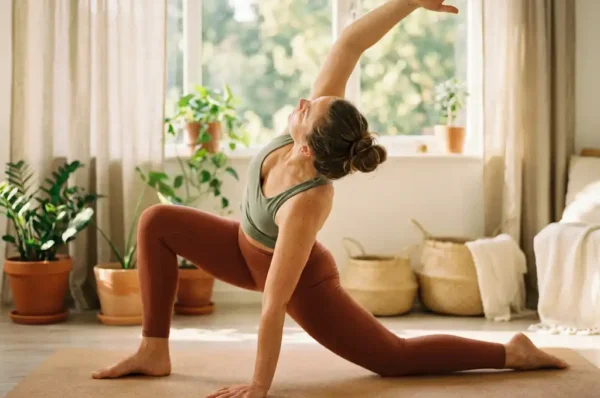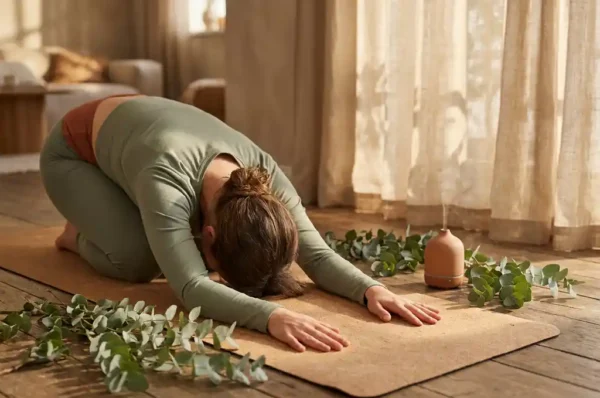



For Vinyasa yoga beginners, the essential accessories are a grippy, cushioned yoga mat, a pair of yoga blocks, and a yoga strap. These three items cover the core demands of a flowing Vinyasa practice: stability during dynamic transitions, support in poses that challenge flexibility, and safety as your body builds strength and range of motion. Below, we break down each accessory in detail so you know exactly what to buy and what to skip.
Which yoga accessories make the biggest difference for Vinyasa beginners?
The three accessories that make the biggest difference for Vinyasa beginners are a high-quality yoga mat, two yoga blocks, and a yoga strap. These cover the fundamentals of a flowing practice without overwhelming you with gear. Everything else is optional until your practice deepens and you have a clearer sense of your personal needs.
Vinyasa is a movement-based style where poses flow continuously from one to the next, often linked with breath. That means your mat is working hard every session, your body is frequently off-balance, and your flexibility is being tested in real time. A mat with reliable grip prevents slipping during transitions like Chaturanga to Upward Dog. Blocks bring the floor closer to your hands in standing forward folds and lunges, making poses accessible without forcing your body into positions it is not ready for. A strap helps you maintain alignment in seated stretches and binds, protecting your joints while you build strength and flexibility over time.
Starting with just these three items keeps things simple and affordable. You can always add more accessories later, but these are the ones that will genuinely improve your practice from day one.
What should beginners look for in a Vinyasa yoga mat?
Beginners should look for a Vinyasa yoga mat with strong grip, adequate cushioning, and a durable, non-slip surface. Because Vinyasa involves constant movement and weight shifting, grip is the single most important quality. A mat that slides or bunches during Sun Salutations creates a safety risk and breaks your flow, which is the opposite of what Vinyasa is about.
Grip and material
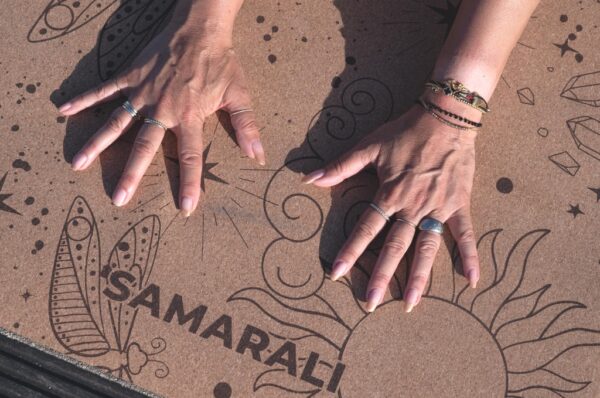
Natural rubber mats are widely regarded as the gold standard for grip in dynamic yoga styles. They provide excellent traction even when you start to sweat, and they tend to be more durable than PVC alternatives. Our natural rubber yoga mat is a strong option here, offering the kind of reliable surface that lets you focus on your breath and movement rather than your footing. If you prefer a softer, more textured feel, an organic cotton yoga rug can also work well for slower Vinyasa flows, though it offers less cushioning for kneeling poses.
Thickness and portability
For Vinyasa, a mat between 4mm and 5mm thick strikes the right balance between cushioning and stability. Thicker mats can feel spongy underfoot, which makes balancing poses harder. Thinner mats are easier to carry, which matters if you are heading to a studio. Pairing your mat with a yoga mat bag keeps it clean and makes transport straightforward.
Do beginners really need yoga blocks and straps for Vinyasa?
Yes, beginners genuinely benefit from both yoga blocks and a yoga strap in Vinyasa practice. Blocks are not a sign of limited ability; they are a tool for practicing poses correctly while your body adapts. A strap extends your reach in poses that require flexibility you have not yet developed, helping you maintain proper alignment instead of compensating with poor form.
In a typical beginner Vinyasa class, blocks are used most often in standing poses like Triangle Pose and Half Moon, where the hand needs to reach the floor but the hamstrings and hips are not yet open enough to allow that without rounding the spine. Placing a block under your hand at the right height keeps your torso long and your weight distributed correctly.
Straps come into play in seated forward folds, reclining leg stretches, and any pose that involves binding the hands behind the back. Rather than yanking your body into a shape, a strap lets you ease into the stretch with control. Over weeks and months, consistent use of a strap can actually accelerate flexibility gains because you are working in a safe range of motion rather than straining.
Two blocks and one strap are all you need to start. They are inexpensive, lightweight, and used in nearly every beginner Vinyasa session.
Are there any Vinyasa accessories beginners should skip at first?
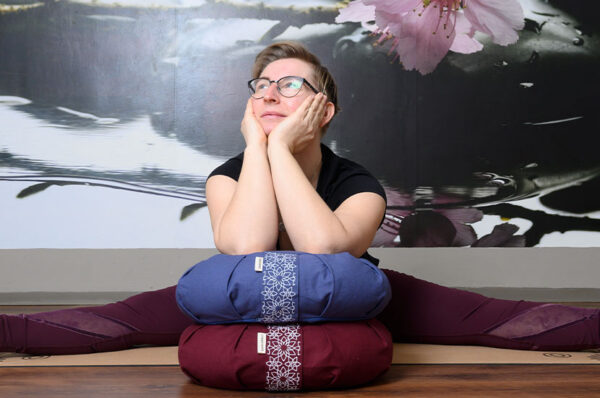
Beginners should skip yoga wheels, bolsters, and specialty props until they have a consistent practice and a clearer understanding of their individual needs. These items are genuinely useful in the right context, but they are not necessary for a standard Vinyasa flow and can add unnecessary cost and clutter when you are just getting started.
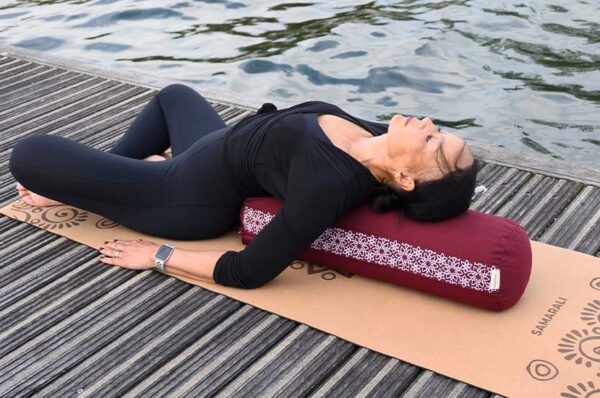
A yoga bolster, for example, is excellent for restorative yoga and Yin practices where poses are held for several minutes with the body fully supported. In a dynamic Vinyasa class, you simply will not use it. The same applies to yoga wheels, which are primarily used for deep backbends and spinal mobility work that beginners are not yet working toward.
Yoga blankets are a mild exception. They are versatile enough to double as knee padding, a seat raiser in cross-legged positions, or a light layer during final relaxation. If you practice at home on hard floors, a folded blanket can substitute for a second block in a pinch. But even a blanket is not essential on day one.
The honest advice is to start lean. Buy your mat, two blocks, and a strap, attend a few classes, and let your practice tell you what it needs next. Beginners who buy too much gear upfront often find that half of it goes unused. Invest in quality where it counts most, keep it simple, and build from there.
Frequently Asked Questions
How do I know when I'm ready to add more accessories beyond the basic three?
A good rule of thumb is to wait until you have completed at least 8–12 weeks of consistent Vinyasa practice before expanding your gear. By that point, you will have a clear sense of which poses challenge you most and which props could genuinely help. For example, if you find yourself regularly attending Yin or restorative classes alongside your Vinyasa practice, that is a natural signal to invest in a bolster. Let your practice guide your purchases rather than buying speculatively.
What's the best way to care for a natural rubber yoga mat so it stays grippy?
Clean your natural rubber mat after every session using a diluted solution of water and a few drops of mild dish soap or a dedicated yoga mat spray — avoid harsh chemicals, which can break down the rubber over time. Wipe it down with a damp cloth, then hang or lay it flat to air dry completely before rolling it up, as moisture trapped inside the roll can cause odor and deterioration. Never put a natural rubber mat in direct sunlight for extended periods or in a washing machine, as both will degrade the material and reduce its grip.
What height should I set my yoga blocks at as a beginner?
Yoga blocks typically have three height settings — flat (lowest), on their side (medium), and upright (tallest) — and as a beginner you will most often use the medium or tallest setting. Start at the tallest height in standing poses like Triangle or Half Moon, where the priority is keeping your spine long and your chest open rather than getting your hand close to the floor. As your flexibility and strength improve over weeks of practice, you can gradually lower the block height, using that progression as a built-in measure of your development.
Can I use a regular stretching strap instead of a dedicated yoga strap?
A basic cotton or nylon yoga strap is purpose-built for the job and costs very little, so it is worth buying the real thing rather than improvising. Regular stretching straps or resistance bands are not ideal substitutes — resistance bands add unwanted elastic tension that can pull your body into a pose rather than letting you ease in with control, and improvised alternatives like belts or scarves often lack the length (typically 6–8 feet) needed for seated forward folds and leg stretches. A standard yoga strap with a D-ring buckle gives you precise, adjustable length and a secure hold.
Is it worth buying a more expensive mat right away, or should I start with a budget option?
If your budget allows, investing in a quality mat from the start is genuinely worthwhile for Vinyasa specifically, because grip and durability are non-negotiable in a dynamic, sweat-generating practice. Very cheap mats tend to be made from low-grade PVC that loses its grip quickly and can bunch or slide mid-flow, which is both frustrating and a safety concern. That said, a mid-range natural rubber or quality PVC mat in the $50–$80 range is perfectly sufficient — you do not need to spend $150+ to get a mat that performs well for years.
What should I do if my hands still slip on my mat even though it's supposed to be grippy?
Hand slipping is usually caused by one of two things: sweat on the surface, or a new mat that has not yet been broken in. For sweat, a microfiber yoga towel laid over your mat provides an extra layer of traction that actually improves as it gets wetter — many experienced Vinyasa practitioners use one routinely. For a brand-new rubber mat, the factory coating can reduce grip initially; try wiping it down with a damp cloth and a little salt, then letting it air dry a few times before your first session to accelerate the break-in process.
How do I find the right Vinyasa class level as a complete beginner, and do I need to tell the teacher about my props?
Look specifically for classes labeled ‘Beginner Vinyasa,’ ‘Vinyasa Level 1,’ or ‘Slow Flow,’ as these are paced to introduce transitions gradually and give you time to find your footing. Always introduce yourself to the teacher before class and let them know you are new — a good instructor will offer modifications throughout the session and can flag which props to have nearby before you start. Bringing your blocks and strap to every class and keeping them within reach at the top of your mat means you will never be caught unprepared when a pose requires support.
Ready to set yourself up for a strong Vinyasa practice from the very first session? At Samarali, you will find everything you need to get started, including our natural rubber yoga mat for dependable grip through every flow, a yoga mat bag to carry it with ease, and a full range of thoughtfully chosen yoga accessories built for both beginners and experienced practitioners. Browse the complete yoga mat collection and find the right foundation for your practice. Shop now and start moving with confidence.