


Yes, Vinyasa yoga can genuinely improve your fitness. It builds functional strength, boosts cardiovascular endurance, and enhances flexibility all at once, making it one of the most well-rounded movement practices available. Whether you are a complete beginner or a seasoned athlete, consistent Vinyasa practice delivers measurable physical results over time.
What makes Vinyasa particularly effective is its dynamic, flowing nature. Unlike static styles of yoga, Vinyasa links breath to movement in continuous sequences, which keeps your heart rate elevated and your muscles working throughout the entire session. Below, we break down exactly what kind of fitness gains you can expect and how to make the most of your practice.
What kind of workout does Vinyasa yoga actually give you?
Vinyasa yoga is a full-body workout that combines strength, flexibility, balance, and cardiovascular conditioning in a single session. Each class moves through a flowing sequence of postures, transitioning continuously from one pose to the next in sync with the breath. This keeps the body in near-constant motion, engaging multiple muscle groups simultaneously rather than isolating them one at a time.
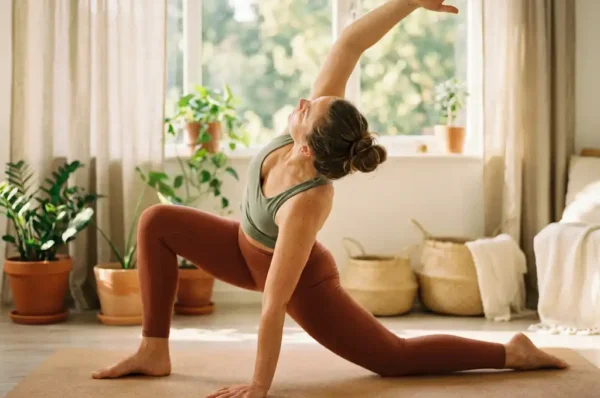
A typical Vinyasa class will challenge your upper body through poses like Plank, Chaturanga, and Downward Dog. Your core is engaged almost constantly as a stabilising force. Standing sequences work the legs, glutes, and hips, while twists and backbends target the spine and supporting muscles. Because the transitions themselves require control and coordination, your stabiliser muscles get a thorough workout that you simply do not get from conventional gym training.
The intensity of Vinyasa can vary widely depending on the teacher and the pace of the class. A slow, mindful flow will still challenge your strength and mobility, while a faster-paced power Vinyasa class can feel genuinely demanding. Either way, you will typically finish a session feeling both physically worked and mentally refreshed, which is part of what makes this style so appealing to wellness-minded practitioners.
Does Vinyasa yoga build strength and muscle tone?
Vinyasa yoga does build functional strength and visible muscle tone, particularly in the core, arms, shoulders, and legs. The practice uses bodyweight resistance across a wide range of movement patterns, which stimulates muscle development in a way that supports everyday movement and athletic performance. Over time, regular practitioners typically develop lean, defined muscle without the bulk associated with heavy lifting.
The key mechanism here is time under tension. Holding and transitioning through poses like Warrior II, Chair Pose, and Boat Pose keeps muscles engaged for extended periods, which is an effective stimulus for building endurance-based strength. Chaturanga Dandasana, the low push-up position that appears repeatedly in Vinyasa sequences, is particularly demanding on the triceps, chest, and shoulders.
It is worth being realistic about the limits of yoga as a strength-building tool. If your primary goal is to maximise muscle mass, progressive overload with external weights will always be more efficient. However, for functional strength, postural integrity, and the kind of muscle tone that supports a healthy, active body, Vinyasa yoga is genuinely effective. Many practitioners find it complements their existing training beautifully, filling in the gaps that conventional gym work tends to leave.
Having a reliable surface to practice on makes a real difference when you are holding demanding poses. A yoga mat with good grip and cushioning helps you focus on building strength rather than worrying about slipping during transitions.
Is Vinyasa yoga enough cardio on its own?
Vinyasa yoga can provide meaningful cardiovascular exercise, but whether it is enough on its own depends on your fitness goals and the intensity of your practice. A vigorous Vinyasa class raises your heart rate into the moderate intensity zone, which contributes to cardiovascular health and calorie expenditure. For general wellness, this is often sufficient. For specific athletic or weight-loss goals, you may benefit from pairing it with other forms of cardio.
The cardiovascular effect of Vinyasa is driven by the continuous, rhythmic nature of the flow. Unlike restorative yoga styles where you hold passive poses, Vinyasa keeps you moving. Sun Salutations in particular are excellent for elevating the heart rate, and a class that includes multiple rounds can feel genuinely aerobic, especially in the early stages of your practice.
That said, Vinyasa yoga is not equivalent to running, cycling, or HIIT training in terms of sustained cardiovascular intensity. The breath-led pace naturally prevents you from pushing into high-intensity zones for prolonged periods. This is not a flaw; it is by design. The practice is built around sustainable effort and breath awareness, which actually makes it very accessible for people who find high-impact cardio difficult or unenjoyable.
For most people in 2026 who are looking to support general health, manage stress, and stay active, Vinyasa yoga as a regular practice provides more than adequate cardiovascular benefit. If you have specific endurance goals, think of Vinyasa as a complementary practice rather than a complete replacement for dedicated aerobic training.
How often should you practice Vinyasa yoga to see fitness results?
Practising Vinyasa yoga three to five times per week is generally enough to see noticeable fitness results within four to eight weeks. Consistency matters far more than duration. Three focused sessions per week will produce better results than one long session followed by days of inactivity. Beginners often see improvements in strength, flexibility, and energy levels relatively quickly because the body adapts rapidly to new movement demands.
Here is a practical guide based on your starting point:
- Beginners: Start with two to three sessions per week, allowing rest days in between. Focus on learning the foundational poses and building body awareness before increasing frequency.
- Intermediate practitioners: Three to four sessions per week is a sweet spot for building strength and improving cardiovascular fitness without overtraining.
- Advanced practitioners: Five or more sessions per week is sustainable for experienced practitioners, especially when varying the intensity between vigorous flows and gentler, recovery-focused classes.
Recovery is an important part of the equation. Vinyasa yoga does stress the muscles and connective tissues, particularly in the shoulders, wrists, and hips. Rest days and gentler movement on recovery days help the body adapt and reduce the risk of overuse injuries.
If you are just getting started and building out your home practice, having the right yoga sets can help you stay consistent and make each session feel intentional. Investing in quality equipment signals to yourself that this practice matters, which genuinely supports long-term commitment.
Ultimately, the best frequency is the one you can sustain. Even two sessions per week practiced consistently over several months will produce meaningful fitness improvements. Vinyasa yoga rewards patience and regularity more than intensity alone.
Ready to take your Vinyasa practice to the next level? At Samarali, you will find everything you need to support a consistent and rewarding practice. Whether you are looking for a high-performance natural rubber yoga mat that keeps you grounded through every transition, a cosy organic cotton yoga blanket for cool-down and recovery, or a complete yoga set to set up your space with intention, Samarali has you covered. Shop the yoga collection now and invest in the tools that make showing up on the mat something to look forward to.
Frequently Asked Questions
Can I do Vinyasa yoga if I have no prior yoga experience?
Absolutely. Vinyasa yoga is accessible to complete beginners, though it helps to start with a beginner-specific class or a slower-paced flow to learn the foundational poses before moving into faster sequences. Many studios and online platforms offer beginner Vinyasa courses that break down key transitions like Chaturanga and Downward Dog so you can build confidence safely. Do not worry about keeping up perfectly from day one — the practice is progressive by nature, and your body will adapt quickly with consistent effort.
What is the best time of day to practice Vinyasa yoga for fitness results?
There is no universally ‘best’ time — the most effective time is whichever slot you can commit to consistently. Morning practice tends to energise the body and set a focused tone for the day, while evening sessions can help decompress stress and improve sleep quality. If your goal is athletic performance, some research suggests that the body is physically warmer and more mobile in the late afternoon, which can make vigorous flows feel more fluid. Ultimately, consistency beats timing every time.
How do I avoid wrist pain during Vinyasa yoga?
Wrist discomfort is one of the most common complaints among Vinyasa practitioners, particularly in poses like Plank, Chaturanga, and Downward Dog. The key fix is to spread your fingers wide and actively press through the knuckles and fingertips to distribute weight evenly rather than sinking into the heel of the hand. Building wrist strength gradually, taking breaks when needed, and using a supportive yoga mat with adequate grip can all make a significant difference. If pain persists, consider using yoga blocks or fists for weight-bearing poses while your wrists build the necessary strength.
Can Vinyasa yoga help with weight loss?
Vinyasa yoga can support weight loss as part of a balanced lifestyle, though it works differently from high-intensity calorie-burning workouts. A vigorous Vinyasa session can burn between 300 and 500 calories per hour depending on body weight and class intensity, while also building lean muscle that raises your resting metabolic rate over time. Perhaps more importantly, regular yoga practice has been shown to reduce stress-related cortisol levels, which can otherwise contribute to weight retention. Pairing Vinyasa with mindful eating habits tends to produce the most sustainable results.
Should I combine Vinyasa yoga with weight training, or will they conflict?
Vinyasa yoga and weight training complement each other exceptionally well and are unlikely to conflict when programmed thoughtfully. Yoga improves the mobility, joint stability, and postural alignment that heavy lifting demands, while weight training builds the raw strength that supports more advanced yoga poses. A common approach is to schedule yoga on rest or recovery days from lifting, or to use a short flow as a warm-up or cool-down. The main thing to watch is cumulative shoulder and wrist load — if both practices are heavy on those areas on the same day, give yourself adequate recovery time.
How long does it take to see visible fitness results from Vinyasa yoga?
Most practitioners notice initial improvements in energy, posture, and flexibility within two to three weeks of consistent practice. Visible changes in muscle tone and cardiovascular fitness typically become apparent between four and eight weeks when practicing three or more times per week. Strength gains in the core, arms, and legs tend to be among the first noticeable physical changes, followed by improved endurance and body composition over the following months. Progress accelerates when you combine regular practice with adequate sleep, hydration, and nutrition.
What should I do if a Vinyasa class feels too intense or overwhelming?
It is completely normal for Vinyasa to feel challenging, especially in the early weeks — but feeling overwhelmed is a signal to modify rather than push through. Most poses have accessible variations: knees can come down in Plank, Cobra can replace Upward Dog, and Child’s Pose is always available as a reset at any point in the class. A good teacher will offer modifications throughout, but do not hesitate to take them even if no one else does. Choosing a slower-paced or beginner-labelled class until your base fitness and familiarity with the sequences builds up is a smart and sustainable strategy.