


The best yoga shorts for Vinyasa yoga are form-fitting, stretchy, and made from moisture-wicking fabric that moves with your body through fast-paced sequences. Look for a secure waistband, a gusset for a full range of motion, and a length that keeps you comfortable during deep lunges and forward folds. Below, we break down exactly what to look for so you can choose with confidence.
What features should yoga shorts have for Vinyasa yoga?
Yoga shorts for Vinyasa yoga need four core qualities: four-way stretch fabric, moisture management, a secure waistband, and a reinforced gusset. Because Vinyasa is a flow-based practice that links breath to movement, your shorts must keep up with constant transitions without riding up, restricting your hips, or becoming uncomfortable from sweat.
Here is what to prioritize when assessing any pair:
- Four-way stretch: Vinyasa sequences like Warrior flows, Downward Dog, and Chair Pose demand fabric that stretches in every direction without snapping back too tightly.
- Moisture-wicking material: A dynamic practice generates heat quickly. Fabric that pulls sweat away from the skin keeps you dry and prevents chafing during longer sessions.
- Secure, non-rolling waistband: A wide waistband with a flat inner lining stays in place through inversions and forward folds. Avoid thin elastic bands that dig in or roll down.
- Gusset construction: A triangular or diamond gusset at the crotch allows a full range of hip movement without seam stress or discomfort.
- Flat seams: Raised seams create friction during mat work. Flatlock or bonded seams sit flush against the skin and are far more comfortable during floor sequences.
Fabric composition matters too. Blends of recycled polyester or organic cotton with a small percentage of elastane tend to strike the best balance between stretch, breathability, and shape retention over time.
What’s the difference between yoga shorts and regular workout shorts for Vinyasa?
The key difference between yoga shorts and regular workout shorts for Vinyasa is fit and fabric intent. Yoga shorts are cut specifically for floor-based, multidirectional movement, with a closer fit, a higher gusset, and softer fabric. Regular workout shorts are often designed for linear movement like running or cycling, which means they can bunch, gap, or restrict during yoga flows.
Regular gym shorts frequently have looser cuts, pockets, and heavier fabrics that work well on a treadmill but become a liability on the mat. During a Sun Salutation, excess fabric bunches at the hips. During a seated forward fold, a loose waistband gaps. These are small annoyances that compound quickly in a 60-minute Vinyasa class.
Yoga-specific shorts also tend to sit higher on the thigh and use softer, lighter fabrics that do not create friction against the mat surface. If you practice on a yoga mat, the interaction between your shorts and the mat surface actually affects grip and stability in standing poses, something regular workout shorts are not designed to consider.
The bottom line is that regular workout shorts can work in a pinch, but purpose-built yoga shorts will consistently feel better, perform better, and hold their shape through repeated washing and practice.
Are sustainable yoga shorts as good as conventional ones for Vinyasa?
Yes, sustainable yoga shorts are absolutely as good as conventional ones for Vinyasa yoga, and in many cases they perform better. Modern eco-friendly fabrics like recycled polyester, TENCEL, and organic cotton blends with elastane offer the same stretch, moisture management, and durability as virgin synthetic materials, without the environmental cost.
A common misconception is that sustainable means compromising on performance. The reality is that material science has advanced significantly, and recycled fibers now match conventional synthetics in stretch recovery and wash durability. What matters most is the fabric construction and fit, not whether the raw material was virgin or recycled.
There are also practical benefits specific to natural and recycled materials. Organic cotton blends tend to be softer against the skin during long practices, and TENCEL-based fabrics have natural temperature-regulating properties that feel particularly good during the heat generated in a strong Vinyasa flow.
At Samarali, we design our yoga sets around this exact principle: sustainable materials should enhance your practice, not limit it. Choosing eco-conscious activewear means you can move freely, feel good, and know your kit aligns with the values that brought you to yoga in the first place.
How do you choose the right fit and length for Vinyasa yoga shorts?
For Vinyasa yoga, choose shorts with a snug but not restrictive fit and a length that sits mid-thigh or slightly above. This length keeps the fabric out of the way during deep hip openers and lunges while providing enough coverage to feel comfortable in all positions, including inversions and wide-legged poses.
Getting the fit right
The fit should feel close to the body without compressing. When you try on a pair, perform a quick squat and a wide lateral lunge before committing. The fabric should move with you, not pull or shift. The waistband should sit flat and stay in place when you hinge forward at the hips. If it rolls or gaps at the back, size up or try a different waistband style.
Pay attention to how the fabric feels against your inner thigh. Vinyasa involves a lot of standing poses and transitions where thighs brush together. A fabric that grips or creates friction will become distracting quickly, so prioritize smooth, soft materials in that area.
Choosing the right length
Length is largely personal, but mid-thigh is the most versatile for Vinyasa. Shorter inseams (two to three inches) offer maximum freedom but can feel exposing during seated and supine poses. Longer shorts that reach just above the knee work well if you prefer more coverage, though they can occasionally restrict knee bend depth in low lunge variations.
If you run warm or practice in a heated studio, a shorter length helps with temperature regulation. If you practice in a cooler environment or prefer more coverage, a slightly longer cut works just as well without sacrificing mobility, provided the fabric has good stretch. The most important thing is that you feel confident and unrestricted from the first pose to the last.
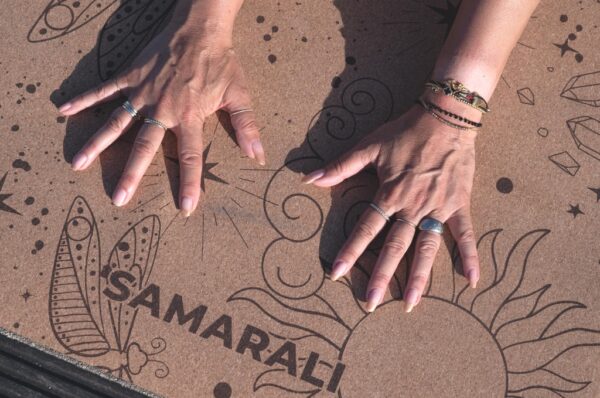
Ready to find your perfect pair? At Samarali, we offer a thoughtfully curated range of sustainable yoga apparel designed to move with you through every flow. Whether you’re looking for a complete yoga set or just the right bottoms to pair with your practice, our yoga collection has you covered. Pair your new shorts with a natural rubber yoga mat for superior grip and support, or add an organic cotton yoga blanket for cooler sessions and restorative practices. Shop the collection now and gear up for your best practice yet.
Frequently Asked Questions
How do I know if my yoga shorts will stay in place during inversions like Downward Dog or Headstand?
The best way to test this before committing to a pair is to perform a forward fold and a simulated Downward Dog in the fitting room or at home. A secure pair should have a wide, flat waistband that doesn’t roll or slip at the back, and the hem should not ride up toward the hips when you hinge forward. Look specifically for a bonded or elasticated inner waistband lining, as this is the feature most responsible for keeping shorts anchored during inverted or weight-bearing positions.
How should I care for my yoga shorts to make sure they keep their stretch and shape over time?
Always wash yoga shorts in cold water on a gentle cycle and avoid tumble drying, as heat degrades elastane fibers and causes fabric to lose its stretch recovery over time. Turn them inside out before washing to protect the outer surface and reduce pilling. Avoid fabric softeners, as they coat moisture-wicking fibers and reduce their ability to pull sweat away from the skin. Air drying flat or hanging is the best method for preserving both shape and performance.
Can I wear yoga shorts for other types of yoga, like Yin or Restorative, or are they only suited to Vinyasa?
Yoga shorts designed for Vinyasa work perfectly well for Yin, Restorative, and Hatha yoga too, since the core requirements — comfort, stretch, and a non-restrictive fit — apply across all styles. The main consideration for slower, floor-based practices like Yin is warmth, since you’re holding poses for several minutes without generating much body heat. In those cases, you may want to layer with a light blanket or opt for a slightly longer cut. For any dynamic or heated style, Vinyasa-specific shorts are an excellent all-round choice.
What's the most common mistake people make when buying yoga shorts for Vinyasa?
The most common mistake is prioritizing style or price over fabric quality and construction, particularly ignoring whether the shorts have a proper gusset. Without a gusset, seams at the crotch are placed under significant stress during wide-legged poses and deep lunges, which leads to discomfort, restricted movement, and premature wear. A second common mistake is buying shorts that fit well standing up but haven’t been tested in movement — always squat, lunge, and fold forward before deciding, as fit can change dramatically once you’re on the mat.
Are there specific fabric types I should avoid for a hot or heated Vinyasa class?
Avoid thick cotton-only fabrics for heated Vinyasa classes, as 100% cotton absorbs sweat rather than wicking it away, leaving you feeling heavy, damp, and uncomfortable as the class progresses. Similarly, avoid fabrics with a heavy GSM (grams per square meter) weight, as these trap heat rather than releasing it. Instead, look for lightweight recycled polyester blends or TENCEL-based fabrics with a small percentage of elastane, which offer breathability, moisture management, and stretch in equal measure.
How do I find the right waistband style if I have a longer torso or a higher hip-to-waist ratio?
If you have a longer torso or a more pronounced hip-to-waist ratio, look for shorts with a high-rise waistband that sits at or just above the natural waist rather than resting on the hips. This provides better coverage during forward folds and prevents the back of the waistband from gapping or pulling away from the body. Wide waistbands of at least three to four centimetres also distribute pressure more evenly and are less likely to roll or dig in regardless of body shape.
Is it worth investing in a matching yoga set, or is it fine to mix and match tops and shorts from different brands?
Mixing and matching is absolutely fine for performance purposes — what matters most is that each piece fits well and functions correctly on its own. That said, investing in a coordinated yoga set can offer practical advantages: fabrics are designed to work together in terms of stretch, weight, and moisture management, and the aesthetic cohesion can contribute to feeling more focused and put-together in class. If you do mix brands, just make sure your top is long enough to stay tucked or secure during inversions so it doesn’t fall forward and distract you mid-flow.