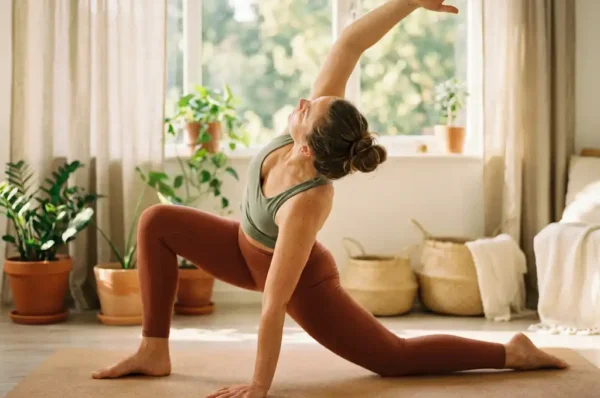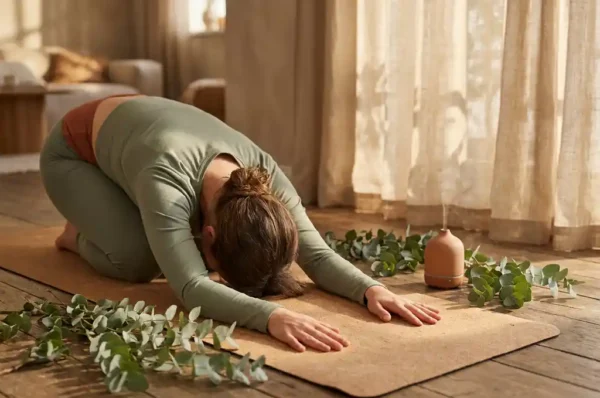



For Vinyasa yoga, wear form-fitting, moisture-wicking activewear that moves freely with your body. Because Vinyasa is a dynamic, flow-based practice with continuous transitions between poses, your clothing needs to stay in place, manage sweat, and allow a full range of motion without restriction. Below, we break down the best fabrics, fits, tops, and bottoms to help you feel confident on the mat.
What fabrics work best for Vinyasa yoga?
The best fabrics for Vinyasa yoga are moisture-wicking, stretchy, and breathable. Since Vinyasa is a continuous flow practice that builds heat quickly, you need materials that pull sweat away from your skin, dry fast, and move with your body. Synthetic blends like nylon and spandex are popular choices, but natural options like organic cotton also work well for lighter sessions.
Here is a quick breakdown of the most common fabric options and what each does best:
- Nylon-spandex blends: Lightweight, highly stretchy, and excellent at wicking moisture. These are the go-to choice for high-intensity Vinyasa flows where you expect to sweat heavily.
- Polyester-spandex blends: Durable and moisture-wicking, though slightly less soft than nylon. A solid everyday option that holds its shape well over time.
- Organic cotton: Breathable and gentle on the skin, making it a great choice for slower or moderate Vinyasa sessions. It absorbs moisture rather than wicking it, so it can feel heavier in a very sweaty class.
- Bamboo fabric: Naturally soft, breathable, and antibacterial. A more sustainable option that works well for practitioners who prefer natural fibres but still want some performance benefit.
If sustainability matters to you as much as performance, look for activewear made from certified organic or recycled materials. At Samarali, we prioritize eco-conscious materials across our yoga range precisely because what you wear should feel good for you and the planet.
Should you wear tight or loose clothing for Vinyasa yoga?
For Vinyasa yoga, form-fitting or close-to-body clothing is generally the better choice. Loose, baggy garments tend to shift, bunch, or fall forward during inversions and forward folds, which can be distracting and can even limit your instructor’s ability to give you alignment cues. Fitted clothing stays in place through fast transitions and gives you a clear sense of where your body is in space.
That said, “fitted” does not have to mean uncomfortably tight. The ideal fit is snug enough to stay put but relaxed enough that you never feel restricted in a deep lunge or a wide-legged forward fold. If you prefer a looser feel, look for tapered or athletic-cut pieces that are cut close at the waist and thigh but still allow movement, rather than oversized styles.
The key test is simple: put on the outfit and move through a few poses at home. If anything rides up, falls forward, or needs constant adjusting, it is not the right fit for a flowing Vinyasa class.
What should you wear on top for Vinyasa yoga?
The best tops for Vinyasa yoga are fitted tanks, cropped tops, or close-cut short-sleeve shirts made from moisture-wicking fabric. A top that sits close to the body without excess fabric will stay in place during downward dog, chaturanga, and other poses where you are parallel to or inverted toward the floor. Built-in shelf bras or removable padding can add support without the bulk of a separate sports bra underneath.
Sports bras as standalone tops
Many Vinyasa practitioners wear a supportive sports bra as their only top layer, especially in warmer studios. This works well if the bra offers enough coverage and support for your comfort level. Look for medium to high-impact support with wide straps that will not dig in during shoulder openers or arm balances.
Layering for warmth at the start of class
If your studio is cool or you like to ease into movement, a lightweight long-sleeve layer that you can remove mid-class is a practical option. Choose a fitted style in a thin, breathable fabric so it does not add unnecessary bulk. Avoid hoodies or sweatshirts with large front pockets, as these tend to get in the way during floor-based poses.
What bottoms are best for Vinyasa yoga?
The best bottoms for Vinyasa yoga are high-waisted leggings or fitted yoga shorts made from a stretchy, moisture-wicking fabric. High-waisted leggings are the most popular choice because they stay securely in place through the full range of Vinyasa movements, from deep hip openers to twists and inversions, without sliding down or requiring adjustment between poses.
When choosing between leggings and shorts, consider your personal preference and the temperature of your practice space:
- Full-length leggings: Offer full coverage and grip on the mat during poses like warrior three or pigeon. Ideal for cooler studios or practitioners who prefer more coverage.
- Capri or 7/8 leggings: A versatile middle ground that gives freedom around the ankle while still offering thigh and knee coverage. Great for warmer classes.
- Fitted yoga shorts: Allow maximum airflow and freedom of movement. Best suited for hot or warm Vinyasa classes. Look for a mid-thigh length with a secure waistband that will not roll during movement.
Whatever style you choose, pair your bottoms with a quality mat that supports your practice. Our natural rubber yoga mat provides the grip and cushioning that complement a strong Vinyasa flow, keeping you stable no matter how dynamic the sequence gets. If you are building out your full practice setup, explore our yoga sets for thoughtfully curated combinations of sustainable gear.
Frequently Asked Questions
How do I know if my yoga outfit is truly squat-proof and opaque enough for Vinyasa class?
The easiest home test is to put on your leggings or shorts, stand in front of a mirror, and bend forward into a forward fold or squat position. If you can see through the fabric or notice it becoming sheer when stretched, it is not suitable for a Vinyasa class. Many high-quality activewear brands use a double-layer gusset or a higher fabric density specifically to ensure opacity during dynamic movement.
Can I wear regular gym or athletic wear to a Vinyasa yoga class, or do I need specific yoga clothing?
General athletic wear can work for Vinyasa yoga as long as it meets the core requirements: moisture-wicking fabric, a secure fit, and a full range of motion. However, standard gym leggings or running shorts are sometimes cut for forward-facing movement rather than multi-directional flexibility, so they may shift or restrict deep hip openers and twists. Yoga-specific clothing is designed with these movement patterns in mind, making it a worthwhile investment if you practice regularly.
What should I wear to a heated or hot Vinyasa class specifically?
For heated Vinyasa classes, opt for minimal, lightweight layers — a supportive sports bra or fitted crop top paired with short or capri-length leggings is ideal. Prioritize fabrics with strong moisture-wicking properties, such as nylon-spandex blends, that dry quickly and do not cling uncomfortably as sweat builds. Avoid cotton in hot classes, as it absorbs moisture and becomes heavy and uncomfortable very quickly under high-heat conditions.
How many yoga outfits do I realistically need if I practice Vinyasa several times a week?
A practical starting point is three to four complete outfits if you practice three or more times per week. This gives you enough rotation to wash and fully dry each set between sessions without rushing — activewear should always be air-dried rather than tumble-dried to preserve the elasticity of the fabric. Having a small, well-curated wardrobe of quality, versatile pieces is more cost-effective and sustainable than accumulating many lower-quality items.
Are there any clothing features I should specifically avoid for Vinyasa yoga?
Yes — avoid tops or bottoms with large decorative hardware like metal zippers, buttons, or thick seams along the spine or hips, as these press uncomfortably into your body during floor poses and can scratch your mat. Drawstring waistbands that sit at the front can dig in during forward folds, and overly loose or flared hems on tops will fall forward during inversions. Sticking to clean, minimal designs with flat seams will make your practice significantly more comfortable.
How should I care for my Vinyasa yoga clothing to make it last longer?
Wash activewear in cold water on a gentle cycle and always air-dry rather than using a tumble dryer, as heat degrades spandex and elastic fibres over time. Turn garments inside out before washing to protect the outer surface and reduce pilling. Avoid fabric softeners, as they coat moisture-wicking fibres and reduce their performance — a small amount of white vinegar in the rinse cycle is a natural alternative that neutralises odour without damaging the fabric.
Is there anything specific to consider when choosing yoga clothes as a beginner to Vinyasa?
As a beginner, prioritise comfort and confidence over style — start with one or two well-fitting, high-waisted leggings and a fitted top or sports bra in a fabric that feels good against your skin. You do not need to invest in an entire wardrobe before your first class; focus on fit and freedom of movement first, then refine your preferences as you become more familiar with the practice. Many beginners also find it helpful to visit a studio or try on pieces in person before buying, since fit varies significantly between brands.
Ready to bring your Vinyasa practice together with gear that matches your intention? At Samarali, every piece is chosen with both performance and sustainability in mind. Ground your flow on our natural rubber yoga mat, add comfort and versatility with our organic cotton yoga blanket, or browse our complete yoga sets for a thoughtfully curated practice setup. Shop the full yoga collection at Samarali and find everything you need to move, flow, and feel your best on the mat.