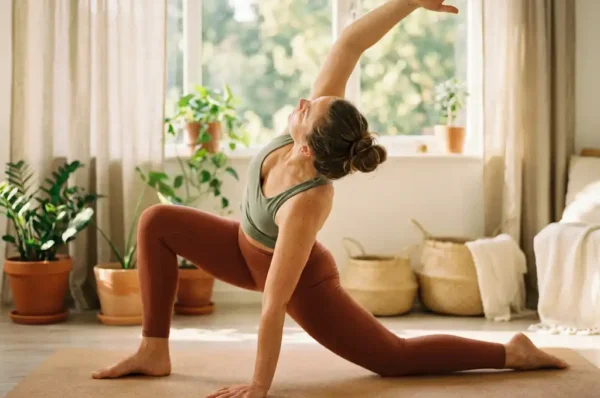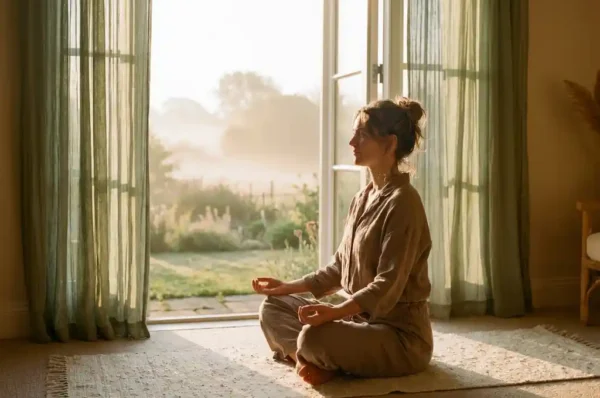



Vinyasa yoga is suitable for beginners, but it does come with a learning curve. The flowing, movement-based style can feel fast-paced at first, so new practitioners benefit most from starting with beginner-specific vinyasa classes rather than jumping into a general all-levels session. Below, we unpack the key questions every beginner has before stepping onto the mat.
What makes vinyasa yoga challenging for new practitioners?
Vinyasa yoga is challenging for beginners primarily because of its continuous, breath-linked movement. Unlike static styles where you hold a pose and settle in, vinyasa flows from one posture to the next without stopping, which means new practitioners must simultaneously learn the poses, coordinate their breathing, and keep pace with the class. That is a lot to manage at once.
A few specific factors tend to trip beginners up in their first vinyasa classes:
- Unfamiliar pose vocabulary: Instructors often use Sanskrit names like Chaturanga, Adho Mukha Svanasana, or Uttanasana. Without prior exposure, it can feel like following directions in a foreign language.
- Upper body strength demands: Transitions like Chaturanga Dandasana (a low push-up position) require shoulder and arm strength that most beginners have not yet built.
- Breath-movement synchronisation: Matching an inhale or exhale to each movement is a core principle of vinyasa, but it takes time and practice to feel natural.
- Pace of the class: A standard vinyasa class moves quickly. Beginners often spend half the class trying to figure out what is happening rather than actually practising.
None of these challenges are reasons to avoid vinyasa yoga. They are simply things to be aware of so you can prepare and choose the right entry point into the practice.
Can a complete beginner start with vinyasa yoga?
Yes, a complete beginner can absolutely start with vinyasa yoga, provided they choose a class that is specifically designed for beginners or newcomers to the style. Many studios and online platforms offer introductory vinyasa courses that slow down the transitions, explain pose names, and progressively build foundational strength. Starting there makes a significant difference.
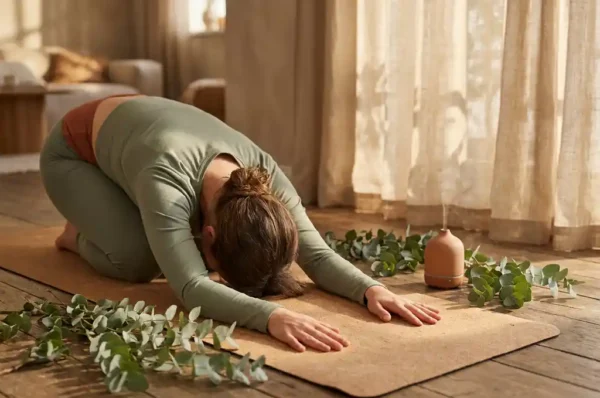
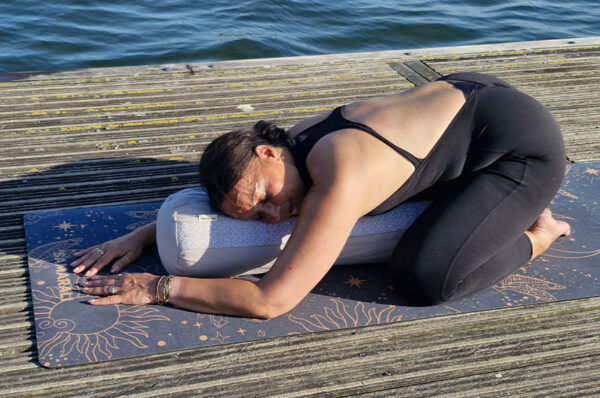
That said, a few things will make the experience more manageable and enjoyable from day one. First, arriving a few minutes early and letting the instructor know you are new gives them the chance to offer modifications and keep an eye on your alignment. Second, giving yourself permission to pause, rest in Child’s Pose, or simply observe is not giving up. It is smart practice.
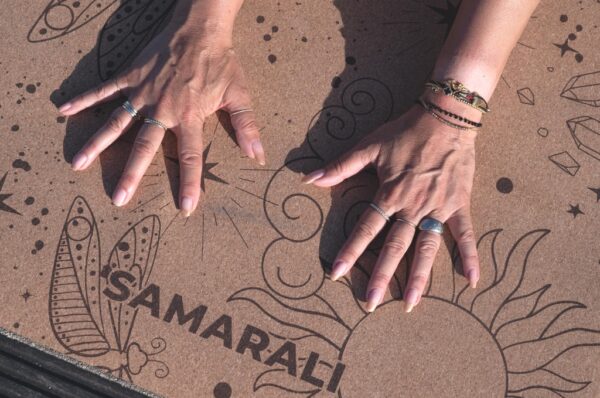
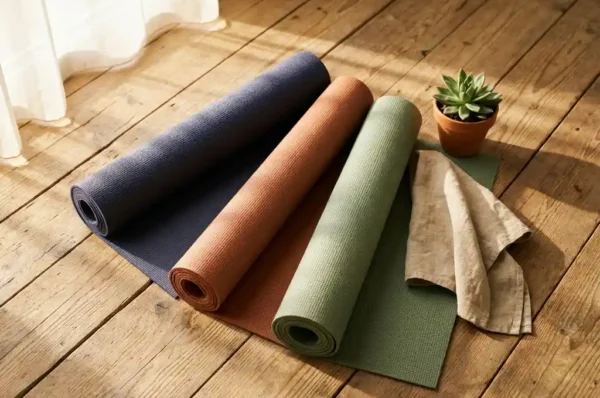
Having the right support under you also helps. A grippy, well-cushioned mat reduces the mental distraction of slipping or discomfort, letting you focus on learning the movements. Our natural rubber yoga mat is a solid choice for beginners who want reliable grip without compromising on sustainability.
The honest truth is that every experienced vinyasa practitioner was once a complete beginner who felt confused in their first class. The style rewards consistency, and most people find that after just a handful of sessions, the flow starts to feel far more intuitive.
What should a beginner know before their first vinyasa class?
Before your first vinyasa class, the most important thing to know is that you do not need to keep up perfectly. Vinyasa yoga is a personal practice, not a performance. Understanding a handful of foundational poses and the basic breath rhythm will give you enough of a framework to follow along and get genuine value from the session.
Here is what will genuinely help you prepare:
- Learn the core poses in advance: Downward-Facing Dog, Plank, Chaturanga, Cobra or Upward-Facing Dog, and Warrior I and II appear in almost every vinyasa sequence. Familiarising yourself with these shapes before class removes a lot of guesswork.
- Understand the basic breath rule: Inhale on expansive or upward movements, exhale on contracting or downward ones. You will not always get it right, and that is fine.
- Wear comfortable, form-fitting clothing: Loose fabric can get in the way during inversions and forward folds. Fitted activewear lets you and your instructor see your alignment clearly.
- Eat lightly beforehand: A full stomach and inversions do not mix well. Aim to eat at least two hours before class.
- Bring water and a towel: Vinyasa is an active style. You will likely work up a sweat, especially in heated classes.
Mentally, the best preparation is simply lowering your expectations for the first session. Treat it as an orientation rather than a workout. You are learning a new physical language, and fluency comes with repetition, not perfection.
How is vinyasa yoga different from other beginner-friendly styles?
Vinyasa yoga differs from other beginner-friendly styles primarily in its pace and structure. Styles like Hatha, Yin, and Restorative yoga hold poses for longer periods, giving beginners time to settle into each shape, focus on alignment, and breathe without feeling rushed. Vinyasa, by contrast, links movement to breath in a continuous sequence, which makes it more dynamic but also more demanding to follow initially.
Vinyasa vs. Hatha yoga
Hatha yoga is widely considered the most accessible starting point for complete beginners. Classes typically move at a slower pace, hold poses for several breaths, and place strong emphasis on alignment and breathwork. Vinyasa evolved from Hatha principles but adds the flowing, choreographed element that makes it feel more like a moving meditation. If you find vinyasa overwhelming at first, a few Hatha classes can build your pose vocabulary and body awareness before you return to the flow.
Vinyasa vs. Yin and Restorative yoga
Yin and Restorative yoga sit at the opposite end of the spectrum from vinyasa. These styles involve passive poses held for several minutes, targeting deep connective tissue and encouraging complete physical relaxation. They are excellent for flexibility, stress relief, and recovery, but they do not build the strength or cardiovascular stamina that vinyasa develops over time. Many experienced practitioners actually combine vinyasa with Yin or Restorative sessions to balance effort with rest.
Ultimately, vinyasa is a rewarding style for beginners who enjoy movement, want to build strength and flexibility simultaneously, and are drawn to the meditative quality of flowing sequences. Exploring our range of yoga mats is a good first step toward setting yourself up with the right foundation before your first class.
Frequently Asked Questions
How many vinyasa classes per week should a beginner aim for?
For beginners, two to three sessions per week is an ideal starting point. This frequency gives your body enough time to recover between sessions while still building the muscle memory and breath awareness that make vinyasa feel more natural over time. As your strength and familiarity with the sequences improve, you can gradually increase to four or five sessions per week if desired.
What if I can't do Chaturanga yet — should I skip vinyasa until I'm stronger?
Absolutely not — Chaturanga is a goal to work toward, not a prerequisite for starting. Most beginner-friendly vinyasa classes offer modifications such as lowering your knees to the mat or simply transitioning through a gentle belly-down position instead. Consistently practising these modifications is exactly how you build the shoulder and core strength needed for the full expression of the pose over time.
Is it better to start with in-person vinyasa classes or online ones?
In-person classes are generally the better starting point for complete beginners because a qualified instructor can observe your alignment, offer hands-on adjustments, and provide real-time feedback that prevents injury. That said, online beginner vinyasa courses are a genuinely useful supplement — they let you pause, rewind, and practise at your own pace, which can accelerate your learning between studio sessions. Ideally, combine both for the fastest and safest progression.
How long does it typically take before vinyasa starts to feel comfortable?
Most beginners start to feel noticeably more comfortable after around six to ten consistent classes. By that point, the core pose vocabulary begins to feel familiar, the breath-movement connection starts to click, and you spend less mental energy decoding instructions and more time actually practising. The timeline varies depending on prior fitness levels and how frequently you attend, but almost everyone experiences a clear turning point where the flow begins to feel intuitive rather than chaotic.
Are there any injuries or physical conditions that make vinyasa unsuitable for beginners?
Vinyasa can be adapted for many physical conditions, but certain issues — such as recent wrist injuries, shoulder impingement, or lower back problems — can be aggravated by common transitions like Chaturanga and Downward-Facing Dog. If you have an existing injury or medical condition, it is worth consulting your doctor or physiotherapist before starting, and always informing your instructor beforehand so they can offer appropriate modifications. A well-trained teacher will never expect you to push through pain.
Do I need any equipment beyond a yoga mat for my first vinyasa class?
A good-quality mat is your most important piece of equipment, but two additional props can make a significant difference as a beginner: yoga blocks and a strap. Blocks bring the floor closer to you in standing folds and support your hands in poses where full flexibility is not yet available, while a strap helps you safely access stretches without straining. Many studios provide these props, but having your own means you can also practise at home with the same support.
What's the biggest mistake beginners make in their first few vinyasa classes?
The most common mistake is trying to keep up with the rest of the class at the expense of their own breath and alignment. Vinyasa is fundamentally a breath-led practice, and moving mindlessly just to match the pace of others defeats its core purpose and increases the risk of injury. A far more effective approach is to slow down, take Child’s Pose whenever you need to reset, and prioritise the quality of each movement over the quantity of poses completed.
Ready to take your practice off the screen and onto the mat? At Samarali, you will find everything you need to start your vinyasa journey with confidence. From our natural rubber yoga mat — designed for the grip and stability that flowing sequences demand — to our organic cotton yoga blanket for those well-earned moments of rest, every product is made with your practice in mind. Browse the full yoga collection at Samarali and set yourself up with the right foundation from day one. Shop now.