


The essential props for yin yoga are a bolster, two yoga blocks, and at least one blanket. These three items support long passive holds of three to five minutes, allowing your muscles to release and your connective tissue to open without strain or discomfort. Below, we cover the most common questions about yin yoga props so you can build a practice that works for your body and your home setup.
What props do most yin yoga teachers recommend for beginners?
Most yin yoga teachers recommend starting with three core props: a bolster, a pair of yoga blocks, and a soft blanket. These tools cover the majority of poses you will encounter as a beginner, providing the lift, cushioning, and warmth your body needs to settle into each shape comfortably and safely.
Blocks are incredibly versatile. They can be placed under your hips in Butterfly, beneath your chest in Sphinx, or used to elevate your seat in seated forward folds. Because yin poses are held for extended periods, even a small amount of extra height or support can make the difference between a restorative experience and unnecessary joint stress.
A blanket adds warmth, which matters more than many beginners expect. Your body temperature drops when you are still for several minutes at a time, and staying warm helps your muscles stay relaxed. A folded blanket also works beautifully as padding under knees, ankles, or the lower back in reclined poses. We offer an organic cotton yoga blanket that is soft, breathable, and durable enough to double as a meditation layer too.
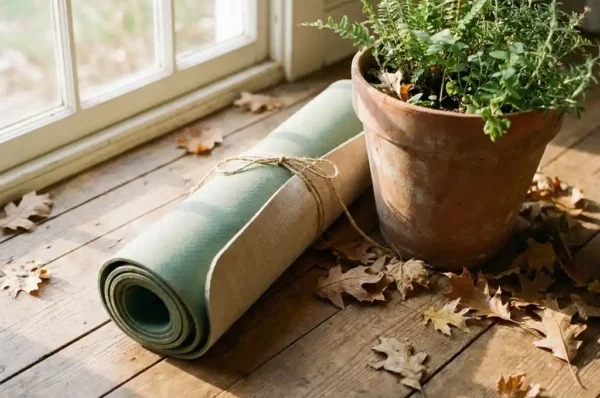
A good non-slip mat is the foundation everything else rests on. Without it, blocks shift, bolsters slide, and your attention moves away from the practice. Look for a mat with enough grip and cushioning to support long holds on hard floors.
What is a bolster used for in yin yoga?
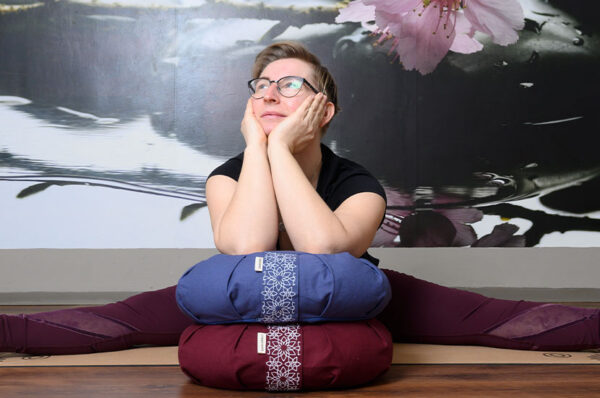
A bolster in yin yoga is a firm, cylindrical or rectangular cushion that supports the body in passive, floor-based poses. It reduces muscular effort by lifting or cradling different parts of the body, allowing you to stay in a pose longer without gripping or bracing, which is exactly what yin practice requires.
In restorative and yin-adjacent poses like Supported Fish or Reclined Butterfly, the bolster sits under the spine or beneath the knees to create a gentle, sustained opening through the chest, hips, or lower back. In forward folds like Caterpillar or Sleeping Swan, it gives your torso somewhere to rest so your upper body weight assists the stretch rather than fighting against it.
The bolster is arguably the single most transformative prop in a yin practice because it allows gravity to do the work. Rather than muscling your way into a shape, you let the support underneath you encourage a slow, passive release. Our yoga bolster is designed with exactly this purpose in mind, offering firm, consistent support that holds its shape across long sessions.
Can you do yin yoga without props?
Yes, you can practice yin yoga without props, but it is generally not recommended, especially for beginners or anyone with tighter connective tissue. Props are not a sign of limitation in yin yoga. They are a core part of the practice, designed to help you achieve the passive, sustained holds that make yin effective and safe.
Without support, your muscles often engage to compensate for a lack of range or stability, which works against the fundamental goal of yin. The practice is specifically designed to target the deeper layers of fascia, ligaments, and joints, and that only happens when the surrounding muscles are relaxed. If you are gripping to stay in a pose, you are not getting the full benefit.
That said, household items can fill the gap when dedicated props are not available. Firm sofa cushions work as a bolster substitute. Thick hardcover books can stand in for blocks. A folded duvet or a rolled bath towel makes a reasonable blanket replacement. These improvisations are fine for occasional practice, but if yin yoga becomes a regular part of your routine, investing in proper props will noticeably deepen your experience.
Which props are worth investing in for a home yin practice?
For a home yin practice, the props most worth investing in are a quality bolster, a supportive yoga mat, and a blanket. If your budget allows, adding two blocks rounds out a setup that will serve you through virtually every yin sequence. Prioritise the bolster first, as it is the prop that makes the biggest difference to the quality and depth of your holds.
When choosing a mat for yin, look for something with enough cushioning to protect your joints during long floor-based poses. A natural rubber or organic cotton option tends to offer both grip and comfort without the synthetic off-gassing that cheaper mats can produce. Our yoga mats are made with this in mind, using sustainable materials that support both your practice and your values.
Here is a practical priority order for building your home yin prop collection:
- Bolster — the most impactful single prop for yin yoga, used in the majority of poses
- Yoga mat — the foundation of every session, essential for grip and joint cushioning
- Blanket — warmth and padding, especially important for longer holds and Savasana
- Two blocks — versatile height and support tools that extend the range of poses you can access
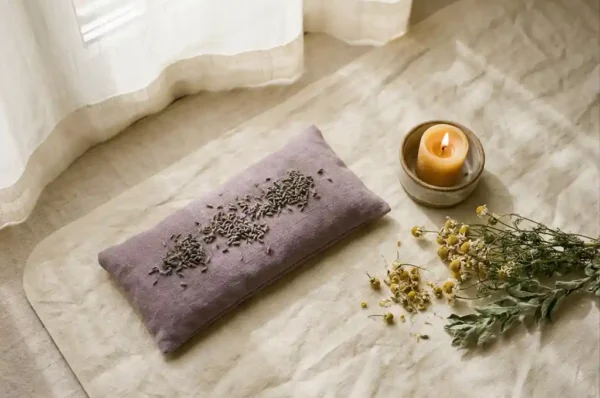
- Neck pillow or eye pillow — a comfort-focused addition for deep relaxation in reclined poses
You do not need to buy everything at once. Starting with a bolster and a good mat gives you a solid foundation, and you can add a blanket and blocks as your practice develops. The key is choosing props that are durable and made from materials you feel good about using, since they will become a regular part of your wellness routine.
If you are ready to build or upgrade your yin yoga prop collection, Samarali has everything you need in one place. From our firm and supportive yoga bolster to our organic cotton yoga blanket and a full range of yoga mats made from sustainable materials, each piece is chosen with intentional, long-hold practice in mind. Explore the complete yoga collection at Samarali and find the props that will support your practice for years to come. Shop now.
Frequently Asked Questions
How do I know if my bolster is firm enough for yin yoga?
A good yin yoga bolster should hold its shape under your body weight without compressing more than an inch or two. If you sit or lie on it and it flattens significantly, it is too soft to provide the sustained, passive support yin poses require. Test it by placing it under your spine in a reclined position — you should feel a consistent lift throughout the hold, not a gradual sinking that forces your muscles to compensate.
What is the difference between foam blocks and cork blocks for yin yoga?
Cork blocks are denser and more stable, making them better suited to yin yoga where you are resting body weight on them for several minutes at a time. Foam blocks are lighter and more comfortable against the skin, but they can compress under prolonged pressure, which reduces their effectiveness as a support tool. For yin specifically, cork is generally the preferred choice — the firmness means the block stays exactly where you need it throughout the entire hold.
How many blankets do I actually need for a yin practice?
One good-quality blanket is sufficient to get started, but many practitioners find two blankets genuinely useful over time. The first handles warmth and padding during poses, while the second can be folded for additional height under the hips or used as a dedicated cover during Savasana. If you practice in a cooler room or tend to get cold during stillness, having a second blanket ready without needing to interrupt your session is a small but meaningful comfort upgrade.
Can I use a yin yoga bolster for other styles of yoga or meditation?
Yes — a yin bolster is one of the most versatile props you can own. It works equally well in restorative yoga, prenatal yoga, and seated or reclined meditation, where it supports the spine, elevates the hips, or cushions the knees during longer sits. Because it is designed for passive, extended use, it naturally suits any practice that prioritises stillness and comfort over dynamic movement. Investing in a quality bolster essentially covers multiple practices in one purchase.
Are there any poses where props can actually get in the way?
In yin yoga, over-propping is a real consideration — if you add too much height or support, the targeted area may not receive any meaningful stress, and the connective tissue benefit is lost. For example, stacking blocks too high under the hips in Butterfly can eliminate the intended inner groin opening entirely. The goal is to find the minimum support needed to allow your muscles to fully relax, not to make the pose feel effortless. A good rule of thumb: use props to remove strain, not to remove sensation.
What props are most helpful for yin yoga if I have tight hips or lower back sensitivity?
For tight hips, a bolster or folded blanket placed under the sitting bones in forward folds is the single most effective adjustment — even a small amount of elevation tilts the pelvis forward and dramatically reduces strain on the lower back. Blocks under the knees in Butterfly or Reclined Butterfly protect the inner groin from overstretching. If your lower back is sensitive, a rolled blanket tucked under the lumbar curve in reclined poses helps maintain a neutral spine and prevents the kind of passive compression that can aggravate discomfort over a long hold.
How do I store yin yoga props at home without taking up too much space?
The most space-efficient approach is to stack your bolster horizontally on a shelf or in a wardrobe, with blocks tucked beside it and the blanket folded on top or draped over the bolster. Many practitioners keep their props together in a dedicated corner or basket so everything is visible and ready without a setup delay — this small habit also reinforces a consistent practice routine. If floor space is limited, a bolster can double as a cushion on a sofa or meditation seat, making it a functional part of your living space rather than equipment that needs to be hidden away.