


Beginners starting Hatha Yoga need just a few core accessories to practice safely and comfortably: a good yoga mat, a pair of yoga blocks, and a yoga strap. These three items cover the foundations of most Hatha poses and help you build alignment and flexibility from day one. As your practice deepens, a blanket or bolster can add meaningful support too.
Hatha Yoga is a slower, alignment-focused style, which means props are not optional extras but genuine tools that make postures more accessible and effective. Whether you are stepping onto the mat for the first time or returning after a break, having the right accessories helps you practise with confidence and avoid unnecessary strain.
Below, we answer the most common questions beginners have about choosing Hatha Yoga accessories.
What accessories do you actually need to start Hatha Yoga?
To start Hatha Yoga, you need three essentials: a non-slip yoga mat, at least one yoga block, and a yoga strap. These three props address the most common challenges beginners face in Hatha postures, namely stability, reach, and flexibility. Everything else, such as blankets, bolsters, and bags, is helpful but not required from day one.
Hatha Yoga classes move at a measured pace, holding poses long enough that comfort and support genuinely matter. A mat gives you grip and cushioning. Blocks bring the floor closer when your hands or hips cannot quite reach. A strap extends your arm length so you can maintain proper alignment in seated forward folds and standing poses without forcing your body into positions it is not yet ready for.
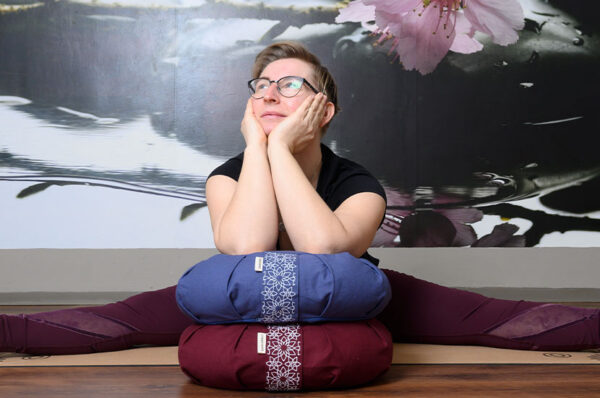
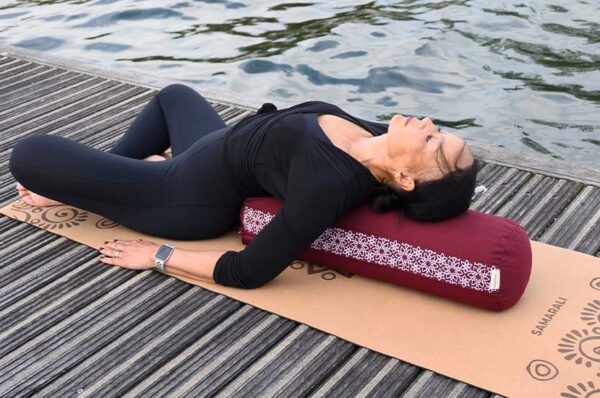
Once you feel settled in your practice, a organic cotton yoga blanket is a wonderful addition. It works as a seat cushion in seated poses, a prop under your knees, and a warm layer during final relaxation. A bolster serves a similar purpose, offering deep support in restorative postures that often appear at the end of a Hatha class.
How do you choose the right yoga mat for Hatha Yoga?
The right yoga mat for Hatha Yoga should offer firm grip, adequate cushioning of around four to six millimetres, and enough stability to hold slow, sustained poses. Because Hatha practice involves longer holds rather than fast transitions, you want a mat that stays firmly in place and supports your joints throughout each posture.
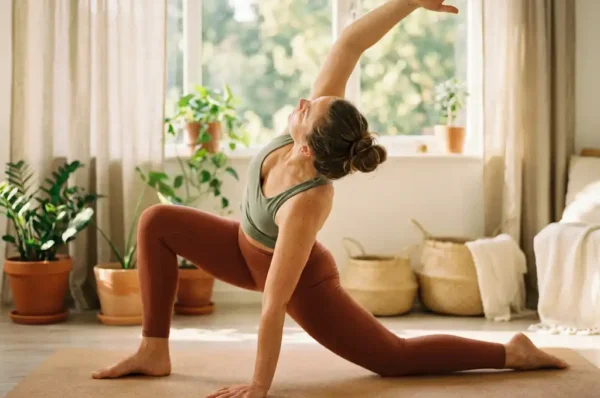
Thickness matters more in Hatha than in faster styles like Vinyasa. Thicker mats absorb pressure on your knees and wrists during poses like low lunge or tabletop, which are common in beginner Hatha sequences. A mat that is too thin can make these positions uncomfortable over time.
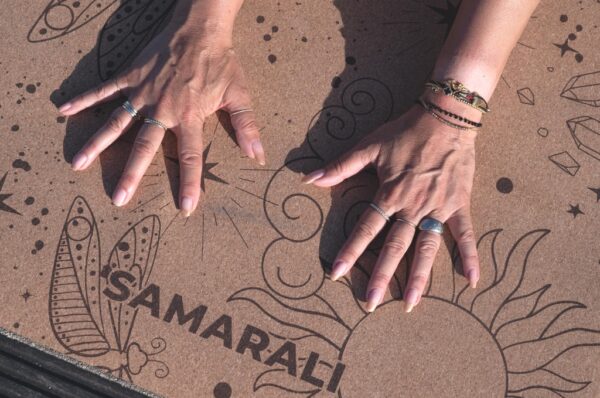
Material is equally important. Natural rubber mats offer excellent grip and durability, and they perform well on both wooden floors and studio carpets. Our natural rubber yoga mat is a strong choice for beginners who want reliable performance from a material that also aligns with eco-conscious values. For those who prefer a softer, more breathable surface, an organic cotton yoga rug provides natural grip and absorbs moisture during longer sessions.
When browsing yoga mats, consider how and where you will practise most. If you plan to carry your mat to a studio regularly, weight and packability matter alongside performance.
What are yoga blocks and straps used for in Hatha Yoga?
Yoga blocks are used in Hatha Yoga to bring the floor closer to you, making poses accessible when flexibility or strength is still developing. Yoga straps extend your reach so you can maintain correct alignment in poses where your hands cannot yet connect. Together, they allow beginners to experience the full shape and benefit of a posture without straining.
In Hatha practice specifically, blocks are used in poses like Triangle Pose, where a block under the lower hand keeps the spine long without collapsing the torso. They also support the hips in seated poses, helping you sit tall rather than rounding the lower back. Two blocks are more useful than one because many poses benefit from symmetrical support on both sides.
Straps come into their own in seated forward folds and supine stretches. In a pose like Seated Forward Bend, looping a strap around your feet lets you keep a straight spine and work into the hamstrings progressively rather than hunching forward to reach your toes. This approach, which is central to Hatha Yoga philosophy, prioritises correct form over depth.
Props are not a sign of limitation. In Hatha Yoga, using blocks and straps thoughtfully is considered good practice at every level, not just for beginners.
Should beginners invest in sustainable yoga accessories?
Yes, beginners should consider sustainable yoga accessories from the start. Eco-friendly materials like natural rubber, organic cotton, and cork are not just better for the planet; they also tend to perform better than synthetic alternatives. Natural rubber grips more reliably, organic cotton breathes well, and cork blocks are lightweight yet firm. Choosing quality sustainable accessories once is more economical than replacing cheap synthetic ones repeatedly.
There is also a values alignment worth considering. Hatha Yoga has deep roots in mindful living and respect for the natural world. Practising with accessories made from sustainably sourced, ethically manufactured materials extends that mindfulness beyond the mat and into your purchasing choices.
For beginners in 2026, the sustainable yoga market is more accessible than it has ever been. Products that are both high performing and environmentally responsible are widely available at fair price points. We design our products specifically with this balance in mind, ensuring that choosing sustainability does not mean compromising on the quality or functionality you need to build a consistent practice.
Starting with sustainable accessories also means you are investing in items built to last. A well-made natural rubber mat or organic cotton blanket will outlast cheaper alternatives and serve you through years of practice, making the initial investment genuinely worthwhile.
Ready to build your Hatha Yoga kit with accessories that match your practice and your values? At Samarali, you will find everything you need to get started, from our natural rubber yoga mat and organic cotton yoga blanket to our supportive yoga bolster — all made from sustainable, high-quality materials. Explore the full yoga collection and find the props that will support your practice from day one. Shop now.
Frequently Asked Questions
How do I know if my yoga mat needs replacing?
Your yoga mat needs replacing when it starts to flake, lose its grip, or develop uneven patches that affect your stability during poses. In Hatha Yoga, where you hold positions for extended periods, a worn mat can compromise your alignment and increase the risk of slipping or joint strain. A simple test is to press your palm flat on the mat and twist slightly — if the surface bunches or slides rather than gripping, it is time for a new one. High-quality natural rubber mats tend to last significantly longer than synthetic alternatives, so investing in a durable mat from the start reduces how often you need to replace it.
Can I use household items like books or scarves instead of buying yoga blocks and straps?
While it is tempting to substitute household items when you are just starting out, books and scarves do not offer the same safety or effectiveness as purpose-made props. Books can be unstable under weight, which is a real concern in balance-dependent Hatha poses like Triangle or Half Moon, and scarves tend to stretch and slip rather than providing the firm, controlled resistance a yoga strap offers. If cost is a concern, even a basic set of foam blocks and a cotton strap is an affordable investment that will meaningfully improve your practice from day one. Proper props also help you build correct muscle memory, which is harder to do when you are compensating for unreliable substitutes.
How many yoga blocks should a beginner buy, and does the material matter?
Beginners should ideally start with two yoga blocks, since many Hatha poses — such as supported Bridge Pose or symmetrical standing postures — benefit from equal support on both sides. For material, cork and foam are the two most common options: cork blocks are firmer, more durable, and naturally antimicrobial, making them a better long-term choice, while foam blocks are lighter and softer, which suits practitioners who need extra cushioning. For Hatha Yoga specifically, cork is generally recommended because the slower pace and sustained holds require a stable, non-compressible surface that holds its shape under your full body weight.
What is the best way to care for and clean sustainable yoga accessories?
Natural rubber mats should be wiped down after each session with a damp cloth and a mild, natural cleaning solution — avoid harsh chemicals, as they degrade the rubber and reduce grip over time. Organic cotton blankets and rugs can typically be machine washed on a gentle cycle with a natural detergent, and air drying rather than tumble drying helps preserve the fibres and shape. Cork blocks can be wiped clean with a damp cloth and allowed to air dry fully before storing. Caring for your accessories properly not only extends their lifespan but also maintains the hygienic, high-performance surface you need for a safe and effective practice.
Do I need special yoga clothing to practise Hatha Yoga as a beginner?
You do not need specialist yoga clothing to begin Hatha Yoga, but what you wear does affect your comfort and your teacher’s ability to observe your alignment. Fitted or form-fitting clothing in breathable, stretchy fabric works best because it moves with your body and does not bunch or restrict movement during seated folds, lunges, or inversions. Loose cotton T-shirts, for example, can fall over your face in forward folds or obscure your spine alignment in poses where form is critical. As your practice develops, investing in quality organic cotton or bamboo yoga wear is a natural next step that complements a sustainable accessories kit.
Is it better to attend in-person Hatha Yoga classes or start with online videos as a beginner?
For complete beginners, attending at least a few in-person classes is strongly recommended before transitioning to a fully online practice. A qualified teacher can observe your alignment in real time, correct potentially harmful habits early — such as rounding the lower back in forward folds or collapsing the knee in Warrior poses — and advise you on which props to use and how. Once you have a foundational understanding of key postures and how your body responds to them, online videos and apps become a highly effective and flexible way to maintain and deepen your practice. Think of in-person classes as your alignment foundation and online resources as the tool that keeps your practice consistent between sessions.
How long does it typically take for a beginner to feel comfortable in Hatha Yoga?
Most beginners start to feel noticeably more comfortable and confident in Hatha Yoga within four to six weeks of consistent practice, typically two to three sessions per week. The slower, alignment-focused nature of Hatha actually accelerates this process compared to faster styles, because you spend more time in each pose developing body awareness and understanding how props support correct form. Progress is rarely linear — some poses will click quickly while others require months of patient work — but using the right accessories from the beginning means you are building on a solid foundation rather than reinforcing compensatory habits that need to be unlearned later.