


Building a home Hatha Yoga practice starts with carving out a consistent space and time, choosing a few foundational poses, and showing up regularly, even for just 20 minutes. Hatha Yoga is one of the most accessible styles for home practice because its slower pace and emphasis on breath-linked movement make it easy to follow without a live instructor. The sections below walk through everything from your first setup to the habits that actually produce results.
What do you actually need to start practicing Hatha Yoga at home?
To start a home Hatha Yoga practice, you need a non-slip mat, enough floor space to extend your arms and legs fully, and comfortable clothing that allows free movement. That is genuinely the minimum. Everything else, props, lighting, incense, is supportive rather than essential, especially in the beginning.
That said, the right equipment does make a meaningful difference over time. A quality mat prevents slipping in poses like Downward Dog and Warrior sequences, which protects your joints and helps you focus on alignment rather than balance. We recommend investing in a mat made from natural rubber or organic cotton, both of which offer better grip and durability than standard PVC options. Our natural rubber yoga mat is a popular choice for home practitioners who want something that holds up across daily sessions.
Beyond the mat, a few props can genuinely deepen your practice:
- A yoga blanket for seated poses, restorative holds, and keeping warm during Savasana
- A bolster for supported backbends, hip openers, and restorative postures
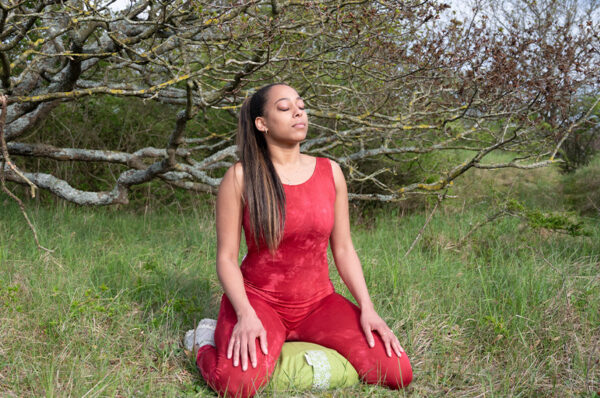
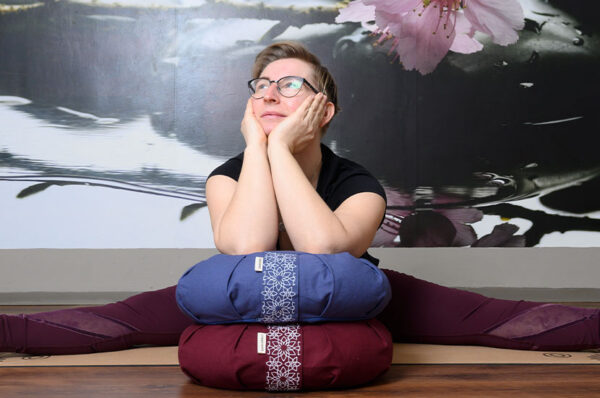
- A meditation cushion for the seated breathing and meditation components that typically open or close a Hatha session
You do not need all of these on day one. Start with your mat and add props as your practice develops and you identify where your body needs more support.
How do you structure a Hatha Yoga session at home?
A well-structured home Hatha Yoga session follows a clear arc: a brief centering period, a gentle warm-up, a standing and floor pose sequence, and a closing relaxation. This progression mirrors how most studio classes are taught and gives your body time to open safely before moving into deeper postures.
Here is a practical structure you can follow for a 45 to 60 minute session:
- Centering (3 to 5 minutes): Sit comfortably, close your eyes, and focus on your breath. This settles the nervous system and draws your attention inward before physical movement begins.
- Pranayama (5 minutes): Practice a simple breathing technique such as Nadi Shodhana (alternate nostril breathing) or three-part breath to build awareness and prepare your lungs.
- Warm-up (5 to 10 minutes): Gentle neck rolls, cat-cow movements, and hip circles prepare the spine and joints for standing postures.
- Standing poses (15 to 20 minutes): Move through foundational postures like Mountain Pose, Warrior I and II, Triangle, and Tree Pose. Hold each pose for 5 to 10 breaths.
- Floor poses (10 to 15 minutes): Transition to seated and supine postures such as Seated Forward Fold, Bridge Pose, and Supine Twist.
- Savasana (5 to 10 minutes): Lie flat and allow your body to integrate the practice fully. Do not skip this step.
For shorter sessions of 20 to 30 minutes, keep the centering and Savasana but compress the standing and floor sequences. Consistency in the structure matters more than session length, especially in the early months.
How often should you practice Hatha Yoga at home to see results?
Practicing Hatha Yoga three to four times per week is enough to see noticeable improvements in flexibility, strength, and mental clarity within four to six weeks. Daily practice accelerates results, but consistency across the week matters far more than session frequency in any single week.
The results you experience depend partly on what you are working toward. Flexibility improvements tend to appear relatively quickly with regular practice, often within the first month. Strength gains, particularly in the core and shoulders, take a little longer. The mental benefits, reduced stress, better sleep, and improved focus, are often the first changes practitioners notice, sometimes after just a handful of sessions.
If you are new to Hatha Yoga, three sessions per week with rest days in between give your muscles time to recover and adapt. As your practice matures, you can increase frequency or add shorter sessions focused on breathing and meditation on the days between longer flows. Our meditation cushions are well suited for those shorter seated sessions, making it easier to maintain a daily mindfulness habit without a full mat practice every day.
The most important factor is not how often you practice in a given week but whether you return to your mat week after week. A sustainable rhythm, even two or three sessions per week, will outperform an intense but short-lived burst of daily practice.
What are the most common mistakes in a home Hatha Yoga practice?
The most common mistakes in a home Hatha Yoga practice are skipping the warm-up, holding poses without breath awareness, progressing too quickly into advanced postures, and neglecting Savasana. Each of these errors reduces the effectiveness of the practice and increases the risk of strain or injury over time.
Here is a closer look at the mistakes that trip up home practitioners most often:
- Rushing through the warm-up: Cold muscles and joints do not move safely into deep stretches. Even five minutes of gentle movement before standing poses significantly reduces the risk of strain.
- Disconnecting breath from movement: Hatha Yoga is built on the union of breath and body. Holding your breath in a challenging pose creates tension rather than releasing it. If you cannot breathe steadily in a posture, ease back until you can.
- Comparing your practice to online videos: Social media and video platforms are full of advanced practitioners demonstrating deep flexibility. Trying to match those shapes before your body is ready is a fast route to frustration or injury. Work within your current range of motion.
- Skipping Savasana: Many home practitioners cut Savasana short because it feels unproductive. In reality, it is the period during which your nervous system integrates the physical work of the session. A full five to ten minutes of stillness at the end is not optional.
- Practicing on an unsuitable surface: A slippery floor or thin mat undermines alignment and concentration. If your mat bunches or slides, replace it. The right surface makes every pose more accessible and safer.
- Inconsistent practice timing: Practicing at random times with no routine makes it harder to build a habit. Anchoring your Hatha Yoga sessions to a consistent time of day, morning, lunchtime, or evening, makes it far easier to show up regularly.
Home practice removes the structure of a class environment, which is both its freedom and its challenge. Being honest with yourself about these tendencies, and building simple safeguards into your routine, is what separates a practice that lasts from one that fades after a few weeks.
Ready to set up a home practice you will actually stick to? At Samarali you will find everything you need to support a consistent Hatha Yoga routine, from a natural rubber yoga mat and a yoga bolster for deeper restorative holds, to an organic cotton yoga blanket for Savasana and a meditation mat for your seated practice. Each piece is chosen to help you build a space that feels as good as the practice itself. Shop the collection now and bring your home practice to life.
Frequently Asked Questions
Can I learn Hatha Yoga at home without any prior yoga experience?
Yes, Hatha Yoga is one of the most beginner-friendly styles precisely because of its slower pace and emphasis on foundational poses held with steady breath. Starting with a beginner-focused video series or a structured online course can give you enough guidance to practice safely on your own. Focus on learning the alignment basics of five to ten core poses before expanding your repertoire, and do not hesitate to use props like blocks or a blanket to modify postures to your current level.
What is the best time of day to practice Hatha Yoga at home?
The best time is whichever slot you can protect consistently in your daily schedule, since habit formation matters more than the hour itself. That said, morning practice tends to set a calm, focused tone for the day, while evening practice can be effective for releasing tension and preparing for sleep. If you choose evening sessions, opt for gentler, more restorative sequences rather than energizing standing flows, which can make it harder to wind down afterward.
How do I stay motivated to keep practicing at home when there is no instructor or class to attend?
Building external accountability helps significantly when the structure of a studio is removed. Consider joining an online yoga community, tracking your sessions in a simple journal, or committing to a 30-day challenge to create momentum in the early weeks. Setting a clear intention for your practice, whether that is stress relief, better sleep, or improved flexibility, also gives you a personal reason to return to your mat that goes beyond obligation.
How do I know if I am doing a pose correctly without a teacher to correct me?
Use a mirror or occasionally record short video clips of your practice to compare your alignment against reliable visual references such as anatomy-based yoga books or reputable online instructors. Pay close attention to how each pose feels rather than how it looks: sharp or pinching sensations signal misalignment, while a steady, sustainable stretch indicates you are working safely. When in doubt about a specific posture, consider booking even a single session with a qualified Hatha Yoga teacher for targeted alignment feedback that you can carry into your home practice.
Is a 20-minute home session actually worth doing, or is it too short to be effective?
A focused 20-minute session is genuinely effective, particularly for stress reduction, breath awareness, and maintaining the flexibility gains you build during longer sessions. The key is to keep the essential structure intact: a brief centering, a short warm-up, a handful of well-chosen poses, and a closing Savasana of at least three to five minutes. Shorter sessions practiced consistently will always outperform longer sessions practiced sporadically.
What should I do if I feel pain or discomfort during a pose at home?
Come out of the pose immediately and rest in a neutral position such as Child’s Pose or lying flat on your back. It is important to distinguish between the productive sensation of a deep stretch, which feels intense but breathable and steady, and sharp, shooting, or joint-based pain, which is a clear signal to stop. If discomfort in a specific area recurs across multiple sessions, consult a physiotherapist or a qualified yoga teacher before continuing to work that area, as home practice without correction can sometimes reinforce poor movement patterns.
Can Hatha Yoga at home replace gym workouts or other forms of exercise?
Hatha Yoga can serve as a complete primary practice for many people, offering meaningful gains in functional strength, flexibility, balance, and stress resilience. However, if your goals include significant cardiovascular fitness or heavy muscle hypertrophy, you will likely benefit from pairing your Hatha practice with complementary activities such as walking, cycling, or resistance training. Think of Hatha Yoga as an excellent foundation that enhances every other physical activity you do, rather than a replacement for all of them.