


The best eco-friendly accessories for Hatha Yoga include a natural rubber or organic cotton yoga mat, a supportive bolster, a cotton yoga blanket, and a meditation cushion, all made from sustainable, non-toxic materials. These tools directly support the slow, alignment-focused nature of Hatha practice while keeping your environmental footprint low. Below, we answer the most common questions about choosing, using, and caring for sustainable Hatha Yoga accessories.
What makes a yoga accessory truly eco-friendly?
A yoga accessory is truly eco-friendly when it is made from natural, renewable, or recycled materials, produced through ethical manufacturing processes, and designed to last long enough to reduce waste over time. The key factors are material origin, production impact, and product longevity. An item that ticks only one of these boxes is not fully sustainable.
Many products on the market use the word “eco” loosely, so it helps to know what to look for. Genuinely eco-friendly yoga accessories tend to share a few clear characteristics:
- Natural or recycled base materials such as natural rubber, organic cotton, jute, cork, or recycled PET
- Free from harmful chemicals including PVC, phthalates, and synthetic dyes that off-gas or pollute waterways
- Ethical production with fair labor standards and transparent supply chains
- Biodegradable or recyclable at end of life so the product does not sit in a landfill for decades
- Durable construction because a product that lasts five years is inherently more sustainable than one replaced every season
For Hatha Yoga practitioners, this matters beyond just values. Many synthetic accessories carry faint chemical odors and slippery surfaces that can actually interfere with practice. Natural materials often perform better in the slow, held postures that define Hatha, giving you grip, comfort, and breathability without compromise.
Which eco-friendly accessories are most useful for Hatha Yoga specifically?
The most useful eco-friendly accessories for Hatha Yoga are a non-slip yoga mat, a yoga bolster, a yoga blanket, and a meditation cushion. Hatha practice emphasizes sustained postures, breathwork, and seated meditation, so props that support alignment and comfort are essential rather than optional.
Unlike faster-paced styles, Hatha Yoga asks you to hold positions long enough that your body needs genuine support. Here is how each accessory serves the practice:
- Yoga mat: The foundation of every session. A natural rubber yoga mat provides excellent grip and cushioning for standing and floor postures without the chemical coating found on PVC mats.
- Yoga bolster: Used to support the spine, hips, and chest in restorative Hatha postures. A well-filled bolster reduces strain during longer holds and makes poses accessible at every level.
- Yoga blanket: Folded under the hips in seated poses or draped over the body during Savasana, an organic cotton blanket adds warmth and gentle height adjustment.
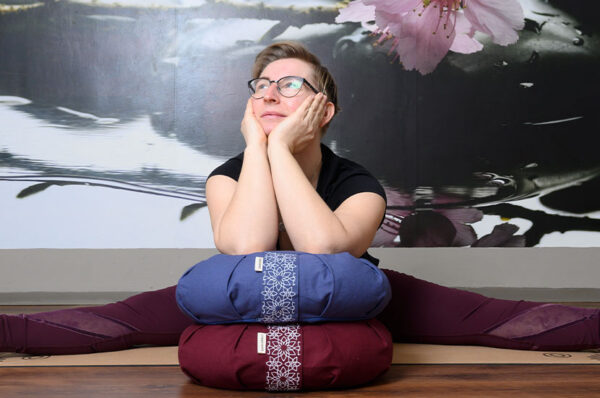
- Meditation cushion: Hatha sessions typically close with seated meditation. A firm, supportive cushion keeps the spine upright without effort, allowing breath and awareness to deepen.
If you are building your kit gradually, start with the mat and one prop that addresses your biggest comfort challenge. Many practitioners find the bolster transforms their experience of forward folds and chest openers almost immediately. You can explore our full range of yoga accessories to find pieces that fit your practice and values.
What sustainable materials should Hatha Yoga accessories be made from?
The best sustainable materials for Hatha Yoga accessories are natural rubber, organic cotton, cork, jute, and sustainably sourced buckwheat or kapok for fillings. Each material brings specific performance qualities alongside its environmental credentials, so the right choice depends on which accessory you are choosing.
Natural rubber and cork
Natural rubber is tapped from rubber trees without harming them, making it a renewable resource. It provides the grip and density that Hatha postures demand, especially in standing and balancing work. Cork is similarly renewable, harvested from the bark of cork oak trees, and naturally antimicrobial, which keeps mats and blocks fresh between sessions. Both materials biodegrade at end of life, unlike PVC or TPE foam alternatives.
Organic cotton and plant-based fillings
Organic cotton is grown without synthetic pesticides or fertilizers, making it significantly gentler on soil and water systems than conventional cotton. For yoga blankets, straps, and bolster covers, it is breathable, durable, and soft against the skin. Bolster and cushion fillings made from buckwheat hulls or sustainably harvested kapok offer firm, moldable support that holds its shape through years of use. An organic cotton yoga blanket is a good example of how natural fiber choices translate directly into a better, cleaner product.
Jute is another strong option for mat surfaces and bags. It is fast-growing, requires minimal water, and adds a natural texture that improves grip. When you see any of these materials listed on a product, you can be reasonably confident the accessory is built on a genuinely sustainable foundation.
How do you care for eco-friendly yoga accessories to make them last?
To care for eco-friendly yoga accessories and extend their lifespan, clean them gently with mild, natural solutions, store them away from direct sunlight, and avoid machine washing items that are designed for hand care. Proper maintenance is one of the most effective sustainability choices you can make because a well-kept accessory rarely needs replacing.
Each material type has slightly different needs, but a few principles apply across the board:
- Clean after every session using a diluted solution of water and a few drops of mild soap or tea tree oil. Avoid alcohol-based sprays on natural rubber, as they dry out the material over time.
- Air dry fully before rolling or storing. Rolling a damp mat traps moisture and encourages mildew, which degrades natural materials faster than use does.
- Store away from UV light. Direct sunlight fades organic cotton and breaks down natural rubber. A cotton mat bag or a shaded shelf is ideal.
- Wash bolster covers and blankets on a cool, gentle cycle using natural detergent. Remove bolster inserts before washing covers to prevent warping of the filling.
- Fluff meditation cushions regularly to redistribute the filling and maintain their supportive height. Buckwheat hulls can be replaced if the cushion compresses significantly over time.
Treating your eco-friendly accessories with the same mindfulness you bring to your Hatha practice is genuinely the best care strategy. These materials are resilient when respected. A natural rubber mat cleaned and stored correctly can serve your practice for many years, making it one of the most cost-effective and environmentally sound investments in your wellness routine.
Ready to build your sustainable Hatha Yoga kit? At Samarali, you will find a carefully curated selection of eco-conscious yoga essentials, from a natural rubber yoga mat and a supportive yoga bolster to an organic cotton yoga blanket and a meditation cushion that keeps your spine supported through every seated close. Every piece is chosen with both your practice and the planet in mind. Shop the collection now and bring more intention to your mat.
Frequently Asked Questions
How do I know if an eco-friendly yoga accessory brand is genuinely sustainable or just greenwashing?
Look for third-party certifications such as GOTS (Global Organic Textile Standard), OEKO-TEX, FSC (Forest Stewardship Council), or Fair Trade labels, as these require independent verification rather than self-reporting. Transparent brands will openly share information about their supply chain, manufacturing locations, and material sourcing on their website. If a brand uses vague terms like ‘natural-inspired’ or ‘earth-friendly’ without backing them up with certifications or specific material details, that is a strong signal of greenwashing.
Can I use eco-friendly accessories if I'm a complete beginner to Hatha Yoga, or are they better suited to experienced practitioners?
Eco-friendly accessories are an excellent choice for beginners precisely because natural materials like rubber and organic cotton tend to perform better out of the box — natural rubber mats offer superior grip with no break-in period, which is especially helpful when you are still learning alignment. Starting with sustainable props from the beginning also means you avoid the common beginner mistake of buying cheap synthetic accessories that wear out quickly and need replacing. If budget is a concern, prioritize a quality natural rubber mat first and add props like a bolster or blanket as your practice develops.
What should I do if my natural rubber yoga mat has a strong smell when it first arrives?
A mild natural latex scent on a new natural rubber mat is completely normal and is a sign of genuine rubber content, not a chemical off-gassing concern like you would get with PVC. To reduce the smell quickly, unroll the mat and leave it flat in a well-ventilated area away from direct sunlight for 24 to 72 hours. You can also wipe it down with a diluted solution of water and a few drops of tea tree oil, which neutralizes odors naturally. The scent typically fades significantly within the first few uses.
Are there eco-friendly alternatives to standard yoga blocks, or should I focus only on the accessories mentioned in the post?
Yes, cork yoga blocks are one of the best eco-friendly alternatives to foam blocks and are particularly well-suited to Hatha Yoga because their firm, stable surface supports the longer holds that define the practice. Cork is naturally harvested without cutting down trees, antimicrobial, and far more durable than standard EVA foam blocks. Wooden blocks are another sustainable option, though they are heavier and less forgiving for sensitive joints. If you already have the core accessories covered, cork blocks are a worthwhile next addition to your sustainable Hatha toolkit.
How often should I replace my eco-friendly yoga mat, and how can I tell when it's time?
A well-maintained natural rubber yoga mat can last anywhere from three to seven years depending on how frequently you practice and how carefully you care for it. The clearest signs it is time to replace your mat are visible tearing or peeling of the surface layer, a loss of grip that persists even after cleaning, or noticeable thinning in high-contact areas like the knees and feet. Before replacing the whole mat, check whether the issue is care-related — a mat that has been stored in sunlight or cleaned with alcohol-based products may degrade prematurely, and adjusting your care routine can significantly extend the life of a new mat.
Is it possible to build a complete eco-friendly Hatha Yoga kit on a limited budget?
Absolutely — the key is to prioritize strategically and buy fewer, better items rather than a full set of lower-quality props at once. Start with a natural rubber yoga mat, which is the one accessory used in every single session, and use folded household blankets or firm cushions as temporary substitutes for a bolster or meditation cushion. As your practice deepens and you identify your specific comfort challenges — tight hips, lower back tension, difficulty sitting upright — invest in the prop that addresses that need most directly. Buying one high-quality sustainable accessory at a time is more financially manageable and more environmentally sound than purchasing an entire synthetic kit that you may outgrow or discard.
What is the most common mistake people make when buying eco-friendly yoga accessories for the first time?
The most common mistake is prioritizing aesthetics or price over material transparency, ending up with a product that looks natural but is made from blended or partially synthetic materials. Always read the full product description and materials list rather than relying on packaging language or color schemes that suggest sustainability. A second frequent mistake is buying accessories that are too thin or too soft for Hatha Yoga specifically — a 3mm natural rubber mat, for example, may not provide enough cushioning for the long floor-based postures central to the practice, so opting for a 4mm to 6mm thickness is generally a better fit for Hatha practitioners.