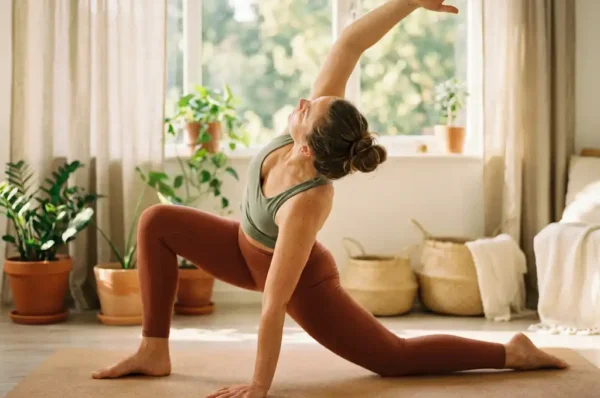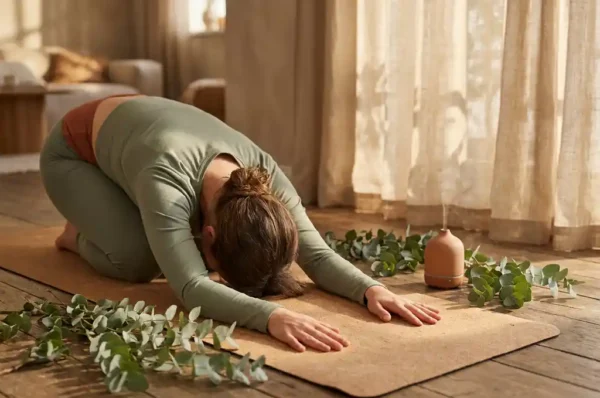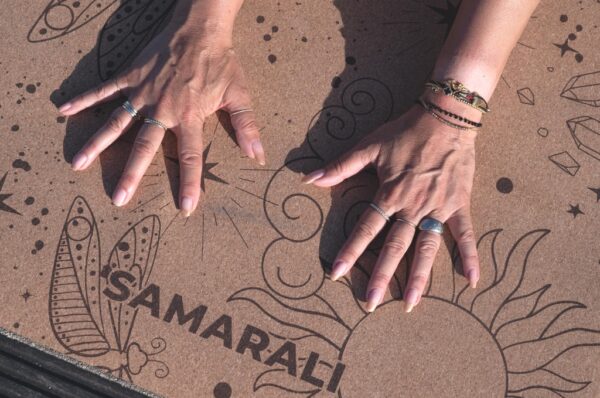



Complete beginners need just two items to start yoga at home: a quality yoga mat and comfortable clothing that allows movement. While shops sell dozens of yoga accessories, most props aren’t necessary for new practitioners. You can begin with basic poses and breathing exercises using only your yoga mat, then add props later as your practice develops and you discover specific needs.
What yoga props do complete beginners actually need to get started?
For complete beginners, the essential yoga equipment list is refreshingly short:
- Quality yoga mat (4–6 mm thick) – Provides cushioning for joints, defines your practice space, and offers grip for stability during poses
- Comfortable, fitted clothing – Allows unrestricted movement without riding up or bunching during poses
- Open floor space – Enough room to extend your arms and legs fully in all directions
These three elements form the foundation of a successful home yoga practice. Your mat serves as both physical support and mental boundary for your practice space, while proper clothing ensures you can move freely through poses without distraction. Everything else—blocks, straps, bolsters, and other accessories—can wait until you’ve established a regular routine and understand your body’s specific requirements.
How do you choose a yoga mat that will support your beginner practice?
Selecting the right yoga mat involves evaluating several key factors that directly impact your practice:
- Thickness (4–6 mm recommended) – Provides optimal balance between joint cushioning and stability for balance poses
- Material quality – Natural rubber or cork offers superior grip, durability, and environmental sustainability compared to synthetic alternatives
- Surface texture – Should feel tacky rather than smooth, providing traction without roughness against skin
- Proper dimensions – Standard 68″ x 24″ works for most people; choose longer if you’re over 5’8″
- Grip performance when damp – Quality mats maintain traction even when slightly wet from perspiration
Investing in sustainable yoga equipment made from organic materials costs more initially but delivers better performance and longevity. These mats also support environmental responsibility by avoiding harmful chemicals and synthetic materials that can off-gas unpleasant odors, making them a wise choice for both your practice and the planet.
When should beginners add yoga blocks and straps to their practice?
The decision to add props should be based on specific physical limitations rather than arbitrary timelines:
- Yoga blocks – Introduce when you can’t comfortably reach the floor in seated forward folds or standing poses without compromising alignment
- Yoga straps – Add when tight hamstrings or shoulders prevent safe completion of binding poses
- Timing consideration – Wait 4-6 weeks of regular practice to identify your body’s specific needs
- Purpose understanding – Props support proper alignment while flexibility develops naturally over time
Props serve as temporary assistance rather than permanent solutions, helping you maintain good form while your body gradually opens up. This targeted approach to adding equipment saves money, reduces clutter, and ensures each purchase directly addresses a real limitation in your practice.
What household items can replace expensive yoga props for beginners?
Creative substitutions using common household items allow you to experiment with prop-supported poses before investing in specialized equipment:
- Books as blocks – Stack hardcover books (dictionaries work well) and wrap in towels for stable, adjustable height support
- Belts and ties as straps – Dressing-gown belts, resistance bands, or twisted towels provide extension for binding poses
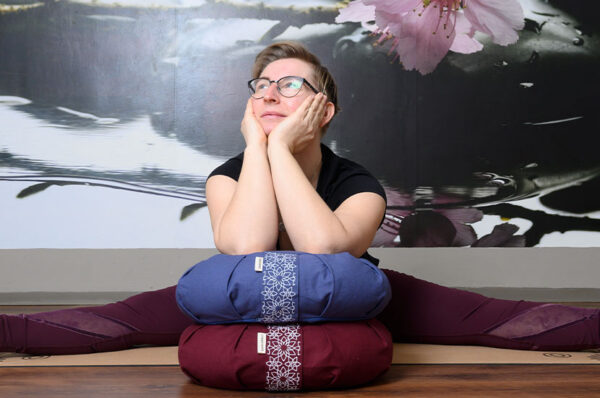
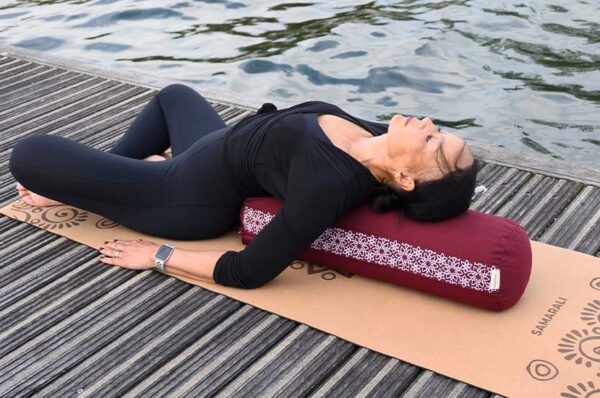
- Pillows as bolsters – Firm cushions or folded blankets offer comfort in restorative poses and seated positions
- Wall support – Use wall space for supported inversions, standing forward folds, and balance poses
- Towels for grip – Place over your mat for extra traction or use as makeshift straps
Experimenting with these alternatives for several months helps you understand which props truly enhance your practice versus those that simply seem appealing. You might discover that certain household solutions work better than traditional yoga props, saving money while meeting your specific needs perfectly.
Starting yoga doesn’t require expensive equipment or extensive prop collections. Focus on consistency and proper alignment using minimal gear, then gradually add sustainable yoga equipment as your practice evolves. We believe in making yoga accessible while supporting environmental responsibility through thoughtfully designed products made from organic cotton and plastic-free packaging.
Browse our selection of thoughtfully crafted collection of sustainable yoga essentials—designed for mindful movement and made with respect for the planet.