


The best eco-friendly neck pillows and eye pillows for holiday relaxation are those made from certified organic or natural materials, filled with sustainable stuffing like buckwheat, millet, or organic cotton, and produced through ethical manufacturing processes. For yoga and wellness travelers, these pillows offer genuine comfort without the environmental cost of synthetic alternatives. Below, we answer the most common questions to help you choose, use, and care for the right sustainable pillow for your needs.
What makes a neck or eye pillow truly eco-friendly?
A neck or eye pillow is truly eco-friendly when its materials, production process, and end-of-life impact are all considered. This means the outer fabric is made from natural or recycled fibers, the filling is free from synthetic foams or petrochemical-derived materials, and the manufacturing follows ethical and low-waste standards. Certifications like GOTS (Global Organic Textile Standard) or OEKO-TEX provide reliable confirmation.
Many products marketed as “natural” still contain hidden synthetic components, so it pays to look beyond the label. A genuinely sustainable pillow will use organic cotton, linen, hemp, or bamboo for the shell, and natural fillings such as buckwheat hulls, millet seeds, lavender, or organic cotton batting. These materials are biodegradable, responsibly sourced, and free from harmful chemical treatments.
Packaging also matters. Brands committed to sustainability ship their products without single-use plastics, using recycled or compostable materials instead. At Samarali, we design our yoga neck pillow with exactly this holistic standard in mind, ensuring every element of the product reflects environmental responsibility, not just the outer cover.
Which sustainable materials are best for neck and eye pillows?
The best sustainable materials for eco-friendly neck and eye pillows are organic cotton, buckwheat hulls, millet seeds, and natural lavender. Organic cotton provides a soft, breathable shell fabric, while buckwheat and millet fillings conform naturally to the body, offer gentle pressure relief, and are fully compostable at the end of their life. Lavender adds aromatherapy benefits without synthetic fragrance.
Shell fabrics worth choosing
Organic cotton is the most versatile and widely available option for pillow shells. It is soft against the skin, washable, and grown without synthetic pesticides. Linen and hemp are excellent alternatives for travelers who prefer a slightly firmer texture and extra durability. Bamboo-derived fabrics can also be sustainable when produced using closed-loop processes that recycle water and solvents.
Natural fillings and their benefits
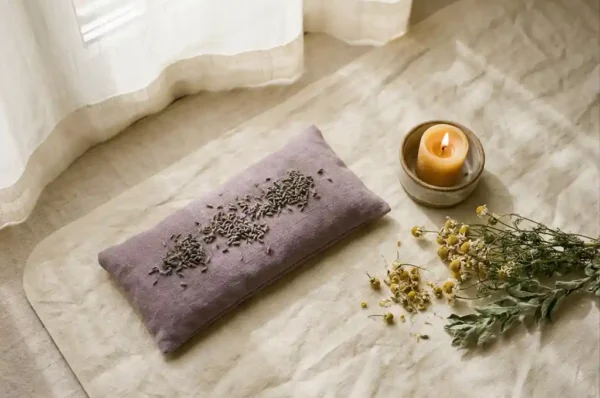
Buckwheat hulls are a popular choice for neck pillows because they hold their shape, allow airflow, and provide firm, moldable support. Millet seeds offer a softer feel with similar breathability. For eye pillows, lighter fillings like flaxseed or dried lavender buds are ideal, as they create gentle, calming pressure across the eyes without excess weight. These natural fillings also carry a mild, grounding scent that supports relaxation during meditation or rest.
If you already use a meditation practice as part of your wellness routine, pairing an organic eye pillow with your existing props creates a cohesive, sustainable toolkit for winding down.
Are eco-friendly neck pillows good for travel and holiday use?
Yes, eco-friendly neck pillows are well suited for travel and holiday use, provided you choose a design that balances portability with support. Natural filling pillows like buckwheat or millet are compact and lightweight when partially filled, and organic cotton shells are durable enough to handle frequent packing and washing. They perform just as well as synthetic travel pillows without the environmental trade-offs.
The key advantage of sustainable travel pillows over conventional foam alternatives is breathability. Natural fillings do not trap heat the way memory foam does, which makes them more comfortable on long journeys or in warm holiday climates. The organic cotton shell also reduces the risk of skin irritation during extended wear, which is a common complaint with synthetic fabrics.
For holiday relaxation specifically, an organic neck pillow doubles as a meditation prop. Whether you are practicing yoga on a beach, resting on a long-haul flight, or settling into a hotel room after a busy day of sightseeing, a natural pillow adapts to multiple uses. Eye pillows are equally versatile, blocking light during rest and providing gentle aromatherapy through their lavender or flaxseed filling.
One practical consideration for travel is removable, washable covers. Look for eco-friendly pillows with a zippered organic cotton cover that can be laundered separately, keeping the pillow hygienic across multiple trips without replacing the entire product.
How do you care for and extend the life of an eco-friendly pillow?
To care for an eco-friendly neck or eye pillow and extend its life, wash the outer cover regularly using a gentle, plant-based detergent, air-dry it away from direct sunlight to preserve the fabric fibers, and store the pillow in a breathable cotton bag when not in use. Natural fillings like buckwheat or millet should be kept dry and can be refreshed by airing them outdoors periodically.
Avoid machine washing pillows with buckwheat or millet filling directly, as moisture can cause the seeds to swell and mold. Instead, remove the filling, wash the shell separately, and allow both to dry completely before reassembling. If the filling begins to lose its structure over time, many natural fills can be topped up or fully replaced, which is far more sustainable than discarding the entire pillow.
For lavender-filled eye pillows, the scent will naturally fade over time. You can refresh it by adding a few drops of organic lavender essential oil to the filling or by storing the pillow in a sealed container with a small amount of dried lavender between uses. This simple step extends the aromatherapy benefit without requiring a new product.
Proper storage is often overlooked but makes a significant difference. Keeping your sustainable pillow in a breathable bag, away from humidity and direct heat, preserves both the fabric and the filling. Paired with our organic cotton yoga blanket, these pillows form a long-lasting, low-waste relaxation set that supports your practice and your values for years to come.
Frequently Asked Questions
How do I know if an eco-friendly pillow brand is genuinely sustainable and not just greenwashing?
Look for third-party certifications such as GOTS (Global Organic Textile Standard) or OEKO-TEX Standard 100, which verify that materials and manufacturing processes meet strict environmental and safety criteria. Beyond certifications, check whether the brand discloses its supply chain, uses plastic-free packaging, and offers transparent information about its sourcing and production. Brands that openly share this detail — rather than relying on vague terms like ‘natural’ or ‘green’ — are far more likely to be genuinely committed to sustainability.
Can I use an eco-friendly eye pillow if I have sensitive skin or allergies?
Yes, but it’s important to check the specific filling and fabric used before purchasing. Organic cotton shells are generally hypoallergenic and well-tolerated by sensitive skin, but fillings like lavender or flaxseed can occasionally trigger reactions in people with plant-based allergies. If you have known sensitivities, opt for an unscented pillow filled with millet seeds or organic cotton batting, and always choose a shell fabric that is certified free from chemical dyes or finishes.
What's the best way to get started if I've never used a natural filling pillow before?
Start with a millet-filled neck pillow or a flaxseed eye pillow, as both offer a gentle introduction to natural fillings without the firmer, more structured feel of buckwheat. Use the pillow during a short meditation session or a rest period at home before relying on it for travel, so you can adjust to its weight and texture in a low-stakes setting. If the pillow feels too firm or too soft, many natural filling pillows allow you to add or remove fill through a zippered opening, letting you customize the support level to your preference.
How long do eco-friendly neck and eye pillows typically last compared to synthetic ones?
With proper care, a high-quality eco-friendly pillow filled with buckwheat or millet can last five to ten years, which is comparable to or longer than most synthetic foam travel pillows. The key difference is repairability — natural fillings can be topped up or fully replaced when they begin to break down, extending the product’s life significantly. Synthetic foam pillows, by contrast, cannot be refilled and typically end up in landfill once they lose their shape, making the natural alternative a more durable long-term investment.
Are eco-friendly pillows suitable for children or during pregnancy?
Organic cotton-shelled pillows with natural fillings are generally a safer choice for children and pregnant individuals than synthetic alternatives, as they are free from the off-gassing chemicals associated with conventional foam or polyester products. However, lavender-filled pillows should be used with caution around young children and during the first trimester of pregnancy, as strong aromatherapy scents may not be appropriate in all cases. Always consult a healthcare provider if you have specific concerns, and opt for unscented, GOTS-certified options when in doubt.
What should I do with an eco-friendly pillow at the end of its life?
One of the greatest advantages of natural filling pillows is that they are largely compostable at the end of their life. Buckwheat hulls, millet seeds, flaxseed, and dried lavender can all be added to a home compost bin, while organic cotton and linen shells can be composted or repurposed as cleaning rags, stuffing for other items, or donated to textile recycling programs. Avoid sending these materials to general landfill where possible — the biodegradable nature of natural fillings means they can return to the earth rather than persisting as waste for decades.
Can eco-friendly neck pillows be used for purposes beyond travel, such as yoga or therapeutic relief?
Absolutely — eco-friendly neck pillows are highly versatile and work exceptionally well as yoga props, restorative support tools, and everyday relaxation aids. Buckwheat-filled neck pillows, for example, can be used to support the cervical spine during savasana, placed under the knees for lumbar relief, or used as a bolster alternative for gentle restorative poses. Pairing a neck pillow with an organic eye pillow during meditation or yoga nidra creates a fully immersive, sensory-calming experience that enhances the depth of your practice without relying on any synthetic materials.