


For yoga nidra, the most comfortable clothing is loose, soft, and non-restrictive. Because yoga nidra is a guided meditation practice done while lying completely still, your body temperature drops and any physical discomfort becomes amplified. Soft natural fabrics, relaxed fits, and a warm layer or two are your best allies. Below, we break down exactly what to wear and what to leave at home.
What fabrics feel best during yoga nidra?
The best fabrics for yoga nidra are natural, breathable materials like organic cotton, bamboo, and linen. These fabrics feel gentle against the skin, allow airflow, and do not trap heat or create static. Because you lie motionless for an extended period, any scratchy, stiff, or synthetic material will pull your attention away from the practice.
Organic cotton is a top choice because it is soft, hypoallergenic, and regulates temperature well. Bamboo fabric is another excellent option, as it has a naturally silky texture and wicks moisture without the slippery feel of synthetic performance wear. Linen, while slightly more textured, breathes exceptionally well and softens beautifully with wear.
Synthetic blends like polyester or nylon are best avoided during yoga nidra. They may feel fine during an active flow class, but when you are completely still, the lack of breathability and the slight roughness against the skin can become a genuine distraction. Natural fibres keep you comfortable without demanding any attention.
Should you wear tight or loose clothing for yoga nidra?
Loose, relaxed clothing is strongly preferable for yoga nidra. Unlike active yoga styles, yoga nidra involves no movement, stretching, or dynamic postures. Tight waistbands, fitted leggings, or compressive tops can restrict circulation and create pressure points that become increasingly noticeable as you sink deeper into stillness.
Think of the kind of clothing you would wear to sleep in or curl up on the sofa with. Wide-leg trousers, a loose long-sleeved top, or comfortable harem-style pants all work beautifully. The goal is to remove every physical reason your mind might have to wander. A waistband digging in or a sleeve that feels too tight is exactly the kind of subtle irritant that breaks a deep state of relaxation.
If you only have fitted yoga wear available, that is still fine. Just make sure the fabric is soft and that nothing is pulling, pinching, or compressing. Removing your socks is optional but worth considering, since feet can feel constrained in footwear during a long, still practice.
Do you need layers or extra warmth for yoga nidra?
Yes, layering is genuinely important for yoga nidra. When the body enters a deeply relaxed state, the metabolism slows and core body temperature drops noticeably. What feels perfectly warm at the start of a session can feel quite cool within ten to fifteen minutes of lying still. Having a light blanket or an extra layer ready makes a significant difference.
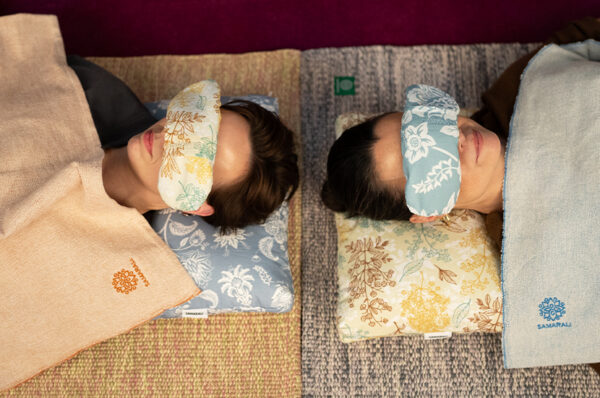
A soft organic cotton yoga blanket is ideal for this purpose. It can be draped over the body once you settle into savasana, keeping you warm without adding weight or restriction. Wearing a long-sleeved top as a base layer under a loose hoodie or wrap also works well, especially in cooler studios or during winter months.
Socks are worth adding to your kit even if you do not normally wear them during yoga. Feet lose heat quickly during stillness, and cold feet are one of the most common reasons people feel unable to fully relax during yoga nidra. Warm, soft socks or even loose slippers worn until you settle in can help you stay comfortable throughout the session.
What should you avoid wearing to a yoga nidra session?
Avoid anything that restricts, scratches, digs in, or demands physical awareness. Specifically, steer clear of tight waistbands, underwire bras, rigid denim, jewellery, belts, and anything with buttons or seams in pressure-point areas. These items create low-level physical distractions that are easy to ignore during active movement but become very noticeable during deep stillness.
- Tight waistbands or shapewear: These restrict the belly and diaphragm, which can interfere with the slow, deep breathing that supports yoga nidra.
- Underwire or structured bras: The rigid structure becomes uncomfortable over a long period of lying down.
- Jewellery and accessories: Necklaces, bracelets, and earrings can press into the skin or create noise with the slightest movement.
- Synthetic performance wear: Designed for sweat and movement, not for stillness and warmth.
- Stiff or textured fabrics: Denim, canvas, or heavily embroidered fabrics create friction and pressure points.
It is also worth thinking about what you carry into the session. Phones in pockets, hair accessories that press against the head when lying down, and glasses that do not sit comfortably in a supine position are all worth addressing before you begin. The more you can remove from your physical awareness, the more freely your mind can settle into the practice.
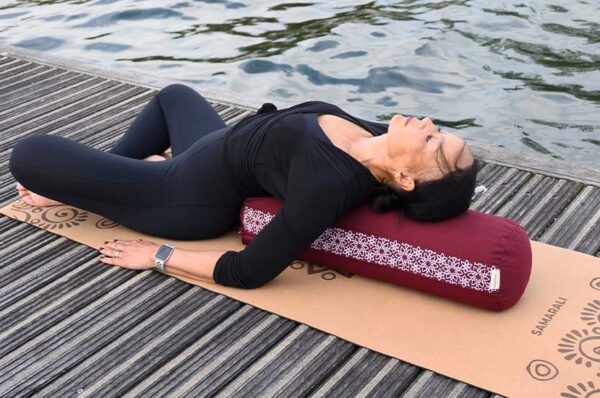
For those building a dedicated home yoga nidra practice, pairing the right clothing with a supportive setup makes a real difference. A yoga bolster under the knees and a yoga neck pillow for head support can complement your comfortable clothing and help the body fully release into the floor. When every layer of your environment supports ease, the practice can go much deeper.
If you are ready to build a practice space that truly supports deep rest, Samarali has everything you need in one place. From an organic cotton yoga blanket to keep you warm throughout your session, to a yoga bolster and meditation mat for full-body comfort, each piece is chosen with stillness and ease in mind. Explore the complete meditation collection at Samarali and create the conditions your practice deserves. Shop now.
Frequently Asked Questions
Can I wear the same outfit I use for active yoga classes to a yoga nidra session?
You can, but it is not ideal. Active yoga wear is designed for movement, stretch, and sweat-wicking, which means it often features compressive fits and synthetic fabrics that become uncomfortable during prolonged stillness. If it is your only option, choose your softest, least compressive pieces and consider adding a loose layer on top to stay warm and reduce any tight-fabric awareness.
What is the best thing to wear for an online or home yoga nidra practice?
At home, you have full freedom to dress for maximum comfort — think pyjamas, a soft robe, or loose loungewear in natural fabrics. Lay out a blanket, pull on a pair of warm socks, and change into your practice clothes a few minutes before you begin so your body has time to settle. Treating the clothing ritual as part of your pre-practice routine can also serve as a helpful mental signal that it is time to wind down.
How do I stay warm enough without overheating during yoga nidra?
The key is layering strategically rather than wearing one heavy item. Start with a soft long-sleeved base layer, add a light blanket you can pull up once you are settled, and keep a loose hoodie or wrap nearby in case you need more warmth mid-session. This approach lets you adjust without disrupting the practice, since removing a heavy jumper mid-session is far more disruptive than simply pulling a blanket a little higher.
Does it matter what I wear on my head or face during yoga nidra?
Yes, more than most people expect. Glasses with rigid frames can create uncomfortable pressure points against the temples and ears when lying flat for an extended time, so removing them before you begin is a good habit. If you use a sleep mask or eye pillow to block light, choose one that is lightweight and does not press too firmly on the eyes, as sustained pressure can be distracting rather than relaxing.
Are there specific clothing recommendations for yoga nidra during pregnancy?
During pregnancy, comfort and circulation are even more important, so opt for maternity-specific loose trousers or soft leggings with a gentle, non-restrictive waistband that sits below the bump. Avoid anything that puts pressure on the abdomen, and layer generously since temperature sensitivity can be heightened. Pairing comfortable clothing with a bolster for side-lying support (particularly in later trimesters) will make the practice significantly more accessible and sustainable.
What should I do if I fall asleep during yoga nidra — does my clothing choice affect this?
Falling asleep during yoga nidra is common, especially for beginners, and while it is not the intended state, it is not harmful. Wearing clothing that is too sleep-like — such as full pyjamas in a very warm room — can actually make it harder to stay in the hypnagogic threshold between wakefulness and sleep. A light, comfortable outfit in a slightly cooler environment can help you stay present at the edge of awareness rather than drifting fully into sleep.
How should I care for my yoga nidra clothing to keep it feeling soft over time?
Natural fabrics like organic cotton and bamboo respond best to gentle, cold-water washing and air drying, which preserves their softness and prevents shrinkage or pilling. Avoid fabric softeners with synthetic fragrances, as residual scent can become a subtle distraction during practice — unscented or natural detergents are a better choice. With proper care, high-quality natural-fibre pieces will actually soften and improve with every wash.