


For Yoga Nidra, a rectangular bolster is generally the best choice. Its flat, stable surface supports the body in savasana-style positions, making it ideal for the deep, passive relaxation this practice requires. The right bolster keeps you comfortable enough to stay completely still for extended periods without distraction. Below, we break down exactly what to look for in a Yoga Nidra bolster, from shape and filling to positioning.
What makes a bolster ideal for Yoga Nidra practice?
An ideal bolster for Yoga Nidra is one that provides firm, consistent support without requiring any muscular effort to stay comfortable. Because Yoga Nidra is a guided meditation and relaxation practice performed in stillness, often for 20 to 45 minutes, the bolster must hold its shape throughout and allow the body to fully release tension. Firmness, size, and weight all matter here.
Unlike dynamic yoga styles where props are used briefly, Yoga Nidra asks you to remain in one position for a long time. Any discomfort, whether from a bolster that sinks too much or one that is too rigid, will pull your attention away from the practice. The ideal bolster strikes a balance: supportive enough to lift and align the body, yet cushioned enough to feel genuinely restful.
Weight is another practical factor. A heavier bolster stays put without shifting underneath you, which matters when you are in a state of deep relaxation and not adjusting your position. Look for a bolster with a removable, washable cover as well, since Yoga Nidra sessions can be long and warmth builds up quickly.
Which bolster shape works best for Yoga Nidra?
A rectangular bolster works best for Yoga Nidra. Its wide, flat surface distributes weight evenly along the spine, under the knees, or beneath the torso, making it more versatile and stable than a round bolster for reclined, passive positions. The flat top prevents rolling and keeps the body in a neutral, supported alignment.
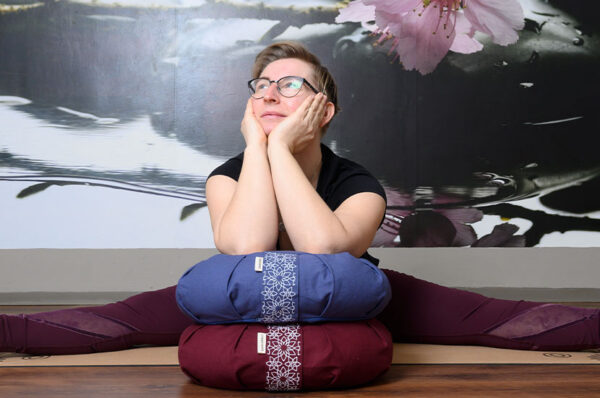
Round bolsters, while excellent for seated poses and chest-opening backbends, have a narrower contact surface. In a long reclined practice like Yoga Nidra, that narrower surface can create pressure points rather than even support, especially when placed under the knees or along the length of the spine.
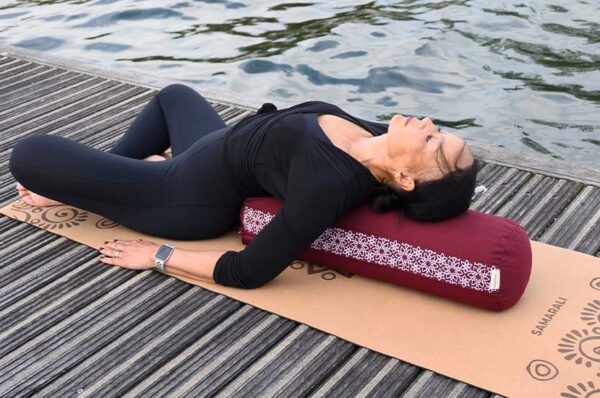
A rectangular yoga bolster placed lengthwise under the spine encourages a gentle, passive heart opener that pairs beautifully with the breath awareness central to Yoga Nidra. Placed under the knees, it releases lower back tension, which is one of the most common barriers to staying still and comfortable in savasana for extended periods.
What filling material should a Yoga Nidra bolster have?
For Yoga Nidra, a bolster filled with buckwheat hulls or dense cotton batting offers the best combination of firm support and natural comfort. These materials hold their shape under sustained body weight, do not compress flat over time, and provide a grounded, stable feel that supports full physical release during deep relaxation.
Buckwheat hull filling
Buckwheat hull filling is a popular choice among practitioners who prefer a firmer, more adjustable bolster. The hulls shift slightly to conform to body contours, offering personalized support. They are also a natural, sustainable material, which aligns well with the values of eco-conscious yoga practitioners. The slight weight of buckwheat bolsters also helps them stay in place.
Cotton batting filling
Dense organic cotton batting provides a firmer, more uniform surface. Cotton bolsters tend to be lighter than buckwheat options while still maintaining their shape effectively. Organic cotton is breathable, naturally hypoallergenic, and a responsible material choice from an environmental standpoint. Over time, cotton filling can compact slightly, but a high-quality cotton bolster will remain supportive through years of regular practice.
Synthetic foam fillings are less ideal for Yoga Nidra. While they are often lightweight, cheaper foam tends to feel bouncy rather than grounded, and it can retain heat uncomfortably during long sessions. If you value sustainability alongside comfort, natural fillings are the clear choice.
How do you position a bolster for Yoga Nidra?
For Yoga Nidra, the most common bolster positions are under the knees in savasana, lengthwise along the spine for a supported recline, or under the head and neck as an elevated pillow. The right position depends on your body and any areas of tension you carry, but placing the bolster under the knees is the most universally recommended starting point.
Placing the bolster horizontally beneath the knees in savasana is the most accessible and effective setup for most people. It creates a slight bend in the knees that releases the lower back and allows the pelvis to soften toward the floor. This single adjustment can make the difference between a restless session and one of genuine stillness.
For practitioners who carry tension in the chest or upper back, positioning the bolster lengthwise along the spine encourages the shoulders to drop open and the chest to expand passively. This position supports the breathing awareness exercises that are central to Yoga Nidra without requiring any effort from the practitioner.
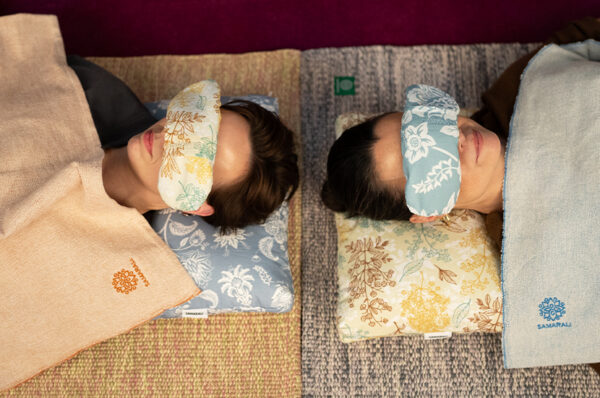
If you find your neck uncomfortable during long sessions, pairing your bolster with a yoga neck pillow can help maintain natural cervical alignment without strain. You might also consider adding an organic cotton yoga blanket over yourself during practice, since body temperature drops quickly in deep relaxation and staying warm supports the transition into the meditative states Yoga Nidra is designed to cultivate.
Experiment with small adjustments before your session begins rather than during it. Setting up your props thoughtfully at the start means your body can fully let go once the practice is underway.
Ready to build your perfect Yoga Nidra setup? At Samarali, you will find everything you need to support a deep, restorative practice — from our yoga bolster and yoga neck pillow to our organic cotton yoga blanket, all crafted with natural materials and conscious comfort in mind. Explore the full meditation collection and find the props that will help you settle in, let go, and go deeper. Shop now.
Frequently Asked Questions
Can I use a regular bed pillow instead of a bolster for Yoga Nidra?
While a bed pillow can work in a pinch, it lacks the firmness and structural integrity needed to support your body properly during a 20–45 minute Yoga Nidra session. Bed pillows compress quickly under body weight, lose their shape, and can create uneven pressure points that pull your attention away from the practice. A dedicated yoga bolster is a worthwhile investment precisely because it maintains consistent support throughout the entire session without any adjustment needed.
How do I know if my bolster is the right firmness for my body?
A good test is to place the bolster under your knees in savasana and check whether your lower back softens toward the floor without any muscular effort. If you feel yourself gripping or adjusting, the bolster may be too soft and sinking, or too firm and creating pressure. Ideally, you should feel a sense of passive release within the first minute of lying down — if discomfort lingers past that point, try a different height or filling type.
What if I experience lower back or knee discomfort even with a bolster in place?
First, try adjusting the bolster height by folding a blanket on top of it to raise the support point, or remove the blanket to lower it — small changes in height can make a significant difference. If knee discomfort persists, try positioning the bolster slightly closer to the mid-thigh rather than directly under the knee joint. For persistent lower back issues, consider also placing a folded blanket under your sacrum for additional pelvic support, and consult a yoga teacher or physical therapist if discomfort continues across multiple sessions.
How many bolsters do I actually need for a complete Yoga Nidra setup?
Most practitioners find that one rectangular bolster covers the majority of their needs, especially when paired with a yoga blanket and a neck pillow. However, if you practice frequently or have specific areas of tension — such as both the lower back and the upper spine — having two bolsters gives you the flexibility to support multiple areas simultaneously without improvising. Start with one quality bolster and add props as you discover what your body needs.
How should I care for and maintain my Yoga Nidra bolster?
Always choose a bolster with a removable, machine-washable cover and wash it regularly, especially since body heat and perspiration build up during long sessions. For buckwheat hull bolsters, avoid getting the inner filling wet — spot clean the outer casing only and allow it to air dry completely before use. Cotton-filled bolsters can typically have their covers laundered on a gentle cycle; fluff and air out the bolster itself periodically to maintain its shape and freshness.
Is there a specific bolster size that works best for taller or larger-framed practitioners?
Yes — taller and larger-framed practitioners generally benefit from a larger rectangular bolster, typically around 24–26 inches long and 12 inches wide, which provides a wider and longer contact surface. Standard bolsters (around 24 x 10 inches) can feel too narrow under the knees or too short along the spine for taller bodies. When shopping, check the bolster’s dimensions carefully and, if possible, test it in a reclined position before purchasing.
Can I use the same bolster for other yoga styles, or should I have a separate one for Yoga Nidra?
A high-quality rectangular bolster is versatile enough to serve double duty across restorative yoga, yin yoga, pranayama, and Yoga Nidra — making it one of the most practical investments in your practice. The key is choosing a bolster firm enough for Yoga Nidra’s extended passive support, which will also perform well in other restorative contexts. The only trade-off is that round bolsters, which excel in seated and backbend poses in active yoga styles, are less ideal for Yoga Nidra, so if you practice a wide range of styles, you may eventually want one of each.