


For Yin Yoga, natural rubber is the most sustainable yoga mat material. It offers the grip, cushioning, and stability that long-held poses demand, while being biodegradable and sourced from renewable rubber trees. If natural rubber does not suit you, organic cotton and cork are strong eco-friendly alternatives worth considering. Below, we break down each material in detail so you can choose with confidence.
Which yoga mat materials are actually eco-friendly?
The most genuinely eco-friendly yoga mat materials are natural rubber, organic cotton, cork, and jute. These materials are either biodegradable, renewable, or produced without the toxic chemicals associated with conventional PVC mats. Each has a different environmental profile, so the best choice depends on how you weigh factors like sourcing, production footprint, and end-of-life disposal.
Natural rubber is tapped from rubber trees without cutting them down, making it a renewable resource. It biodegrades at the end of its life and requires no synthetic processing to achieve excellent grip and durability. Cork is harvested from the bark of cork oak trees, which regenerates every nine years, making it one of the lowest-impact materials available. Organic cotton is grown without synthetic pesticides or fertilizers, and when woven into a yoga rug or mat, it creates a breathable, washable surface that lasts for years.
What all of these materials share is transparency. Brands that use them tend to be open about sourcing and manufacturing, which matters to anyone making a genuinely conscious purchase. Conventional mats made from PVC or synthetic rubber, by contrast, rely on petrochemicals, off-gas harmful compounds, and do not break down in landfill. They may be cheap upfront, but their environmental cost is significant.
What makes a yoga mat suitable for Yin Yoga specifically?
A yoga mat is suitable for Yin Yoga when it provides adequate cushioning, consistent grip, and a stable surface for long-held, passive poses. Because Yin Yoga involves holding postures for two to five minutes at a time with minimal muscular engagement, the mat needs to support your body weight comfortably without causing discomfort at pressure points like hips, knees, and ankles.
Thickness matters more in Yin than in dynamic styles like Vinyasa. A mat that is at least four millimetres thick will protect joints during seated and reclined poses. Grip is equally important because you are not actively pressing into the mat with muscular effort, so the surface needs to hold position passively rather than relying on your engagement to prevent slipping.
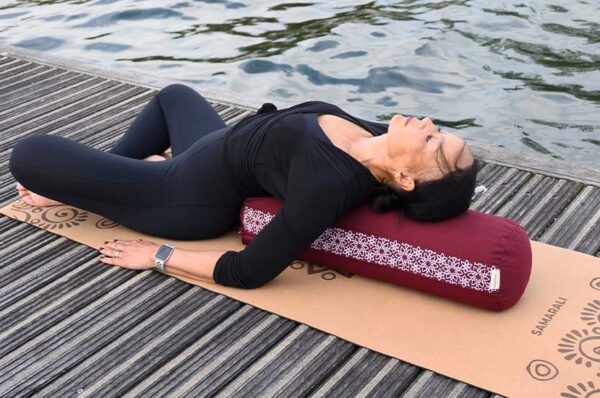
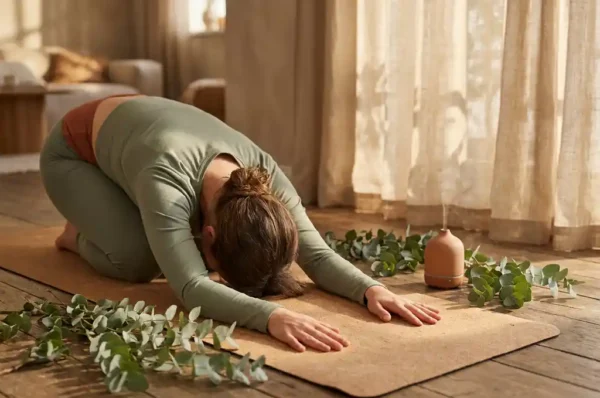
Temperature also plays a subtle role. Yin practice is typically slow and still, meaning your body generates less heat. A mat that stays warm and does not feel cold against the skin adds to the comfort of longer holds. Natural rubber and cork both have a naturally warm, tactile quality that suits this slower, more meditative style well. Many practitioners also layer a yoga blanket on top of their mat for additional warmth and cushioning during floor-based poses.
Which sustainable mat material performs best for Yin Yoga?
Natural rubber performs best for Yin Yoga among sustainable materials. It combines the cushioning depth, consistent grip, and joint support that long passive holds require, without relying on synthetic materials. Cork is a close second, particularly for practitioners who prefer a firmer surface or have a latex sensitivity.
Natural rubber mats typically range from four to six millimetres in thickness, which is ideal for Yin. The material compresses slightly under body weight to cushion pressure points, then springs back to shape. Its grip is reliable even when you are completely still, which is exactly what Yin practice demands. Our natural rubber yoga mat is a good example of how this material performs in practice, offering the density and traction that slower styles benefit from most.
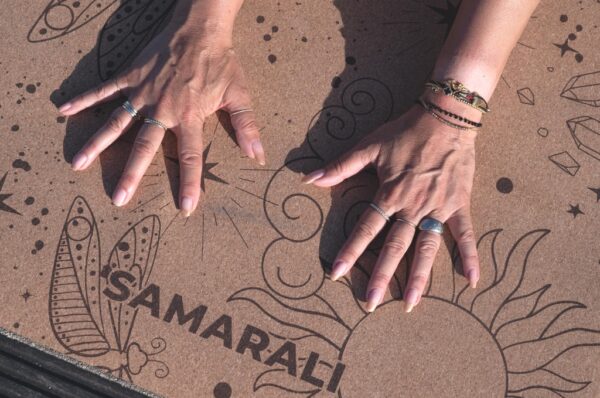
Cork is worth considering if you run warm, practice in a heated space, or prefer a slightly firmer feel underfoot and under the hips. Cork has natural antimicrobial properties, which means it stays fresher between washes, and its texture actually improves with moisture, making it a practical choice for practitioners who sweat even in a slow practice.
Organic cotton yoga rugs are a traditional option with real merit for Yin. They are soft, breathable, and washable, and they layer beautifully over a thin mat for extra comfort. They are less suited as a standalone surface on smooth floors because they can shift during transitions, but on carpet or over a rubber base, they work very well for restorative and Yin styles.
Should you avoid any sustainable materials for Yin Yoga?
You should approach jute mats with caution for Yin Yoga. Jute is a sustainable and biodegradable material, but its texture is coarse and its cushioning is minimal. For dynamic styles where you are moving through poses quickly, this is less of an issue. For Yin, where you are pressing the same body part into the mat for several minutes at a time, a rough or thin surface can cause real discomfort.
Thin cork mats, typically under three millimetres, can also be less comfortable for Yin than their thicker counterparts. Cork is firm by nature, and without sufficient depth, it offers little protection for bony contact points during long floor holds. If you love cork, look for mats that use a natural rubber backing to add cushioning beneath the cork surface layer.
It is also worth being cautious about mats marketed as eco-friendly but made from TPE (thermoplastic elastomer). TPE is often positioned as a greener alternative to PVC, and it is technically free of PVC and latex. However, it is still a synthetic material derived from petrochemicals, and it does not biodegrade. For a practice rooted in mindfulness and intention, a genuinely natural material tends to feel more aligned with the values that draw people to Yin in the first place.
Ultimately, the right sustainable mat for your Yin practice is one that keeps you comfortable enough to stay present in each pose. At Samarali, you will find a carefully curated selection of natural, eco-conscious yoga essentials — from our natural rubber yoga mat and organic cotton yoga rug to the organic cotton yoga blanket that adds warmth and cushioning to every long hold. Browse the full yoga mat collection to find the material and thickness that fits your practice and your values — and shop now to bring more intention to every session.
Frequently Asked Questions
How do I care for and clean a natural rubber yoga mat?
Natural rubber mats should be wiped down after each practice with a damp cloth and a mild, natural cleaning solution — avoid harsh chemicals or alcohol-based sprays, as these can degrade the rubber over time. For a deeper clean, hand wash with cold water and a gentle soap, then air dry flat away from direct sunlight, which can cause the rubber to dry out and crack. Avoid rolling your mat with the rubber side facing out, as this can stress the material and shorten its lifespan.
I have a latex allergy — what is the best sustainable mat option for Yin Yoga?
Cork is your best sustainable alternative if you have a latex sensitivity, as it is completely free of latex and delivers firm, reliable support for long-held Yin poses. Look for a cork mat that is at least four millimetres thick, ideally with a non-rubber backing such as natural foam or a dense cork base, to ensure adequate joint cushioning. Organic cotton yoga rugs layered over a latex-free base mat are another comfortable and allergy-safe option worth exploring.
How thick should my mat be if I practice Yin Yoga on hardwood floors?
On hardwood floors, aim for a mat that is at least five to six millimetres thick to provide meaningful protection for pressure points like the hips, knees, and ankles during extended holds. Natural rubber mats in this thickness range offer the best combination of cushioning and stability on hard surfaces. If your mat is on the thinner side, layering a folded organic cotton yoga blanket beneath your hips or knees during floor poses is a practical and eco-friendly way to add extra padding where you need it most.
What is the most common mistake people make when buying a sustainable yoga mat for Yin?
The most common mistake is prioritising eco-credentials over functional suitability — choosing a mat because it is marketed as sustainable without checking whether it actually meets the cushioning and grip requirements of a slow, floor-based practice. A thin jute mat or a minimal cork mat may be genuinely eco-friendly but still leave you uncomfortable after two minutes in a hip opener. Always check the thickness specification and read reviews from practitioners of slower styles like Yin or Restorative before committing to a purchase.
How long does a natural rubber yoga mat typically last, and is it worth the higher upfront cost?
A well-maintained natural rubber mat typically lasts between three and five years with regular practice, and some high-quality mats last considerably longer with proper care. When you factor in that a single natural rubber mat replaces multiple cheaper PVC mats over the same period — each of which would end up in landfill — the long-term cost and environmental impact are both lower. For a practice like Yin, where the mat is a central part of your comfort and focus, investing in a durable, high-performing material is genuinely worthwhile.
Can I use a sustainable yoga mat outdoors for Yin or Restorative practice?
Natural rubber and cork mats can both be used outdoors, but they require a little extra care in those conditions. Prolonged exposure to direct sunlight will degrade natural rubber over time, so outdoor use is best kept occasional rather than routine, and the mat should be stored indoors away from UV exposure. Cork is more UV-resilient and handles light moisture well, making it a slightly better choice for outdoor sessions, though neither material is designed to replace a purpose-built outdoor mat for regular al fresco practice.
Are there any certifications I should look for when buying an eco-friendly yoga mat?
Yes — look for GOTS (Global Organic Textile Standard) certification on cotton mats, which guarantees the fibre was grown and processed to strict organic and ethical standards. For natural rubber mats, FSC (Forest Stewardship Council) certification confirms the rubber was sourced from responsibly managed forests. OEKO-TEX Standard 100 is another useful label that indicates the finished product has been tested for harmful substances, regardless of the base material — it is a good baseline assurance for any mat you are considering.