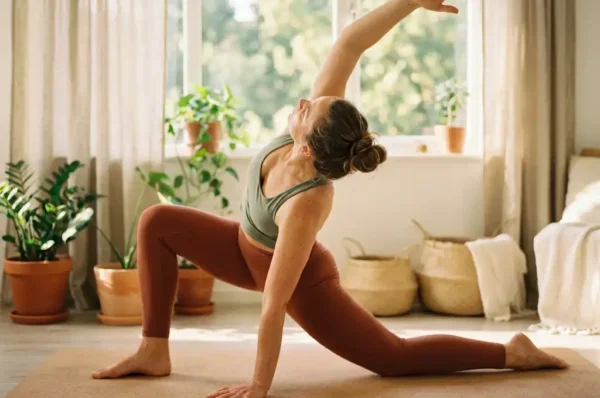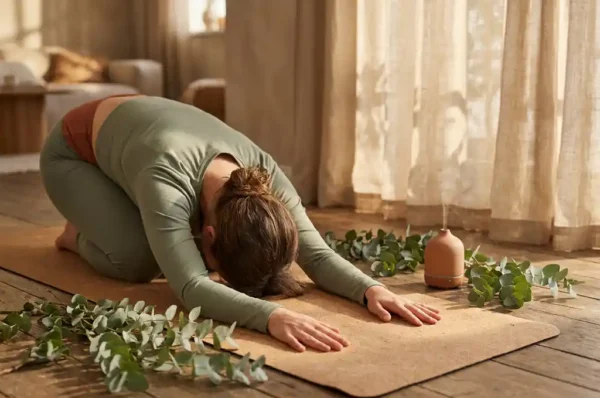



Yin yoga is absolutely suitable for beginners. In fact, its slow pace, long-held poses, and focus on stillness make it one of the most accessible yoga styles for people who are new to the practice. It requires no prior flexibility or experience, just a willingness to slow down and be present. Below, we cover everything a beginner needs to know before stepping onto the mat.
What makes yin yoga different from other yoga styles?
Yin yoga is a slow, meditative style of yoga where poses are held for two to five minutes or longer, targeting the deep connective tissues of the body rather than the muscles. Unlike more active styles such as vinyasa or ashtanga, yin yoga is practiced in stillness, with the body relaxed and supported rather than engaged and working.
Most yoga styles are considered “yang” in nature, meaning they build heat, strengthen muscles, and create dynamic movement. Yin yoga works in the opposite direction. By holding passive poses for extended periods, it gently stresses the fascia, ligaments, and joints, improving flexibility and circulation in areas that more active movement rarely reaches.
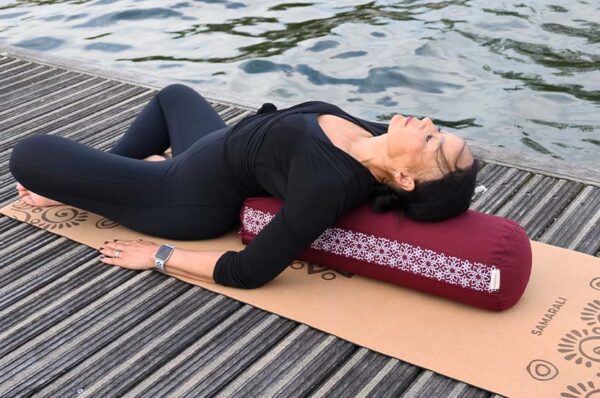
The practice is deeply rooted in Chinese medicine and the concept of energy channels known as meridians. Holding poses for a long time is thought to stimulate these channels, supporting the flow of energy through the body. This gives yin yoga a quality that sits somewhere between physical practice and meditation, making it both restorative and introspective. A supportive yoga bolster can make holding these long poses much more comfortable, especially for beginners.
What should a beginner expect in their first yin yoga class?
In a first yin yoga class, beginners can expect a quiet, unhurried environment where poses are held for several minutes at a time, often with the support of props. There will typically be fewer than ten postures in a single session, and the teacher will guide students into each shape gradually, encouraging them to find their own comfortable edge rather than pushing for depth.
The most common beginner experience is the challenge of stillness itself. Holding a pose for three or four minutes can feel surprisingly intense, not always physically but mentally. Thoughts tend to surface, discomfort becomes more noticeable, and the urge to fidget or move is real. This is completely normal, and most teachers will acknowledge it directly.
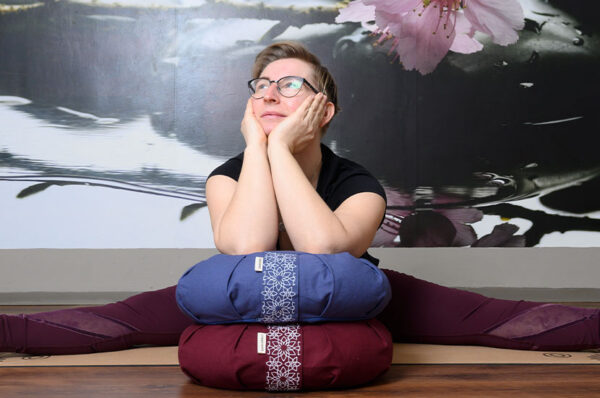
Props play a big role in yin yoga, and beginners are actively encouraged to use them. Blankets, bolsters, and blocks help the body settle into poses without strain, allowing the connective tissue to release gradually rather than being forced. Classes are typically practiced in a warm room to help the body soften more easily, and sessions often end with a longer savasana or a brief meditation to integrate the practice.
Are there any beginners who should approach yin yoga with caution?
Most beginners can practice yin yoga safely, but certain individuals should approach it with care or consult a healthcare professional before starting. Yin yoga involves sustained pressure on joints and connective tissue, which means people with specific injuries or conditions need to be mindful of how they engage with the practice.
Those who should take extra care include:
- People with hypermobility: Because yin yoga encourages the body to soften and release, those who are already very flexible can overstretch connective tissue without realising it. Finding a gentle edge rather than going to full range is especially important.
- Anyone with recent joint injuries: Ligaments and tendons that are already healing need time before being placed under sustained stress. A physiotherapist or doctor can advise on when it is safe to begin.
- Pregnant individuals: Relaxin, a hormone produced during pregnancy, already loosens connective tissue, so additional deep stretching requires care. Prenatal-specific guidance is recommended.
- People with lower back conditions: Some yin poses place a significant load on the lumbar spine. Props and modifications can make the practice accessible, but it is worth speaking to a teacher beforehand.
The good news is that yin yoga is highly adaptable. A skilled teacher will offer modifications for almost every pose, and the use of props means that most bodies can find a version of each shape that feels appropriate and safe.
How can a beginner get the most out of yin yoga?
Beginners get the most out of yin yoga by arriving with patience, gathering the right props, and focusing on sensation rather than shape. The goal in yin yoga is not to look a certain way in a pose but to feel a moderate, sustainable stretch in the target area. Letting go of comparison and performance is the single most valuable mindset shift a new student can make.
A few practical tips to help beginners thrive:
- Use props generously. A bolster, blanket, and mat that provides enough cushioning will transform your experience. Having the right support means you can actually relax into a pose instead of bracing against discomfort.
- Find your edge, not your maximum. In yin yoga, the ideal sensation is around a six out of ten in intensity. Sharp, shooting, or joint pain is a signal to ease back immediately.
- Breathe consciously. Long, slow breaths help the nervous system shift into a parasympathetic state, which is where the real release happens. Each exhale is an invitation to soften a little more.
- Give yourself time after class. Yin yoga can leave the body feeling tender or the mind feeling unexpectedly emotional. Building in even ten minutes of quiet time after practice helps the integration process.
- Practice consistently. The benefits of yin yoga, including improved joint mobility, reduced tension, and greater mental calm, build over time. Even one session per week makes a meaningful difference.
Investing in quality, sustainable equipment also supports a more comfortable and focused practice. An organic cotton yoga blanket adds warmth and cushioning for floor-based poses, and having your own props means you can practice at home whenever the mood strikes. We believe that the right environment and tools make it much easier to show up consistently, especially when you are just starting out.
Ready to build your yin yoga practice with the support it deserves? At Samarali, you will find everything you need to get started, from a yoga bolster and organic cotton yoga blanket for long, comfortable holds to a natural rubber yoga mat that grounds your practice from the very first session. All our products are made with care for both people and the planet — because how you practice matters just as much as what you practice on. Shop the collection now and set yourself up for a practice you will actually look forward to.
Frequently Asked Questions
How long does it take to notice the benefits of yin yoga as a beginner?
Most beginners notice some immediate effects after their very first class, such as a sense of calm, reduced tension, and improved mental clarity. Deeper physical benefits like increased joint mobility and lasting flexibility improvements typically become noticeable after four to eight weeks of consistent practice, even at just one session per week. The key is regularity rather than frequency — showing up steadily over time matters far more than doing multiple sessions in a single week.
What is the best way to deal with mental restlessness during long-held poses?
Mental restlessness in yin yoga is extremely common and is actually part of what the practice is designed to work with. A helpful strategy is to anchor your attention to the breath, counting slow inhales and exhales to give the mind something gentle to focus on. You can also do a quiet body scan, noticing sensations from head to toe without trying to change them. Over time, this discomfort with stillness tends to ease naturally as your nervous system becomes more familiar with the practice.
Can I practice yin yoga at home as a beginner, or should I start with in-person classes?
Both options are valid, but beginners tend to benefit from attending at least a few in-person or live online classes first. Having a qualified teacher present means you receive real-time guidance on finding your edge safely, using props correctly, and understanding the difference between productive discomfort and pain. Once you have a feel for the pace and principles of yin yoga, home practice becomes much more effective and enjoyable. Having your own props — such as a bolster, blanket, and blocks — makes home sessions far more comfortable and sustainable.
How is yin yoga different from restorative yoga? Are they the same thing?
Yin yoga and restorative yoga are often confused, but they have distinct purposes. Restorative yoga is entirely passive and uses props to fully support the body in positions of complete rest, with no intentional stress placed on the tissues — the goal is pure relaxation and nervous system recovery. Yin yoga, by contrast, does apply a gentle, deliberate stress to the connective tissues and joints in order to stimulate adaptation and improve mobility. Think of restorative yoga as a deep rest and yin yoga as a slow, mindful stretch that also happens to be deeply calming.
What should I wear and bring to my first yin yoga class?
Wear comfortable, loose or stretchy clothing that allows for a full range of movement without restriction, since you will be holding floor-based poses for several minutes at a time. Layers are a good idea, as the body temperature can drop during long passive holds. Most studios provide props like bolsters, blocks, and blankets, but bringing your own mat ensures you have adequate cushioning. Arriving five to ten minutes early is always helpful so you can set up your space, let the teacher know it is your first class, and settle in before the session begins.
Is it normal to feel sore or emotional after a yin yoga session?
Yes, both physical tenderness and unexpected emotional responses after yin yoga are completely normal, especially for beginners. The deep pressure on connective tissue can leave joints and surrounding muscles feeling mildly achy for a day or two, similar to the sensation after a deep tissue massage. Emotionally, long holds and stillness can bring suppressed feelings to the surface — this is widely recognised in the yoga and somatic therapy communities as the body releasing stored tension. Gentle movement, hydration, and quiet rest time after class all help the body and mind integrate the experience.
How many times per week should a beginner practice yin yoga?
For beginners, one to two sessions per week is an ideal starting point. This frequency gives the connective tissues adequate time to recover between sessions, since unlike muscles, fascia and ligaments adapt more slowly and need sufficient rest. Starting with one weekly session also makes it easier to build a consistent habit without overwhelming your schedule. As your body adapts and you become more familiar with the practice over several weeks, you can gradually increase frequency if it feels right for you.