


Yes, Hatha yoga can genuinely improve your posture. Regular practice strengthens the muscles that support your spine, increases body awareness, and gently releases the tension patterns that pull your body out of alignment. The benefits apply to beginners and experienced practitioners alike, and the improvements tend to be lasting because Hatha yoga addresses both the physical and habitual causes of poor posture. Below, we unpack exactly how it works and what to expect.
What does Hatha yoga do to your spine and posture?
Hatha yoga improves spinal alignment by simultaneously strengthening the muscles that hold the spine upright and lengthening the muscles that compress or pull it out of position. Unlike passive stretching, Hatha yoga trains your body to actively hold better alignment, which means the improvements carry over into everyday movement and not just during your practice.
The spine has a natural S-shaped curve that distributes weight efficiently. When muscles around the hips, core, chest, and shoulders become tight or weak, those curves either flatten or exaggerate, leading to rounded shoulders, forward head posture, or an overly arched lower back. Hatha yoga targets all of these areas systematically.
A few key mechanisms explain why Hatha yoga is especially effective for spinal health:
- Core strengthening: Poses like Plank and Boat build the deep stabilising muscles of the abdomen and lower back that act as a natural corset for the spine.
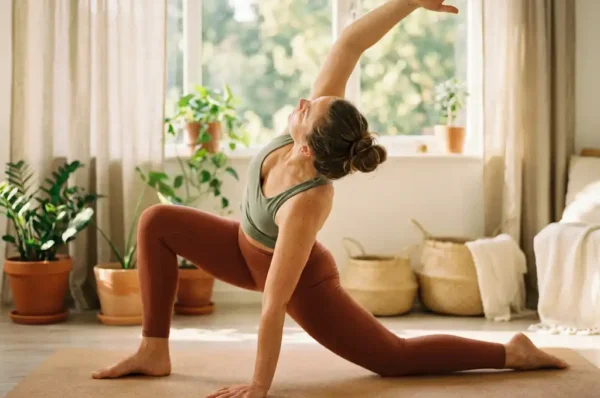
- Hip flexor release: Extended low lunge and similar poses open the hip flexors, which, when tight, tilt the pelvis forward and compress the lumbar spine.
- Chest and shoulder opening: Backbends and chest-opening poses counteract the forward rounding caused by prolonged sitting or screen time.
- Proprioceptive awareness: Holding poses teaches you to notice where your body is in space, so you begin to catch and correct slouching automatically throughout the day.
Over time, this combination of strength, flexibility, and awareness rewires how your body defaults to standing and sitting.
Which Hatha yoga poses are best for correcting posture?
The most effective Hatha yoga poses for posture correction are those that open the chest, strengthen the back and core, and realign the pelvis. Mountain Pose, Cobra, Bridge, Cat-Cow, and Warrior I are consistently recommended because they address the most common postural imbalances directly and are accessible to most practitioners.
Here is a closer look at the most useful poses and what each one targets:
- Mountain Pose (Tadasana): Establishes neutral spinal alignment and trains full-body postural awareness from the ground up. It sounds simple, but practised mindfully, it recalibrates your entire sense of upright posture.
- Cobra Pose (Bhujangasana): Strengthens the muscles along the entire length of the spine and opens the chest, directly counteracting forward rounding.
- Bridge Pose (Setu Bandhasana): Activates the glutes and lower back while stretching the hip flexors and chest, addressing the pelvis-to-shoulder chain that governs overall posture.
- Cat-Cow (Marjaryasana-Bitilasana): Mobilises each segment of the spine and builds awareness of the difference between a neutral and a collapsed back.
- Warrior I (Virabhadrasana I): Strengthens the legs and core while opening the hip flexors and lifting the chest, reinforcing the upright alignment needed for good posture.
- Child’s Pose (Balasana): Gently decompresses the lumbar spine and releases tension in the back muscles accumulated during the day.
Practising on a supportive, non-slip surface makes a real difference when holding alignment-focused poses. Our natural rubber yoga mat provides the grip and cushioning that let you focus on the pose rather than your footing.
How long does it take for Hatha yoga to improve posture?
Most people notice measurable improvements in posture within four to eight weeks of consistent Hatha yoga practice, typically two to four sessions per week. The earliest changes are usually increased body awareness and reduced muscle tension, while structural improvements in alignment and muscle balance develop over two to three months of regular practice.
The timeline varies depending on a few factors:
- Starting point: If your postural habits are deeply ingrained or you have significant muscle imbalances, it takes longer to see visible change.
- Frequency: Two to three sessions per week produces noticeably faster results than one session per week.
- Session length: Even 20 to 30 minute focused sessions are effective, particularly when they target the specific areas driving your postural issues.
- Daily habits: Yoga accelerates improvement when combined with conscious posture habits off the mat, such as adjusting your desk setup or taking movement breaks during long sitting periods.
Consistency matters far more than session length or intensity. A short, regular practice builds the neuromuscular patterns that make better posture feel natural, rather than something you have to consciously force.
Can Hatha yoga fix posture problems caused by sitting all day?
Yes, Hatha yoga is one of the most effective tools for reversing the postural damage caused by prolonged sitting. Sitting for extended periods tightens the hip flexors, weakens the glutes and deep core, rounds the upper back, and pushes the head forward. Hatha yoga directly addresses every one of these patterns through targeted stretching and strengthening.
The postural profile of someone who sits at a desk all day typically includes a forward-tilted pelvis, tight chest and shoulders, a compressed lower back, and a chin that juts forward. Left unaddressed, these patterns can lead to chronic neck and back pain. Hatha yoga works against all of these tendencies in a single practice session.
A short Hatha sequence at the end of a workday is particularly effective because the muscles have been held in shortened positions for hours and respond well to gentle, sustained lengthening. Poses like Low Lunge, Seated Forward Fold, Supine Twist, and Legs Up the Wall decompress the spine and reset the body after a day of desk work.
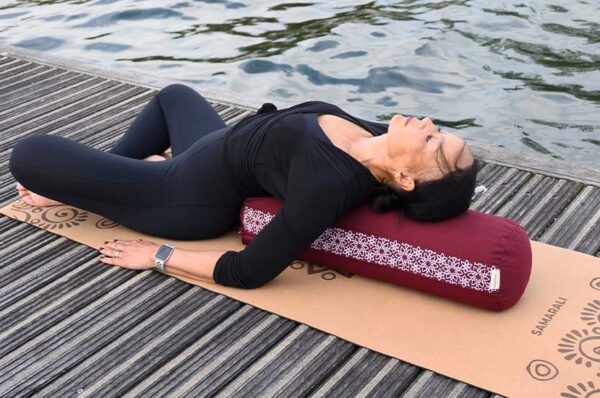
Using supportive props can deepen the release in key areas. A yoga bolster is especially useful for chest-opening poses and passive backbends that counteract the rounding that builds up during long hours at a screen.
It is worth noting that Hatha yoga addresses the root causes of desk-related posture problems rather than just the symptoms. By rebuilding strength in the muscles that sitting underuses and releasing the ones it overworks, regular practice creates a more balanced body that holds better posture naturally, even when you are back at your desk.
Ready to support your practice with the right equipment? At Samarali, you will find everything you need to build a consistent, posture-focused yoga routine — from our natural rubber yoga mat and organic cotton yoga rug to our yoga bolster for deeper chest-opening and restorative poses. The right foundation makes a real difference — shop the collection now.
Frequently Asked Questions
Is Hatha yoga suitable for beginners who have never done yoga before?
Yes, Hatha yoga is widely considered one of the most beginner-friendly yoga styles because it moves at a slower pace and holds poses long enough for you to learn proper alignment. Most posture-focused poses like Mountain Pose, Cat-Cow, and Bridge require no prior experience and can be modified with props such as blocks or a bolster to suit your current flexibility and strength. Starting with a beginner-level class or guided video ensures you build the foundational habits that make posture improvements stick.
How do I know if my posture is actually improving from my Hatha yoga practice?
The most reliable way to track progress is to take side-profile photos at the start of your practice and every four weeks thereafter, looking for changes in head position, shoulder rounding, and the curve of your lower back. Beyond photos, practical signs of improvement include sitting or standing for longer periods without discomfort, noticing yourself naturally correcting your posture throughout the day without conscious effort, and reduced tension in your neck and upper back by the end of a workday. Keeping a simple practice journal noting how your body feels before and after each session can also help you spot gradual improvements that are easy to overlook in the moment.
What if certain poses cause discomfort or pain in my back — should I push through it?
No — pain is always a signal to stop, back off, or modify the pose, never something to push through. A distinction worth learning early is the difference between the mild discomfort of a productive stretch and sharp, pinching, or radiating pain, which indicates that a pose is being performed incorrectly or is unsuitable for your body at that stage. If back pain persists during or after practice, it is worth consulting a physiotherapist or a yoga teacher trained in therapeutic yoga before continuing, as some postural conditions such as herniated discs or scoliosis require tailored modifications.
Can I combine Hatha yoga with other exercises like strength training or Pilates for better posture results?
Absolutely — Hatha yoga pairs exceptionally well with both strength training and Pilates, and combining them tends to accelerate posture improvements faster than any single modality alone. Strength training builds the load-bearing capacity of the muscles that Hatha yoga activates, while Pilates reinforces deep core stability that supports spinal alignment. The key is sequencing: many practitioners find it effective to use Hatha yoga as a recovery or cool-down practice on strength training days, so the body benefits from both the muscular challenge and the restorative lengthening within the same week.
How many days a week should I practice Hatha yoga specifically to see posture improvements?
Two to three dedicated sessions per week is the sweet spot for most people targeting posture improvement, as this frequency allows enough repetition to build neuromuscular patterns without overloading the body. That said, even five to ten minutes of targeted poses daily — such as a morning Cat-Cow and Cobra sequence or an evening Low Lunge and Supine Twist routine — can meaningfully reinforce the alignment habits you build during longer sessions. Consistency and regularity matter far more than session length, so a short daily practice will generally outperform one long weekly session.
Are there any common mistakes beginners make when using Hatha yoga for posture correction?
One of the most frequent mistakes is prioritising flexibility over alignment — for example, sinking into a deep backbend without first engaging the core and glutes, which can actually compress the lumbar spine rather than decompress it. Another common error is treating the practice as purely physical and ignoring the proprioceptive awareness component, meaning practitioners go through the motions without tuning into how each pose feels and what it is correcting. Finally, many beginners neglect the transitions between poses, which are just as important for building postural habits as the poses themselves — moving mindfully in and out of each position reinforces the alignment cues your body needs to carry into everyday life.
Will I need any equipment beyond a yoga mat to practice Hatha yoga for posture?
A good-quality, non-slip yoga mat is the only essential piece of equipment, as it provides the stable foundation needed to hold alignment-focused poses safely. However, a few affordable props can significantly enhance your practice: yoga blocks help you maintain proper spinal alignment in poses where tight hamstrings or limited mobility might otherwise cause compensations, while a yoga bolster is invaluable for passive chest-opening and backbend poses that counteract the forward rounding from desk work. A yoga strap is also useful for poses that target tight shoulders or hamstrings, allowing you to access the correct alignment without straining.