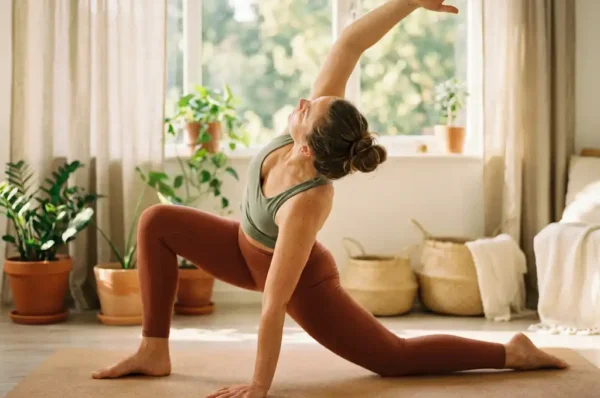



Yes, Hatha yoga is genuinely good for stress relief. Its slow, deliberate pace combines physical postures, conscious breathing, and moments of stillness in a way that directly calms the nervous system and quiets a busy mind. It works particularly well for people who carry stress in their bodies as well as in their thoughts. Below, we break down exactly how it works, which poses help most, and how it compares to other styles.
How does Hatha yoga actually reduce stress?
Hatha yoga reduces stress by activating the parasympathetic nervous system, often called the “rest and digest” response, which counteracts the body’s stress-driven “fight or flight” state. Holding postures while focusing on slow, rhythmic breathing lowers cortisol levels, reduces muscle tension, and brings the mind into the present moment rather than dwelling on worries.
The mechanism is both physical and mental. On the physical side, sustained stretching releases tension stored in muscles, particularly in the hips, shoulders, and lower back, which are common areas where stress accumulates. Deep diaphragmatic breathing, a core element of Hatha practice, directly influences the vagus nerve, which plays a key role in regulating the stress response.
Mentally, the structured focus required to hold a pose and coordinate breath gives the mind a clear, manageable anchor. This is essentially a form of moving mindfulness. Over time, regular Hatha practice trains the nervous system to return to a calmer baseline more quickly, even outside of yoga sessions. Think of it as building a kind of stress resilience that carries into everyday life.
What Hatha yoga poses are best for stress relief?
The most effective Hatha yoga poses for stress relief are those that combine gentle forward folds, supported inversions, and restorative shapes that signal safety to the nervous system. Child’s Pose, Legs Up the Wall, Standing Forward Fold, Supine Twist, and Savasana consistently rank among the most calming postures in a Hatha practice.
Here is a closer look at why each works so well:
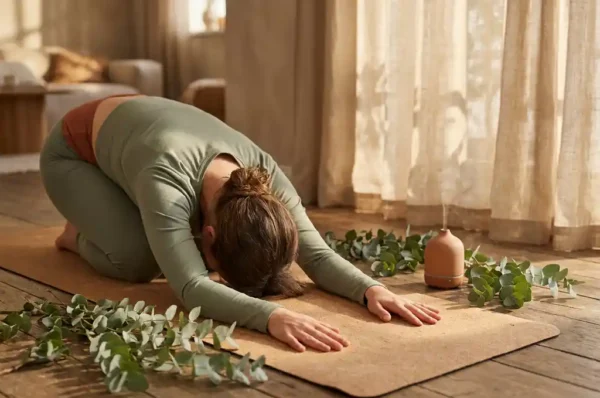
- Child’s Pose (Balasana): The forward fold and grounded position naturally slow the breath and create a sense of protection, making it deeply soothing for an anxious mind.
- Legs Up the Wall (Viparita Karani): This gentle inversion encourages venous return and activates the parasympathetic response, making it one of the most restorative poses in the Hatha toolkit.
- Standing Forward Fold (Uttanasana): Releasing the head below the heart stretches the back of the legs and spine while encouraging the nervous system to downshift.
- Supine Twist (Supta Matsyendrasana): Gentle spinal rotation releases tension along the back and sides of the torso, areas that tighten noticeably under chronic stress.
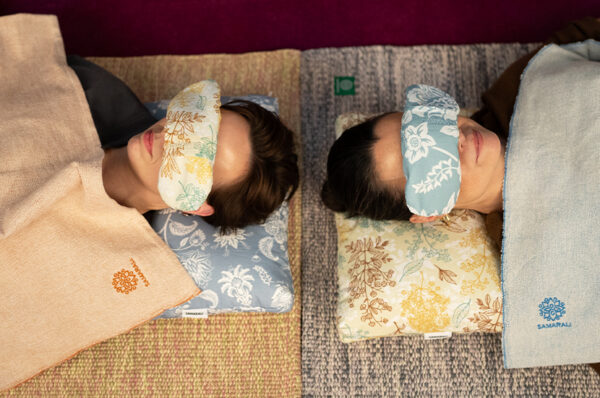
- Savasana (Corpse Pose): The final resting pose is essential for stress relief. Lying completely still while consciously relaxing each part of the body allows the benefits of the entire practice to settle in.
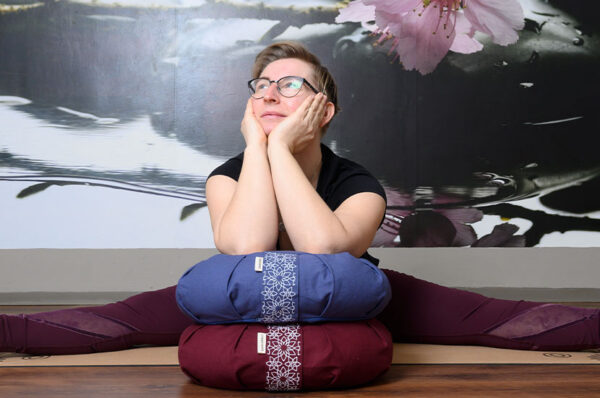
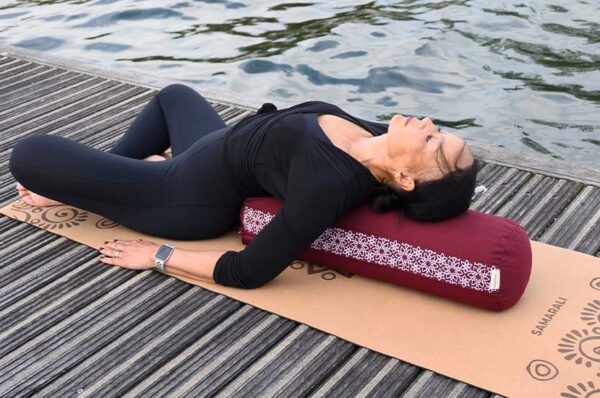
Practising these poses on a supportive surface makes a real difference. A quality mat helps you hold postures comfortably and stay grounded. We recommend our natural rubber yoga mat for this kind of practice, as it provides the grip and cushioning that longer holds require. For restorative poses like Legs Up the Wall or supported forward folds, a yoga bolster adds the gentle prop support that makes these shapes truly relaxing.
How often should you practice Hatha yoga to manage stress?
Practising Hatha yoga three to five times per week is generally considered the sweet spot for meaningful stress management. Even two sessions per week can produce noticeable benefits, while daily practice tends to deliver the most consistent results. The key is regularity rather than duration: a focused 30-minute session done consistently beats an occasional 90-minute class.
For beginners, starting with two or three sessions per week allows the body and mind to adapt without feeling overwhelmed. As the practice becomes more familiar, increasing frequency feels natural rather than forced. If time is a barrier, even a 15 to 20-minute wind-down sequence in the evening, focusing on a few restorative poses and breathwork, can meaningfully reduce daily stress accumulation.
The timing of your practice also matters. Morning sessions tend to set a calmer tone for the day ahead, while evening practice helps the body transition out of work mode and prepare for restful sleep. Both approaches are valid; the best time is simply the one you will actually stick to.
Is Hatha yoga better for stress than other yoga styles?
Hatha yoga is one of the most effective yoga styles for stress relief because its slower pace, longer pose holds, and emphasis on breathwork are specifically suited to calming the nervous system. Compared to more vigorous styles like Vinyasa or Ashtanga, Hatha is gentler and more accessible, making it easier to sustain when stress levels are already high.
That said, “better” depends on the individual and the type of stress involved. Here is a straightforward comparison:
- Hatha vs. Vinyasa: Vinyasa’s flowing, movement-heavy sequences can be energising and mood-lifting, which helps with stress relief through physical exertion. However, for someone who is already overstimulated or exhausted, the pace of Vinyasa can feel like another demand. Hatha’s stillness is often more appropriate in those moments.
- Hatha vs. Yin Yoga: Yin yoga holds poses for three to five minutes or longer, making it even more deeply restorative for the connective tissue and nervous system. Yin is an excellent complement to Hatha, but some people find very long holds mentally challenging when starting out. Hatha offers a more balanced middle ground.
- Hatha vs. Restorative Yoga: Restorative yoga, which uses props to fully support the body in passive shapes, is arguably the most targeted style for acute stress and burnout. However, Hatha provides more physical engagement, which many people find necessary to feel the mental release.
For most people managing everyday stress, Hatha yoga strikes the right balance between physical movement and mental stillness. It is accessible enough for beginners, satisfying enough for experienced practitioners, and gentle enough to practise consistently without adding physical strain. If you are building a stress-management routine from scratch, Hatha is an excellent place to start.
Frequently Asked Questions
Can complete beginners with no yoga experience use Hatha yoga for stress relief?
Absolutely. Hatha yoga is widely considered the most beginner-friendly yoga style precisely because of its slow pace and focus on foundational postures. You don’t need any prior flexibility or fitness level to start — most poses can be modified using props like blocks, bolsters, or folded blankets. Starting with a beginner-specific class or guided video allows you to learn proper alignment without pressure, which actually enhances the stress-relieving effect from your very first session.
What if I find it hard to quiet my mind during Hatha yoga — does it still help with stress?
Yes, and this is one of the most common experiences beginners report. A wandering or busy mind during practice doesn’t cancel out the physiological benefits — your nervous system is still being calmed through breathwork and posture holds even when your thoughts are racing. Rather than trying to force mental silence, simply redirect your attention to the physical sensation of the pose or the rhythm of your breath each time you notice your mind drifting. Over weeks of consistent practice, the mental quieting tends to become more natural and effortless.
How quickly can I expect to feel stress relief from Hatha yoga?
Many people notice a tangible sense of calm within a single session, particularly after poses like Legs Up the Wall or Savasana. However, the deeper, cumulative benefits — such as a lower baseline stress response and improved sleep quality — typically become noticeable after two to four weeks of regular practice. Think of the immediate post-session calm as a short-term reward and the nervous system retraining as the long-term payoff you’re building toward with each session.
Are there any situations where Hatha yoga might not be the right choice for stress relief?
Hatha yoga is safe and beneficial for the vast majority of people, but there are a few situations worth considering. If you’re dealing with a clinical anxiety disorder, PTSD, or severe burnout, yoga works best as a complement to professional mental health support rather than a standalone solution. Physically, certain poses may need to be modified or avoided if you have injuries to the spine, knees, or hips — a qualified instructor can help you adapt your practice safely. When in doubt, a short conversation with your doctor or a certified yoga therapist before starting is always a sensible step.
Should I combine Hatha yoga with breathwork or meditation for better stress relief results?
Combining Hatha yoga with dedicated breathwork (pranayama) and even brief meditation can significantly amplify your stress relief results. Practices like alternate nostril breathing (Nadi Shodhana) or extended exhale breathing before or after your asana practice further regulate the nervous system and deepen the parasympathetic response. Even five minutes of seated stillness or a body scan meditation at the end of your session, extending beyond Savasana, can meaningfully enhance how grounded and calm you feel afterward.
Can I practice Hatha yoga for stress relief if I only have 10–15 minutes a day?
Yes — a short, intentional Hatha sequence is far more effective for stress relief than doing nothing at all. A 10 to 15-minute routine focused on two or three restorative poses, such as Child’s Pose, Supine Twist, and Legs Up the Wall, paired with slow, conscious breathing, can meaningfully shift your nervous system out of a stressed state. The key is consistency: a brief daily practice will outperform a longer session done sporadically. Consider keeping your mat rolled out in a visible spot as a simple cue to make it a daily habit.
What is the biggest mistake people make when using Hatha yoga for stress relief?
The most common mistake is approaching the practice with a performance mindset — pushing too hard into poses, rushing through sequences, or judging yourself for not being flexible enough. This tension-driven approach actually works against the parasympathetic activation you’re trying to achieve. Hatha yoga for stress relief should feel like permission to slow down, not another task to complete perfectly. Prioritising ease, comfort, and breath quality over depth or difficulty in each pose will consistently deliver better stress-relief outcomes.
Ready to support your Hatha practice with the right tools? At Samarali, you will find everything you need to create a calming, grounded practice at home. From our natural rubber yoga mat — designed for the grip and cushioning that longer holds demand — to our yoga bolster for fully supported restorative shapes, every piece is chosen with intentional practice in mind. Pair them with a cosy organic cotton yoga blanket for Savasana, and your space becomes a true sanctuary for stress relief. Shop the collection and find the props that help you slow down, breathe deeply, and make your practice a consistent part of your day.