


Hatha and Vinyasa are two distinct yoga styles that differ primarily in pace and structure. Hatha yoga is slower and pose-focused, holding each position for several breaths, while Vinyasa yoga links movement to breath in a continuous, flowing sequence. Both are rooted in the same foundational postures, but they offer very different experiences on the mat. Below, we break down the key differences to help you find the right fit for your practice.
Which yoga style is better for beginners — Hatha or Vinyasa?
Hatha yoga is generally the better starting point for beginners. Its slower pace gives new practitioners time to understand alignment, build body awareness, and settle into each pose without feeling rushed. That said, many beginners also thrive in beginner-level Vinyasa classes, especially if they enjoy movement and rhythm. The best choice depends on your personality and how you learn best.
In a Hatha class, you typically hold a pose for anywhere from three to ten breaths before moving on. This creates space to notice how your body feels, ask questions, and make adjustments. For someone who is new to yoga, that breathing room is genuinely valuable. It reduces the risk of injury and builds the foundational strength and flexibility that more dynamic styles demand later.
Vinyasa, on the other hand, moves quickly. Transitions happen on every inhale and exhale, which means beginners need to process a lot of information at once. That said, a well-structured beginner Vinyasa class will slow things down and offer clear cues. If you are someone who gets bored easily or loves music and movement, a gentle Vinyasa flow might actually keep you more engaged than a static Hatha session.
The honest answer is that neither style is universally “better” for beginners. Start with Hatha if you want to learn postures carefully. Try Vinyasa if you want energy and flow from the start. Many people find it useful to explore both early on and let their body guide the decision.
How does the pace and structure of each style differ?
Hatha yoga is structured around individual poses held with stillness and breath, while Vinyasa yoga is structured around continuous movement where each transition is choreographed to an inhale or exhale. Hatha classes tend to follow a set sequence at a measured pace, whereas Vinyasa classes vary widely in speed, sequence, and intensity depending on the teacher.
In a typical Hatha class, you might move through ten to fifteen postures in a 60-minute session. Each pose is introduced, aligned, and held long enough for the body to genuinely settle into it. The class often ends with a longer relaxation period, making it feel grounded and restorative.
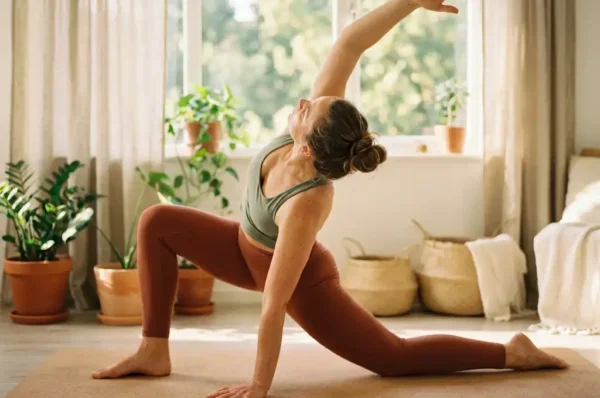
Vinyasa classes cover significantly more ground in the same time. A single flow might string together twenty or more postures, linked by transitional movements like Chaturanga and Downward Dog. The rhythm feels more like a dance, and the continuous nature of the practice builds heat quickly. This is why Vinyasa is sometimes called “flow yoga.”
Structurally, Hatha classes often feel more predictable and accessible. Vinyasa classes tend to be more creative, with teachers designing unique sequences each session. If you value consistency and depth, Hatha suits that preference. If you enjoy variety and physical challenge, Vinyasa delivers it. A quality yoga mat that offers grip and cushioning serves you well in both styles, since stability matters whether you are holding a pose or flowing through one.
What are the physical and mental benefits of Hatha vs. Vinyasa?
Both Hatha and Vinyasa yoga build strength, flexibility, and mental focus, but they emphasize different outcomes. Hatha yoga is particularly effective for improving flexibility, posture, and stress reduction through its slower, meditative approach. Vinyasa yoga offers stronger cardiovascular benefits, builds muscular endurance, and can be an effective tool for building stamina alongside mental resilience.
Physical benefits
Hatha yoga excels at lengthening tight muscles and improving joint mobility. Because poses are held for longer, the body has time to release tension gradually rather than moving through it quickly. This makes Hatha especially beneficial for people dealing with chronic tightness, postural issues, or recovering from minor injuries. The slower pace also makes it easier to build core stability with precision.
Vinyasa yoga builds functional strength more rapidly because the body is constantly moving against gravity through transitions. Poses like Plank, Chaturanga, and Warrior sequences repeated across a class create genuine muscular challenge. The elevated heart rate also means Vinyasa contributes to cardiovascular fitness in a way that a slow Hatha session typically does not.
Mental benefits
Hatha yoga’s stillness creates a natural environment for mindfulness and introspection. Holding a pose while focusing on the breath trains the mind to stay present, which is why Hatha is often described as a gateway to meditation. Many practitioners find that a regular Hatha practice significantly reduces anxiety and improves sleep quality over time.
Vinyasa yoga builds a different kind of mental strength. The demand to stay coordinated, keep up with transitions, and synchronize breath with movement requires intense concentration. This focus can be deeply absorbing, leaving little mental space for rumination. Many people find Vinyasa a powerful tool for releasing stress through physical exertion rather than stillness.
Can you practice both Hatha and Vinyasa yoga together?
Yes, practicing both Hatha and Vinyasa yoga together is not only possible but genuinely beneficial. Many experienced practitioners combine both styles throughout the week, using Hatha sessions for recovery, alignment work, and mindfulness, while using Vinyasa sessions for energy, cardiovascular challenge, and building strength. The two styles complement each other well.
A balanced weekly practice might look like two or three Vinyasa sessions paired with one or two Hatha classes. The Vinyasa sessions build heat and stamina, while the Hatha sessions give the body and nervous system time to recover and integrate. This kind of variation also prevents plateaus and keeps your practice feeling fresh.
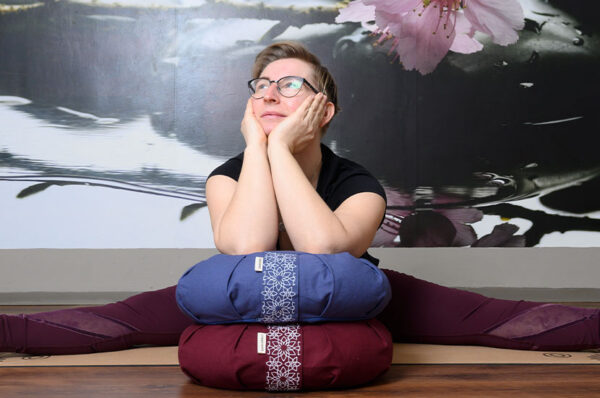
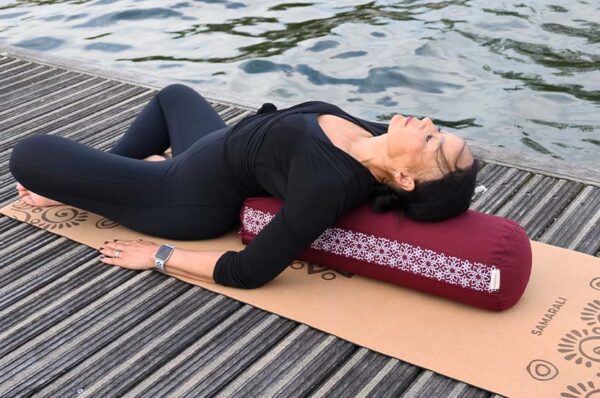
If you are exploring how to structure your practice, props can make both styles more accessible and effective. A yoga bolster is particularly useful in Hatha for supported poses and restorative work, while a grippy, well-cushioned mat serves you in both styles. We design our yoga accessories with exactly this kind of versatile, mindful practice in mind.
Ultimately, the question is not whether to choose one style over the other. Both Hatha and Vinyasa have something distinct to offer, and a practice that draws from both tends to be more well-rounded, sustainable, and enjoyable over the long term. Let your energy levels, goals, and mood on any given day guide which style you step into.
Ready to support your practice with the right gear? At Samarali, you will find everything you need for both Hatha and Vinyasa — from a natural rubber yoga mat that delivers grip and cushioning through every flow, to a yoga bolster that makes restorative Hatha holds deeply comfortable. If you prefer a more complete setup, explore our yoga sets for a thoughtfully curated collection of essentials. Shop now and find the tools that help your practice thrive.
Frequently Asked Questions
How do I know when I'm ready to transition from Hatha to Vinyasa yoga?
A good sign you’re ready to try Vinyasa is when you can move through foundational poses like Downward Dog, Warrior I, Warrior II, and Chaturanga with confidence and without needing to think hard about alignment. You don’t need to be perfect — you just need enough body awareness to keep up with transitions safely. A practical approach is to attend a beginner or slow-flow Vinyasa class first, rather than jumping into an intermediate session, so you can gauge the pace without feeling overwhelmed.
How long should I hold poses in a Hatha practice if I'm working on flexibility?
For flexibility gains specifically, holding poses for 5 to 10 full breaths (roughly 30 to 60 seconds) tends to be most effective, as this gives connective tissue and muscle fascia time to gradually release. Shorter holds build awareness, but longer holds are where meaningful flexibility change happens over time. If you’re targeting particularly tight areas like the hips or hamstrings, consider supplementing your Hatha practice with Yin yoga, which holds poses for 3 to 5 minutes for even deeper tissue release.
Is Vinyasa yoga a good workout for weight loss or fitness goals?
Vinyasa yoga can absolutely support fitness and weight management goals, as a moderate-to-vigorous Vinyasa class can elevate your heart rate comparably to a light cardio session, burning anywhere from 300 to 500 calories per hour depending on intensity and body weight. It also builds lean muscle through bodyweight movements like Plank, Chaturanga, and standing sequences, which supports a healthy metabolism. That said, it works best as part of a broader fitness routine rather than a standalone solution, and consistency over weeks and months is what produces lasting results.
What should I do if I can't keep up with the pace in a Vinyasa class?
The most practical thing you can do is take Child’s Pose whenever you need to rest — this is always an acceptable option in any Vinyasa class, and experienced teachers actively encourage it. Rather than rushing to catch up with the group, use the pause to reconnect with your breath and re-enter the flow when you feel ready. Over time, your stamina and familiarity with common sequences will naturally improve your ability to keep pace, so don’t treat struggling as a sign that Vinyasa isn’t right for you.
Do I need different equipment or props for Hatha versus Vinyasa yoga?
The core equipment — a quality yoga mat — is essential for both styles, but the props you reach for most will differ. Hatha practice benefits greatly from blocks, straps, and bolsters, which support longer holds and help you access poses safely at any flexibility level. Vinyasa requires less prop use during class, but a mat with strong grip and adequate cushioning is especially important given the pace of transitions and the frequency of poses like Plank and Downward Dog. Starting with a good mat and a set of blocks covers most of what you’ll need across both styles.
Can I practice Hatha or Vinyasa yoga if I have a pre-existing injury or chronic pain?
Both styles can be practiced with injuries or chronic pain, but Hatha is generally the safer and more adaptable choice because its slower pace allows for careful modifications and gives you time to listen to your body. Always inform your teacher about your injury before class so they can offer appropriate adjustments. For more serious conditions — such as herniated discs, joint replacements, or acute injuries — it’s worth consulting a physiotherapist or doctor before starting, and seeking out a teacher with experience in therapeutic yoga.
How often should I practice each week to see real progress in either style?
Practicing 3 to 4 times per week is generally enough to see meaningful progress in strength, flexibility, and overall wellbeing within 4 to 8 weeks for most people. Consistency matters far more than session length — three 45-minute classes per week will outperform one long session done sporadically. If you’re combining both styles, a simple structure like two Vinyasa sessions and one or two Hatha sessions per week gives your body both challenge and recovery, which is a sustainable rhythm for long-term progress.