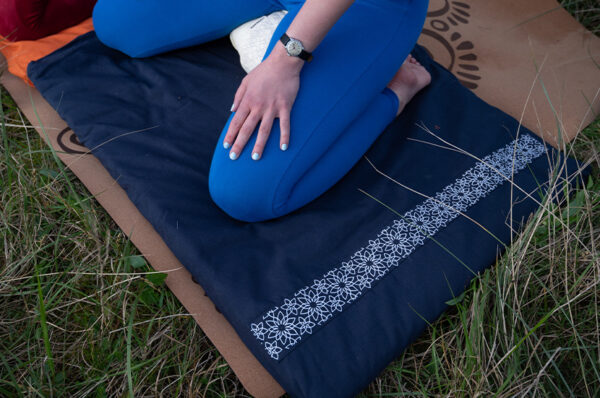



If you have ever wondered whether your yoga mat is actually safe to practice on, you are right to ask. Many conventional mats contain harmful chemicals, including PVC, phthalates, and heavy metals, that can off-gas during use and disrupt hormones through prolonged skin contact. The safest yoga mat materials are natural rubber, cork, jute, and organic cotton, all of which are free from synthetic toxins and biodegradable. To confirm a mat is genuinely non-toxic, look for third-party certifications like OEKO-TEX Standard 100 or GREENGUARD Gold, which verify both environmental sustainability and health safety for your practice.
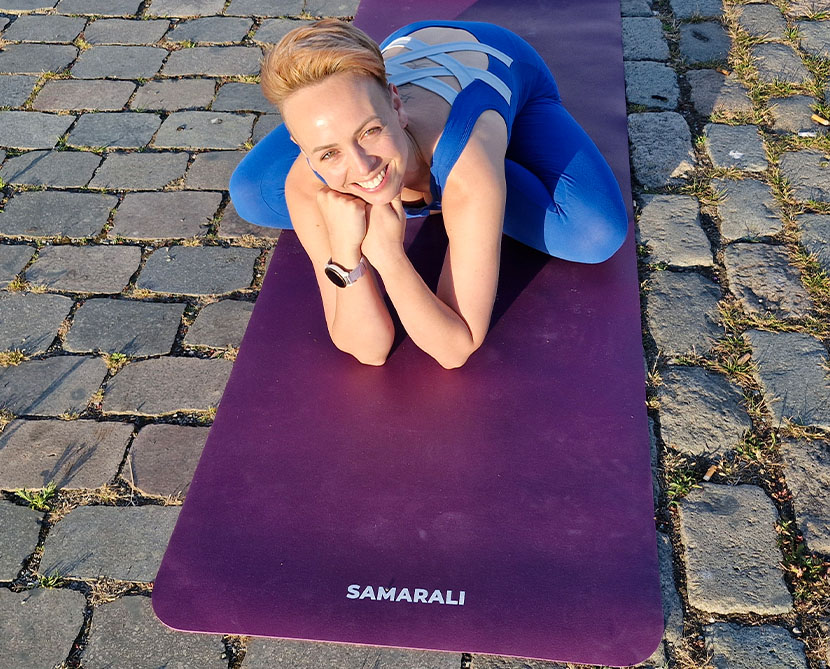
How we evaluate sustainable and non-toxic yoga mats
Our recommendations are based on defined criteria rather than marketing claims alone. In an industry where terms like “eco-friendly” and “natural” are entirely unregulated, we believe it is important to be transparent about exactly what we assess before standing behind any mat as genuinely sustainable and non-toxic.
- Material origin and renewability: We consider whether the primary material is plant-derived, how quickly it regenerates, and whether its harvest supports or degrades the surrounding ecosystem.
- Third-party certification status: Independent verification from bodies such as OEKO-TEX, GREENGUARD Gold, REACH or Cradle to Cradle is a non-negotiable signal of genuine safety — not optional evidence.
- Chemical transparency and full ingredient disclosure: Reputable products disclose every material in the construction, including backing layers, adhesives, and surface coatings, not just the headline material.
- Performance characteristics: Grip, cushioning, and durability are assessed across practice types, because a sustainable mat that cannot support your practice is not a meaningful recommendation.
- End-of-life biodegradability: We consider what happens to the mat at the end of its lifespan. Materials that return safely to the earth are prioritised over those that persist in landfill indefinitely.
Only mats that meet all of these criteria are considered genuinely sustainable and non-toxic.
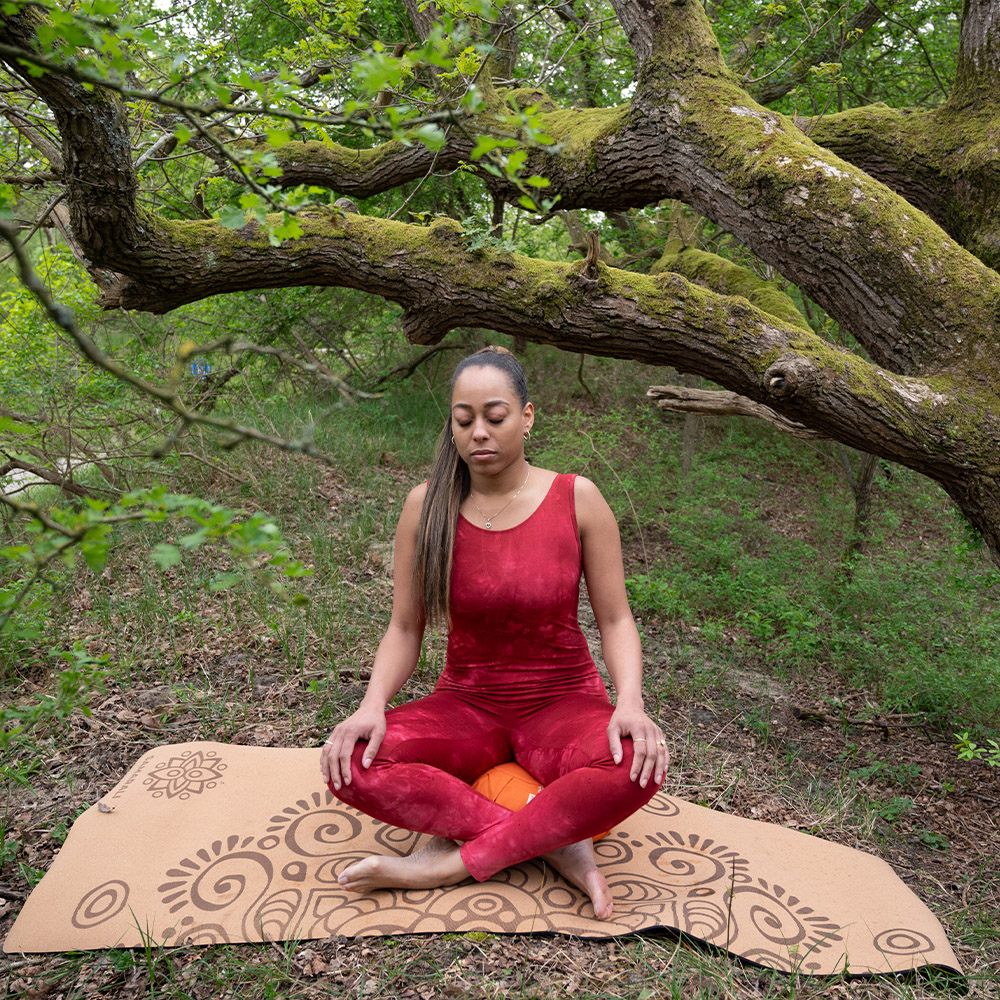
What materials make a yoga mat truly sustainable and safe?
The most sustainable yoga mats are crafted from specific natural materials that offer both environmental benefits and superior performance. Understanding what each safe yoga mat material contributes, and where its limitations lie, helps you choose the right option for your practice style and health priorities:
- Natural rubber: Harvested from rubber trees that can be tapped for 25–30 years without damage, creating a renewable resource that supports sustainable forestry
- Cork: Extracted from oak tree bark that regenerates every nine years, providing antimicrobial properties and excellent stability for your practice
- Jute: A fast-growing plant requiring minimal water that offers firm support with a natural texture that actually improves with use
- Organic cotton: Grown without pesticides or synthetic fertilizers, protecting soil health while providing comfortable cushioning
While all four materials are genuinely sustainable and non-toxic, they are not identical in their strengths. For the lowest environmental footprint, jute is the strongest choice because it requires minimal water, no pesticides, and very little agricultural input to grow. For the best all-round practice performance, natural rubber leads on grip and durability, cork excels on antimicrobial stability and renewability, and organic cotton offers the softest, most skin-gentle surface available in a natural material.
These natural materials create a complete sustainable cycle from production to disposal. Unlike conventional PVC mats, which persist in landfills for decades while releasing toxic chemicals such as phthalates and volatile organic compounds, sustainable materials biodegrade naturally and return nutrients to the soil. The manufacturing processes for natural rubber, cork, jute, and organic cotton also require significantly less energy and produce fewer emissions than petroleum-based alternatives, making yoga mats made from sustainable materials the clear choice for environmentally conscious practitioners who want their wellness routine to reflect their values.
PVC-free yoga mats eliminate exposure to phthalates, heavy metals, and volatile organic compounds that off-gas during practice, particularly during heated or extended sessions where skin contact is prolonged and absorption risk is highest. Choosing a certified non-toxic mat means your wellness routine actively supports your health rather than quietly working against it.

Which yoga mat materials should you avoid and why?
Knowing which materials to avoid is just as important as knowing which to seek out. Several synthetic materials are routinely used in conventional yoga mats and are frequently disguised behind reassuring-sounding marketing language. Understanding what each one is, why it poses a risk, and how it is typically presented will help you cut through the noise.
PVC: the most harmful conventional mat material
Polyvinyl chloride, or PVC, is the material used in the vast majority of budget yoga mats. It is cheap to produce, highly flexible, and durable — which is precisely why it has dominated the market for decades. The problem is that PVC requires phthalate plasticizers to achieve that flexibility, and these compounds are well-documented endocrine disruptors that can leach out through prolonged skin contact. PVC mats also off-gas volatile organic compounds, particularly when new or when heated, and they contain heavy metal stabilizers including lead and cadmium that persist in landfill indefinitely.
TPE: why eco-friendly claims are misleading
Thermoplastic elastomer, or TPE, is an umbrella term covering a broad family of petroleum-derived synthetic rubber compounds. It is frequently marketed as an eco-friendly or biodegradable alternative to PVC, and while it does avoid some of PVC’s most acute chemical risks, it is still a fossil-fuel-derived material with no standardized composition and no guarantee of what copolymers or additives any given manufacturer has included. Claims of biodegradability for TPE are largely unsubstantiated under real-world conditions.
PER: a marginal improvement that still falls short
Polymer environmental resin, marketed as PER, was introduced as a safer PVC alternative and does eliminate some of the most harmful plasticizers. However, it remains a synthetic, petroleum-derived material that still requires chemical processing and does not biodegrade. It is often positioned as a transitional “green” option, but without third-party certification it offers no verifiable safety guarantee. The marketing language to watch for includes “PVC-free eco mat” or “reformulated foam” — technically accurate but not meaningfully safer than PVC for long-term health or environmental impact.
Azodicarbonamide: the chemical blowing agent to watch for
Azodicarbonamide is a chemical blowing agent used to create the foam structure in many synthetic mats. It is the same compound that drew public attention when it was identified in bread products, and its presence in yoga mats raises similar concerns about respiratory irritation and potential carcinogenic breakdown products. It is rarely listed explicitly on product pages and is most likely to appear in low-cost foam mats with no material certification. If a mat has no third-party certification and is described only as “foam” or “high-density foam,” azodicarbonamide may well be part of its construction.
Across all of these materials, the pattern is consistent: certification, not marketing copy, is the only reliable indicator of safety.
What is the difference between natural rubber and synthetic yoga mats in terms of safety and sustainability?
Natural rubber yoga mats and synthetic alternatives differ significantly in both environmental impact and performance characteristics. From a safety standpoint, natural rubber is free from phthalates, PVC, and synthetic foaming agents, making it one of the most widely recommended safe yoga mat materials for practitioners with chemical sensitivities. Synthetic options like TPE and EVA foam, while sometimes marketed as eco-friendly, are petroleum-derived and may contain undisclosed copolymers or chemical additives that are not independently tested:
- Environmental impact: Natural rubber biodegrades completely and supports carbon sequestration, while synthetic mats are petroleum-based and persist in landfills indefinitely
- Grip performance: Natural rubber offers superior traction that actually improves when slightly damp, making it ideal for hot yoga, while synthetic mats provide consistent but non-adaptive grip
- Durability and adaptation: Natural rubber molds to your body over time and becomes more comfortable with use, whereas synthetic mats may develop permanent indentations or lose grip with regular use
- Manufacturing process: Natural rubber production requires less energy and creates no toxic waste, while synthetic mat production involves intensive petroleum processing
- Weight and cost considerations: Natural rubber tends to be heavier and costs more upfront, but synthetic mats often require replacement more frequently
The choice between natural and synthetic ultimately impacts both your practice experience and environmental footprint. Biodegradable yoga mats made from natural rubber support sustainable forestry practices while providing superior grip that improves with use, and they carry no risk of phthalate exposure during your session. Though natural rubber may trigger latex allergies in sensitive individuals, the long-term health, performance, and environmental benefits make it one of the safest yoga mat materials available for most practitioners.

Which sustainable mat material suits your yoga practice?
Choosing the right natural mat material is not only about sustainability credentials — it is also about how the material performs under the specific demands of your practice. Each natural material has distinct physical properties that make it better suited to certain yoga styles and practitioner profiles. Here is how to match your material to your movement.
Natural rubber: best for hot yoga and flow-based practices
Natural rubber is the strongest performer in high-heat and high-sweat environments. Its surface grip actually improves as moisture increases, which makes it the preferred choice for Bikram, hot yoga, and vigorous vinyasa flows where a slipping mat is both frustrating and potentially unsafe. The material also offers a responsive, cushioned feel underfoot that suits practitioners who spend extended time in standing sequences or need reliable joint support through dynamic transitions. Natural rubber is particularly well-suited to daily practitioners who need a mat that holds up to frequent, intense use over many years. The one meaningful limitation to note is latex content: natural rubber is derived from the rubber tree and does carry a latex allergy risk for sensitive individuals.
Cork: best for dynamic and standing-pose-heavy practices
Cork offers a uniquely stable, firm surface that responds well to the weight and pressure of standing poses, balances, and strength-focused sequences. Its natural antimicrobial properties mean it resists odor and bacteria without any chemical treatment, which is a meaningful benefit for practitioners who practice frequently or share equipment. Cork also provides a satisfying tactile feedback that many practitioners find grounding during balance work. It suits practitioners who prioritize a clean, low-maintenance surface and prefer a firmer feel over cushioned softness. Cork is naturally latex-free, making it an excellent option for those with rubber sensitivities.
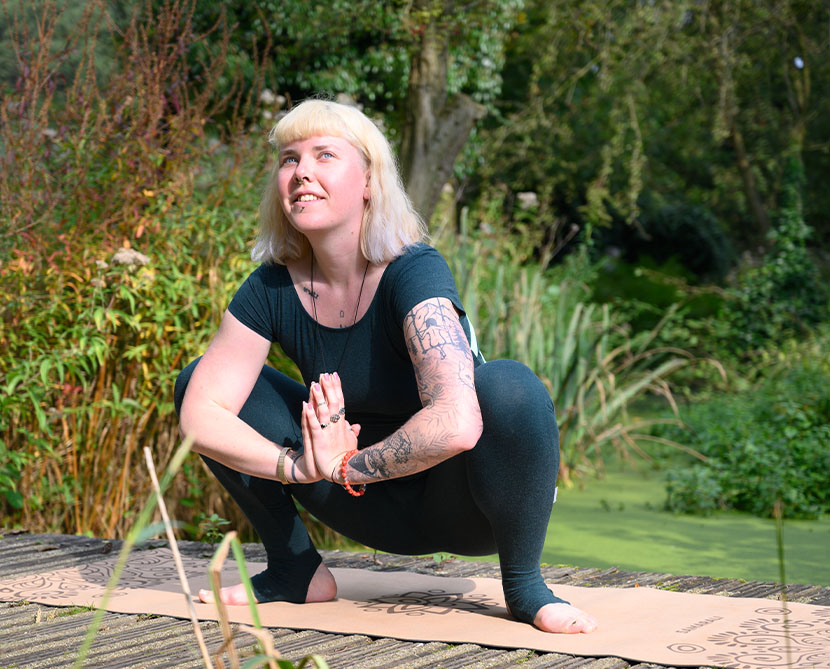
Jute: best for hatha and alignment-focused practices
Jute offers a firm, textured surface that improves with use as the fibers settle and the mat develops a more refined feel. This makes it particularly well-suited to hatha yoga, Iyengar practice, and any style where precise foot and hand placement matters. The natural texture provides reliable traction without relying on moisture activation, and the firm support helps practitioners maintain awareness of alignment cues. Jute suits practitioners who prefer a more grounded, minimal feel underfoot and are less focused on cushioning. It is also naturally latex-free and one of the most environmentally low-impact materials available, requiring minimal water and no pesticides to grow.
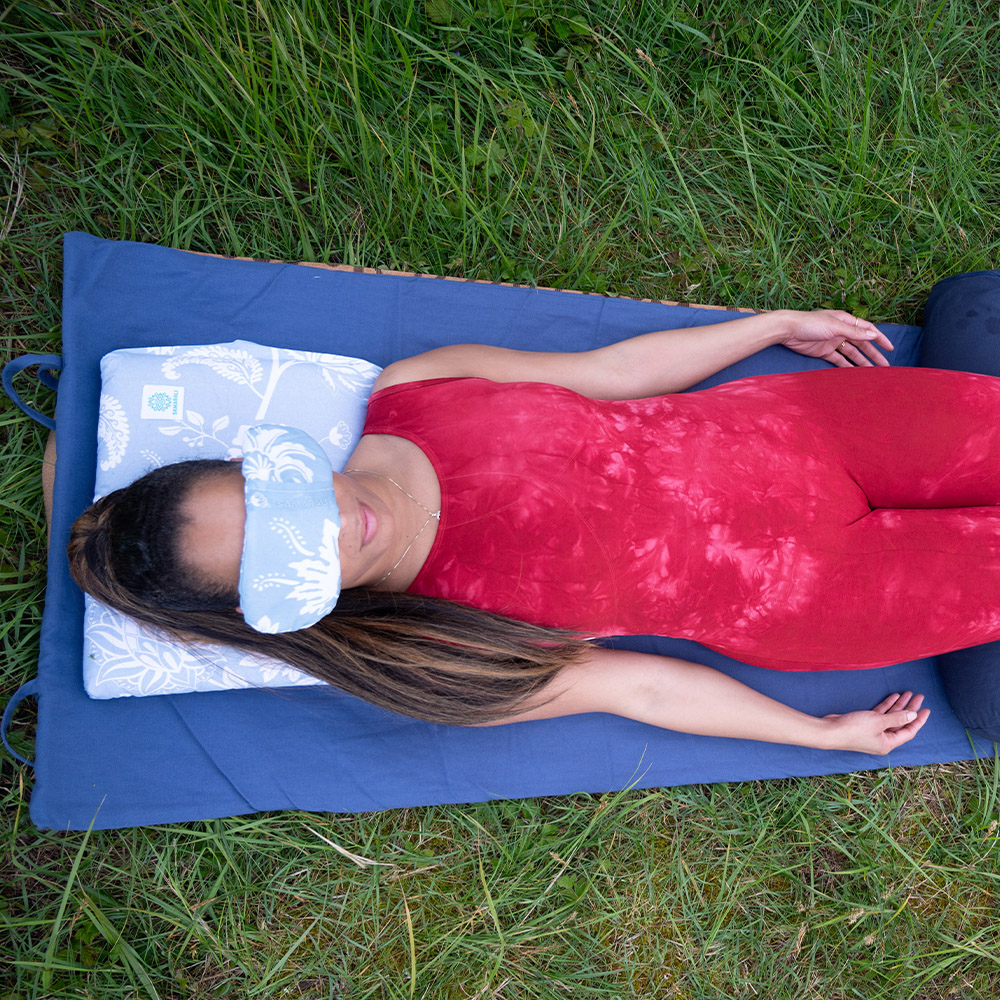
Organic cotton: best for restorative, yin, and meditation practices
Organic cotton is the softest and most skin-gentle of the natural mat materials, making it the natural choice for slower, floor-based practices where comfort and prolonged contact with the surface are central to the experience. It suits restorative yoga, yin, prenatal practice, and seated meditation, where cushioning and warmth matter more than grip performance. Organic cotton mats are also among the most accessible for practitioners with sensitive skin, as the material is free from synthetic finishes and grown without pesticides. The one consideration is that cotton provides less traction than rubber or cork in dynamic or standing-heavy sequences, so it is best reserved for practices where grip is not the primary requirement.
How do sustainable yoga mats perform compared to conventional options?
Environmentally friendly yoga mats consistently match or exceed conventional mat performance across all key areas while delivering the added assurance that your practice surface is free from harmful chemicals. For practitioners who spend extended time in floor poses or practice in heated environments, choosing yoga mats made from sustainable materials also means eliminating the off-gassing risk that increases with heat and prolonged skin contact:
- Grip performance: Natural rubber excels in moisture conditions, cork offers consistent antimicrobial grip, and jute provides stable traction that enhances with use
- Durability advantage: High-quality natural materials can last 5–10 years with proper care, often outlasting multiple conventional PVC mats
- Adaptive comfort: Sustainable materials improve over time, developing better cushioning and grip as they adapt to your specific practice patterns
- Maintenance benefits: Natural materials require gentler cleaning products, which actually extend their lifespan and maintain performance better than harsh chemicals
- Style versatility: Different sustainable materials suit various practices—natural rubber for restorative work, cork or jute for dynamic styles
These performance advantages confirm that choosing sustainable materials does not require compromising your practice quality. The combination of verified non-toxic construction, environmental responsibility, and enhanced functionality makes sustainable mats the optimal choice for conscious practitioners seeking both performance and planetary stewardship.
How to care for your sustainable yoga mat to maximize its lifespan
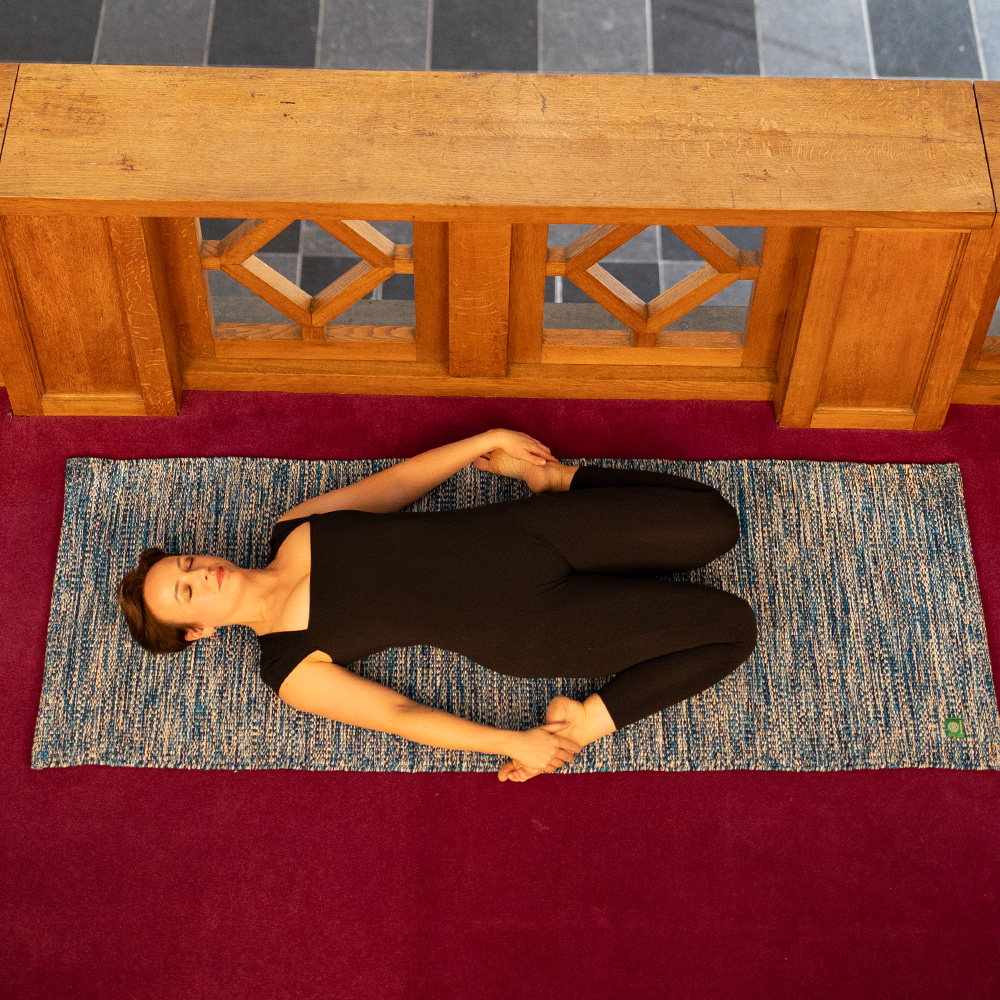
One of the strongest arguments for investing in a quality sustainable mat is longevity. Natural rubber, cork, and jute mats can last 5–10 years with proper care — significantly outlasting the repeated replacement cycle of cheaper conventional mats. That lifespan, however, depends on cleaning and storage habits that respect the properties of natural materials. Here is what proper care looks like for each.
Caring for your natural rubber yoga mat
- Wipe down after each session with a damp cloth and a small amount of diluted mild soap — avoid harsh detergents, which degrade the rubber over time.
- Allow the mat to air dry fully before rolling it up, as trapping moisture accelerates deterioration.
- Roll rather than fold your mat to prevent cracking along stress lines.
- Store away from direct sunlight and heat sources — prolonged UV exposure breaks down the rubber structure and shortens its lifespan considerably.
Caring for your cork yoga mat
- Wipe the surface with a lightly damp cloth after each session to remove sweat and debris.
- Allow the mat to air dry completely before rolling — cork is naturally antimicrobial, but trapped moisture can still cause surface degradation over time.
- Avoid submerging your cork mat in water or using it in standing water, as prolonged saturation can cause the cork layer to separate from its backing.
- Store in a cool, dry place away from direct sunlight.
Caring for your jute or organic cotton yoga mat
- Spot clean with a gentle, natural cleanser rather than soaking the mat, as excessive water can distort natural fibers.
- Lay flat to dry rather than hanging, which can cause uneven stretching.
- Avoid machine washing, which can cause fiber distortion and reduce the mat’s structural integrity over time.
- Air your mat regularly between sessions to prevent moisture build-up in the fibers.
Consistent, gentle care is the single most effective way to protect your investment in a sustainable mat. A natural rubber or cork mat that is cleaned regularly and stored correctly can easily reach the upper end of its 5–10 year lifespan, which means fewer replacements, less waste, and a significantly lower cost per session compared to replacing a cheaper conventional mat every one to two years. Caring for your mat well is, in itself, an act of sustainability.

Which sustainable yoga mats do we recommend for your practice?
Understanding sustainable materials and certifications is the foundation of a good decision — but at some point, you need to know which specific mats are worth your investment. Below are the sustainable yoga mats we recommend from our own range, selected because they meet all of the evaluation criteria outlined above: certified materials, full ingredient transparency, and genuine performance across real practice conditions.
Our natural rubber yoga mat
Our natural rubber yoga mat is built for practitioners who need reliable, high-performance grip across a wide range of practice styles.
- Material and certification: Natural rubber with full material transparency and third-party certification — free from PVC, phthalates, and synthetic foaming agents.
- Best practice type: Hot yoga, vinyasa flow, and dynamic practices where moisture-activated grip is essential.
- Grip and cushioning: Superior traction that improves with sweat; responsive cushioning that adapts to your body over time.
- Honest limitation: Natural rubber contains latex, which makes this mat unsuitable for practitioners with a latex allergy.
For daily practitioners who want a mat that performs harder the more they use it, this is considered an investment designed to last in the long term.
Frequently asked questions about sustainable and non-toxic yoga mats
Are TPE yoga mats really non-toxic?
TPE mats are generally considered safer than PVC, but they are not as reliably non-toxic as certified natural materials. TPE is an umbrella term for a broad family of petroleum-derived synthetic compounds, and there is no standardized formulation — meaning the specific additives and copolymers vary between manufacturers and are rarely disclosed. Without independent third-party certification such as OEKO-TEX Standard 100 or GREENGUARD Gold, there is no way to verify what a specific TPE mat actually contains. If you are prioritizing genuine non-toxic safety, certified natural rubber, cork, or organic cotton are significantly more reliable choices.
What is the most eco-friendly yoga mat material?
Jute has the lowest environmental footprint of all natural mat materials, as it grows rapidly with minimal water, no pesticides, and very little agricultural input. Natural rubber and cork are close behind, both offering renewable harvesting cycles that support rather than deplete their source ecosystems. Organic cotton is also a strong option, particularly when certified, as it eliminates the pesticide load associated with conventional cotton farming.
How do I know if my yoga mat is off-gassing?
The most immediate indicator of VOC off-gassing is a strong chemical smell when you first unroll a new mat — this is the most reliable warning sign, regardless of how the mat is marketed. Off-gassing tends to be most intense when a mat is new and when it is exposed to heat, which means heated yoga environments or warm storage conditions will accelerate the process. If your mat has a persistent chemical odor after several weeks of airing out, that is a significant concern. A genuinely non-toxic yoga mat made from certified natural materials will have little to no chemical smell, even when new.
Are cork yoga mats safe for latex allergy sufferers?
Yes — cork is naturally latex-free and is one of the best sustainable alternatives for practitioners with a latex sensitivity. Cork yoga mats are derived from the bark of the cork oak tree and contain no rubber compounds whatsoever. Jute and organic cotton mats are equally latex-free and similarly well suited to sensitive practitioners. If you have a confirmed latex allergy, any of these three materials provides a safe, high-performing, and genuinely sustainable option without the need to rely on synthetic alternatives.
How long do sustainable yoga mats last?
High-quality sustainable yoga mats made from natural rubber, cork, or jute typically last between 5 and 10 years with proper care — significantly longer than most conventional PVC mats, which tend to lose grip and surface quality within 1 to 3 years of regular use. The lifespan of a natural mat depends on how frequently it is used, how it is cleaned, and how it is stored. Avoiding prolonged sun exposure, using gentle cleaning products, and allowing the mat to dry fully before rolling it up are the most impactful habits for extending longevity.
What certifications should I look for on a non-toxic yoga mat?
The three most meaningful certifications for non-toxic yoga mats are OEKO-TEX Standard 100, GREENGUARD Gold, REACH and Cradle to Cradle. OEKO-TEX Standard 100 verifies that every component of the product has been tested for harmful substances, including phthalates, heavy metals, and formaldehyde. GREENGUARD Gold specifically tests for low chemical emissions, ensuring the mat will not release harmful VOCs into your practice environment. Cradle to Cradle evaluates the full product lifecycle, covering both human health safety and environmental impact. Any mat carrying one or more of these certifications has been independently verified, which is the only reliable standard in a market where unregulated terms like “natural” and “eco-friendly” are freely used by any brand.
Choosing sustainable, non-toxic yoga mats supports both your health and environmental well-being without compromising the quality of your practice. Natural materials like rubber, cork, and jute offer excellent performance while eliminating exposure to the phthalates, heavy metals, and VOCs found in conventional PVC mats. At Samarali, we understand the importance of aligning your yoga practice with your values, which is why all our products are produced from natural and organic materials to ensure your wellness journey supports both your health and the planet.
Browse our selection of thoughtfully crafted sustainable yoga essentials, each made with certified safe yoga mat materials and designed for mindful movement with respect for the planet.