


Moving meditation uses physical movement — such as walking, yoga, or tai chi — as the primary anchor for mindfulness, while seated meditation uses the breath or a chosen mental focus point. The key difference lies in how each engages the mind: moving meditation activates multiple sensory systems simultaneously, making it especially accessible for restless or active individuals, while seated practice cultivates single-point concentration and inner stillness. Both are equally valid paths to mindfulness, and the right choice depends on your personality, lifestyle, and which practice you will actually sustain.
What exactly is moving meditation and how does it work?
Moving meditation is not a modern invention. Across centuries and cultures, contemplative traditions have recognized that awareness can be cultivated through motion as powerfully as through stillness. Buddhist monks have practiced walking meditation — known as kinhin — between seated Zen sessions for over a thousand years. Taoist tradition gave rise to tai chi, a moving contemplative art in which slow, flowing forms become a vehicle for inner calm. Yogic vinyasa traditions link breath to movement as a direct path to meditative absorption, treating each transition between poses as an opportunity for present-moment awareness. These are not adaptations of seated practice — they are equally ancient, equally validated paths to mindfulness.
In practice, moving meditation transforms physical movement into a mindfulness practice by using your body’s motion as the focal point for awareness. Rather than sitting still and focusing on the breath, you concentrate on each step, gesture, or movement sequence while maintaining present-moment awareness. The body itself becomes the meditation object — making the practice immediately tangible for beginners who find breath-focused stillness difficult to sustain.
Common forms of moving meditation
Moving meditation appears in several accessible forms, each offering a distinct way to cultivate mindfulness through movement:
- Walking meditation – Slow, deliberate steps where you focus on lifting, moving, and placing each foot, creating awareness through simple locomotion
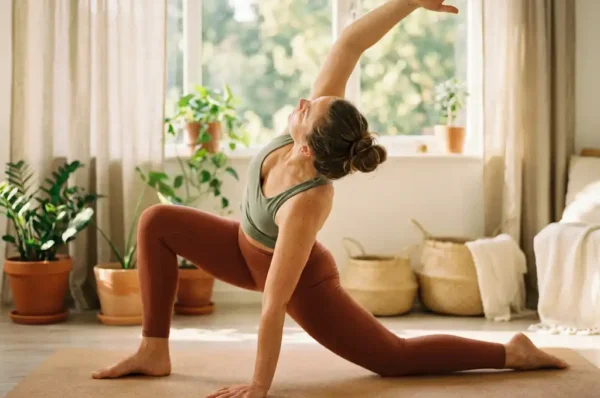
- Yoga flows – Breath combined with movement sequences, creating a moving meditation through coordinated poses and transitions
- Tai chi – Gentle, flowing movements that cultivate both physical balance and mental calm through ancient martial arts forms
- Mindful daily activities – Routine tasks like washing dishes or folding laundry transformed into meditation opportunities through conscious attention
Lesser-known but equally powerful forms
Beyond these core practices, several other traditions offer powerful pathways into moving meditation. The full range of forms is broader than most beginners realize:
- Qigong – An ancient Chinese wellness system distinct from tai chi in that it is less martial-arts-oriented and more focused on cultivating life energy through slow, repetitive breath-coordinated movements. Qigong is often considered one of the most accessible entry points into movement-based mindfulness because its sequences are gentle, low-impact, and easy to learn without prior fitness experience.
- Mindful dancing – Free, unstructured movement to music without a set routine or choreography. The emphasis is on joy, spontaneity, and body awareness rather than technique, making it particularly appealing for those who feel intimidated by structured practices.
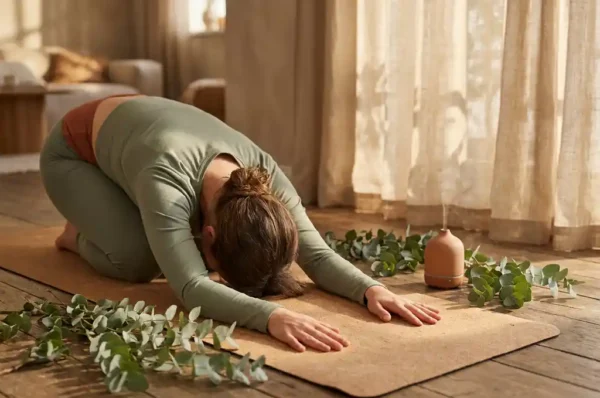
- Mindful stretching – Deliberate, slow stretching with full attention given to the sensations arising in each muscle group as it lengthens and releases. Unlike a routine warm-up, mindful stretching is practiced with curiosity rather than a goal of increased flexibility — making it ideal for pre- or post-sleep routines and for those managing chronic tension or stress.
- Forest bathing (Shirin-yoku) – A Japanese practice of mindful immersion in a natural environment, involving slow, unhurried movement through woodland or green space while engaging all five senses. Research in this area consistently links time in nature with reduced stress and improved mood.
- Standing meditation (Zhan Zhuang) – Holding a relaxed upright posture with focused internal awareness, bridging the gap between stillness and movement by cultivating body presence without locomotion.
All of these forms center on embodied awareness — your moving body becomes the meditation object, replacing traditional anchors like breath counting or mantras. This creates a direct connection between physical sensation and mental focus, offering multiple pathways to present-moment awareness while accommodating different preferences, fitness levels, and physical capabilities.
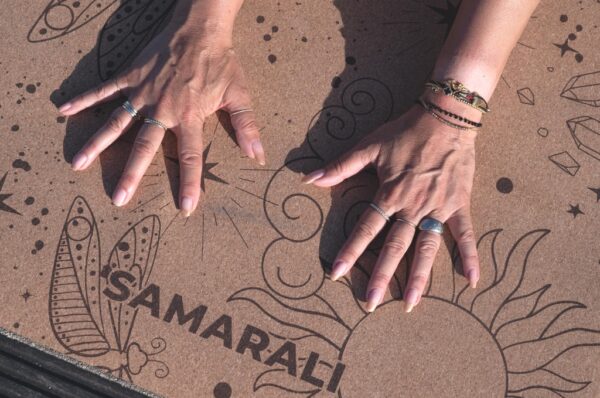
Moving meditation particularly helps those who struggle with restlessness during seated practice. The physical engagement gives your mind something concrete to focus on, reducing mind-wandering and interrupting anxious thought loops more immediately than stillness-based approaches can for many people. Many practitioners find yoga mats helpful for creating a dedicated space for mindful movement at home.
How does your mind respond differently to moving versus seated meditation?
Your brain processes moving meditation differently because it engages multiple sensory systems at once. Movement activates proprioception (your body’s sense of its own position), visual processing, and motor coordination — creating more neural pathways for maintaining focus compared to seated meditation’s single-point concentration. This multi-sensory engagement is a core reason why moving meditation differs neurologically from seated practice: it reduces mind-wandering by giving the brain richer, moment-to-moment physical feedback to process, which many practitioners find makes sustained attention feel more natural and less effortful.
These neurological differences translate into distinct real-world benefits for each approach:
- Enhanced sensory integration – Moving meditation activates multiple brain regions simultaneously, creating richer feedback loops for maintaining awareness
- Reduced mind-wandering – Continuous physical feedback keeps attention anchored, making it harder for thoughts to drift into planning or worry
- Immediate awareness cues – Physical sensations signal when attention wanders, helping you return to the present moment quickly
- Kinesthetic learning activation – Engages learning pathways that respond better to movement than stillness, particularly beneficial for active learners
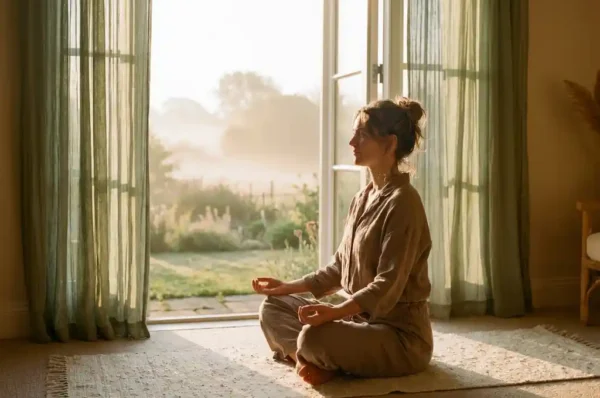
Seated practice develops different but equally valuable mental skills. It cultivates sustained concentration by training your mind to stay focused despite minimal external stimuli — building stronger attention for handling distractions in daily life through subtler awareness of mental states, without physical cues to lean on. Neither practice is superior to the other: comparing moving and seated meditation is like comparing swimming to running. Both build fitness but train different systems and suit different people. The depth of any meditation practice is determined by the quality of attention and consistency you bring to it, not by the posture you hold.
The table below summarizes the core differences between moving and seated meditation at a glance:
| Moving Meditation | Seated Meditation | |
|---|---|---|
| Primary focus anchor | Body movement and physical sensation | Breath or chosen mental focal point |
| Brain engagement style | Multi-sensory: proprioception, motor coordination, visual processing | Single-point concentration, inner stillness |
| Ideal personality type | Active, restless, kinesthetic learners | Reflective, quiet, focus-oriented |
| Typical session format | Walking path, yoga flow, tai chi sequence, or mindful movement routine | Upright or supported seated posture with eyes closed or softly focused |
| Best for beginners? | Yes — tangible physical feedback makes presence easier to grasp | Yes — but requires more tolerance for restlessness initially |
| Key challenge to overcome | Keeping awareness on sensation rather than drifting into autopilot movement | Managing restless thoughts without a physical anchor to return to |
Both practices build mindfulness — the right choice depends on which you will sustain consistently.
What are the key benefits of moving meditation?
Moving meditation offers both immediate and cumulative health outcomes that make it one of the most well-rounded mindfulness practices available. Whether you practice for five minutes or fifty, a consistent mindful movement practice supports the body and mind in ways that extend well beyond the session itself.
- Stress and cortisol reduction – Rhythmic, intentional movement has a measurable calming effect on the nervous system. Combining gentle physical activity with present-moment awareness helps lower the physiological stress response, making it easier to return to a baseline of calm after demanding situations.
- Anxiety relief and nervous energy discharge – For those whose anxiety manifests as physical restlessness, movement-based mindfulness provides a constructive outlet. Rather than suppressing anxious feelings, the practice channels them into deliberate physical action — gradually reducing their intensity and interrupting the feedback loop between anxious thoughts and bodily tension.
- Improved sleep quality – Regular moving meditation supports better sleep by releasing physical tension accumulated during the day and calming an overactive mind before bed. Gentle practices such as mindful stretching or slow walking in the evening work especially well as part of a wind-down routine.
- Cognitive health and memory support – Research in movement-based mindfulness suggests that regular practice may support cognitive resilience and reduce age-related mental decline. The mechanism is thought to involve increased cerebral blood flow and neuroplasticity — the brain’s capacity to form and strengthen neural connections — both of which are enhanced when mindful awareness is combined with physical movement.
- Emotional regulation and mood enhancement – Moving meditation engages the body’s natural mood-regulating systems, supporting a more stable emotional baseline over time. Practitioners commonly report feeling more grounded, less reactive, and better able to respond to difficult emotions without being overwhelmed.
- Improved physical balance and body awareness – Practices like tai chi, qigong, and yoga flows directly train proprioception. Over time, this improves physical coordination and balance — with practical benefits for daily movement and long-term physical health, particularly for older adults.
Which meditation style works better for different personality types and lifestyles?
Moving meditation suits active personalities, people with physical restlessness, and those who learn better through kinesthetic experiences. If you struggle to sit still, feel antsy during traditional meditation, or have a naturally energetic disposition, movement-based practices often feel more accessible and sustainable. Seated meditation, by contrast, tends to suit those drawn to quiet reflection, who want to develop strong single-point focus, or who have already built some comfort with managing restless thoughts without physical cues.
Different lifestyles benefit from specific approaches, and many practitioners find that alternating between both creates a well-rounded routine that adapts to changing energy levels and circumstances:
- Busy professionals – Can integrate mindful walking during lunch breaks, use stairs as meditation opportunities, or incorporate brief yoga sequences between meetings
- Parents with limited time – Practice while children play nearby, transform household chores into mindful activities, or use playground visits for walking meditation
- People with physical limitations – Can adapt movements to their abilities, using gentle stretches, seated movements, or mindful breathing with arm gestures
- Anxious individuals – May find movement helps discharge nervous energy while building present-moment awareness, though some benefit more from seated stillness
- Beginners to meditation – Often find moving practices less intimidating, as they don’t require sitting in one position or managing restless thoughts without a physical outlet
The immediate physical feedback of movement helps practitioners across all backgrounds understand what “being present” actually feels like — creating accessible entry points into mindfulness regardless of previous experience or physical capability. For beginners especially, this tangible quality is often what makes the difference between a practice that sticks and one that is abandoned after the first week.
How do you actually practice moving meditation effectively?
Before you begin
Choose a quiet space where you will not be interrupted — indoors or outdoors, even a small room corner works well for walking meditation or gentle stretching. Wear loose, comfortable clothing that allows free movement. Take three to five slow, deep breaths to center your mind before starting. This brief preparation signals to your body that you are transitioning into a mindful state and makes the session feel intentional from the first moment.
Walking meditation
Start with basic walking meditation by choosing a quiet path 10 to 20 steps long. Walk more slowly than normal, focusing entirely on the sensation of each footstep. When you reach the end, pause, turn mindfully, and walk back. Begin with 5 to 10 minutes and gradually extend your practice time as your comfort and focus develop.
Mindful yoga sequences
Choose simple poses you can perform safely. Focus on the transition between poses rather than achieving perfect alignment. Coordinate your breath with movement — inhaling as you expand or lift, exhaling as you fold or lower. This breath-movement connection deepens the meditative quality and is what distinguishes a mindful yoga flow from a purely physical workout.
Principles for a sustainable practice
A few foundational guidelines will help you build a practice that feels natural and repeatable from the start:
- Start slowly – Begin with deliberate, measured movements that allow your mind to stay present with physical sensations rather than rushing through sequences
- Focus on transitions – Pay attention to the spaces between poses or steps, as these moments often contain the deepest awareness opportunities
- Avoid perfectionism – Release expectations about ideal form and instead cultivate curiosity about present-moment sensations
- Integrate naturally – Incorporate mindful movement into existing activities like walking to your car, stretching before bed, or moving consciously during household tasks
- Build gradually – Extend practice duration and complexity slowly to develop sustainable habits rather than overwhelming yourself early on
End each session by pausing briefly to acknowledge the time you invested. This simple closing habit reinforces a positive association with meditation and supports the consistency that makes any practice — moving or seated — genuinely transformative over time. Remember: there is no wrong way to begin. Whether you spend five minutes walking mindfully or stretch gently before bed, any consistent practice builds the awareness that transforms daily life.
Frequently asked questions about moving meditation
Is moving meditation as effective as seated meditation?
Moving meditation is as effective as seated meditation — it simply works through different mechanisms. Seated practice builds deep single-point concentration and trains the mind to remain calm with minimal external input, while a moving meditation practice develops embodied awareness and multi-sensory presence. Research in contemplative science consistently shows that both approaches produce measurable improvements in stress, attention, and emotional regulation. Effectiveness ultimately depends less on which style you choose and more on how consistently you practice it.
Can I practice both moving and seated meditation?
Combining moving and seated meditation is not only possible but widely recommended, including by many long-standing contemplative traditions that have always used both. A balanced routine might involve a short walking or yoga-based moving meditation to settle the nervous system, followed by a period of seated stillness to deepen concentration. Alternating between both styles across the week also helps you adapt your practice to your energy levels — leaning into movement on restless or high-stress days, and exploring stillness when you feel naturally calm. Many practitioners find this combination more sustainable than committing exclusively to one approach.
How long should a moving meditation session be?
For beginners, 5–15 minutes is an ideal starting range — long enough to settle into the practice, short enough to feel manageable and repeatable. As your familiarity and focus develop, extending sessions to 20–30 minutes allows for a deeper meditative state and more pronounced benefits. The most important factor is not duration but regularity: a consistent 10-minute daily practice will produce more meaningful results over time than occasional hour-long sessions. Start where you are, and build gradually.
Why is yoga considered a moving meditation?
Yoga is considered a moving meditation because it uses the deliberate coordination of breath and movement as its primary tool for cultivating present-moment awareness. Each inhale and exhale is synchronized with a specific physical transition — expanding on the inhale, folding or releasing on the exhale — which anchors the mind in the body rather than allowing it to drift into thought. This breath-movement coordination is what distinguishes a mindful yoga flow from a purely physical workout, and it is the same principle that defines all forms of moving meditation: the body becomes the object of meditation rather than a vehicle for exercise.
What is the difference between walking meditation and mindful walking?
Walking meditation is a structured practice with a defined path, a deliberately slow pace, and an explicit intention to use each footstep as the object of meditation — typically involving conscious attention to the lifting, moving, and placing of each foot. Mindful walking, by contrast, is an informal awareness you layer onto your regular walks, noticing your surroundings, your breath, or your physical sensations without altering your route or pace. Both are valuable, but walking meditation is a dedicated practice session — the moving equivalent of formal seated meditation — while mindful walking is a way of bringing meditative quality to everyday movement. Beginners often find it helpful to start with short, structured walking meditation sessions before integrating informal mindful walking into daily life.
Both moving and seated meditation offer valuable paths to mindfulness, each serving different needs and preferences. Moving meditation provides an accessible entry point for active individuals while building body awareness alongside mental clarity. Seated practice develops concentrated focus and inner stillness. Many practitioners find that combining both creates a well-rounded routine that adapts to different situations and energy levels: on high-stress or restless days, lean into movement; on calmer days, explore stillness. The best meditation practice is the one you will actually do consistently — so build a routine that works for your life, not against it. Whether you prefer flowing yoga practices or seated meditation, we support your mindful movement journey with sustainable yoga mats made from organic cotton, packaged without plastic to honor both your practice and environmental values.
Browse our selection of sustainably crafted yoga mats and meditation tools designed to support your moving meditation practice, your seated sessions, and every mindful moment in between — all made with genuine respect for the planet.