


Over 55% of yoga practitioners report improved sleep quality, and more than 85% experience reduced stress, according to national survey data, making yoga one of the most accessible, drug-free sleep solutions available today. If you struggle to fall asleep, stay asleep, or simply unwind after a demanding day, a consistent bedtime yoga practice works by activating your parasympathetic nervous system, lowering cortisol levels, and signaling to your brain that it is time to transition from alertness into rest. The combination of gentle movement, controlled breathing, and mindfulness creates the ideal physiological and psychological conditions for deep, restorative sleep. In this guide, you will discover the specific poses, breathing techniques, optimal timing, and a ready-to-use sequence you can start tonight, with no prior yoga experience required.
What makes yoga so effective for improving sleep quality?
Yoga’s effectiveness for sleep improvement stems from its ability to simultaneously address the physiological and psychological factors that most commonly interfere with rest. Clinical research published in peer-reviewed journals shows that regular yoga practice can increase melatonin production, the hormone that regulates your sleep-wake cycle, while measurably reducing cortisol, the primary stress hormone that keeps your nervous system in a state of alertness. Beyond hormonal effects, yoga activates the parasympathetic nervous system, often called the rest-and-digest system, which counteracts the fight-or-flight response responsible for racing thoughts and physical tension at bedtime. Here is what the science and practice consistently show:
- Nervous system regulation: Yoga switches your body from “fight or flight” mode to “rest and digest” mode, activating the parasympathetic nervous system that naturally lowers heart rate and blood pressure
- Stress hormone reduction: Regular practice decreases cortisol levels, the primary stress hormone that often keeps you awake at night
- Physical tension release: Gentle movements target areas where stress accumulates, particularly in shoulders, neck, and hips
- Mental quieting: Mindfulness components help silence the mental chatter that prevents sleep by focusing attention on breath and bodily sensations
- Breathing optimization: Controlled breathing techniques increase oxygen flow and help regulate your autonomic nervous system
These combined benefits create a comprehensive, science-supported approach to sleep preparation that addresses both physical tension and mental restlessness simultaneously. By practicing yoga consistently before bed, you are essentially conditioning your nervous system to recognize these movements and breathing patterns as reliable cues for sleep onset. National survey data confirms that this conditioning effect compounds over time, with practitioners reporting progressively deeper and less interrupted sleep the longer they maintain a regular bedtime yoga routine. This makes yoga for better sleep one of the most sustainable, drug-free solutions available for adults experiencing mild to moderate sleep difficulties.
Which yoga poses work best for better sleep?
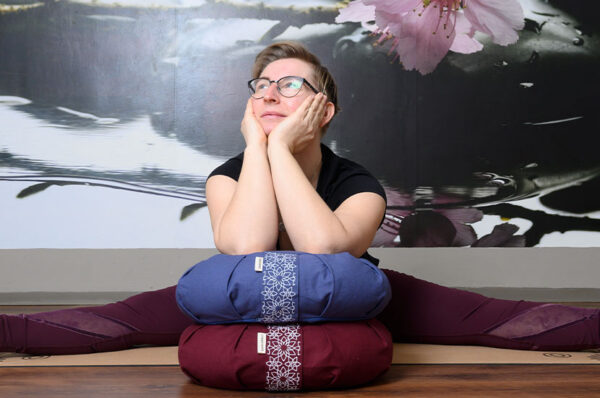
The most effective bedtime yoga poses focus on gentle, floor-based movements that release accumulated physical tension and activate your body’s relaxation response. Each pose below targets a specific area where adults commonly hold stress, including the hips, lower back, and nervous system, and can be held for 3 to 5 minutes to allow deep tissue release. Where available, using a yoga bolster or folded blanket for support allows you to hold poses longer with less effort, deepening the restorative effect:
- Child’s pose (Balasana): Creates a sense of safety and introspection while gently stretching hips and lower back – kneel on your yoga mat, touch big toes together, and fold forward with arms extended
- Legs-up-the-wall pose (Viparita Karani): Reduces leg swelling and promotes circulation by lying on your back with legs extended up against a wall, creating a deeply calming inversion effect
- Seated forward fold (Paschimottanasana): Releases spinal and hamstring tension while encouraging introspection – sit with legs extended and gently fold forward without forcing the stretch
- Happy baby pose (Ananda Balasana): Opens hips and releases emotional tension stored in the pelvis from prolonged sitting and daily stress
- Supine spinal twist: Helps decompress the spine and release physical tension while promoting a sense of letting go
These relaxing yoga poses work synergistically to prepare your entire body and nervous system for rest. For best results, hold each pose for 3 to 5 minutes, breathe slowly and steadily throughout, and use a folded blanket or bolster under any area that feels unsupported. If you fall asleep during the final pose, that is a sign the sequence is working exactly as intended. Practiced consistently 3 to 5 nights per week, this bedtime yoga routine creates a progressively stronger sleep signal that your body learns to follow automatically over time.
How long before bed should you practice yoga for sleep?
The optimal timing for yoga before bed depends on the style and intensity of your practice. As a general guideline, complete any yoga session at least 30 to 60 minutes before you intend to sleep, allowing your core body temperature and heart rate to return to resting levels before you get into bed. Gentle, floor-based styles such as Yin yoga, Restorative yoga, and Yoga Nidra can be practiced closer to bedtime, even within 20 to 30 minutes of sleep, because they do not elevate heart rate or body temperature. More active styles such as Vinyasa or Power yoga should be reserved for earlier in the evening, ideally 2 to 3 hours before bed, as the physical stimulation they produce can delay sleep onset rather than support it. Key timing factors to consider include:
- 30-60 minutes before sleep: This window allows your body temperature to cool down after gentle movement and gives your nervous system adequate time to shift into rest mode
- 15-20 minute sessions: Perfect for busy schedules while providing sufficient time to release physical tension and calm your mind
- 30-45 minute extended practices: Allow for deeper relaxation and more comprehensive stress relief when you have additional time available
- Avoid vigorous practices within 2 hours: Heating or energizing yoga can increase core body temperature and stimulate your nervous system, interfering with sleep onset
- Consider personal energy patterns: Some benefit from post-dinner practice for digestion, while others prefer practicing after completing evening tasks
The most important principle for a successful evening yoga routine is consistency over duration. A focused 10 to 15 minute practice performed at the same time each night will deliver greater long-term sleep quality improvements than longer, irregular sessions, because the ritual itself trains your circadian rhythm to begin winding down at that hour. Start with a duration that feels manageable and sustainable, then gradually extend your practice as it becomes a natural anchor in your bedtime routine. Even two weeks of nightly practice creates measurable changes in how quickly your nervous system responds to these cues.
What breathing techniques help you fall asleep faster?
Specific yoga breathing techniques, known as pranayama, can dramatically reduce the time it takes to fall asleep by directly activating the parasympathetic nervous system and slowing your heart rate within minutes. Research shows that slow, controlled breathing lowers cortisol levels and increases heart rate variability, two physiological markers strongly associated with faster sleep onset. The following techniques range from beginner-friendly to more structured practices, and all can be used independently or woven throughout your bedtime yoga sequence:
- 4-7-8 breathing: Inhale through nose for 4 counts, hold for 7, exhale through mouth for 8 – this pattern naturally slows heart rate and activates relaxation response
- Alternate nostril breathing (Nadi Shodhana): Use thumb to close right nostril while inhaling through left, then switch to balance nervous system and calm mental activity
- Simple breath awareness: Focus on natural breathing rhythm without changing it, returning attention to breath sensations when mind wanders
- Box breathing: Inhale for 4 counts, hold for 4, exhale for 4, hold empty for 4 – creates steady rhythm that’s particularly helpful for anxiety or overstimulation
- Extended exhale breathing: Make exhales longer than inhales to further activate the parasympathetic nervous system and promote deeper relaxation
These mindful sleep practices work by anchoring your attention in the present moment and interrupting the cycle of stress-driven thoughts that most commonly delay sleep onset. Each technique activates the vagus nerve, a key pathway of the parasympathetic nervous system, producing a measurable calming effect within just a few minutes of practice. Integrating these breathing techniques into your sleep yoga practice as a consistent nightly ritual trains your nervous system to downregulate more efficiently over time, creating a reliable and increasingly automatic pathway to restful sleep.
Incorporating these yoga techniques into your nightly routine creates a natural, sustainable approach to better sleep that addresses both the physical and mental dimensions of rest. The combination of gentle movement, focused breathing, and mindfulness works together to prepare your body and mind for deep, restorative sleep without the need for pharmaceutical intervention. At Samarali, we understand the importance of creating peaceful bedtime rituals that support both your wellbeing and the planet. Our yoga bolster and organic cotton yoga blanket are crafted from organic cotton and packaged without plastic, helping you maintain your commitment to sustainable living while enhancing your sleep quality through mindful practices. Browse our selection of thoughtfully crafted sustainable yoga essentials, designed for mindful movement and made with respect for the planet.