


Yes, meditation can genuinely improve your sleep. Regular practice helps calm the nervous system, quiet mental chatter, and shift the body out of the stress response that so often keeps people awake. The benefits are particularly strong for people whose sleep struggles stem from anxiety, overthinking, or difficulty switching off after a busy day. Below, we unpack the most common questions people have about meditation and sleep so you can put it to work tonight.
How does meditation actually help you sleep better?
Meditation improves sleep by activating the parasympathetic nervous system, the part of your body responsible for rest and recovery. When you meditate, your heart rate slows, cortisol levels drop, and the mental activity that feeds worry and rumination begins to settle. This physiological shift makes it easier for your body to transition into the deeper stages of sleep.
The connection between meditation basics and better sleep comes down to one core mechanism: reducing arousal. Most people who struggle to fall asleep are in a heightened state of alertness, either from stress, screens, or simply the habit of a busy mind. Meditation interrupts that cycle by giving the mind a single, gentle point of focus, whether that is the breath, a body scan, or a repeated phrase. Over time, this trains the nervous system to settle more quickly and reliably.
Consistency matters more than session length. Even five to ten minutes of focused, intentional practice each day can begin to shift your baseline stress levels, making it easier to fall asleep and stay asleep throughout the night. The effect compounds over weeks, so think of it as a long-term investment in your rest rather than a quick fix.
What types of meditation are best for sleep?
The most effective meditation types for sleep are body scan meditation, guided sleep meditation, and breath-focused mindfulness. These approaches share a common thread: they direct attention away from anxious thoughts and toward physical sensations or slow, rhythmic breathing, both of which signal safety to the nervous system.
Body scan meditation
A body scan involves moving your attention slowly through each part of the body, from the tips of your toes to the crown of your head, noticing sensations without judgment. This practice is particularly effective for sleep because it grounds awareness in the physical rather than the mental, interrupting the loop of racing thoughts. It also gently encourages muscular relaxation as you go.
Breath-focused mindfulness
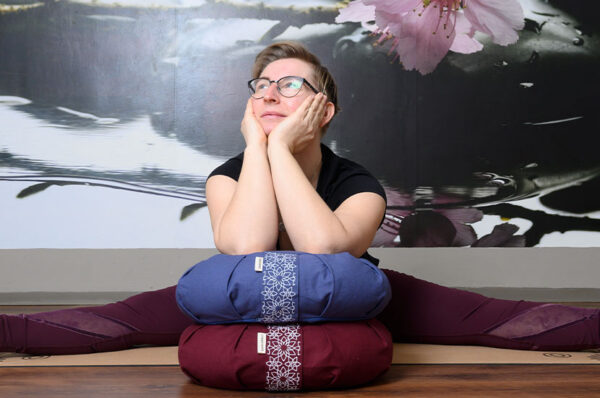
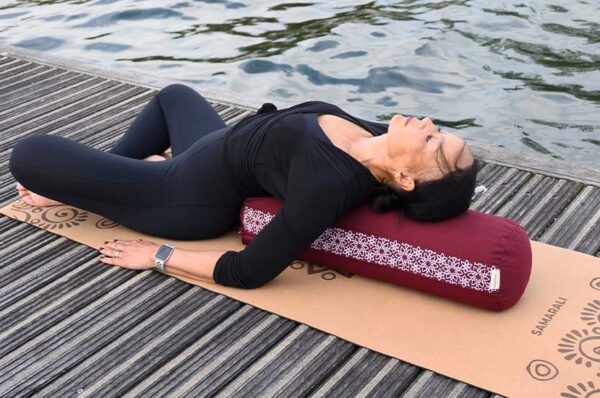
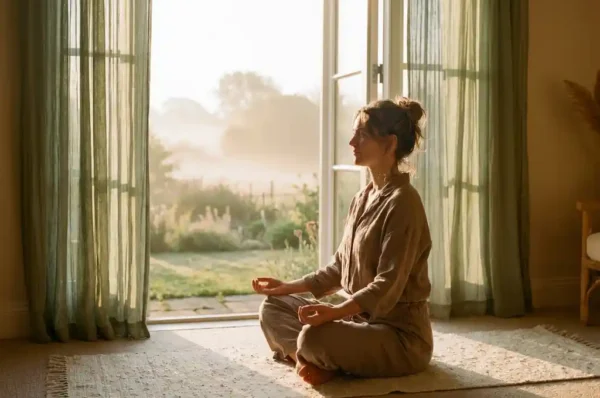
Breath-focused meditation is one of the most accessible meditation basics for beginners. You simply observe the natural rhythm of your inhale and exhale, returning attention to the breath each time the mind wanders. Practised in a comfortable position on a meditation mat, this technique is easy to adapt into a bedtime ritual and requires no prior experience.
Yoga nidra, sometimes called yogic sleep, is another powerful option. It guides practitioners through a state between waking and sleeping, and many people find they drift off before the practice even ends. If you are new to meditation, guided audio recordings are a helpful starting point, as they remove the pressure of having to direct the session yourself.
How long before bed should you meditate?
Meditating between 30 minutes and one hour before bed is generally the most effective window. This gives the nervous system enough time to shift into a calmer state before you lie down, without so much of a gap that the calming effect fades. However, even meditating directly in bed can be beneficial, particularly for people who wake in the night and struggle to fall back asleep.
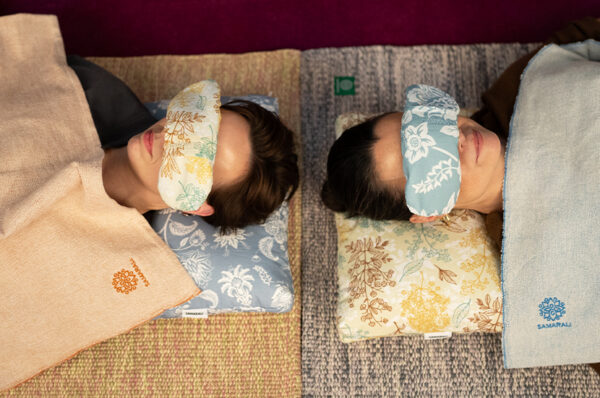
The key is building a consistent pre-sleep routine around your practice. When the brain learns that meditation signals the approach of sleep, it begins to associate the two, making the transition easier over time. Pairing your session with other calming habits, such as dimming the lights, reducing screen use, or using a yoga blanket for warmth and comfort during practice, reinforces this association further.
Avoid vigorous or energising styles of meditation close to bedtime. Practices that involve rapid breathing techniques or intense visualisation can increase alertness rather than reduce it. Save those for the morning or early afternoon, and keep your evening practice slow, soft, and grounded.
Can meditation replace sleep aids or medication?
Meditation is not a direct replacement for prescribed sleep medication, but for many people with mild to moderate sleep difficulties, it can reduce or eliminate the need for over-the-counter sleep aids over time. If you are currently taking prescribed medication for a sleep disorder, always speak with a healthcare professional before making any changes.
That said, meditation addresses something that most sleep aids do not: the underlying mental and physiological patterns that cause poor sleep in the first place. Sleep aids typically work by sedating the nervous system temporarily. Meditation, practised consistently, can actually rewire how your nervous system responds to stress, creating lasting improvements rather than short-term relief.
For people whose sleep struggles are rooted in anxiety, chronic stress, or an overactive mind, meditation basics can be genuinely transformative. Many practitioners report that after several weeks of consistent practice, they fall asleep faster, wake less frequently, and feel more rested in the morning, without any pharmaceutical support.
It is also worth noting that meditation carries no side effects and supports overall wellbeing well beyond sleep. It builds emotional resilience, sharpens focus, and supports a more grounded approach to daily life. Whether you explore our meditation collection to support your practice or simply start with a folded blanket and a quiet corner, the most important step is simply beginning.
Ready to create the ideal conditions for your practice? At Samarali, you will find everything you need to build a calming bedtime ritual — from a supportive meditation mat and cosy organic cotton yoga blanket to complete meditation sets designed to help you unwind and sleep more deeply. Shop the collection now and give your sleep the foundation it deserves.
Frequently Asked Questions
I've never meditated before — what's the easiest way to get started with sleep meditation tonight?
The simplest starting point is a guided body scan or breathing meditation via a free app like Insight Timer or Calm — no experience or special equipment needed. Lie down or sit comfortably, press play, and follow the instructions. Don’t worry about doing it perfectly; even a distracted, imperfect session still activates the parasympathetic nervous system and offers real benefit. Start with just 5–10 minutes and build from there as it begins to feel natural.
What if my mind is too busy to meditate — does it still work?
Yes, and this is one of the most common misconceptions about meditation: a wandering mind doesn’t mean you’re failing. Every time you notice your thoughts have drifted and gently return your focus to your breath or body, that act of returning is the practice itself. Over time, this repetition is precisely what trains the nervous system to settle more quickly. A busy mind at the start of a session is completely normal, especially for beginners or on high-stress days.
How long does it take to see real improvements in sleep from meditation?
Most people begin to notice subtle improvements — falling asleep a little faster or feeling slightly more rested — within one to two weeks of consistent daily practice. More significant changes, such as fewer night wakings and a noticeably calmer pre-sleep state, typically emerge after four to eight weeks. Research backs this up: a landmark study published in JAMA Internal Medicine found that mindfulness meditation significantly improved sleep quality in older adults after just six weeks. Consistency is the key variable — a short daily session outperforms occasional longer ones.
Is it okay to fall asleep during meditation, or does that defeat the purpose?
If you’re meditating specifically to improve sleep, falling asleep during a session is completely fine — and with practices like yoga nidra, it’s almost the intended outcome. The sleep-promoting physiological shifts triggered by meditation are still happening as you drift off. If your goal is to build a longer-term mindfulness practice with broader benefits beyond sleep, you may want to keep at least some sessions upright and alert. But for a bedtime routine, there’s no need to fight the drowsiness.
What should I do if I wake up in the middle of the night and can't get back to sleep?
A short, simple breath-focused meditation is one of the most effective tools for middle-of-the-night waking. Try the 4-7-8 technique: inhale for 4 counts, hold for 7, exhale slowly for 8. Alternatively, run a quiet mental body scan from your toes upward without moving. The key is to avoid reaching for your phone, as the light and stimulation will make returning to sleep significantly harder. Keeping a pair of earbuds on your nightstand with a sleep meditation queued up can make this much easier in the moment.
Are there any types of people or sleep problems for whom meditation won't help much?
Meditation is most effective for sleep difficulties rooted in stress, anxiety, overthinking, or an overactive mind. It is less likely to resolve sleep issues caused by underlying medical conditions such as sleep apnoea, restless leg syndrome, or chronic pain — though it may still help manage the stress and frustration those conditions create. If you’ve been struggling with sleep for several months despite lifestyle changes, it’s worth speaking to a GP or sleep specialist to rule out a physiological cause. Meditation works best as part of a broader sleep hygiene approach rather than as a standalone solution for complex disorders.
Can I meditate in bed, or is it better to have a dedicated space?
Both approaches work, and the right choice depends on your goals. Meditating in bed is perfectly effective for sleep-specific practice and is especially useful for those who wake in the night. A dedicated space — even a quiet corner with a meditation mat or folded blanket — can be helpful if you want to build a broader daily practice, as it creates a clear mental cue that separates meditation time from sleep time. If you find you consistently fall asleep mid-session when practising in bed, try sitting upright on a mat for your evening practice and only moving to bed once the session is complete.