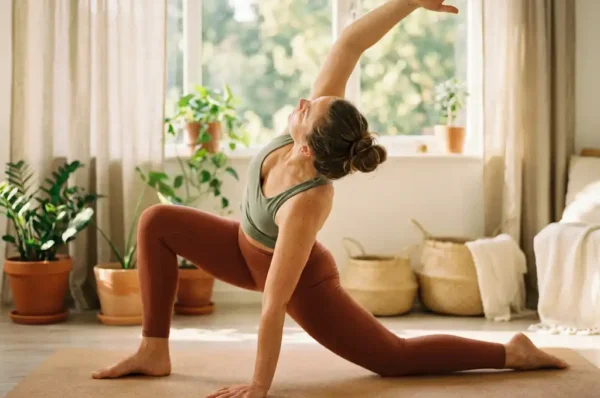



Yoga offers gentle, effective relief for lower back pain through targeted stretches and strengthening poses that address muscle tension and poor posture. The safest beginner poses include child’s pose, cat-cow stretch, and knee-to-chest pose, which provide immediate comfort while building long-term back health. Consistent practice helps reduce pain and prevents future episodes.
What causes lower back pain and how can yoga help?
Lower back pain typically stems from several interconnected factors:
- Muscle tension and tightness – Prolonged sitting and repetitive movements create chronic tension in the lumbar muscles
- Poor posture habits – Forward head position and rounded shoulders from desk work strain the entire spinal chain
- Weak core muscles – Insufficient abdominal and back muscle strength fails to properly support the spine
- Stress accumulation – Mental tension manifests as physical tightness, particularly in the lower back region
- Tight hip flexors and hamstrings – These muscles directly connect to the pelvis and pull on the lower back when restricted
Yoga’s comprehensive approach addresses these root causes simultaneously rather than merely masking symptoms. The practice combines gentle stretching with mindful movement to release tension while building the muscular support your spine needs. Unlike quick fixes that provide temporary relief, yoga creates lasting change by improving body awareness, teaching you to notice tension before it becomes painful, and developing a natural support system around your spine.
Yoga’s holistic approach works differently from quick fixes. The practice increases flexibility in tight hip flexors and hamstrings that pull on your lower back. Gentle backbends counteract forward hunching from desk work, while twisting poses release deep spinal tension. The breathing techniques taught in yoga also activate your body’s relaxation response, reducing stress-related muscle tightness.
Which yoga poses are safest for beginners with lower back pain?
The safest yoga poses for beginners with lower back pain focus on gentle movement and supported positioning:
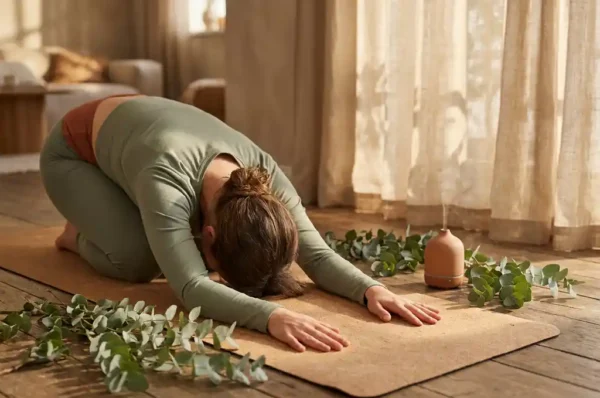
- Child’s pose – Serves as your go-to rest position, gently stretching the lower back while calming the nervous system
- Cat-cow stretch – Mobilises your entire spine through gentle, controlled movement that improves flexibility
- Knee-to-chest pose – Releases tight hip flexors and lower back muscles while providing immediate comfort
- Gentle spinal twists – Help release deep spinal tension safely without overstretching vulnerable areas
- Supported bridge pose – Strengthens glutes and hamstrings while opening tight hip flexors
These foundational poses teach proper alignment principles while providing immediate relief. Child’s pose can be modified with a pillow between your calves and thighs if needed. Cat-cow stretch should be performed slowly, focusing on the sensation in your lower back. For knee-to-chest pose, keep the extended leg bent if straightening feels uncomfortable. When practising these poses, yoga mats with proper cushioning and grip enhance safety and comfort, allowing you to focus on alignment rather than slipping or joint discomfort.
Cat-cow stretch mobilises your entire spine through gentle, controlled movement. Begin on your hands and knees, then alternate between arching your back (cow) and rounding it (cat). Move slowly and focus on the sensation in your lower back. This pose is particularly effective when practised on sustainable yoga mats that provide proper cushioning and grip.
How do you practice yoga safely when your back hurts?
Safe yoga practice with back pain requires careful attention to several key principles:
- Listen to your body’s signals – Distinguish between gentle stretching sensations and warning pain that requires stopping
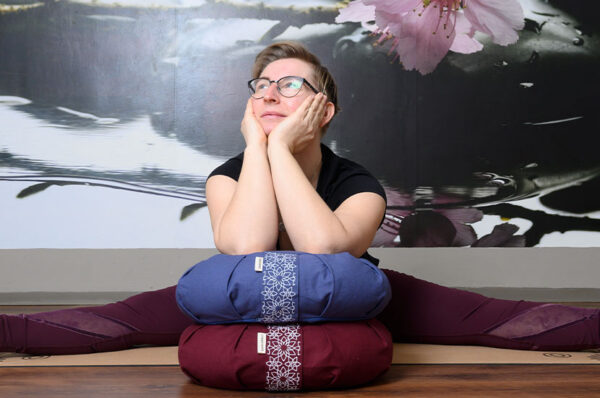
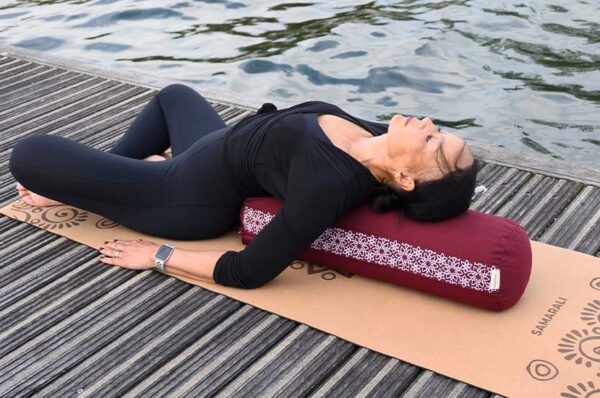
- Use props generously – Bolsters, blocks, and blankets help maintain proper alignment without straining
- Avoid aggravating poses – Skip deep backbends, intense forward folds, and poses requiring lifting both legs simultaneously
- Move slowly and mindfully – Rushed movements increase injury risk, especially when muscles are already tender
- Create a warm environment – Cold muscles are more prone to injury and don’t respond as well to stretching
- Modify without hesitation – Every pose can be adapted to meet your current needs and limitations
These safety guidelines ensure your practice supports healing rather than creating additional strain. Props become essential tools – place a bolster under your knees during relaxation poses, use blocks to bring the floor closer in forward folds, and choose a quality yoga mat with adequate thickness for joint protection. Remember that your practice should feel nurturing rather than challenging when dealing with pain, and any pose that doesn’t feel right should be modified or skipped entirely.
Avoid deep backbends, intense forward folds, and poses that require you to lift both legs simultaneously when your back hurts. Skip poses like wheel, camel, or boat until your pain subsides. Instead, focus on gentle movements that feel good and support your body’s natural healing process.
What should you expect when starting yoga for back pain relief?
Your yoga journey for back pain relief will unfold in predictable stages with realistic timelines:
- Initial awareness (Week 1-2) – You’ll discover how tight and tense your back muscles have become, which is valuable feedback
- Early improvements (Weeks 2-4) – Most people notice some relief in daily discomfort and increased mobility
- Significant changes (Weeks 6-8) – Consistent practice typically produces noticeable improvements in pain levels and function
- Normal sensations – Gentle stretching, increased body awareness, and mild muscle fatigue after practice indicate positive responses
- Warning signs – Sharp pain, shooting sensations down your legs, or increased pain after practice require immediate attention
Understanding this timeline helps set realistic expectations and prevents discouragement during the initial phases. Consistency matters more than intensity – practising gentle poses for 15-20 minutes daily produces better results than one long, intense weekly session. Track your progress by noting pain levels, sleep quality, and daily activities that feel easier over time. Remember that yoga works best as part of a comprehensive approach alongside other treatments like physiotherapy or massage, and individual healing timelines vary significantly.
Yoga works well alongside other treatments like physiotherapy or massage. Don’t expect it to solve complex back problems alone; instead, view it as part of a comprehensive approach to back health. Some people find immediate relief, while others need several weeks to notice significant changes. Be patient with your body’s healing timeline.
Starting a yoga practice for back pain relief offers a gentle, sustainable path to better spinal health. The combination of mindful movement, strengthening, and stress reduction addresses multiple factors that contribute to back discomfort. Remember that healing takes time, and consistent practice yields the best results. At Samarali, we support your wellness journey with thoughtfully designed yoga sets made from organic cotton and packaged without plastic, because we believe your practice should nurture both your body and the planet.
Browse our selection of thoughtfully crafted collection of sustainable yoga essentials—designed for mindful movement and made with respect for the planet.