


Yoga philosophy and meditation share a deep, interconnected relationship rooted in ancient wisdom traditions. Yoga philosophy provides the framework for understanding consciousness and spiritual development, while meditation serves as the primary tool for realizing these states. This connection forms the foundation of authentic yoga practice, extending far beyond physical postures to encompass mental training and spiritual growth.
What exactly is yoga philosophy and how does it relate to meditation?
Yoga philosophy is an ancient system for understanding consciousness, reality, and spiritual development, outlined primarily in Patanjali’s Yoga Sutras. Meditation forms the core of this philosophy, representing three of the eight limbs: dharana (concentration), dhyana (meditation), and samadhi (absorption or enlightenment).
The eight-limbed path, known as Ashtanga Yoga, builds systematically toward meditative states through these key components:
- Yamas and Niyamas – Ethical guidelines that create mental clarity by reducing internal conflict and establishing harmonious relationships with others and yourself
- Asana and Pranayama – Physical postures and breath control that prepare the body and nervous system for sustained meditation by releasing tension and regulating energy
- Pratyahara – Withdrawal of the senses from external distractions, allowing attention to turn inward toward deeper states of consciousness
- Dharana, Dhyana, and Samadhi – The three stages of meditation that progress from focused concentration to effortless awareness to complete absorption in pure consciousness
This systematic progression demonstrates that meditation isn’t an add-on to yoga philosophy but rather its ultimate destination. Each limb builds upon the previous ones, creating the optimal conditions for the mind to naturally settle into deeper states of awareness. The physical practices you might know as yoga actually serve as preparation for sustained meditation, with every aspect of the path designed to support this inner journey toward self-realization.
How does meditation actually enhance your physical yoga practice?
Meditation significantly improves physical yoga practice by developing focused attention, body awareness, and breath control. Regular meditation training teaches you to observe sensations without immediately reacting, which translates directly into better alignment and injury prevention during poses.
The specific ways meditation transforms your physical practice include:
- Enhanced body awareness – Meditation develops your ability to notice subtle sensations, helping you detect misalignment or strain before it becomes injury
- Improved breath control – Regular meditation practice teaches you to maintain steady, conscious breathing even during challenging poses, supporting both stability and relaxation
- Witness consciousness – You learn to observe your thoughts, emotions, and physical reactions objectively rather than getting caught up in them during difficult poses
- Balanced effort – Meditation helps you find the sweet spot between appropriate challenge and harmful strain, embodying yoga’s principle of “sthira” (stability) and “sukha” (ease)
- Present-moment focus – Instead of rushing through poses or fixating on the “perfect” form, you learn to fully inhabit each moment of your practice
These meditation-derived skills create a more sustainable and enjoyable physical practice. You become better at listening to your body’s signals, respecting its limitations while still challenging yourself appropriately. This mindful approach transforms yoga from a series of exercises into a moving meditation that integrates body, breath, and awareness into a unified experience.
What are the most effective ways to combine yoga poses with meditation?
The most effective integration involves bringing meditative awareness to every moment of your practice, whether you’re moving between poses or holding them. This means maintaining conscious attention on breath, sensation, and present-moment awareness throughout your session.
Here are proven methods for seamlessly blending meditation with physical practice:
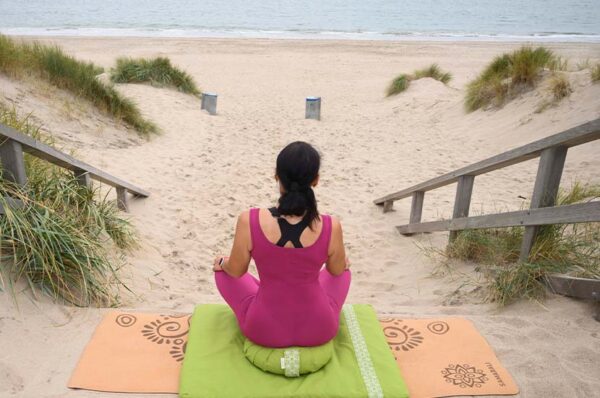
- Pre-practice meditation – Begin with 5-10 minutes of seated meditation to establish mindful awareness and set a clear intention before moving
- Breath-synchronized movement – Coordinate each transition with inhalation or exhalation, treating flowing sequences as moving meditation rather than exercise
- Dynamic stillness in held poses – Maintain active awareness of sensations, breath, and mental state while your body remains in position, observing without immediately trying to fix or change
- Mindful transitions – Pay equal attention to the spaces between poses, moving with the same conscious awareness you bring to the poses themselves
- Integration meditation – End with dedicated meditation time, either seated or in savasana, to absorb the benefits and return to the stillness that yoga philosophy considers the ultimate goal
This integrated approach transforms your entire practice into a meditation in motion. Rather than compartmentalizing physical poses and mental training, you discover that every breath, every movement, and every moment of stillness becomes an opportunity for deeper awareness. The key lies in treating your yoga mat as sacred space where body and mind unite in conscious presence, honoring the complete system that yoga philosophy has always intended.
The connection between yoga philosophy and meditation reveals that authentic practice extends far beyond physical flexibility or strength. By understanding this relationship, you can approach your practice with greater depth and purpose. Whether you’re sitting in meditation or moving through poses, you’re participating in a complete system designed to cultivate awareness, peace, and spiritual growth. We at Samarali honor this tradition by creating sustainable organic cotton yoga rugs and meditation accessories, supporting your practice while caring for the planet we all share.
Browse our selection of thoughtfully crafted collection of sustainable yoga essentials—designed for mindful movement and made with respect for the planet.