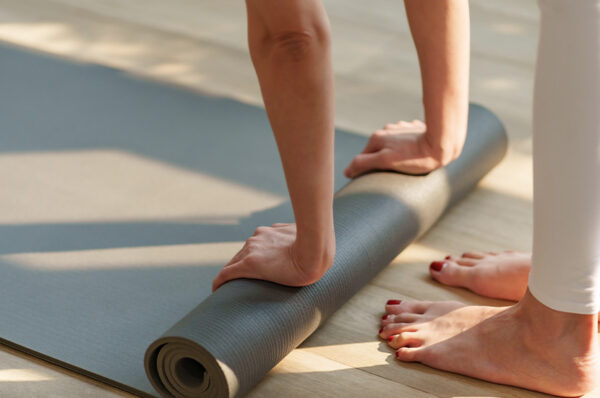



For most practitioners, a yoga mat between 6mm and 8mm thick provides optimal knee comfort without compromising stability. This thickness offers sufficient cushioning for kneeling poses while maintaining connection to the ground for balance. Your body weight, practice style, and knee sensitivity determine whether you need the lower or higher end of this range.
What yoga mat thickness provides the best knee protection?
A 6–8mm thick yoga mat delivers the best knee protection for most people. This range cushions your knees during poses like low lunge, camel, and child’s pose while maintaining enough stability for standing postures and balancing sequences.
Here’s how different thicknesses affect your knees:
- 4mm mats – Offer minimal cushioning and work best for practitioners with healthy knees who prioritize stability and floor connection
- 6mm mats – Strike an excellent balance between comfort and stability, providing adequate knee protection while allowing proper alignment in standing poses
- 8mm mats – Deliver enhanced cushioning for sensitive knees or practitioners who spend significant time in kneeling positions
- 10mm+ mats – Offer maximum cushioning but can compromise practice stability, working well for restorative yoga or chronic knee issues
Each thickness level serves different practitioner needs, from stability-focused yogis to those requiring maximum joint protection. Your body weight also influences the ideal choice, as heavier practitioners often benefit from 8mm mats since their weight compresses the material more, while lighter individuals may find 6mm sufficient for comfortable cushioning. Understanding these distinctions helps you select the thickness that best supports your unique practice requirements.
How does mat thickness affect your yoga practice beyond knee comfort?
Thicker mats reduce your connection to the ground, which impacts balance, proprioception, and energy transfer during poses. This trade-off between comfort and stability influences your entire practice, not just knee-heavy sequences.
Different aspects of your practice are affected by mat thickness in these ways:
- Balance poses – Tree pose, warrior III, and arm balances become more challenging as thicker surfaces create a “sinking” sensation that makes micro-adjustments difficult
- Yoga style compatibility – Vinyasa and power yoga benefit from thinner mats (4–6mm) for quick transitions, while yin and restorative practices work well with thicker mats (8–10mm) for longer holds
- Portability factors – Thicker mats weigh considerably more and roll larger, affecting daily transport to classes or travel convenience
- Standing pose stability – Thicker mats can make you feel less grounded in poses like warrior I and triangle, though they provide relief during seated positions
- Heat retention – Thicker mats insulate more from cold floors but may feel warmer during vigorous practices, particularly important for hot yoga
These factors work together to shape your overall yoga experience, extending far beyond simple knee comfort. The thickness you choose affects everything from your ability to hold challenging balances to how easily you can transport your mat, making it crucial to consider your complete practice needs rather than focusing solely on cushioning.
What should you consider when choosing a thick yoga mat for sensitive knees?
Material density matters more than thickness alone for knee comfort. A dense 6mm mat often provides better support than a soft 10mm version that compresses completely under pressure. Look for materials that offer cushioning while maintaining structural integrity.
Key factors to evaluate when selecting your mat include:
- Material quality – Natural rubber and TPE materials provide excellent density-to-comfort ratios with consistent cushioning that doesn’t bottom out during kneeling poses
- Compression testing – Quality mats maintain some cushioning even under full body weight, while inferior options compress completely
- Practice frequency – Daily practitioners often prefer 6–7mm for durability and versatility, while occasional yogis might choose 8mm for maximum comfort
- Floor surface considerations – Concrete or hardwood floors require more cushioning than carpeted studios, influencing your thickness needs
- Storage practicalities – Thicker mats require more storage room and may not fit standard yoga mat bags or studio cubbies
- Budget and longevity – Thicker mats often last longer as they can wear down more before becoming uncomfortable, though premium thin mats may outlast cheap thick alternatives
These considerations work together to determine the best mat for your specific situation, balancing immediate comfort needs with long-term practicality. Testing potential mats in person, when possible, helps ensure your choice meets both your knee protection requirements and overall practice goals. Finding the right yoga mat thickness balances comfort, stability, and practical considerations unique to your practice.
We at Samarali create sustainable yoga mats using organic cotton and plastic-free packaging, ensuring your choice supports both your practice and environmental values. The ideal thickness supports your knees while maintaining the connection and stability that make yoga transformative.
Browse our selection of thoughtfully crafted collection of sustainable yoga essentials—designed for mindful movement and made with respect for the planet.