


Meditation cushion height directly affects your spinal alignment, hip positioning, and overall comfort during practice. The right height allows your hips to sit slightly higher than your knees, maintaining your spine’s natural curves and preventing slouching. Incorrect height leads to tension, discomfort, and reduced focus, making it harder to sustain your meditation practice effectively.
Why does meditation cushion height matter for your posture?
Proper cushion height creates the foundation for healthy spinal alignment during meditation. When your hips are elevated correctly, your pelvis tilts slightly forward, allowing your spine to maintain its natural S-curve without strain or effort.
This positioning prevents the common problem of posterior pelvic tilt, where your lower back rounds and your shoulders hunch forward. When you sit too low, gravity pulls your spine into this unhealthy C-shaped curve, compressing your breathing and creating tension throughout your back and neck.
The relationship between hip elevation and spinal health becomes particularly important during longer meditation sessions. Without proper support, you will find yourself constantly adjusting your position, fighting against discomfort, and losing focus on your practice. Your body will naturally try to compensate for poor alignment, leading to muscle fatigue and joint stress.
Correct cushion height also affects your breathing capacity. When your spine maintains its natural curves, your ribcage can expand fully, allowing deeper, more relaxed breathing. This physiological benefit directly supports the meditative state you are trying to achieve.
What happens when your meditation cushion is too high or too low?
Cushions that are too high cause your hips to tilt excessively forward, creating strain in your hip flexors and lower back. You will notice your knees lifting off the ground, putting pressure on your knee joints and making it difficult to feel grounded and stable.
With an overly high cushion, you might experience:
- Hip flexor tension and tightness – excessive forward pelvic tilt overworks these muscles
- Knee strain from suspended positioning – floating knees create joint pressure and instability
- Lower back hyperextension and discomfort – exaggerated spinal curve causes muscle fatigue
- Feeling unstable or “perched” rather than grounded – lack of three-point contact disrupts your meditation foundation
An overly high cushion transforms your meditation seat into an unstable perch, forcing your body to constantly work against gravity. This positioning not only creates physical discomfort but also undermines the mental stillness you’re seeking in your practice.
Cushions that are too low create the opposite problem. Your hips sink below your knee level, forcing your spine into a rounded position. This compressed posture restricts breathing and creates tension throughout your upper body.
Signs your cushion is too low include:
- Rounded shoulders and forward head posture – collapsed spine pulls your upper body out of alignment
- Compressed breathing and shallow chest expansion – hunched posture restricts your lung capacity
- Leg numbness or tingling from poor circulation – compressed position reduces blood flow to extremities
- Lower back pain and stiffness – spine loses its natural curve and muscles overcompensate
- Difficulty maintaining alertness during practice – poor posture affects mental clarity and focus
Both height extremes create a cascade of physical problems that extend far beyond simple discomfort. When your cushion height is wrong, your entire body works against you, turning meditation into a battle rather than a practice of ease and awareness.
How do you find the right meditation cushion height for your body?
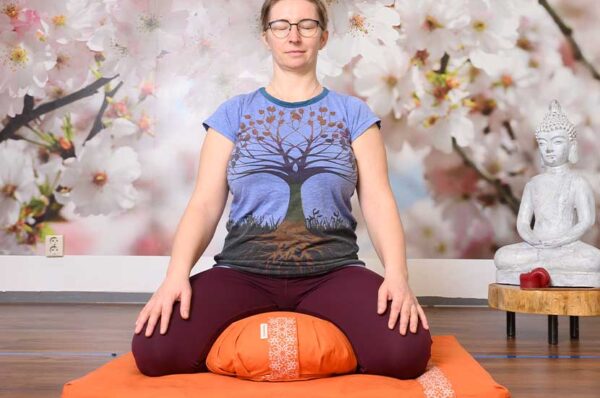
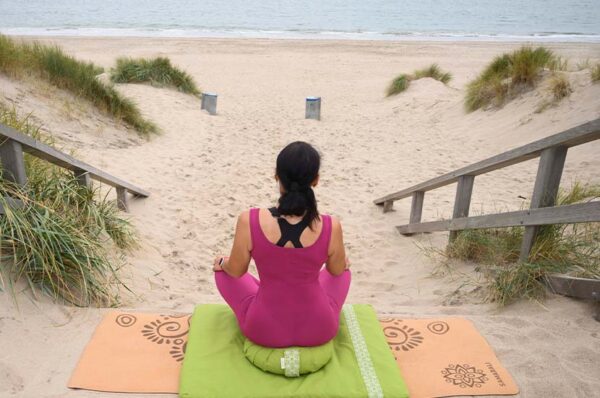
Start by sitting cross-legged on your meditation cushions and checking that your hips are slightly higher than your knees. Your thighs should slope gently downward, creating a stable triangular base with your sitting bones and knees touching the ground.
Follow this step-by-step process to find your optimal height:
- Test different heights by adding or removing cushion filling, or stacking additional supports
- Sit for 5–10 minutes in each position to assess comfort over time rather than just initial feel
- Check that both knees can touch the ground without strain or forcing
- Notice whether you can breathe deeply without restriction in your chest or abdomen
- Observe whether you can maintain the position without constant adjustment or fidgeting
This systematic approach helps you move beyond initial impressions to find a height that truly supports sustained practice. Remember that what feels comfortable for the first few minutes may not work for longer sessions, so patience during this testing phase pays dividends in your ongoing meditation journey.
Your flexibility level significantly influences the height you will need. If you have tight hips or limited flexibility, you will likely need a higher cushion to achieve proper alignment. Do not worry about sitting lower as your flexibility improves—comfort and proper alignment matter more than appearance.
Consider your preferred meditation position as well. Cross-legged sitting typically requires more height than kneeling positions. If you use sustainable yoga mats beneath your cushion, account for this additional elevation in your height calculations.
For those with physical limitations, modifications can help. Knee problems might require additional support under your thighs, while back issues might benefit from sitting against a wall. The goal remains the same: finding a position you can maintain comfortably while keeping your spine naturally aligned.
Remember that your ideal height might change over time as your flexibility improves or your body changes. Regular reassessment helps ensure your meditation setup continues to support rather than hinder your practice.
Finding the right meditation cushion height transforms your practice from a physical challenge into a comfortable, sustainable routine. When your body feels supported and aligned, you can focus entirely on the mental aspects of meditation. At Samarali, we create our meditation cushions with adjustable filling and organic cotton covers, allowing you to customise the height perfectly for your body while supporting sustainable practices through plastic-free packaging.
Browse our selection of thoughtfully crafted collection of sustainable yoga essentials—designed for mindful movement and made with respect for the planet.