


To start meditating, find a quiet spot, sit comfortably, close your eyes, and focus your attention on your breath. That is genuinely all it takes to begin. Meditation basics are simple by design: you do not need special equipment, a particular belief system, or years of training. The sections below answer the most common questions beginners ask so you can start with confidence.
What do you actually do when you meditate?
When you meditate, you deliberately direct your attention to a single point of focus, most commonly your breath, and gently return to that focus each time your mind wanders. That returning is the practice. You are not trying to empty your mind or achieve a blissful state; you are training your attention the same way you train a muscle.
Here is a simple sequence to follow for your first session:
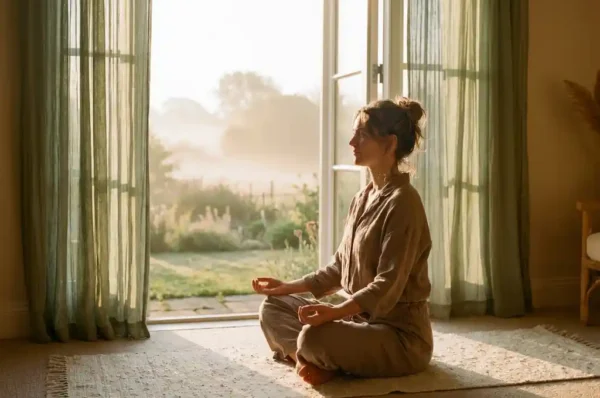
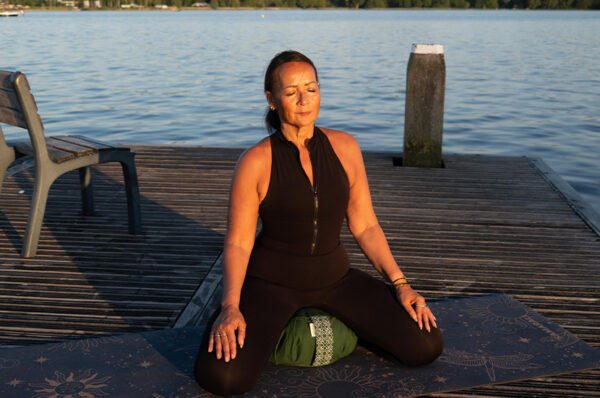
- Choose a comfortable position. Sit on a chair with your feet flat on the floor, or cross-legged on the ground. Your spine should be upright but not rigid. A meditation cushion can make floor sitting much more comfortable if you plan to sit for longer than a few minutes.
- Set a timer. Even five minutes is enough to start. Knowing the timer will signal the end frees you from clock-watching.
- Close your eyes and breathe naturally. Do not try to control your breath. Simply notice the sensation of air entering and leaving your nose, or the rise and fall of your chest.
- Notice when your mind wanders and return. Thoughts will appear. That is completely normal. The moment you notice you have drifted, gently redirect your attention back to the breath without judgment.
- Open your eyes slowly when the timer sounds. Take a moment before jumping up. Notice how you feel.
The whole point of meditation basics is repetition. Each time you bring your attention back, you are doing the work. A session where your mind wandered fifty times and you returned fifty times is just as valuable as one that felt calm and focused.
How long should a beginner meditate each day?
A beginner should meditate for five to ten minutes per day. That duration is long enough to experience the practice meaningfully and short enough to stay consistent. Consistency matters far more than session length, especially in the early weeks when you are building the habit.
Many people make the mistake of starting with twenty or thirty minutes because they assume longer equals better. In practice, long sessions often feel frustrating for beginners, which makes it easy to skip the next day. A five-minute session you actually do every morning is worth more than a thirty-minute session you attempt twice a week.
Once sitting quietly for five to ten minutes feels natural, you can extend gradually. Adding two or three minutes every couple of weeks is a sustainable approach. Most regular meditators settle somewhere between fifteen and twenty-five minutes for a daily practice, but there is no universal target. The right length is the one you will actually maintain.
What are the most common mistakes beginners make when meditating?
The most common mistake beginners make when meditating is believing that a wandering mind means they are doing it wrong. It does not. A wandering mind is the condition meditation works with, not a sign of failure. Beyond that, several other patterns tend to derail new practitioners.
Trying to stop thinking
Thoughts are a natural product of a living brain. Attempting to suppress them creates tension and frustration. The goal is not a blank mind; it is a non-reactive relationship with whatever arises. When a thought appears, you notice it and return to your breath. That is the complete instruction.
Expecting immediate results
Meditation benefits accumulate gradually. After one session, you may feel a little calmer. After a few weeks of daily practice, you are more likely to notice meaningful shifts in how you respond to stress or difficult emotions. Approaching each session with no particular expectation removes a lot of unnecessary pressure and actually makes the practice more effective.
Other common mistakes include choosing an uncomfortable position that makes physical discomfort the main focus, meditating at inconsistent times so the habit never sticks, and giving up after a few days because progress is not visible. Treating meditation like any other skill you are learning, something that requires patient, regular practice, resolves most of these issues naturally.
How do you know if your meditation practice is working?
You know your meditation practice is working when you notice small but consistent changes in daily life rather than during the sessions themselves. These signs typically appear off the cushion: a slightly longer pause before reacting to frustration, an easier time falling asleep, or a quiet awareness that you are stressed before it escalates. These subtle shifts are the clearest evidence the practice is taking hold.
During sessions, a common sign of progress is that returning to your breath starts to feel more familiar and less effortful. You will still get distracted, but you may notice the distraction sooner. That quicker recognition is a genuine improvement in attentional skill.
It is worth keeping a simple log. After each session, write one sentence about how you felt afterward. Over weeks, patterns emerge that are invisible session to session. Many people are surprised to find, looking back, that their baseline mood or reactivity has shifted noticeably.
Ready to make your practice as comfortable and consistent as possible? At Samarali, you will find everything you need to sit well and stay committed — from supportive meditation cushions and a dedicated meditation mat to complete meditation sets designed to help you settle in and go deeper. A practice that feels good to return to is one that actually sticks. Shop the meditation collection at Samarali now.
Frequently Asked Questions
What is the best time of day to meditate as a beginner?
Morning is generally the most effective time for beginners because your mind is less cluttered with the events of the day and it is easier to build a consistent habit when you attach it to an existing routine, like right after waking up or before breakfast. That said, the best time is simply the one you can protect and repeat daily. If mornings are chaotic for you, a lunch break or the few minutes before bed works just as well, as long as you choose a time you can realistically stick to every day.
Do I need to use an app or guided meditation to get started, or can I meditate on my own?
You can absolutely meditate on your own from day one — the breath-focused technique described in this post requires no app, audio, or guide whatsoever. That said, apps like Insight Timer, Headspace, or Calm can be genuinely useful for beginners who find silence uncomfortable or who want a little structure and accountability in the early weeks. Think of guided meditations as training wheels: helpful at first, but something you can gradually set aside as sitting quietly starts to feel more natural.
What should I do if physical discomfort keeps distracting me during meditation?
First, adjust your position before assuming the discomfort is something to push through — there is nothing virtuous about meditating in pain. Try sitting on a chair with your feet flat on the floor, which removes most of the strain that floor sitting places on the hips and knees. If you prefer floor sitting, a firm meditation cushion that tilts your pelvis slightly forward can make a significant difference in comfort for sessions longer than five minutes. For any discomfort that remains, you can treat it the same way you treat a wandering thought: notice it, acknowledge it without judgment, and gently return your attention to your breath.
Is it normal to feel anxious or restless when I first start meditating?
Yes, this is very common and completely normal. When you sit quietly for the first time, you are essentially pausing the constant activity and noise that usually fills your day, and that stillness can initially feel unfamiliar or even unsettling. Many beginners also notice that their mind seems busier during meditation than at other times — this is not meditation making things worse; it is simply the first time you are paying close enough attention to notice how active your mind already is. This restlessness typically eases within the first one to two weeks of consistent practice as your nervous system adjusts to the habit of slowing down.
Can I meditate lying down, or does it have to be seated?
You can meditate lying down, and it is a perfectly valid option if sitting is uncomfortable due to injury, pain, or other physical limitations. The practical challenge with lying down is that it strongly signals sleep to your brain and body, which makes it easy to doze off — especially if you are meditating in the morning or when you are tired. If you choose to lie down, keep your arms slightly away from your body with palms facing up, and consider keeping your eyes slightly open to help maintain alertness. For most beginners, an upright seated position remains the most effective starting point because it balances comfort with the level of alertness the practice requires.
How do I build a consistent meditation habit when I keep forgetting or skipping days?
The most reliable approach is habit stacking — anchoring your meditation session to something you already do every single day without thinking, such as brewing your morning coffee, brushing your teeth, or sitting down at your desk. Place a visual cue, like your meditation cushion or a specific chair, somewhere you will see it at the right moment. When you do skip a day, the only rule that matters is never skipping two days in a row; one missed session is a blip, but two in a row is the beginning of a lapse. Keeping your sessions short (five minutes is enough) also dramatically lowers the internal resistance that leads to skipping in the first place.
When should I consider exploring different types of meditation beyond breath focus?
A good benchmark is when sitting quietly and returning to your breath starts to feel relatively comfortable and familiar, which for most people happens somewhere between two and six weeks of consistent daily practice. At that point, you have built enough foundational attentional skill to experiment meaningfully with other styles, such as body scan meditation, loving-kindness (metta) practice, or open-awareness meditation. Jumping into more complex techniques too early can be confusing and discouraging, so treat breath-focused meditation as the foundation everything else builds on rather than a beginner step to move past quickly.