


Meditation is the practice of training your attention and awareness to achieve a mentally clear, emotionally calm, and focused state. It is a simple but powerful tool that has been used for thousands of years across many cultures and traditions. Whether you want to reduce stress, sleep better, or simply feel more grounded, meditation offers a practical path toward greater inner balance. Below, we answer the most common questions people have when they are just getting started with meditation basics.
How does meditation actually work?
Meditation works by shifting your brain out of its default reactive mode and into a state of deliberate, focused awareness. When you meditate, you train your mind to observe thoughts and sensations without immediately reacting to them. Over time, this builds a stronger connection between the prefrontal cortex (the part of the brain responsible for decision-making) and the amygdala (the part that triggers stress responses), helping you respond to life more calmly.
At its core, meditation is a form of mental exercise. Just as physical training strengthens your body, consistent meditation strengthens your capacity for focus, self-regulation, and emotional resilience. During a session, you typically anchor your attention to a focal point, such as your breath, a word, or a physical sensation. When your mind wanders, which it will, you gently bring it back. That returning of attention is the actual practice. It is not a failure when your mind drifts; it is the moment of training.
The physiological effects are real and measurable. Regular meditation activates the parasympathetic nervous system, which is your body’s rest-and-digest response, counteracting the chronic stress that many people carry. Heart rate slows, cortisol levels drop, and the body enters a state of genuine recovery.
What are the main types of meditation?
The main types of meditation include mindfulness meditation, focused attention meditation, loving-kindness meditation, body scan meditation, transcendental meditation, and movement-based meditation. While they differ in technique and tradition, all forms share the same core goal: cultivating a more present, aware, and settled mind.
Mindfulness and focused attention meditation
Mindfulness meditation is the most widely practiced form in the Western world. It involves observing your thoughts, feelings, and sensations as they arise, without judgment. You are not trying to empty your mind; you are simply noticing what is there. Focused attention meditation is closely related but narrower: you fix your attention on a single object, most commonly the breath, and return to it whenever the mind wanders.
Loving-kindness and body scan meditation
Loving-kindness meditation (also called Metta) involves silently directing phrases of goodwill toward yourself and others. It is particularly effective for building compassion and reducing feelings of isolation or resentment. Body scan meditation guides your attention systematically through different parts of the body, helping you notice and release physical tension. It is a popular choice for people dealing with stress or difficulty sleeping.
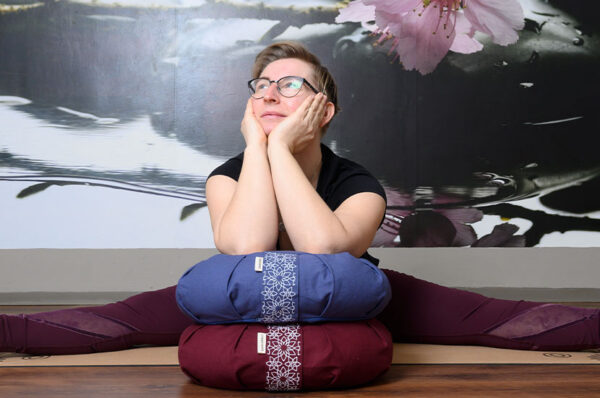
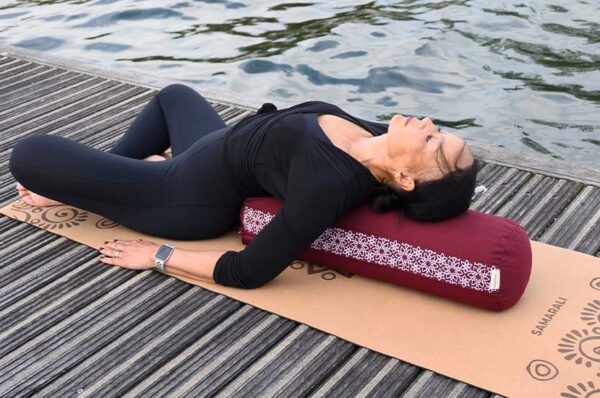
Movement-based practices like yoga nidra or walking meditation are also valid forms of meditation, and they are a natural complement to a yoga practice. If you are exploring meditation through the lens of yoga, having the right physical support matters. A dedicated meditation mat or a set of meditation cushions can help you settle into stillness more comfortably, especially during longer sits.
What are the benefits of a regular meditation practice?
A regular meditation practice can reduce stress, improve focus, support emotional regulation, enhance sleep quality, and increase overall feelings of well-being. These benefits are not just anecdotal; they reflect consistent findings across decades of research into contemplative practices and their effects on the mind and body.
Here is a closer look at what a consistent practice can offer:
- Stress reduction: Meditation lowers cortisol levels and activates the parasympathetic nervous system, helping your body physically recover from the effects of chronic stress.
- Improved focus and concentration: Training your attention through meditation directly strengthens your ability to concentrate during daily tasks, creative work, and decision-making.
- Emotional resilience: Regular practice creates a small but meaningful pause between stimulus and response, giving you more choice in how you react to difficult situations.
- Better sleep: Body scan and mindfulness meditation are particularly effective at calming the mental chatter that keeps people awake at night.
- Greater self-awareness: Over time, meditation helps you notice habitual thought patterns and emotional reactions, which is the first step toward changing them.
- Reduced anxiety: By practicing non-reactive awareness, many people find that anxious thoughts lose some of their grip and urgency.
The benefits compound with consistency. A five-minute session every day will serve you far better than a forty-minute session once a week. Think of it less as a special event and more as a daily habit, like brushing your teeth.
How long should you meditate as a beginner?
As a beginner, you should aim to meditate for five to ten minutes per day. This is enough time to experience the settling effect of a practice session without feeling overwhelmed or discouraged by the challenge of sustaining attention for longer periods. Starting short and staying consistent is far more valuable than starting long and giving up.
Many people make the mistake of assuming they need to meditate for twenty or thirty minutes to see any benefit. In reality, even brief daily sessions begin to reshape your relationship with your own mind over time. Once five to ten minutes feels comfortable and natural, you can gradually extend your sessions to fifteen or twenty minutes if you want to deepen the practice.
A few practical tips for building your routine as a beginner:
- Choose a consistent time: Morning meditation sets a calm tone for the day, but the best time is whichever time you will actually stick to.
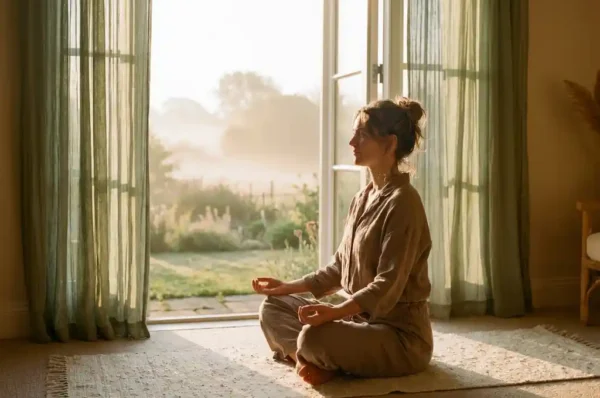
- Create a dedicated space: Having a specific spot for your practice, even a small corner with a cushion, signals to your mind that it is time to settle.
- Use a timer: Remove the temptation to check how much time is left by setting a gentle alarm before you begin.
- Be kind to yourself: Distraction is not failure. Every time you notice your mind has wandered and bring it back, you are doing exactly what the practice asks of you.
Ready to build a meditation space that truly supports your practice? At Samarali, you will find everything you need to sit with comfort and intention. Explore our meditation cushions and meditation mats for a grounded, comfortable seat, or browse our complete meditation sets if you want to set up your space in one go. The right support makes it easier to show up every day — and consistency, as you now know, is everything. Shop the meditation collection at Samarali now.
Frequently Asked Questions
What should I do if my mind won't stop racing during meditation?
A racing mind is completely normal, especially in the early stages of practice, and it does not mean you are meditating wrong. Instead of trying to force your thoughts to stop, simply acknowledge them without judgment and gently redirect your attention back to your chosen focal point, such as your breath. Some beginners find it helpful to mentally label thoughts as they arise (for example, ‘thinking’ or ‘planning’) before returning focus. Over time and with consistency, the mental noise naturally begins to settle.
Do I need to sit in a specific position to meditate?
There is no single correct posture for meditation, but the general principle is to find a position that is both comfortable and alert. You can sit cross-legged on a cushion, kneel on a meditation bench, or simply sit upright in a chair with your feet flat on the floor. The key is to keep your spine relatively straight so you stay awake and attentive, without creating unnecessary tension. If physical discomfort becomes a distraction, investing in a supportive meditation cushion or mat can make a meaningful difference, particularly during longer sessions.
Is it better to meditate in silence or with guided audio?
Both approaches are valid, and the best choice depends on your personal preference and where you are in your practice. Guided meditations are particularly helpful for beginners because they provide structure, prevent the mind from drifting too far, and teach technique without requiring prior knowledge. Silent meditation gives you more independence and can deepen self-awareness over time. Many practitioners start with guided sessions and gradually transition to silent sits as they grow more comfortable with the practice.
How long does it take to notice real benefits from meditation?
Many people report feeling calmer and more centered after just a single session, but lasting, structural benefits typically begin to emerge after two to four weeks of consistent daily practice. Research suggests that as little as eight weeks of regular meditation can produce measurable changes in stress levels, attention, and emotional regulation. The key variable is consistency rather than session length, so showing up for five minutes every day will yield results far faster than sporadic longer sessions.
Can meditation replace therapy or medical treatment for anxiety and stress?
Meditation is a powerful complementary tool, but it is not a substitute for professional mental health care or medical treatment. For many people, it works best as part of a broader wellness approach that may include therapy, lifestyle changes, and, where appropriate, medical support. If you are dealing with significant anxiety, depression, or trauma, it is important to consult a qualified healthcare professional before relying solely on meditation as an intervention. That said, meditation is widely used alongside clinical treatment and is recognized by many therapists as a valuable self-regulation practice.
What is the most common mistake beginners make when starting a meditation practice?
The most common mistake is treating distraction as failure and giving up too soon as a result. Many beginners expect meditation to feel peaceful and effortless right away, and when their mind wanders repeatedly, they conclude that they are ‘bad at meditating.’ In reality, noticing that your mind has wandered and returning your focus is the entire exercise. Another frequent mistake is starting with sessions that are too long, which can feel discouraging. Beginning with just five minutes and building gradually is a far more sustainable approach.
Can I meditate if I follow a specific religion, or is meditation tied to a particular belief system?
Meditation in its modern, secular form is not tied to any specific religion or belief system and is practiced by people of all faiths and none. While meditation has roots in Buddhist, Hindu, and other contemplative traditions, the core techniques, such as breath awareness and mindful observation, are entirely non-dogmatic and can be practiced independently of any spiritual framework. If you do follow a religious tradition, you may also find that certain forms of meditation, such as contemplative prayer or loving-kindness practice, align naturally with your existing beliefs.