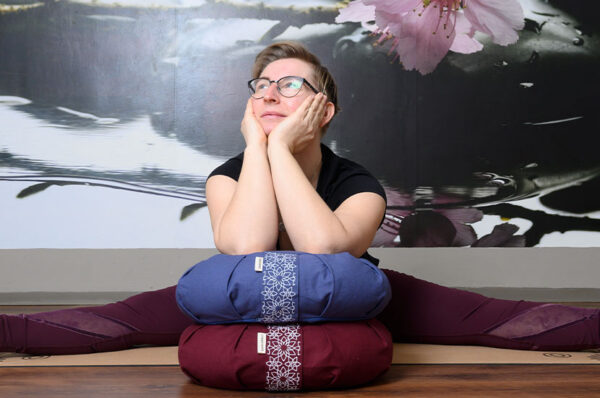



A zafu meditation cushion is the best all-round support for breathwork practice. Its rounded, firm shape elevates the hips above the knees, allowing the pelvis to tilt forward naturally so the spine lengthens without effort. For longer sessions or floor-based pranayama, a yoga bolster offers a broader, more reclined alternative. Below, we unpack the key factors that determine which cushion truly serves your breathwork practice.
What type of cushion works best for breathwork sessions?
A firm, round zafu cushion works best for most breathwork sessions. It raises the hips just enough to release tension in the lower back and hips, creating the stable, upright posture that deep, rhythmic breathing requires. A bolster works well when a more supported or reclined position suits the breathwork style being practiced.
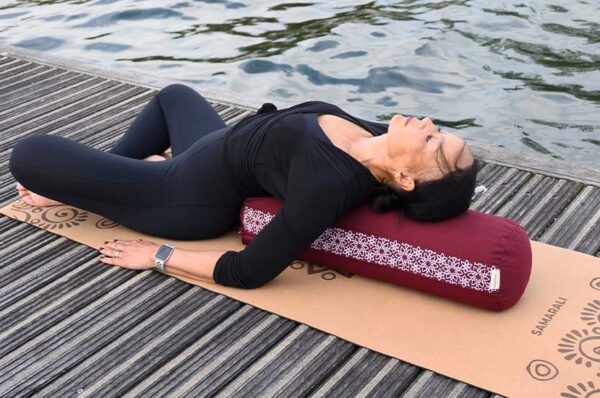
The right cushion depends on the style of breathwork you practice most. Seated pranayama techniques such as nadi shodhana or kapalabhati call for an upright spine, which a zafu supports directly. Restorative or body-centred breathwork practices, where you lie at a gentle incline, benefit more from a bolster placed beneath the spine or behind the knees.
A crescent-shaped zafu is worth considering if you tend to sit cross-legged rather than in a kneeling position. Its curved design cradles the sitting bones and reduces outward rotation pressure on the hips. Whatever shape you choose, the core requirement is the same: the cushion must hold its form throughout a session without compressing flat beneath your weight.
Why does hip elevation matter during breathwork?
Hip elevation matters during breathwork because it directly affects how freely the diaphragm can move. When the hips sit level with or below the knees, the pelvis tilts backward, the lumbar spine rounds, and the abdomen compresses. This compression restricts the downward movement of the diaphragm, which is the primary muscle responsible for deep, full breathing.
Raising the hips even a few centimetres shifts the pelvis into a slight anterior tilt. This small adjustment has a noticeable chain effect: the lower back curves naturally, the chest opens, the shoulders drop away from the ears, and the throat relaxes. Together, these changes create an unobstructed channel for breath to move freely from the belly through to the upper chest.
The practical impact becomes most obvious during extended breathwork sessions. Sitting unsupported on a flat surface causes fatigue in the back and hip flexors within minutes, pulling attention away from the breath. A well-chosen cushion removes that muscular effort entirely, allowing the body to stay relaxed and the mind to stay focused on the breath cycle for as long as the practice demands.
How firm should a breathwork cushion be?
A breathwork cushion should be firm enough that it does not compress more than a centimetre or two under your full body weight. If a cushion flattens significantly when you sit on it, it stops providing meaningful hip elevation and your posture gradually collapses as the session continues. Medium-to-firm density is the practical target for most practitioners.
Softness has its place, but not as the primary support layer. A very soft cushion may feel comfortable in the first few minutes, yet by the midpoint of a 20-minute breathwork session, the support has disappeared and the body is compensating with muscular effort. This is particularly relevant for breathwork compared to casual seated meditation, because controlled breathing patterns require the body to remain consistently open throughout.
If you are unsure whether a cushion is firm enough, a simple test is to press your palm flat onto the surface and push down firmly. The cushion should resist and spring back rather than yielding all the way to the floor. This resistance is what keeps the pelvis in the correct position for the duration of a practice.
Which sustainable cushion materials support long breathwork practice?
Buckwheat hulls and natural kapok fibre are the two most effective sustainable fill materials for breathwork cushions. Buckwheat hulls are dense, shift to match the shape of the sitting bones, and hold their position without collapsing. Kapok is a plant-based fibre that provides a slightly softer but still supportive feel and is naturally resistant to compression over time.
Both materials have practical advantages beyond their environmental credentials. Buckwheat hulls allow air to circulate through the cushion, which prevents heat build-up during longer sessions. Kapok is significantly lighter, making it a better choice if you travel with your practice or carry your cushion between spaces. Neither material requires synthetic additives to maintain its structure, which aligns well with the values many breathwork practitioners bring to their wellness routines.
The outer cover material matters just as much as the fill. Organic cotton and hemp are the most sustainable choices for cushion covers. Organic cotton is soft against the skin, breathable, and durable through repeated washing. Hemp is even more hardwearing and becomes softer with use. Both fabrics are free from the synthetic coatings and chemical treatments found in conventional textiles, making them better choices for a practice built around clean, conscious breathing.
At Samarali, our meditation cushions are made with exactly these principles in mind, using natural materials and ethical manufacturing so that your support for practice is as mindful as the practice itself. Pairing a quality cushion with a meditation mat beneath it adds an extra layer of grounding and insulation from cold floors, which helps the body stay warm and relaxed during slower, deeper breathwork techniques.
Ready to build a breathwork setup that truly supports your practice? At Samarali, you will find everything you need, from our carefully crafted meditation cushions and meditation mats to our versatile yoga bolster — all made with natural materials and designed to keep you grounded, open, and comfortable for every breath. Explore the full meditation sets range and find the combination that fits your practice. Shop now and breathe easier from your very next session.
Frequently Asked Questions
How do I know if my current cushion is the right height for my body?
A good rule of thumb is that when seated on your cushion, your knees should rest lower than your hip bones, and your pelvis should tilt slightly forward without any conscious effort. If you notice your lower back rounding, your knees rising above your hips, or tension building in your hip flexors within the first few minutes, your cushion is likely too low. Try adding a folded blanket beneath your cushion to test whether extra height immediately improves your posture and breathing ease before investing in a taller or firmer option.
Can I use a regular pillow or sofa cushion for breathwork instead of a dedicated zafu?
While a regular pillow or sofa cushion can work as a temporary solution, they are generally too soft and unstable to support extended breathwork sessions effectively. Most household cushions compress quickly under body weight, meaning your posture will gradually collapse mid-session without you noticing — exactly the kind of subtle distraction that disrupts breath control. A dedicated zafu or firm meditation cushion is a worthwhile investment if breathwork is a regular part of your routine, as consistent postural support directly translates to more effective and comfortable practice.
What is the best sitting position to pair with a zafu for breathwork?
The most commonly recommended position is Sukhasana (easy cross-legged pose), where the zafu raises the hips enough to allow both knees to relax toward the floor without strain. If full cross-legged sitting is uncomfortable, a kneeling position (Seiza) with the zafu placed vertically between the thighs and calves is an excellent alternative that maintains the same beneficial pelvic tilt. The key principle regardless of position is that your sit bones should feel evenly grounded on the cushion surface, with no leaning or twisting to one side.
How do I care for and maintain a buckwheat or kapok-filled cushion over time?
Most quality meditation cushions come with a removable outer cover that can be machine-washed regularly — aim to wash it every two to four weeks if you practice daily, as breathwork sessions can cause the cover to absorb body heat and moisture. The inner hull or fibre insert should not be machine-washed; instead, air it out in indirect sunlight periodically to keep it fresh and prevent moisture build-up. Buckwheat hulls can be topped up or replaced entirely when the cushion begins to lose height, making it a long-lasting and sustainable choice compared to synthetic-fill alternatives.
Is a zafu cushion suitable for beginners who are just starting breathwork practice?
Yes, a zafu is an ideal starting point for beginners precisely because it removes one of the most common early obstacles — physical discomfort and postural fatigue — so you can focus entirely on learning the breath techniques. Beginners often underestimate how quickly an unsupported seated position becomes distracting, especially during breath-retention or extended inhale-exhale cycles that require sustained concentration. Starting with proper cushion support builds good postural habits from the beginning and makes it far easier to extend session length as your practice develops.
Can I use a breathwork cushion for regular seated meditation as well, or is it too specialised?
A zafu cushion is equally well-suited to regular seated meditation — in fact, it was originally designed for Zen meditation practice long before breathwork became a standalone discipline. The same qualities that make it effective for breathwork (firm support, hip elevation, and postural alignment) are exactly what seated mindfulness and concentration meditation require. Investing in a quality zafu therefore gives you a versatile, multi-purpose tool that supports your entire seated practice, whether you are working with the breath, a mantra, a visualisation, or open awareness.
What should I do if I experience lower back pain even when sitting on a cushion during breathwork?
Persistent lower back pain while seated usually signals one of two things: either the cushion is still not providing enough height for your particular hip flexibility, or there is underlying tightness in the hip flexors and hamstrings that needs to be addressed with preparatory stretching before practice. Try sitting closer to the front edge of the cushion rather than the centre, as this encourages a more pronounced forward pelvic tilt. If discomfort continues, switching to a supported reclined position using a bolster beneath the spine is a perfectly valid approach that allows effective breathwork without placing any load on the lower back.