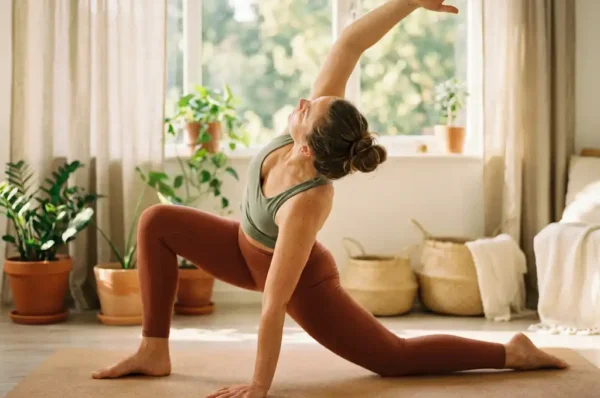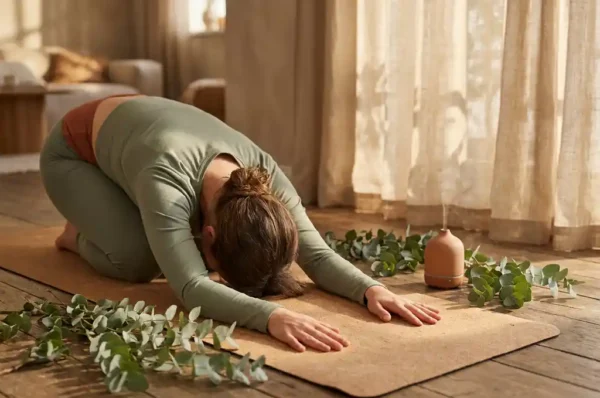



Your yoga mat choice depends heavily on where you practice most often. Home practice allows for thicker, more comfortable mats since portability isn’t a concern, while studio practice requires lighter, more portable options. The best mat balances comfort, grip, durability, and convenience based on your specific practice environment and frequency.
What makes a yoga mat suitable for home practice versus studio use?
Home and studio environments have fundamentally different requirements that affect your mat choice:
- Home practice mats can prioritise comfort and cushioning since you don’t need to transport them, allowing for thicker options (6–8 mm) that provide extra joint support
- Studio mats must balance performance with portability, requiring lighter weights and moderate thickness for easy transport
- Environmental consistency at home means you can choose based purely on comfort preferences, while studios present varying floor surfaces, temperatures, and humidity levels
- Storage flexibility at home allows permanent unrolling or dedicated space without weight concerns, unlike studio practice where compact carrying matters
- Practice frequency influences investment priorities—daily home practitioners benefit from premium comfort features, while occasional studio-goers need durability and easy maintenance
Understanding your primary practice location helps determine whether to invest in maximum comfort or prioritise versatility and portability for your yoga journey.
How does yoga mat thickness affect your practice in different settings?
Mat thickness significantly impacts your practice comfort and stability across different environments:
- Standard mats (4–5 mm) offer the best balance for most practitioners, providing adequate cushioning while maintaining floor connection for balance poses
- Travel mats (1–3 mm) excel for studio portability but offer minimal joint protection, making you feel every floor imperfection during longer holds
- Thick mats (6–8 mm) provide excellent cushioning for home practice, ideal for yin yoga or meditation, though they reduce stability in standing balance poses
- Extra-thick mats (10 mm+) suit home-only practice, perfect for restorative yoga and joint-sensitive practitioners, but too heavy for regular transport
- Practice style compatibility varies—dynamic practices like vinyasa benefit from thinner mats for stability, while gentle practices work beautifully with thicker cushioning
Choosing the right thickness involves matching your yoga style, joint sensitivity, and transport needs to create the optimal foundation for your practice.
Which yoga mat materials work best for home versus studio environments?
Different materials suit specific practice environments and personal values:
- Natural rubber mats provide excellent grip and durability for both home and studio use, though they’re heavier than synthetic alternatives
- PVC mats offer consistent performance and easy cleaning, making them practical for studio use due to lightweight design and reliable grip, despite environmental concerns
- TPE (thermoplastic elastomer) mats bridge performance and sustainability, offering lighter weight than rubber with good grip and environmental consciousness
- Cork mats naturally resist bacteria and provide moisture-activated grip, excellent for hot yoga or studio environments where hygiene matters
- Organic cotton mats appeal to environmentally conscious practitioners for gentle home practices but lack grip for dynamic studio sessions
- Maintenance requirements vary—natural materials need more care but offer better environmental credentials, while synthetic options provide consistent performance with minimal upkeep
Material selection should align with your environmental values, maintenance preferences, and the specific demands of your practice environment to ensure long-term satisfaction.
What should you prioritise when choosing between portability and performance?
Balancing portability and performance requires honest assessment of your practice habits:
- Multi-location practitioners need mats that travel well without sacrificing comfort, typically choosing 4–5 mm thickness with moderate weight (1–1.5 kg)
- Transport method influences weight tolerance—walking or cycling to class makes mats over 2 kg cumbersome for regular use
- Folding mats offer space-saving advantages over rolled mats, fitting easily in bags despite potential thickness compromises and permanent creases
- Carrying solutions like yoga mat bags, backpack-style carriers, or built-in handles reduce the burden of heavier, more comfortable options
- Multi-purpose functionality adds value for travellers—mats suitable for general exercise, stretching, or meditation beyond yoga practice
- Practice priorities determine investment strategy—comfort-focused practitioners might invest in premium home mats and use studio rentals, while studio regulars prioritise grip and portability
The key lies in honestly evaluating whether you value maximum comfort or need practical portability, then finding solutions that support your specific practice lifestyle without compromising your yoga experience.
Your ideal yoga mat depends on an honest assessment of your practice habits, transport needs, and personal values. Whether you prioritise sustainable materials, maximum comfort, or travel convenience, understanding these key differences helps you choose equipment that supports your practice goals. At Samarali, we create sustainable yoga equipment using organic cotton and plastic-free packaging, supporting both your practice and environmental values.
Browse our selection of thoughtfully crafted collection of sustainable yoga essentials—designed for mindful movement and made with respect for the planet.