


If you have ever walked out of a power yoga class with shaking arms and a burning core, you have probably asked yourself: is yoga enough to build muscle, or are you leaving real gains on the table by skipping the gym? It is one of the most debated questions in fitness right now. The honest answer is nuanced: yoga can replace strength training for muscle building to some extent, but how well it works depends entirely on your specific goals. Yoga builds muscle through bodyweight resistance and isometric holds, developing functional strength and genuine muscle tone. Traditional weight training, however, offers more targeted muscle hypertrophy and far greater options for progressive overload. For most fitness-conscious adults, the most effective and sustainable approach combines both methods to cover what neither can fully deliver alone.
Can yoga actually build muscle like traditional strength training?
Yoga does build muscle, but through different mechanisms than traditional weight training. Understanding how yoga qualifies as strength training helps clarify both its real potential and its limitations:
- Isometric holds – Poses like Plank, Warrior III, and arm balances create sustained muscle contractions that stimulate growth through time under tension
- Bodyweight resistance – Your muscles work against gravity and your own body weight, providing natural resistance that builds strength progressively
- Multi-muscle activation – Yoga poses engage multiple muscle groups simultaneously, creating functional strength patterns that translate to daily activities
- Progressive complexity – Advancement comes through more challenging poses, longer holds, or dynamic movements rather than adding external weight
These mechanisms work together to create lean muscle development and improved muscle endurance. Yoga excels at building functional strength and often-neglected stabilizing muscles, and consistent practice can maintain functional muscle mass effectively for most adults.
Where yoga reaches its ceiling is progressive overload. Without the ability to incrementally add external load, it becomes increasingly difficult to stimulate the level of hypertrophy that heavy resistance training produces. For those transitioning away from the gym, adequate protein intake, practice frequency, and the inclusion of strength-intensive styles like Ashtanga or Power Yoga become the decisive variables in how well yoga preserves muscle mass built through years of lifting.
What results can you realistically expect and when?
For gym-goers accustomed to tracking progressive overload and one-rep maxes, it helps to have equivalent benchmarks for yoga progress. Here is a realistic three-stage framework based on consistent strength-focused practice at three or more sessions per week:
- At 4 weeks: Expect improved muscle endurance and reduced soreness in stabilizing muscles, particularly in the core and shoulders. Foundational poses like Plank and Chaturanga will feel more controlled and deliberate. This is when body awareness begins to sharpen — a signal that the neuromuscular adaptations underlying strength development are already underway.
- At 8 to 12 weeks: Visible improvements in functional strength become apparent. You will hold challenging poses longer, notice measurable gains in balance and proprioception, and begin to see early signs of muscle tone — particularly in the arms, core, and legs. Progressing toward poses like Crow Pose or extended Side Plank is a reliable indicator that upper body and core strength are developing meaningfully.
- At 3 to 6 months: Significant strength in bodyweight movements is achievable, including the capacity to attempt arm balances and advanced inversions. Muscle maintenance comparable to light resistance training is well within reach. Hypertrophy beyond maintenance levels, however, will require either supplementing with weighted resistance or consistently committing to the most physically demanding yoga styles.
These milestones are not guarantees — individual results depend on starting fitness level, practice consistency, and nutrition. But they provide a concrete framework for evaluating progress in terms that translate from a gym mindset to a yoga context.
It is also worth being transparent about the current state of the research. Large-scale clinical trials directly comparing yoga and weight training for hypertrophy are limited. The available evidence — including studies on isometric training, bodyweight resistance, and time-under-tension protocols — consistently supports yoga’s capacity to build and maintain functional muscle. Fitness professionals who work across both modalities report strong outcomes for strength maintenance and endurance development, particularly in strength-focused styles. This limitation is not a reason to dismiss yoga’s potential; it is the context that helps you set realistic expectations.
What types of yoga are most effective for building strength and muscle?
The most effective yoga styles for muscle building share common characteristics: dynamic movement sequences, challenging isometric holds, and progressive intensity that forces the body to adapt. If you are coming to yoga from the gym, these styles will feel the most physically demanding and translate most directly into measurable strength gains:
- Power yoga – Builds heat and intensity through athletic sequences with a strong emphasis on strength-building poses
- Ashtanga yoga – Follows a set sequence that becomes progressively more challenging, with jumping transitions that add explosive power training
- Vinyasa flow – Combines flowing movements with challenging holds, creating both strength and cardiovascular benefits through varied sequences
- Hot yoga variations – The heated environment increases muscle pliability while maintaining challenging poses for extended periods
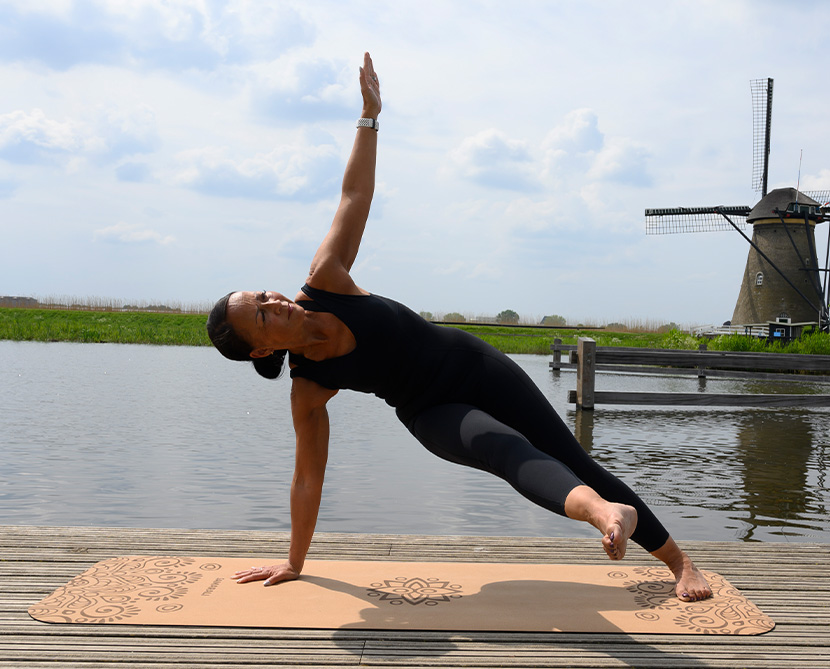
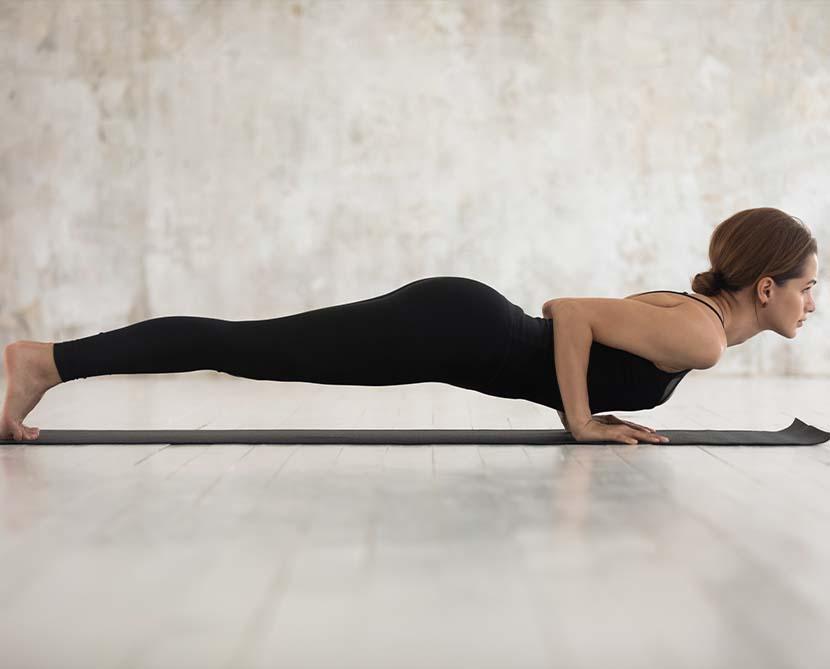
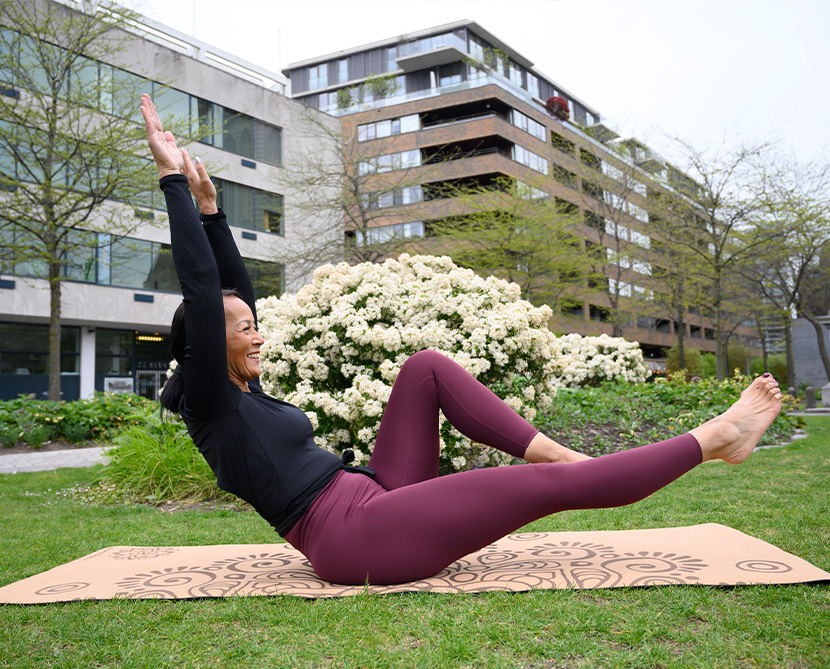
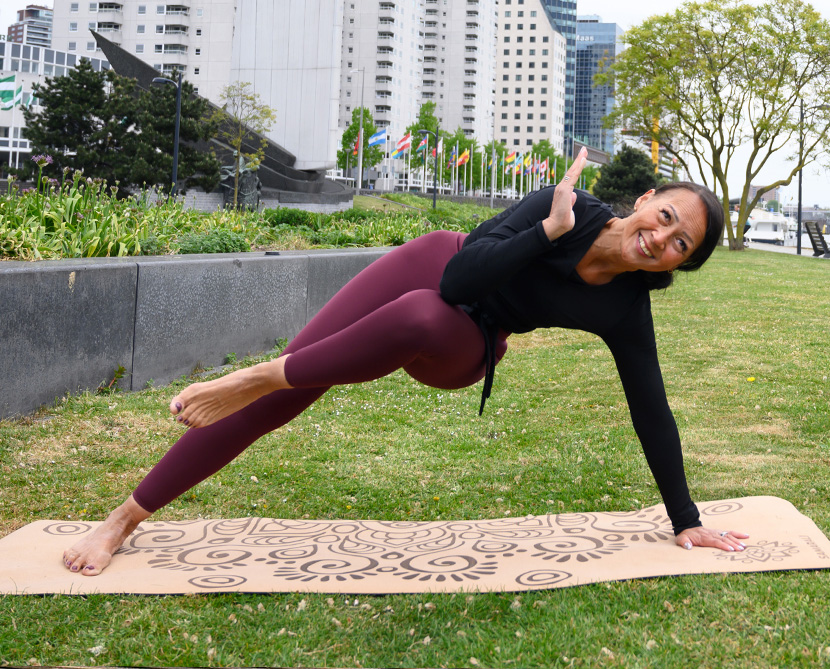
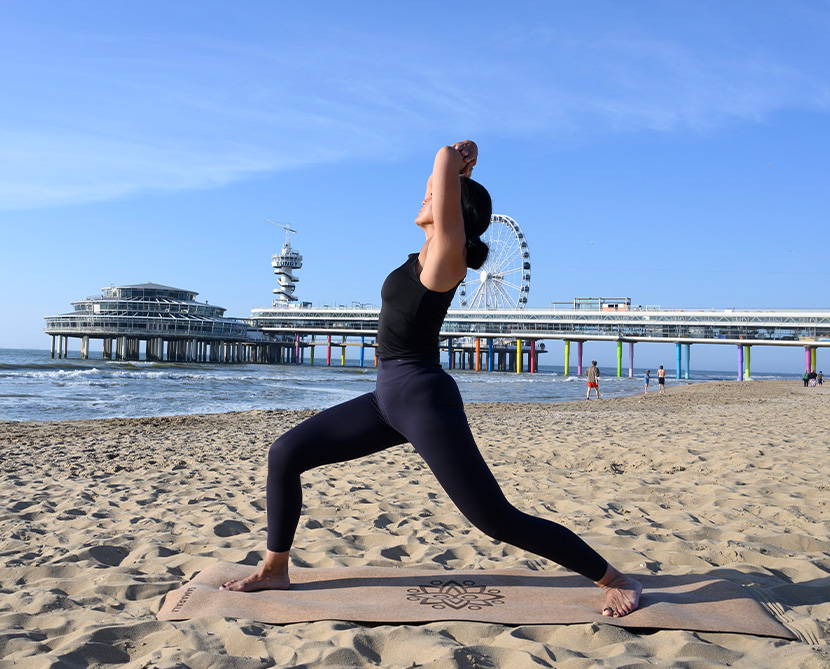
Key muscle-building poses include Chaturanga Dandasana for arms and chest, Warrior III for legs and balance, Crow Pose for arm strength, Boat Pose for core engagement, and Side Plank variations for obliques and shoulders.
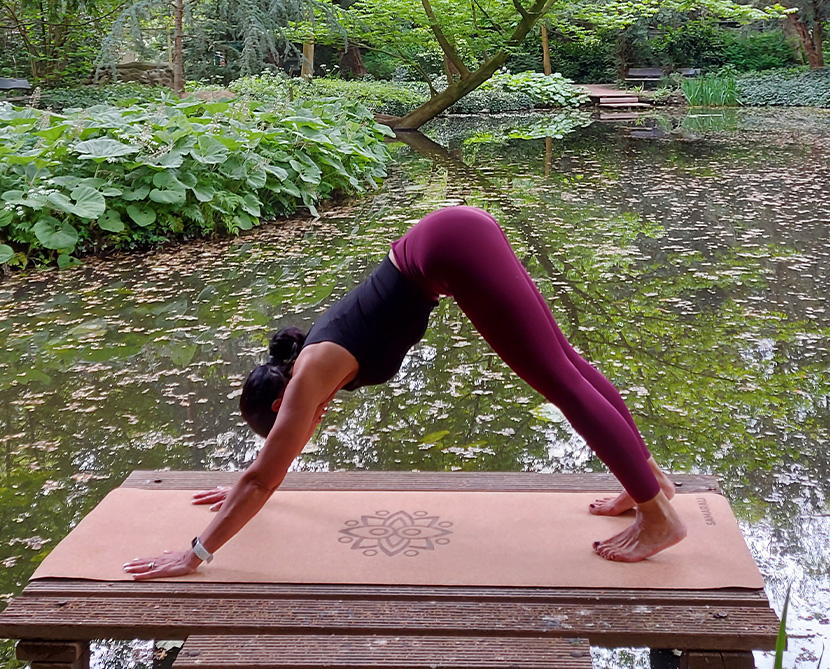
If you are new to yoga and coming from a weight training background, resist the urge to start with advanced arm balances. Begin with foundational poses — Warrior I, Warrior II, Downward Dog, and Plank — to build body awareness and baseline flexibility. Commit to four to eight weeks of consistent foundational practice before progressing, starting with two to three sessions per week alongside existing training. A stable, non-slip natural rubber yoga mat helps you build confidence in balance-dependent poses safely. These styles and poses work together to create comprehensive muscle development while maintaining the flexibility and mindfulness benefits that distinguish yoga from conventional strength training.
Transitioning from the gym to yoga: what to expect in the first 12 weeks
For anyone with a serious gym background, reducing weight training in favor of yoga can feel counterintuitive — even threatening. If your identity is tied to lifting numbers, progressive overload, and visible hypertrophy, stepping onto a yoga mat for the first time can genuinely feel like a step backward. It is not. It is an expansion of your fitness toolkit, and understanding that distinction early makes the transition far more productive and far less frustrating.
Addressing the fears gym-goers bring to yoga
The most common concern is losing muscle mass and strength gains. This fear is legitimate, but it is manageable with the right approach. Strength-focused styles like Power Yoga and Ashtanga place real demands on the muscles you have built. If you can hold a Chaturanga for 30 seconds with proper form, or progress to Crow Pose within your first few months, your upper body strength is being maintained. These poses function as reliable benchmarks, translating gym-built strength into yoga-specific performance markers you can track over time.
The second most common barrier is the flexibility myth: the belief that you need to already be flexible to do yoga. This gets it exactly backward. Yoga is not a prerequisite for flexibility — it is the practice that builds it. Gym-goers with tight hips, limited shoulder mobility, and stiff hamstrings are precisely the people who benefit most from starting yoga. Your strength is an asset from day one; your flexibility develops with consistent practice.
What to expect physically in the first 12 weeks
In the first four weeks, expect muscle soreness in places the gym rarely reaches — deep stabilizers, the muscles around your shoulder blades, hip rotators, and the intrinsic core. This is not a sign of weakness; it is evidence that yoga is targeting movement patterns your weight training left underdeveloped.
By weeks eight to twelve, functional strength improvements become visible: better posture, more controlled movement, and a noticeable increase in balance and body awareness. These changes may not show up on a barbell, but they represent genuine physical adaptation. The practical recommendation is to begin with two yoga sessions per week alongside your existing training rather than replacing it immediately. Use strength-focused styles — Power Yoga or Ashtanga — to ensure the sessions feel physically meaningful rather than purely restorative. After four to eight weeks, you will have enough firsthand data to decide how to adjust the balance between the two practices based on how your body is responding.
How does muscle building through yoga compare to traditional weight training?
The fundamental differences between yoga and weight training create distinct advantages and limitations for each approach. One often-overlooked distinction is the type of muscle contraction each method emphasizes. Yoga primarily relies on eccentric contractions — muscles lengthening under load — producing a lean, elongated physique while improving flexibility. Traditional weight training emphasizes concentric contractions — muscles shortening under load — generating greater force output and muscle bulk. This difference in contraction type is a key reason the two methods produce visibly different body compositions, and it is central to understanding whether yoga counts as strength training for your specific goals.
- Progressive overload potential – Weight training allows easy resistance increases by adding weight; yoga progression relies on pose complexity and hold duration
- Muscle targeting specificity – Weights enable isolated muscle work for addressing weaknesses; yoga emphasizes integrated movement patterns
- Functional strength development – Yoga builds real-world movement patterns and stabilizing muscles; weights focus on maximum force production
- Recovery and sustainability – Yoga includes restorative elements that allow more frequent practice; weight training typically requires more rest between sessions
- Injury risk and joint health – Yoga promotes joint mobility alongside strength; weight training carries a higher injury risk but offers greater strength gains

Yoga also trains the body to move in multiple planes — twisting, balancing, hinging, and arcing — mirroring real-life movements like lifting groceries, bending to pick something up, or rotating to reach overhead. Many weight training exercises operate on a single plane of motion, building isolated strength that may not transfer as directly to these everyday activities. For functional strength and long-term physical resilience, many fitness professionals consider yoga and weight training more complementary than competitive.
The comparison also extends beyond aesthetics and hypertrophy in ways that matter increasingly as you move through your thirties and forties. Both yoga and weight training contribute to bone health through mechanical loading — the physical stress placed on bones during resistance-based movement stimulates bone remodeling and helps maintain density over time. Weight training generally produces higher mechanical load, making it more effective for bone density preservation. Yoga contributes meaningfully through weight-bearing poses like Warrior sequences, Plank, and standing balances. Beyond bone health, resistance-based movement — whether from weights or bodyweight — supports metabolic efficiency and helps preserve lean muscle mass, both of which have long-term implications for energy, body composition, and healthy aging. This is another reason the hybrid approach makes practical sense: combining both methods addresses muscle, bone, metabolic, and mental health simultaneously, rather than optimizing for any single dimension of fitness.
Should you combine yoga with strength training or choose one approach?
The right choice depends on your specific goals, time availability, and personal preferences. For those skeptical about yoga’s muscle-building potential, the evidence is clear: upper body and core strength built through poses like Chaturanga Dandasana, handstand progressions, and Crow Pose rivals advanced bodyweight training benchmarks. If you have existing muscle mass from weight training, you will find yoga highly effective for maintaining that strength, improving mobility, and reducing injury risk. A practical starting point is three days of weight training combined with two days of yoga, which supports both hypertrophy goals and long-term physical resilience.
Beyond the physical, yoga offers benefits that weight training cannot fully replicate. It activates the parasympathetic nervous system to reduce cortisol and support recovery, is consistently associated with measurable reductions in anxiety and improvements in mood, and cultivates the mind-body awareness that makes fitness feel intentional rather than obligatory. These benefits make yoga a powerful complement regardless of whether your primary goal is muscle building or overall well-being.
- Combination benefits – Using both provides comprehensive fitness, addressing strength, flexibility, recovery, and functional movement patterns
- Scheduling considerations – Weight training works best on high-energy days; yoga serves well for active recovery and flexibility work
- Goal-specific emphasis – Prioritize weight training for muscle size and maximum strength, or emphasize yoga for functional fitness and stress reduction
- Recovery integration – Yoga sessions can enhance recovery from intense weight training while maintaining movement quality
- Long-term sustainability – Consider which approach you are more likely to maintain consistently over years rather than months
A practical weekly schedule might alternate weight-training days with yoga sessions, allowing each method to complement the other while preventing overuse injuries. Ultimately, the most effective fitness routine is the one you genuinely enjoy and can commit to consistently over the years, not just months. Fitness professionals consistently emphasize that personal enjoyment and intrinsic motivation are among the strongest predictors of long-term results, regardless of whether you choose yoga, weight training, or a thoughtful combination of both.
Frequently asked questions about yoga and muscle building
Can yoga build muscle without weights?
Yes, yoga can build muscle without weights by using your own bodyweight as resistance. Poses like Chaturanga Dandasana, Crow Pose, and Warrior III place significant demand on the arms, core, and legs through isometric holds and eccentric contractions. The key is consistency and progression — advancing to more challenging poses and longer holds provides the stimulus needed for ongoing muscle development. For most adults, yoga as strength training without weights is most effective for building functional muscle and endurance rather than maximum hypertrophy.
How long does it take to build muscle with yoga?
With consistent practice of three or more sessions per week using strength-focused styles, most people notice improved muscle endurance and stronger core and shoulder engagement within four to six weeks. Visible muscle tone — particularly in the arms, core, and legs — typically becomes apparent between eight and twelve weeks. Meaningful muscle maintenance comparable to light resistance training develops over three to six months of dedicated practice. Significant hypertrophy beyond maintenance levels generally requires supplementing with weighted resistance, or committing to the most physically demanding styles like Ashtanga or Power Yoga over six or more months.
Is yoga enough exercise if your goal is muscle growth?
Yoga is enough to build and maintain functional muscle, but it has real limitations for those whose primary goal is maximum hypertrophy. Because yoga relies on bodyweight resistance and pose complexity rather than incrementally increasing external load, it becomes harder to drive the progressive overload needed for significant muscle size gains over time. If muscle growth is your primary objective, yoga alone is unlikely to fully satisfy that goal — but yoga works well alongside weight training to support recovery, mobility, and functional strength development.
Can yoga replace the gym entirely?
For some people with moderate fitness goals — particularly those prioritizing functional strength, flexibility, stress reduction, and long-term physical resilience — yoga can replace the gym entirely and deliver genuinely satisfying results. For those with specific hypertrophy goals or competitive strength targets, a full replacement is less practical. The hybrid approach of combining yoga with strength training tends to produce the most comprehensive outcomes, covering what neither method can fully deliver alone. Whether yoga can replace the gym depends entirely on what you are asking the gym to do for you.
Is yoga good for muscle recovery after weight training?
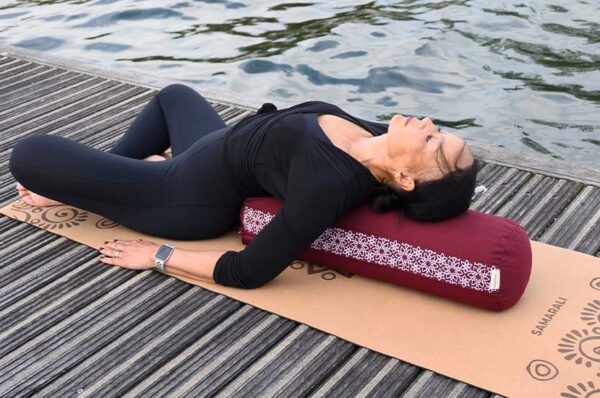
Yes, yoga is particularly well-suited for muscle recovery after weight training. Gentle and restorative yoga styles activate the parasympathetic nervous system, which helps reduce cortisol levels and shift the body into a recovery state. The stretching and mobility work embedded in yoga practice helps reduce delayed onset muscle soreness and restore range of motion in muscles that tighten under heavy load. Many fitness professionals recommend incorporating one to two yoga sessions per week specifically as active recovery days within a weight training program, rather than complete rest days.
Can beginners build muscle with yoga?
Beginners can absolutely build muscle with yoga, and in some respects the early gains are more pronounced because the body is adapting to movement patterns it has rarely encountered. Foundational poses like Plank, Downward Dog, Warrior I, and Warrior II engage major muscle groups effectively even at a beginner level. Starting with two to three sessions per week and focusing on proper form before attempting advanced poses is the most effective approach. Over the first eight to twelve weeks, noticeable improvements in strength, stability, and muscle tone are realistic and well-supported by consistent practice.
Building a sustainable yoga practice is easier with equipment that supports your progress and aligns with your values. A natural rubber yoga mat provides the grip and stability essential for strength-building poses like Crow Pose and Chaturanga Dandasana, while supportive accessories like yoga bolsters enhance both active sessions and the restorative recovery that makes a hybrid routine sustainable long term. At Samarali, we craft our yoga accessories from organic cotton without plastic packaging, supporting both your practice and the planet’s well-being.
Browse our full collection of thoughtfully crafted sustainable yoga essentials, designed to support every stage of your strength and mindfulness practice, and made with respect for the planet.