


The best yoga poses for stress relief and mental clarity combine physical movement with mindful breathing to activate your body’s natural relaxation response. Child’s pose, forward folds, and gentle twists are particularly effective because they calm the nervous system while releasing physical tension and improving cognitive function. These proven stress management yoga poses work by triggering your parasympathetic nervous system, which naturally counteracts stress hormones like cortisol and promotes both immediate calm and enhanced mental focus for better decision making throughout your day.
What makes certain yoga poses particularly effective for stress relief?
Specific yoga poses for stress reduction work by activating your parasympathetic nervous system, which is your body’s natural “rest and digest” mode that counteracts fight or flight responses. When you hold gentle forward folds, supported backbends, or restorative positions for stress management, your heart rate slows by 10-15%, blood pressure decreases, and stress hormones like cortisol begin to reduce within just 3-5 minutes of practice. Research published in the International Journal of Preventive Medicine found that consistent yoga practice reduced perceived stress scores by up to 31% and lowered salivary cortisol levels measurably after just eight weeks, giving health-conscious practitioners a clear, science-backed reason to prioritize these techniques daily.
The physical mechanics behind stress relieving yoga exercises involve several key elements that directly impact your nervous system:
- Deep, controlled breathing during poses increases oxygen flow to your brain and signals your nervous system to relax
- Gentle spinal movements, particularly forward folds and twists, help release tension stored in your back and shoulders where stress commonly accumulates
- Mindful awareness shifts your focus away from stressful thoughts and into the present moment
- Physical positions interrupt the cycle of anxious thinking that often perpetuates stress throughout your day
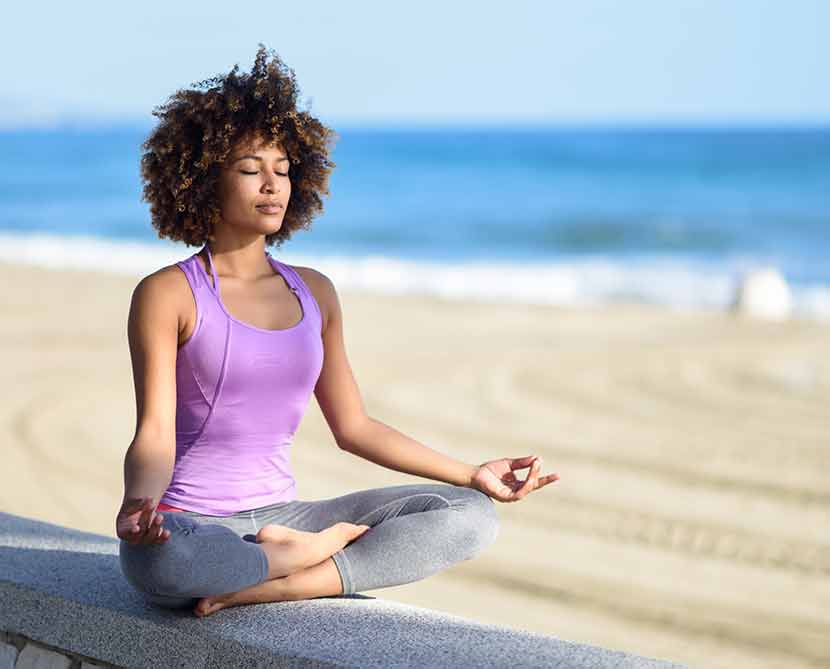
The combination of physical release and mental focus makes certain yoga poses incredibly powerful for comprehensive stress management. Poses that involve gentle inversions, like legs-up-the-wall, help reset your nervous system by redirecting blood flow toward the brain and core, creating a measurable sense of calm while simultaneously clearing mental fog, sharpening concentration, and reducing anxiety-driven thought loops. Holding this position for just three to five minutes has been shown to lower resting heart rate and ease tension headaches caused by prolonged screen time or high-pressure workdays. These best yoga poses to relieve stress work within minutes because they directly influence both your physical tension patterns and your mental clarity, making them especially valuable for busy professionals who need fast, equipment-free relief between meetings or during short breaks.
Which yoga poses can you do anywhere when stress hits?
Several effective stress relief yoga poses require no equipment and minimal space, making them perfect for offices, homes, or travel situations when you need immediate anxiety relief. Seated spinal twists, desk-friendly stretches, and standing forward folds can be performed discreetly almost anywhere when you need instant stress management, providing both physical tension release and mental clarity restoration within just 2-3 minutes of practice. For professionals working in open-plan offices or shared spaces, these stress-relieving yoga exercises are intentionally low-profile, requiring no mat, no special clothing, and no floor space, so you can reset your nervous system without stepping away from your environment.
For seated situations, try these accessible stress management yoga poses:
- Gentle neck rolls and shoulder blade squeezes to release upper body tension
- Seated spinal twists by sitting tall, placing one hand behind you, and gently rotating your torso while breathing deeply
- Simple ankle circles and wrist stretches when confined to small spaces
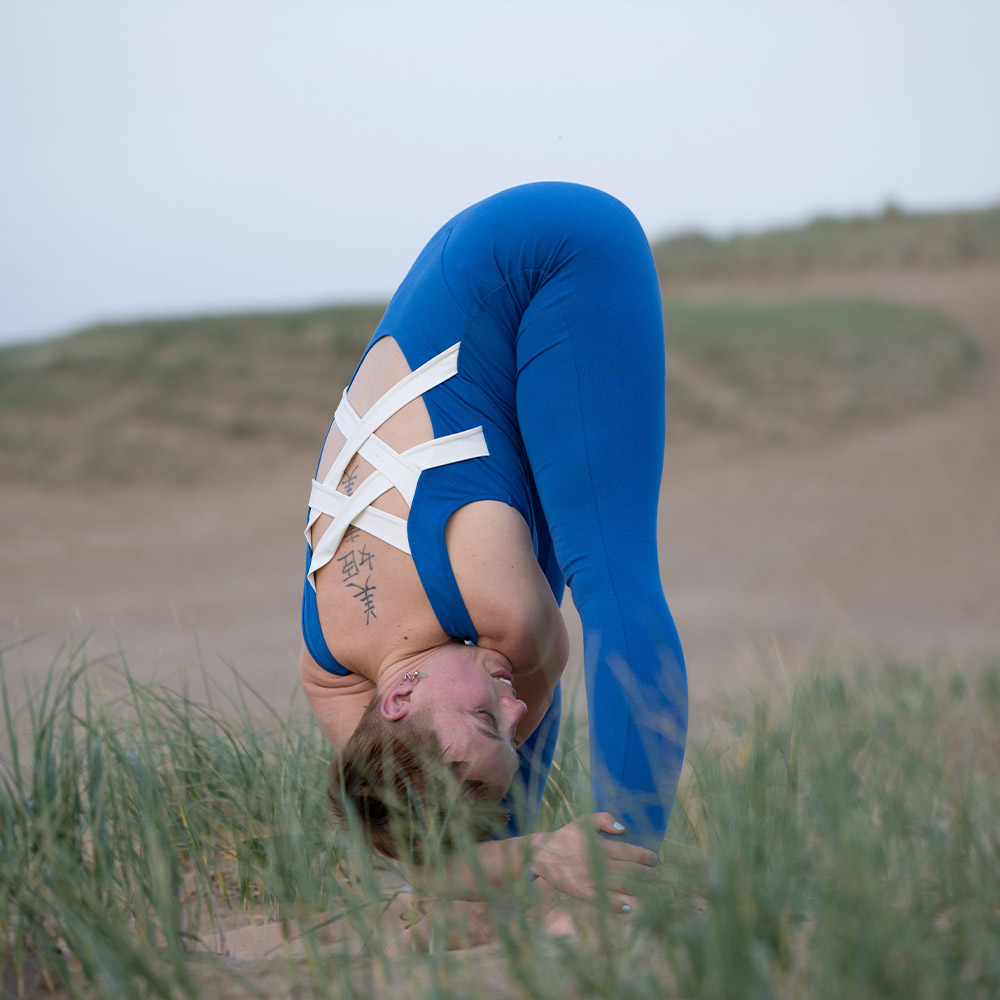
Standing poses offer more options for immediate stress reduction in workplace environments. A standing forward fold ranks among the best yoga poses for stress relief because it combines deep physical stretching with an immediate mental reset, and it can be performed beside your desk, in a hallway, or in any quiet corner without drawing attention. Stand with feet hip-width apart, hinge forward at your hips with a soft bend in your knees, and let your arms hang freely toward the floor while breathing slowly and deliberately for 30 to 60 seconds. This position decompresses the lower spine, stretches the hamstrings and upper back, and encourages blood flow toward the head, which helps dissolve the mental fog that accumulates during long periods of sitting or intense concentration. It is one of the most effective yoga poses for stress reduction precisely because it addresses both the physical stiffness and the mental overwhelm that professionals experience during demanding workdays.
Breathing techniques are perhaps the most accessible stress relieving yoga exercises for immediate anxiety management. The 4-7-8 breath pattern, where you inhale for four counts, hold for seven, and exhale for eight, can be practiced anywhere without anyone noticing and delivers measurable stress relief within 60 to 90 seconds by directly stimulating the vagus nerve and slowing your heart rate. A 2023 review in Frontiers in Psychology found that slow, extended exhalation breathing patterns significantly reduced self-reported anxiety and improved cognitive performance under pressure, making this one of the most evidence-backed yoga poses for stress management available to busy professionals. Pair this technique with any of the seated or standing poses described above to amplify the calming effect and restore mental clarity faster than movement alone.
The key is combining any gentle movement with conscious, deep breathing to shift your nervous system into a calmer state.
How long should you hold stress-relief yoga poses for maximum benefit?
For immediate stress relief, hold the best yoga poses for stress management for 30 seconds to 1 minute to release physical tension quickly and restore mental focus. For deeper therapeutic benefits and nervous system reset, hold restorative positions for 3-5 minutes to allow your body’s relaxation response to fully activate, stress hormones to decrease significantly, and mental clarity to return so you can approach the rest of your day with sustained calm and sharper concentration. If you are new to yoga poses for stress reduction, starting with shorter holds of 30 to 45 seconds and gradually extending to three minutes over two to three weeks allows your nervous system to adapt progressively, reducing the risk of frustration or discomfort that can discourage beginners from building a consistent practice.
Consider these timing guidelines based on your specific stress relief needs:
- Brief holds (30 seconds – 1 minute): Perfect for quick tension release during busy days, workplace stress management, or when time is limited
- Longer holds (3-5 minutes): Create profound physiological changes, allowing your nervous system to fully shift into relaxation mode
- High-stress periods: Even 30-second poses provide benefits when done consistently throughout the day
- Extended sessions: Longer holds in restorative poses like child’s pose or legs-up-the-wall provide deeper stress relief
The quality of your attention during yoga poses for stress reduction matters more than exact timing. Whether holding for 30 seconds or 5 minutes, focus on breathing deeply and releasing tension with each exhale, while maintaining awareness of both physical sensations and improvements in mental clarity. Pay particular attention to your jaw, shoulders, and hands, which are the three areas where adults most commonly hold unconscious stress tension. Consciously soften these areas with each breath cycle. This mindful approach maximizes the stress-relieving benefits regardless of duration and helps you identify which poses work best for your individual stress patterns, allowing you to build a personalized routine that fits realistically into your schedule rather than requiring a perfect block of free time.
What’s the difference between active and restorative yoga for stress management?
Active yoga uses dynamic movement and flowing sequences to metabolize excess stress hormones like adrenaline and cortisol through physical effort, while simultaneously sharpening mental clarity and restoring focus after periods of anxious rumination. Restorative yoga employs gentle, supported poses held for longer periods to activate deep parasympathetic relaxation and allow the nervous system to fully recover from sustained stress exposure. Choose active approaches when feeling anxious energy and restless thoughts and restorative methods when feeling overwhelmed, exhausted, or mentally depleted after a long or emotionally draining day. Both represent highly effective yoga poses for stress relief, but understanding which type of stress you are experiencing is the key to choosing the right method and getting results quickly rather than spending time on an approach that does not match your current state.
Active stress relief yoga includes:
- Flowing movements and standing poses that engage muscles and increase circulation
- Sun salutations, warrior poses, and flowing vinyasas
- Sequences that help metabolise stress hormones while building physical strength
- Approaches that work well when stress manifests as restless energy or tension needing physical release
Restorative yoga for stress management focuses on:
- Passive poses supported by props like bolsters, blankets, and blocks
- Positions like supported child’s pose, gentle backbends over bolsters, and legs-up-the-wall pose
- Minimal muscular effort while promoting deep relaxation
- Gentle recovery when stress has left you feeling depleted or when your nervous system needs restoration
You can combine both approaches based on your individual stress patterns and daily energy levels. Start with gentle active movements to release initial tension and anxious energy, then transition into restorative poses for deeper relaxation and mental clarity restoration. A practical structure that works well for busy adults is five to seven minutes of flowing movement followed by ten minutes of supported restorative holds, which together provide comprehensive stress relief that addresses both the physical and mental dimensions of stress without requiring more than 15 to 20 minutes of your day. Over time, this combination helps you develop a personalized toolkit of the best yoga poses for stress relief that respond to your specific lifestyle, work schedule, and stress triggers, making consistent practice genuinely achievable rather than aspirational.
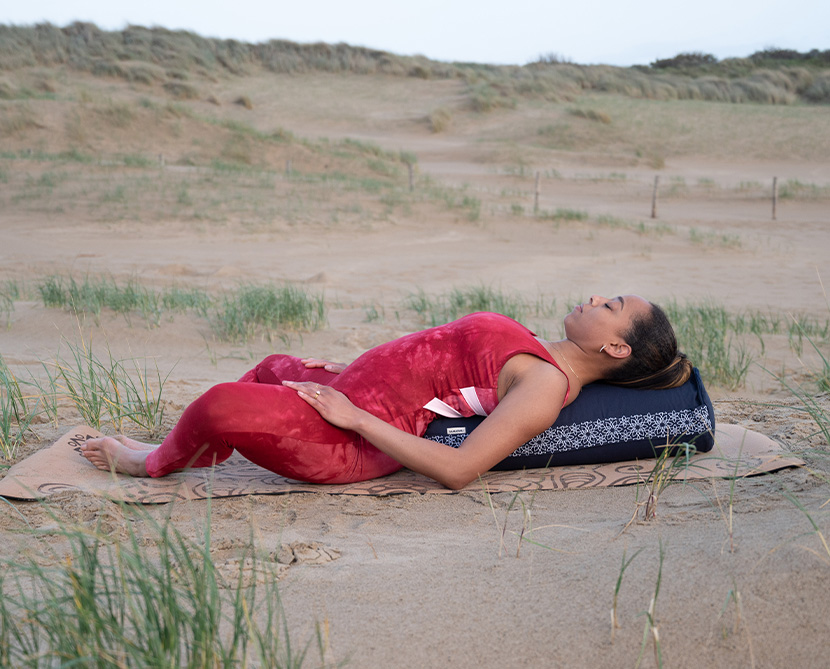
Regular practice of both active and restorative yoga creates a well-rounded approach to stress management that addresses different stress types and recovery needs. Active practices like vinyasa flows and warrior sequences build your physical and mental capacity to handle workplace stress and daily challenges, while restorative practices, including child’s pose, legs up the wall, and gentle twists, help you recover from stress-induced tension and maintain emotional balance. This dual approach ensures you have effective yoga poses for stress relief available, whether you need immediate energy or deep relaxation.
The most effective yoga for stress relief and mental clarity combines understanding these different approaches with consistent daily practice that fits your lifestyle and stress patterns. Whether you choose energising flows for morning motivation, targeted yoga poses for stress reduction during your lunch break, or gentle restorative sequences for evening wind-down sessions, the key lies in building a sustainable stress management routine that addresses your specific tension areas and triggers. Practicing on a supportive surface matters more than most beginners realise, and having the right yoga mats gives you the stable, comfortable foundation needed for consistent practice in any space. Pairing your physical poses with meditation techniques and mindful breathing deepens the cortisol-reducing benefits of each session. We believe that weaving targeted stress-relieving yoga exercises into your daily routine creates lasting, measurable changes in how your nervous system responds to workplace pressure and life challenges, supporting a more resilient and balanced approach to modern living.
Browse our selection of thoughtfully crafted collection of sustainable yoga essentials—designed for mindful movement and made with respect for the planet.