


Proper alignment in downward facing dog requires your hands to be shoulder-width apart with your fingers spread, creating a straight line from your wrists to your hips while keeping your spine neutral. Your legs should be engaged, with weight evenly distributed between your hands and feet. This foundational pose becomes more comfortable and effective when you understand the key alignment principles and the common mistakes to avoid.
What does proper alignment actually look like in downward facing dog?
Perfect downward facing dog alignment involves several interconnected elements that work together to create stability and comfort:
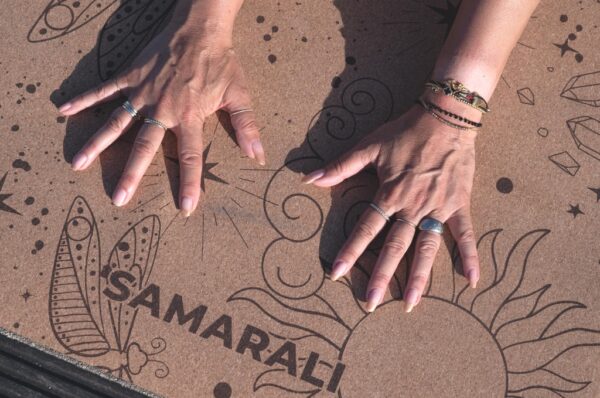
- Hand placement: Position your hands shoulder-width apart with fingers spread wide and middle fingers pointing straight forward, creating a stable foundation
- Spine alignment: Form a straight line from your wrists through your hips, creating an inverted V-shape that maintains your spine’s natural curves
- Weight distribution: Balance your body weight evenly between your hands and feet to prevent excessive strain on any single area
- Leg engagement: Actively engage your leg muscles while reaching your heels toward the floor, keeping legs straight or slightly bent as needed
- Shoulder positioning: Create external rotation in your shoulders to broaden across your upper back and prevent collapse
These alignment elements work synergistically to transform downward facing dog from a passive stretch into an active, strengthening posture. When properly aligned, the pose creates length through your spine while building strength in your arms, core, and legs. Your head should hang naturally between your arms, and your breathing should remain steady and comfortable throughout the hold.
Why do most people struggle with downward facing dog alignment?
Several physical limitations and technique errors commonly interfere with proper downward facing dog alignment:
- Limited shoulder mobility: Tight shoulders cause practitioners to dump weight into their hands rather than engaging arms and core properly
- Hamstring inflexibility: Tight hamstrings lead to rounded spine or excessive knee bending without addressing the underlying flexibility issue
- Incorrect hand positioning: Placing hands too wide, narrow, or turned outward creates unnecessary wrist and shoulder strain
- Insufficient core strength: Weak core muscles allow ribs to flare, lower back to sag, and shoulders to collapse forward
- Inadequate finger engagement: Failing to spread fingers wide or press evenly through palms reduces stability and increases discomfort
These challenges create a cascade of compensation patterns throughout the body, making the pose feel heavy and uncomfortable rather than energising. Understanding these common struggles helps practitioners identify their specific limitations and work systematically to address them through targeted practice and modifications.
How can you tell if your downward facing dog alignment is correct?
Several clear indicators help you assess whether your alignment is supporting rather than hindering your practice:
- Weight distribution check: Your body weight should feel evenly balanced between hands and feet without excessive pressure in your wrists
- Spine assessment: You should be able to draw an imaginary straight line from wrists through shoulders to hips without lower back compression
- Shoulder positioning: Your shoulders should feel broad across your back rather than hunched around your ears
- Leg engagement quality: Your thigh muscles should draw upward actively while heels reach toward the floor, regardless of whether they touch
- Breathing pattern: You should maintain steady, comfortable breathing rather than holding your breath or breathing shallowly
These alignment checkpoints provide immediate feedback about your positioning and help you make real-time adjustments. Good alignment creates a sense of lightness and energy in the pose, while poor alignment typically feels heavy, strained, or uncomfortable. Trust these sensations as valuable information about your technique and make gentle corrections as needed.
What modifications help improve downward facing dog alignment over time?
Strategic modifications allow you to practice proper alignment principles while working within your current flexibility and strength limitations:
- Wall-supported variation: Place hands on wall at hip height to learn spine positioning and shoulder engagement without full weight-bearing
- Block elevation: Use blocks under hands to reduce the pose angle and make it more accessible for tight hamstrings or limited shoulder mobility
- Bent-knee adaptation: Keep knees bent as needed to prioritise spine alignment over straight legs, gradually extending as flexibility improves
- Forearm alternative: Practice forearm downward facing dog to reduce wrist pressure while maintaining essential alignment principles
- Preparatory pose practice: Regularly practice cat-cow stretches for spine mobility, plank pose for strength, and forward folds for hamstring flexibility
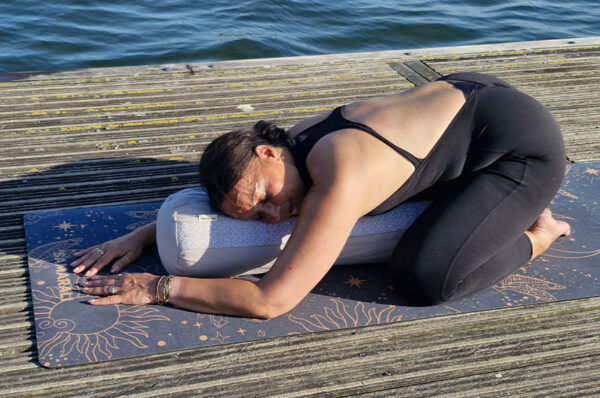
These modifications create a progressive pathway toward improved alignment by addressing specific limitations while maintaining the pose’s essential benefits. Rather than forcing your body into an uncomfortable position, these adaptations allow you to build the necessary strength and flexibility gradually while reinforcing proper movement patterns. A supportive yoga bolster can also help with modified variations and restorative poses that complement your downward facing dog practice.
Understanding proper alignment in downward facing dog transforms this fundamental pose from a struggle into a source of strength and energy. Focus on the key elements of hand placement, spine alignment, and leg engagement rather than forcing your body into a shape it’s not ready for. With consistent practice and attention to these alignment principles, downward facing dog becomes a pose you can return to again and again for grounding and rejuvenation. Having a quality yoga mat with proper grip and cushioning supports your alignment practice, while exploring complete yoga sets can provide all the props you need for safe and effective practice. We at Samarali support your yoga journey with thoughtfully designed, sustainable yoga mats made from organic cotton, packaged without plastic to honour both your practice and our planet.
Browse our selection of thoughtfully crafted collection of sustainable yoga essentials—designed for mindful movement and made with respect for the planet.