


Yes, yoga props can significantly help prevent injuries during practice by providing support, improving alignment, and reducing strain on your body. Props allow you to maintain proper form while building strength and flexibility gradually, making your practice safer and more accessible regardless of your experience level.
How do yoga props actually help prevent injuries?
Yoga props work by providing external support that helps you maintain proper alignment without forcing your body into positions it’s not ready for. Understanding the specific mechanisms helps you use them more effectively:
- Reducing joint strain: Props distribute weight more evenly across your body, preventing excessive pressure on vulnerable areas like knees, wrists, and neck
- Maintaining proper alignment: External support helps you hold poses with correct form while your body gradually builds the strength and flexibility needed
- Preventing compensation patterns: Props eliminate the need for one body part to work harder to compensate for limitations elsewhere
- Gradual adaptation: They allow your muscles and joints to adapt slowly to new positions rather than forcing immediate flexibility
- Supporting natural biomechanics: Props help maintain your body’s natural curves and movement patterns during challenging poses
These mechanisms work together to create a safer practice environment where you can explore poses within your current capabilities while steadily progressing. When you use yoga blocks under your hands in forward folds, for example, you’re simultaneously reducing spinal strain, maintaining proper alignment, and allowing your hamstrings to lengthen gradually without forcing the stretch.
Which yoga props are most important for injury prevention?
While many props can enhance safety, certain ones provide the most comprehensive injury prevention benefits:
- Yoga blocks: The most versatile props for supporting standing poses, seated positions, and backbends while preventing wrist strain and lower back compression
- Yoga straps: Essential for safely extending your reach in binding poses and stretches without forcing shoulder or neck positions
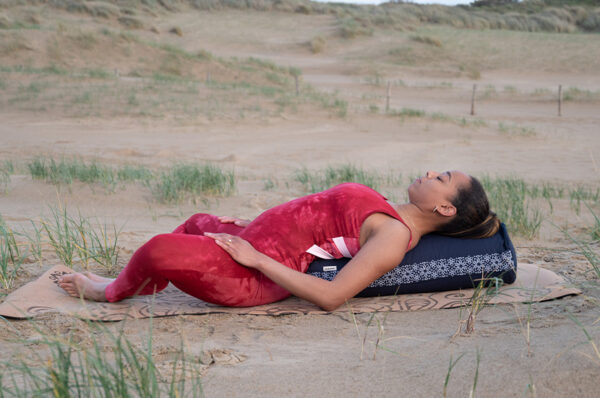
- Bolsters: Provide crucial support in restorative poses and hip openers, preventing overstretching and knee strain in seated positions
- Blankets: Offer cushioning, warmth, and adjustable height support while providing gentle weight for relaxation poses
- Meditation cushions: Support proper spinal alignment during seated practice, reducing lower back strain and hip discomfort
For beginners, starting with blocks and a strap addresses the most common injury risks immediately. These two props work together to modify the majority of poses safely, making them the foundation of an injury-prevention toolkit. As your practice develops, adding bolsters and blankets enhances comfort and safety in restorative and seated poses.
What are the most common yoga injuries that props help avoid?
Understanding the specific injuries that props prevent helps you use them proactively rather than reactively:
- Lower back strain: Often occurs in forward folds when rounding the spine excessively; blocks under hands maintain natural spinal curves
- Shoulder impingement: Results from forcing binding poses or overhead positions; straps allow safe exploration without joint compression
- Knee stress: Develops in cross-legged poses and deep hip openers; bolsters and blocks reduce knee angles while blankets provide cushioning
- Neck tension: Caused by looking around during practice or forcing inversions; props support neutral neck alignment
- Wrist injuries: Common in weight-bearing poses like downward dog; blocks and forearm modifications reduce pressure on hands
- Hip flexor strain: Occurs when forcing deep backbends; bolsters provide gradual support for safe opening
These injuries typically develop gradually through repeated stress rather than single incidents, making prevention through proper prop use especially important. Props allow you to experience the benefits of challenging poses while staying within safe ranges of motion, protecting vulnerable joints and muscles as your body adapts over time.
How do you choose sustainable and safe yoga props?
Selecting props that prioritise both safety and environmental responsibility requires attention to materials, manufacturing, and quality indicators:
- Natural materials: Choose organic cotton, natural cork, sustainably sourced wood, and recycled foam that avoid harmful chemicals while supporting durability
- Quality construction: Look for dense, supportive materials that maintain shape over time and provide consistent stability during practice
- Sustainable manufacturing: Prioritise companies using renewable resources, plastic-free packaging, and transparent sourcing practices
- Chemical-free options: Avoid synthetic materials that off-gas harmful substances or break down quickly, requiring frequent replacement
- Comfort and stability: Test props for supportive feel and pleasant texture that encourages regular use rather than creating discomfort
Quality sustainable props represent a long-term investment in both your practice and environmental health. While they may cost more initially, their durability and safety features make them more economical over time. The mindful selection of props also reflects yoga’s principles of non-harm, extending your practice’s benefits beyond personal wellness to planetary stewardship.
Investing in quality, sustainable yoga accessories creates a safer practice while supporting manufacturers who prioritise both your wellbeing and environmental responsibility. At Samarali, we understand this connection between personal wellness and environmental responsibility, which is why all our yoga accessories use organic cotton and completely plastic-free packaging to support both your practice and our planet.
Browse our selection of thoughtfully crafted collection of sustainable yoga essentials—designed for mindful movement and made with respect for the planet.