


Starting a home yoga practice requires far less equipment than most beginners expect. The true essentials come down to a quality yoga mat built for grip and durability, comfortable clothing that moves with your body, and one or two yoga blocks for pose support and modifications. Whether you are exploring gentle flow, vinyasa, or restorative styles, these at home yoga equipment basics cover virtually every beginner need. Prioritising sustainable, natural material pieces from the start means your gear lasts longer, performs better, and keeps both your practice space and your conscience clutter-free.
What yoga equipment do you actually need to start practicing at home?
The essential yoga gear for home practice comes down to a focused set of items that support virtually any style or level, from your very first session through years of consistent practice:
- Quality yoga mat – Your only truly necessary piece of equipment, providing grip, cushioning, and a defined practice space for every pose
- Yoga blocks (1-2) – Versatile props that bring the floor closer, support your hips, and help maintain proper alignment in challenging poses
- Comfortable, stretchy clothing – Any athletic wear or flexible clothing that allows unrestricted movement without special yoga-specific garments
- Yoga strap (optional) – Helpful for flexibility and reaching poses, though easily substituted with a belt, towel, or dressing gown tie
These home yoga essentials create a complete foundation for daily practice while keeping costs manageable and storage refreshingly simple. A quality mat made from natural rubber or organic materials delivers the grip, cushioning, and durability needed for consistent sessions, while cork or recycled foam blocks give you the versatility to modify poses safely as a beginner. Together, this minimal at home yoga equipment setup addresses 95% of what any practice style demands. Everything beyond these basics falls firmly into the nice-to-have category, letting you invest gradually and intentionally rather than cluttering your space with accessories you rarely use.
How do you choose the right yoga mat for your home practice?
Choosing the right yoga mat for home practice means understanding how material, thickness, texture, and size each affect your safety, comfort, and long-term enjoyment of daily sessions:
- Material quality – Natural rubber offers the best grip and durability, cork provides antimicrobial properties, while PVC mats offer budget-friendly options with less sustainability
- Thickness considerations – 6mm provides ideal comfort for most practitioners, thicker mats (8mm+) offer joint protection but reduce stability, thinner options (3-4mm) suit dynamic practices
- Size specifications – Standard 68″ x 24″ works for most people, but longer mats (72-84″) accommodate taller practitioners, wider options provide more flow space
- Grip performance – Essential for safety, especially in dynamic practices or if you sweat; natural rubber excels in most conditions, cork improves when slightly damp
- Sustainable materials – Organic cotton, natural rubber, and sustainably harvested cork support environmental values while often delivering superior performance
The right mat is genuinely one of the most important investments you can make in your long-term home yoga practice. Prioritise material quality and construction over price or aesthetics, because a well-chosen mat sustains thousands of sessions while holding its grip, cushioning, and structural integrity. Mats made from natural rubber or organic materials tend to outperform cheaper synthetic alternatives in both durability and eco-credentials, making them the preferred choice for health-conscious beginners who want equipment that aligns with their values. This single piece of essential yoga gear directly shapes your safety, your comfort, and the quality of your connection to your home practice space every time you unroll it.
What’s the difference between expensive and budget yoga equipment?
Knowing where price differences actually matter helps you allocate your home yoga equipment budget wisely, investing more where quality has a direct impact on your practice and saving confidently where it does not:
- Material quality – Premium gear uses natural, sustainable materials like organic rubber and cork that improve with age, while budget options often rely on synthetic materials that degrade faster
- Construction durability – Higher-priced items feature reinforced stitching, quality hardware, and materials that maintain their shape and function over years of regular use
- Performance longevity – Expensive mats typically maintain grip and cushioning properties throughout their lifespan, whereas budget versions may lose effectiveness relatively quickly
- Value consideration – Mid-range options often provide excellent quality without premium pricing, making price alone an unreliable quality indicator
- Usage frequency impact – Daily practitioners benefit more from quality investments, while occasional users may find budget options perfectly adequate for their needs
- Environmental responsibility – Eco-friendly materials often cost more initially but provide better long-term value through superior durability and reduced environmental impact
The smartest approach is matching your investment to your practice frequency, your environmental values, and your long-term goals rather than defaulting to the cheapest or most expensive option available. Quality yoga equipment for home use performs reliably session after session, reducing the frustrations that can quietly derail a new practice routine, while thoughtfully chosen budget-friendly pieces can serve you just as well in lower-impact areas. For beginners building their essential home yoga gear collection, the mat and blocks deserve the most careful consideration, as these directly affect your safety and comfort every single time you practice.
How do you create an effective home yoga space with minimal equipment?
Almost any room in your home can become a functional yoga practice space with a little planning and the right at home yoga equipment. Whether you are working with a small apartment bedroom, a shared living room, or even an outdoor area, these practical strategies help you make the most of whatever space you have:
- Space requirements – A clear 6′ x 3′ floor area accommodates most practices; test by lying with arms overhead and legs extended to ensure comfortable clearance
- Surface considerations – Hard floors provide better stability than thick carpets; ensure your mat won’t slide on your chosen surface during dynamic movements
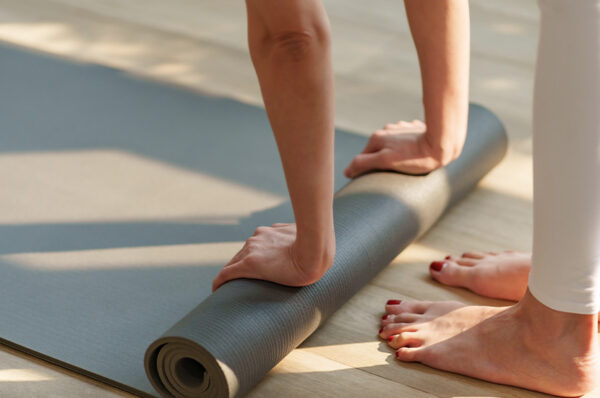
- Storage solutions – Baskets, wall hooks, or designated corners keep equipment organised and accessible; mats roll easily for storage behind doors or under beds
- Lighting optimisation – Natural light works beautifully for morning practice, soft lamps create evening ambiance; avoid harsh overhead lights that cause glare during poses
- Audio setup – Small speakers or quality headphones ensure clear instruction audio without disturbing others; consider room acoustics for optimal sound
- Multi-purpose design – Your yoga area can double as exercise space, meditation corner, or general floor space when equipment is easily stored away
The most effective home yoga spaces prioritise ease of use and consistency over elaborate setups or dedicated rooms. Adequate floor space for your mat, good natural or adjustable lighting, and a simple storage solution for your yoga equipment at home are all you genuinely need to practice daily. This flexible approach works particularly well in apartments or smaller homes where rooms serve multiple purposes, removing the common beginner barrier of feeling like you need a perfect, permanent space before you can start. A rolled mat in the corner and two blocks on a shelf are enough to build a meaningful, lasting practice.
Building a sustainable home yoga practice means choosing quality over quantity at every step of your equipment journey. At Samarali, we believe in supporting your wellness path with thoughtfully designed, eco-conscious yoga and meditation equipment that is built to last. All our products use organic cotton fabrics, and we eliminate plastic from all our packaging entirely, so every purchase supports both your practice and the health of our planet.
Browse our full collection of sustainable yoga essentials and meditation gear, each piece thoughtfully crafted for mindful movement and made with genuine respect for the planet.