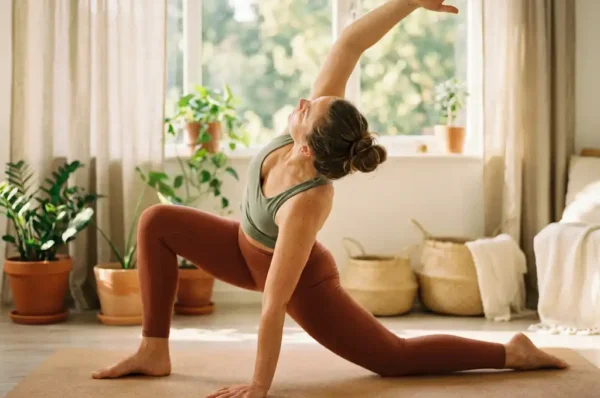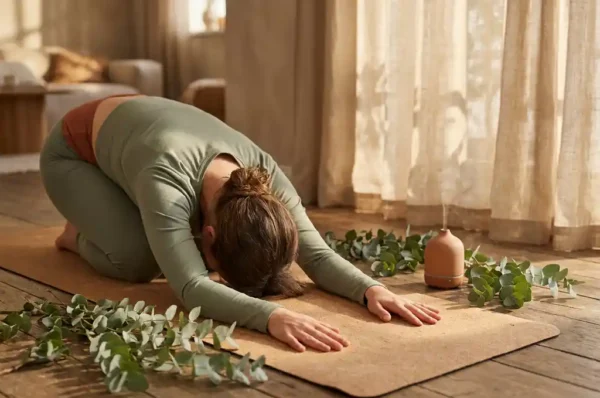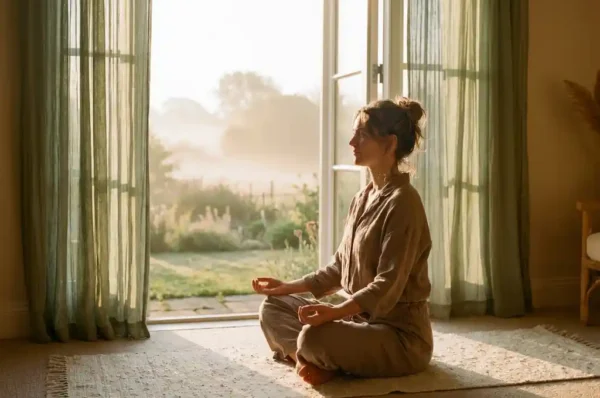



Restorative yoga props are supportive tools that help beginners and experienced practitioners alike hold gentle poses for extended periods without strain or discomfort. To start your practice, you need four essential props: bolsters, blocks, blankets, and straps. Together, these create fully supported positions that promote deep relaxation and nervous system recovery. Props are not optional accessories — they are fundamental to restorative yoga, allowing your body to release tension completely while maintaining proper alignment throughout longer holds of 5 to 20 minutes.
What exactly is restorative yoga and why do you need props?
Restorative yoga is a gentle, beginner-friendly practice focused on deep relaxation through passive poses held for 5 to 20 minutes each. Unlike active yoga styles that build strength and flexibility, restorative yoga uses complete stillness to activate your body’s natural healing response, calm your nervous system, and relieve accumulated physical and mental tension. Props are what make this possible: without a bolster, blocks, or blankets supporting your body weight, most people cannot fully surrender into a pose long enough to experience genuine restoration.
Props serve as your support system in this practice by:
- Eliminating physical effort – They hold your body in therapeutic positions, allowing muscles to release completely without any muscular engagement
- Maintaining proper alignment – Props ensure your spine and joints stay in healthy positions throughout extended holds
- Preventing strain and tension – Without support, your body would create tension trying to maintain poses, which defeats the relaxation purpose
- Enabling deeper surrender – Complete support allows your nervous system to shift into parasympathetic mode for true healing
This comprehensive support system transforms your restorative yoga practice into a therapeutic experience where healing happens naturally and progressively. Restorative yoga differs significantly from other styles: while vinyasa flows challenge your strength and hot yoga tests endurance, restorative yoga asks you to surrender completely into a supported position, making it one of the most accessible and beneficial practices for beginners dealing with stress, fatigue, or recovery from injury.
Which props do you actually need to start restorative yoga as a beginner?
Essential restorative yoga props for beginners include:
- One bolster – Your most important investment for supporting your torso in forward folds, heart-opening poses, and side stretches while maintaining spinal alignment
- Two blocks – Provide height and stability under hips, knees, or head, bringing the ground closer to your body in seated poses
- Two blankets – Serve triple duty as warmth during long holds, soft padding over harder props, and gentle weight for grounding
- One strap – Helps maintain gentle stretches without forcing, particularly useful in leg stretches and shoulder releases
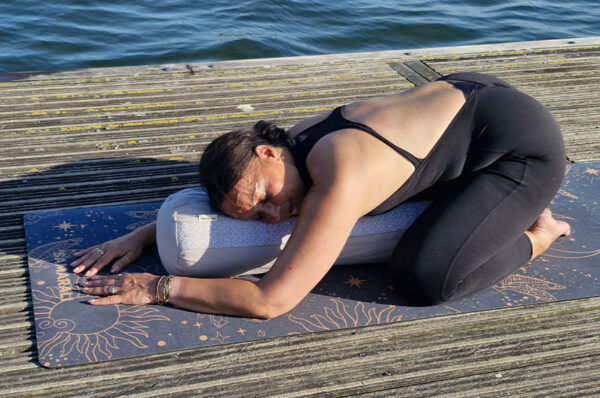
These four items support most foundational beginner restorative yoga poses and provide everything you need for a complete, comfortable practice at home. Rectangular bolsters like our yoga bolster offer more versatility than round ones for beginners, providing stable support in poses like Supported Child’s Pose and Reclined Butterfly. When choosing the best yoga blocks for restorative yoga, cork blocks are the top recommendation: they provide superior grip, durability, and firm support compared to foam alternatives, which can compress under sustained body weight. Natural fiber blankets like our organic cotton yoga blanket breathe better than synthetic options, maintaining a comfortable temperature throughout long holds. A yoga strap is one of the best tools for restorative yoga poses that require extended reach, helping you maintain position without muscular effort. You can add specialty items like eye pillows and cushions as your practice develops and you discover your personal preferences.
How do you choose sustainable and eco-friendly restorative yoga props?
Sustainable restorative yoga props benefit both your health and your environmental impact through mindful material choices:
- Organic cotton covers – Naturally antimicrobial and breathable, becoming softer with use while avoiding pesticide-treated conventional cotton that can off-gas chemicals
- Natural fillings – Buckwheat hulls, kapok, or organic cotton batting provide excellent support while remaining biodegradable, unlike synthetic foams containing volatile organic compounds
- Cork construction – Harvested without harming trees, naturally resists bacteria and odours, and lasts significantly longer than foam alternatives
- Certified materials – Look for GOTS (Global Organic Textile Standard) certification and brands using plastic-free packaging
These sustainable choices align your yoga practice with environmental stewardship values while often delivering superior durability and performance. Natural materials like organic cotton, cork, and buckwheat are not only safer for your body during long passive holds, but they also outlast synthetic alternatives significantly. Though eco-friendly restorative yoga props may cost more upfront, they offer better long-term value through extended lifespan, reduced replacement costs, and a healthier practice environment — supporting both your wellness journey and your commitment to conscious living.
What can you use as alternatives if you don’t have restorative yoga props yet?
Common household items can effectively substitute for restorative yoga props while you explore the practice and decide which equipment suits your needs:
- Firm pillows or couch cushions – Replace bolsters by stacking and arranging for proper height and support, though they may compress more than dedicated props
- Hardcover books – Work excellently as temporary blocks, stackable for different heights and wrappable in towels for softer body contact
- Bath towels – Serve multiple functions when folded for cushioning, rolled for cylindrical support, or used large for warmth and coverage
- Regular belts or scarves – Replace yoga straps for gentle stretching, though without the same grip or adjustability features
These alternatives work well for occasional practice or travel situations, giving you an authentic introduction to the benefits of restorative yoga before committing to equipment. Many beginners start this way and find it genuinely helpful for understanding which props matter most to their body. That said, transitioning to purpose-built restorative yoga props often marks a turning point: the improved comfort, stability, and support quality make longer holds far more enjoyable and sustainable as a regular wellness routine.
Building your restorative yoga setup is a personal journey, not a one-time shopping list. Start with household alternatives to explore the practice, notice what your body needs, and then invest gradually in quality restorative yoga props that will support you for years to come. At Samarali, we craft our sustainable yoga props from organic cotton with natural fillings and plastic-free packaging, so your wellness choices stay aligned with your values from the very first pose. Whether you are just discovering beginner restorative yoga poses with props or deepening an existing practice, we have everything you need to build a sanctuary at home.
Browse our collection of thoughtfully crafted sustainable yoga props and essentials, designed for mindful movement and made with respect for the planet.